Thailand District Cooling Market
Market Size in USD Million
CAGR :
% 
 USD
167.07 Million
USD
278.59 Million
2025
2033
USD
167.07 Million
USD
278.59 Million
2025
2033
 Forecast Period Forecast Period |
2026 –2033 |
 Market Size (Base Year) Market Size (Base Year) |
USD 167.07 Million |
 Market Size (Forecast Year) Market Size (Forecast Year) |
USD 278.59 Million |
 CAGR CAGR |
% |
| Major Markets Players |
|
District Cooling Market Size
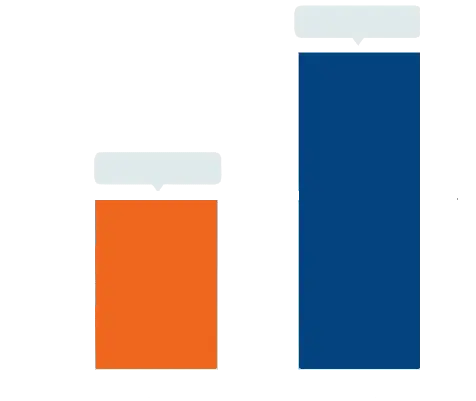
- The Thailand district cooling market size was valued at USD 167.07 million in 2025 and is expected to reach USD 278.59 million by 2033, at a CAGR of 6.6% during the forecast period
- The market growth is largely driven by rapid urbanization, rising energy demand for cooling in high-density cities, and increasing investments in sustainable urban infrastructure, which are accelerating the adoption of centralized district cooling systems across residential, commercial, and industrial developments
- Furthermore, growing focus on energy efficiency, carbon emission reduction, and long-term cost optimization is positioning district cooling as a preferred alternative to conventional cooling methods. These combined factors are strengthening large-scale deployment of district cooling networks, thereby supporting steady market expansion
District Cooling Market Analysis
- District cooling systems supply chilled water from centralized plants to multiple buildings through a distribution network, enabling efficient space cooling while reducing electricity consumption, peak load stress, and overall environmental impact across urban areas
- The increasing demand for district cooling is primarily supported by large infrastructure projects, government-led sustainability initiatives, and the need for reliable cooling solutions in sectors such as commercial buildings, airports, hospitals, and data centres
- Electric chillers segment dominated the market with a market share of around 60% in 2025, due to their high cooling efficiency, operational reliability, and widespread adoption across large-scale district cooling networks. Electric chillers are extensively deployed due to their ability to handle high and consistent cooling loads in dense urban developments. Their compatibility with advanced automation systems and energy management platforms supports optimized performance and cost control
Report Scope and District Cooling Market Segmentation
|
Attributes |
District Cooling Key Market Insights |
|
Segments Covered |
|
|
Countries Covered |
|
|
Key Market Players |
|
|
Market Opportunities |
|
|
Value Added Data Infosets |
In addition to the insights on market scenarios such as market value, growth rate, segmentation, geographical coverage, and major players, the market reports curated by the Data Bridge Market Research also include import export analysis, production capacity overview, production consumption analysis, price trend analysis, climate change scenario, supply chain analysis, value chain analysis, raw material/consumables overview, vendor selection criteria, PESTLE Analysis, Porter Analysis, and regulatory framework. |
District Cooling Market Trends
Rising Adoption of Energy-Efficient District Cooling Systems
- A key trend in the district cooling market is the increasing adoption of energy-efficient district cooling systems as urban areas seek sustainable alternatives to conventional building-level air conditioning. These systems optimize energy consumption by centralizing cooling production and distributing chilled water efficiently across multiple buildings, reducing overall electricity demand
- For instance, Emirates Central Cooling Systems Corporation (Empower) operates large-scale district cooling plants in Dubai that utilize advanced thermal energy storage and efficient chillers to significantly lower energy usage and carbon emissions. Such implementations demonstrate how centralized cooling improves operational efficiency while supporting long-term sustainability goals
- The integration of advanced control systems and smart monitoring technologies is enhancing the performance of district cooling networks by enabling real-time load management and energy optimization. This trend is improving reliability and allowing operators to balance cooling supply with fluctuating demand more effectively
- Growing emphasis on reducing greenhouse gas emissions in dense urban developments is further accelerating the shift toward district cooling solutions. These systems support sustainability objectives by lowering peak power loads and minimizing the environmental impact of cooling-intensive infrastructures
- Commercial complexes, mixed-use developments, and large residential communities are increasingly adopting district cooling to achieve consistent cooling performance and predictable operating costs. This is strengthening the role of district cooling as a preferred solution for large-scale urban projects
- The continued focus on energy efficiency, system optimization, and sustainable urban planning is reinforcing the long-term adoption of district cooling systems. This trend is positioning district cooling as a critical component of future-ready, low-energy urban infrastructure
District Cooling Market Dynamics
Driver
Growing Urbanization and Centralized Cooling Demand
- Rapid urbanization and the expansion of high-density cities are driving demand for centralized cooling solutions that can efficiently serve large populations and commercial hubs. District cooling systems address this demand by offering scalable and reliable cooling for clustered urban developments
- For instance, Tabreed provides district cooling services to major developments in Abu Dhabi, including large residential and commercial zones, supporting the cooling needs of rapidly expanding urban areas. These projects highlight how centralized cooling meets the requirements of dense city environments with high and continuous cooling demand
- The rise in large-scale real estate projects such as business districts, airports, and healthcare campuses is increasing the need for centralized cooling infrastructure. District cooling offers consistent temperature control and operational efficiency across interconnected buildings
- Urban planners and developers are prioritizing centralized cooling to reduce individual building equipment requirements and free up valuable space. This approach supports more efficient land use and simplifies long-term infrastructure management
- The ongoing expansion of urban populations and infrastructure continues to reinforce centralized cooling demand. This driver is sustaining long-term growth in the district cooling market by aligning with urban development and energy efficiency objectives
Restraint/Challenge
High Upfront Infrastructure Investment
- The district cooling market faces challenges due to the high upfront capital investment required for infrastructure development, including central plants, distribution networks, and thermal storage systems. These costs can create financial barriers for new projects, particularly in emerging markets
- For instance, the development of large district cooling networks by organizations such as Veolia requires substantial initial investment in plant construction and underground piping systems. These financial commitments can extend payback periods and impact project feasibility
- The need for extensive civil work and coordination with urban infrastructure increases project complexity and raises initial deployment costs. This can delay implementation timelines and require strong stakeholder alignment
- Financing district cooling projects often depends on long-term contracts and stable demand projections, which can be difficult to secure during early stages of urban development. Uncertainty around occupancy rates and future cooling demand adds to investment risk
- Despite strong long-term operational savings, the challenge of high upfront investment continues to restrain wider adoption. Addressing financing models and risk-sharing mechanisms remains essential for accelerating district cooling deployment while maintaining economic viability
District Cooling Market Scope
The market is segmented on the basis of product, usage, and customer.
- By Product
On the basis of product, the district cooling market is segmented into free cooling, absorption cooling, and electric chillers. The electric chillers segment dominated the largest market revenue share of around 60% in 2025, driven by their high cooling efficiency, operational reliability, and widespread adoption across large-scale district cooling networks. Electric chillers are extensively deployed due to their ability to handle high and consistent cooling loads in dense urban developments. Their compatibility with advanced automation systems and energy management platforms supports optimized performance and cost control. Utilities and operators prefer electric chillers owing to their mature technology base and predictable maintenance cycles. The presence of established manufacturers and standardized installation practices further reinforces their dominance in district cooling infrastructure.
The absorption cooling segment is anticipated to witness the fastest growth rate from 2026 to 2033, supported by rising emphasis on waste heat utilization and low-carbon cooling solutions. Absorption cooling systems leverage industrial waste heat or renewable thermal energy, aligning with sustainability targets in urban planning projects. Growing investments in combined heat and power plants encourage the adoption of absorption-based district cooling. These systems help reduce electricity dependency during peak demand periods, improving grid stability. Policy support for energy-efficient cooling technologies accelerates their deployment in new district cooling plants.
- By Usage
On the basis of usage, the district cooling market is segmented into storage, production, and distribution. The production segment accounted for the largest market revenue share in 2025, owing to its central role in district cooling networks and significant capital investment requirements. Cooling production plants form the backbone of district systems, housing chillers, pumps, and thermal storage units. High initial infrastructure costs and continuous capacity expansion drive revenue concentration in this segment. Urban expansion and large mixed-use developments sustain demand for high-capacity cooling production facilities. Technological upgrades focused on energy efficiency further strengthen the segment’s market position.
The storage segment is projected to grow at the fastest pace during the forecast period, driven by the increasing adoption of thermal energy storage to optimize load management. Storage systems enable operators to produce cooling during off-peak hours and distribute it during peak demand, reducing operational costs. This approach supports energy efficiency goals and lowers electricity consumption during high-tariff periods. Rising focus on grid balancing and demand-side management enhances the relevance of storage solutions. Integration of chilled water and ice storage technologies boosts system flexibility and resilience.
- By Customer
On the basis of customer, the district cooling market is segmented into commercial buildings, industrial, hospitals, airports, data centres, and others. The commercial buildings segment dominated the market revenue share in 2025, supported by extensive cooling requirements in office complexes, shopping malls, and mixed-use developments. Rapid urbanization and high-density commercial construction increase reliance on centralized cooling solutions. District cooling offers commercial customers reduced operational costs, space savings, and consistent cooling performance. Developers favor district systems to meet sustainability benchmarks and green building certifications. Long-term service contracts further contribute to stable revenue generation from this segment.
The data centres segment is expected to register the fastest growth rate from 2026 to 2033, driven by the exponential rise in digitalization and cloud infrastructure expansion. Data centres require continuous and highly reliable cooling to maintain equipment performance and prevent downtime. District cooling provides scalable and energy-efficient solutions capable of supporting high heat loads. Growing investments in hyperscale and colocation data centres amplify demand for centralized cooling networks. The focus on reducing carbon footprints in digital infrastructure accelerates adoption among data centre operators.
District Cooling Market Share
The district cooling industry is primarily led by well-established companies, including:
- Emicool (U.A.E.)
- Engie (France)
- Tabreed (U.A.E.)
- Vattenfall (Sweden)
- Siemens (Germany)
- Veolia (France)
- Helen Ltd (Finland)
- Ramboll Group A/S (Denmark)
- Fortum (Finland)
- Emirates Central Cooling Systems Corporation PJSC (U.A.E.)
- Keppel Ltd (Singapore)
- SP Group (Singapore)
- SHINRYO CORPORATION (Japan)
- Cetetherm (Sweden)
- ADC Energy Systems (U.A.E.)
- Wien Energie GmbH (Austria)
- Gothenburg Energy (Sweden)
- LOGSTOR Denmark Holding ApS (Denmark)
- Danfoss (Denmark)
- Marafeq Qatar (Qatar)
- DC Pro Engineering (U.A.E.)
Latest Developments in Thailand District Cooling Market
- In June 2023, Emirates Central Cooling Systems Corporation PJSC awarded multiple contracts to develop a state-of-the-art district cooling plant and expand its cooling distribution network in Jumeirah, Dubai. The new facility, designed with a capacity of 48,000 refrigeration tons (RT), aims to meet rising cooling demand from residential and mixed-use developments in the area. The project reflects Emirates Central Cooling’s focus on enhancing system efficiency and network coverage in high-growth urban zones. The plant is scheduled to commence operations by the third quarter of 2024, strengthening Dubai’s district cooling infrastructure
- In March 2023, Danfoss completed the acquisition of BOCK GmbH, a recognized global supplier of CO₂ and low-GWP compressors for cooling and heating applications. This strategic move expands Danfoss’ product portfolio in natural refrigerant technologies and supports its long-term sustainability objectives. The acquisition enhances Danfoss’ capability to serve district cooling and industrial refrigeration markets with energy-efficient solutions. It also reinforces the company’s position in supporting the transition toward environmentally responsible cooling systems
- In August 2022, ENOWA entered into a strategic partnership with ITOCHU and France-based Veolia to develop a renewable energy-powered desalination plant for district cooling at OXAGON. The collaboration combines expertise in infrastructure development, water treatment, and energy management to support sustainable industrial cooling. The project aligns with broader objectives of integrating clean energy solutions into large-scale cooling and utility systems. This initiative highlights the growing role of renewable-powered infrastructure in next-generation district cooling projects
- In February 2022, Tabreed announced a collaboration with Gascool and Marakez to deliver district cooling services for the D5M mall in New Katameya, East Cairo. The project represents Tabreed’s first entry into the Egyptian market, expanding its regional footprint beyond the Gulf region. The partnership focuses on providing reliable and energy-efficient cooling for large commercial developments. Egypt’s expanding real estate and retail sectors present long-term growth opportunities for district cooling providers
- In December 2021, ENGIE and RATP were selected to operate Europe’s largest district cooling network, marking a significant milestone in large-scale urban cooling management. The partnership includes plans to expand the network through the addition of 20 new plants, 10 storage facilities, and 158 kilometers of distribution pipelines. The project is expected to generate approximately USD 2.7 billion in revenue over 20 years. It also supports sustainability goals by reducing an estimated 300,000 metric tons of greenhouse gas emissions through efficient cooling solutions
SKU-
Get online access to the report on the World's First Market Intelligence Cloud
- Interactive Data Analysis Dashboard
- Company Analysis Dashboard for high growth potential opportunities
- Research Analyst Access for customization & queries
- Competitor Analysis with Interactive dashboard
- Latest News, Updates & Trend analysis
- Harness the Power of Benchmark Analysis for Comprehensive Competitor Tracking
Research Methodology
Data collection and base year analysis are done using data collection modules with large sample sizes. The stage includes obtaining market information or related data through various sources and strategies. It includes examining and planning all the data acquired from the past in advance. It likewise envelops the examination of information inconsistencies seen across different information sources. The market data is analysed and estimated using market statistical and coherent models. Also, market share analysis and key trend analysis are the major success factors in the market report. To know more, please request an analyst call or drop down your inquiry.
The key research methodology used by DBMR research team is data triangulation which involves data mining, analysis of the impact of data variables on the market and primary (industry expert) validation. Data models include Vendor Positioning Grid, Market Time Line Analysis, Market Overview and Guide, Company Positioning Grid, Patent Analysis, Pricing Analysis, Company Market Share Analysis, Standards of Measurement, Global versus Regional and Vendor Share Analysis. To know more about the research methodology, drop in an inquiry to speak to our industry experts.
Customization Available
Data Bridge Market Research is a leader in advanced formative research. We take pride in servicing our existing and new customers with data and analysis that match and suits their goal. The report can be customized to include price trend analysis of target brands understanding the market for additional countries (ask for the list of countries), clinical trial results data, literature review, refurbished market and product base analysis. Market analysis of target competitors can be analyzed from technology-based analysis to market portfolio strategies. We can add as many competitors that you require data about in the format and data style you are looking for. Our team of analysts can also provide you data in crude raw excel files pivot tables (Fact book) or can assist you in creating presentations from the data sets available in the report.