Middle East And Africa Hydrocephalus Market
Market Size in USD Million
CAGR :
% 
 USD
57.74 Million
USD
74.86 Million
2025
2033
USD
57.74 Million
USD
74.86 Million
2025
2033
 Forecast Period Forecast Period |
2026 –2033 |
 Market Size (Base Year) Market Size (Base Year) |
USD 57.74 Million |
 Market Size (Forecast Year) Market Size (Forecast Year) |
USD 74.86 Million |
 CAGR CAGR |
% |
| Major Markets Players |
|
Middle East and Africa Hydrocephalus Market Size
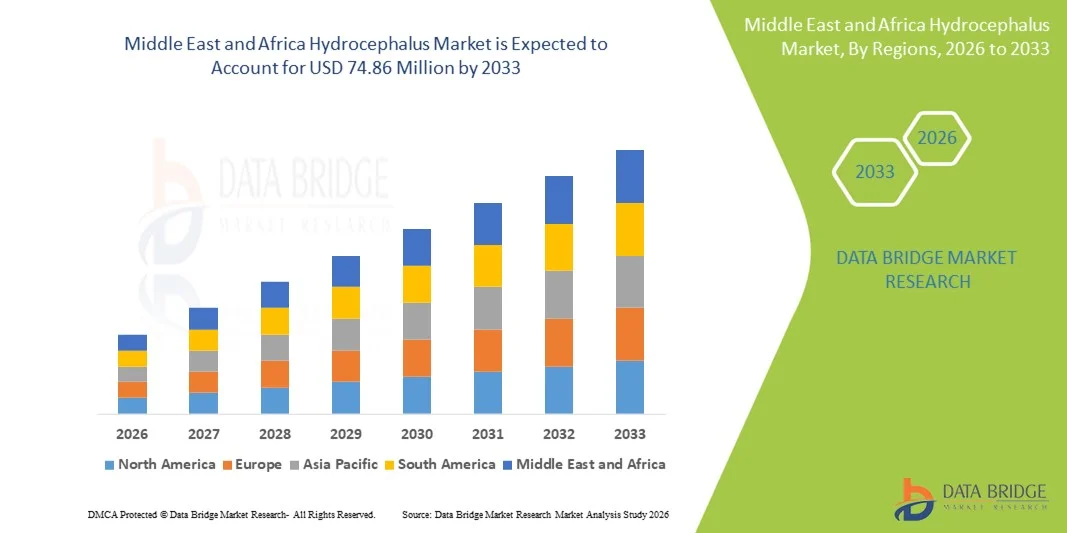
- The Middle East and Africa hydrocephalus market size was valued at USD 57.74 million in 2025 and is expected to reach USD 74.86 million by 2033, at a CAGR of 3.3% during the forecast period
- The market growth is largely fueled by increasing healthcare expenditure, expanding neurosurgical infrastructure, and growing awareness of neurological disorders across both developed and developing countries in the region, leading to greater diagnosis and treatment uptake
- Furthermore, rising prevalence of hydrocephalus especially congenital cases and growing demand for effective cerebrospinal fluid management solutions are prompting investments in advanced therapeutic devices and integrated treatment approaches. These converging factors are accelerating adoption of hydrocephalus management solutions, thereby significantly boosting the industry’s growth throughout the Middle East and Africa
Middle East and Africa Hydrocephalus Market Analysis
- Hydrocephalus management solutions, including diagnostic tools and treatment systems, are increasingly vital components of neurological care in both pediatric and adult populations across hospitals, clinics, diagnostic centers, and academic & research organizations due to their life-saving potential, early detection capabilities, and integration with advanced clinical workflows
- The escalating demand for hydrocephalus management is primarily fueled by the rising prevalence of congenital and acquired hydrocephalus, growing awareness of early diagnosis and treatment, and increasing investment in neurosurgical infrastructure and skilled healthcare professionals across the region
- South Africa dominated the Middle East and Africa hydrocephalus market with the largest revenue share of 37.3% in 2025, characterized by strong hospital infrastructure for complex neurosurgical care and wide adoption of shunting procedures
- Egypt is expected to be the fastest-growing country in the Middle East and Africa hydrocephalus market during the forecast period, driven by rising healthcare access, government initiatives, and increased adoption of diagnostic and treatment solutions
- Congenital hydrocephalus segment dominated the market with a market share of 45.9% in 2025, driven by its higher prevalence among neonates and children and the growing adoption of early intervention strategies
Report Scope and Middle East and Africa Hydrocephalus Market Segmentation
|
Attributes |
Middle East and Africa Hydrocephalus Key Market Insights |
|
Segments Covered |
|
|
Countries Covered |
Middle East and Africa
|
|
Key Market Players |
|
|
Market Opportunities |
|
|
Value Added Data Infosets |
In addition to the insights on market scenarios such as market value, growth rate, segmentation, geographical coverage, and major players, the market reports curated by the Data Bridge Market Research also include in-depth expert analysis, patient epidemiology, pipeline analysis, pricing analysis, and regulatory framework |
Middle East and Africa Hydrocephalus Market Trends
Rising Adoption of Minimally Invasive and AI-Enabled Treatments
- A significant and accelerating trend in the Middle East and Africa hydrocephalus market is the increasing adoption of minimally invasive endoscopic procedures and AI-assisted diagnostic and treatment solutions, improving patient outcomes and reducing recovery time
- For instance, neuro-endoscopic systems integrated with AI can provide surgeons with real-time CSF flow analysis, enhancing precision in shunt placement and improving surgical decision-making
- AI and digital imaging integration enables predictive modeling of patient-specific hydrocephalus progression, allowing more personalized treatment planning and alerting clinicians to potential complications early
- The seamless integration of advanced diagnostic tools and treatment systems facilitates comprehensive patient management, allowing hospitals and clinics to monitor therapy effectiveness, adjust interventions, and optimize hospital workflows
- This trend toward more intelligent, minimally invasive, and patient-centric hydrocephalus management is reshaping clinical standards, with companies developing AI-assisted devices and monitoring solutions to enhance both pediatric and adult care
- The demand for advanced, AI-enabled hydrocephalus diagnostic and treatment solutions is growing rapidly across hospitals, clinics, and academic institutions, as healthcare providers prioritize early intervention and improved patient outcomes
- Collaborations between hospitals, research institutes, and device manufacturers are increasing to accelerate innovation in hydrocephalus treatment devices and improve adoption of new technologies across the region
Middle East and Africa Hydrocephalus Market Dynamics
Driver
Growing Need Due to Rising Prevalence and Awareness
- The increasing prevalence of congenital and acquired hydrocephalus, coupled with growing awareness among healthcare professionals and parents, is a significant driver of demand for hydrocephalus management solutions
- For instance, in 2024, South Africa’s hospitals reported an increase in pediatric hydrocephalus cases, prompting investments in modern shunting systems and endoscopic treatment devices to improve patient outcomes
- As governments and NGOs promote early diagnosis and intervention programs, hydrocephalus management devices become essential for hospitals and specialty clinics across key countries in the region
- Rising healthcare expenditure, expanding neurosurgical infrastructure, and the need for effective cerebrospinal fluid management further drive market growth across Middle Eastern and African countries
- The availability of advanced treatment solutions, combined with increasing clinical awareness, is enabling more effective care for both pediatric and adult patients, reinforcing the importance of hospitals, clinics, and diagnostic centers in the regional market
- Increasing training programs and workshops for neurosurgeons and clinical staff are boosting the adoption of advanced hydrocephalus management devices
- Government and NGO funding initiatives targeting pediatric neurological disorders are supporting market expansion and improving access to treatment in underserved areas
Restraint/Challenge
High Cost and Limited Healthcare Access in Some Countries
- The high costs of advanced hydrocephalus diagnostic and treatment solutions, including shunt systems and AI-assisted devices, pose a significant challenge to wider market adoption in lower-income countries
- For instance, hospitals in Nigeria and other African countries may face budget constraints that limit the acquisition of state-of-the-art endoscopic systems and AI-enabled monitoring devices
- Limited access to trained neurosurgeons and specialized healthcare infrastructure in certain regions restricts the adoption of advanced hydrocephalus management solutions, especially in rural and underserved areas
- Addressing these challenges through government support, NGO initiatives, and cost-effective device development is crucial for expanding market reach and improving patient outcomes
- While efforts are being made to improve awareness and infrastructure, affordability and skilled personnel shortages continue to restrict widespread access to hydrocephalus diagnosis and treatment in parts of the Middle East and Africa
- Regulatory hurdles and delays in device approvals in some countries can slow the introduction of innovative hydrocephalus management solutions, limiting availability to patients
- Cultural and social factors, such as delayed medical consultation due to lack of awareness or stigma around congenital disorders, can impede early diagnosis and treatment, restricting market growth
Middle East and Africa Hydrocephalus Market Scope
The market is segmented on the basis of type, diagnostic & treatment, age group, and end users.
- By Type
On the basis of type, the hydrocephalus market is segmented into congenital hydrocephalus, acquired hydrocephalus, normal-pressure hydrocephalus, and ex-vacuo hydrocephalus. Congenital Hydrocephalus dominated the market with the largest revenue share of 45% in 2025, driven by its higher prevalence among neonates and infants across the Middle East and Africa. Hospitals and pediatric neurosurgery centers often prioritize early detection and intervention for congenital cases to prevent long-term neurological complications. Advanced shunt systems, endoscopic procedures, and AI-assisted monitoring solutions are widely adopted in these cases due to their established efficacy. The segment also benefits from government and NGO programs targeting pediatric neurological health. High awareness among clinicians and parents regarding congenital hydrocephalus contributes to the consistent demand for diagnostic and treatment solutions. In addition, specialized pediatric hospitals and academic institutions focus on research and clinical trials, further reinforcing the dominance of this segment.
Acquired Hydrocephalus is anticipated to witness the fastest growth rate of 7.1% CAGR from 2026 to 2033, fueled by increasing incidents of traumatic brain injury, infections, and tumors leading to hydrocephalus in adults. Growing hospital infrastructure in countries such as South Africa, Egypt, and Saudi Arabia supports the adoption of advanced diagnostic tools and treatment devices for acquired cases. Increased awareness among clinicians about post-traumatic hydrocephalus management drives investment in endoscopic and minimally invasive shunting procedures. Telemedicine and remote monitoring solutions are being increasingly applied for post-operative care, enhancing adoption. The segment’s growth is further supported by expanding neurosurgical training programs and public health initiatives targeting injury-related neurological disorders. Rising demand for personalized treatment solutions and hospital-based specialized care is strengthening this segment’s trajectory.
- By Diagnostic & Treatment
On the basis of diagnostic & treatment, the market is segmented into diagnostic and treatment. Treatment dominated the market with the largest revenue share in 2025, accounting for 62% of total market revenue, due to the continuous demand for effective hydrocephalus management solutions, including shunts, endoscopic third ventriculostomy (ETV), and cerebrospinal fluid management devices. Hospitals and specialty clinics prioritize treatment solutions over diagnostics, as timely intervention is critical for both pediatric and adult patients. Advanced treatment solutions, including AI-assisted shunts and minimally invasive procedures, are increasingly deployed in leading hospitals across Saudi Arabia, UAE, and South Africa. Government initiatives and NGO support for pediatric and adult hydrocephalus cases contribute to robust adoption. Continuous R&D efforts and collaborations with medical device manufacturers enhance the availability and performance of treatment devices. Rising patient awareness of long-term neurological outcomes further reinforces treatment demand.
Diagnostic is expected to witness the fastest growth during the forecast period, driven by the increasing focus on early detection and monitoring of hydrocephalus progression. The adoption of advanced imaging technologies, such as MRI, CT, and AI-assisted predictive diagnostics, is accelerating in both urban and semi-urban hospitals. Diagnostic solutions are increasingly being integrated with treatment planning systems, allowing clinicians to optimize shunt placement and monitor post-operative recovery. Telemedicine platforms and digital monitoring tools enhance accessibility for remote patient populations. Rising training and awareness among neurologists and radiologists also contribute to the growth of this segment. Early intervention strategies supported by diagnostics are critical to reduce complications, improving overall patient outcomes.
- By Age Group
On the basis of age group, the market is segmented into pediatric and adult patients. Pediatric patients dominated the market with a revenue share of 58% in 2025, as hydrocephalus is most commonly diagnosed in neonates and infants. Pediatric hospitals and specialized neurosurgical centers in South Africa, Egypt, and Saudi Arabia prioritize early intervention and minimally invasive procedures for long-term neurological health. Government and NGO programs targeting child health significantly support pediatric hydrocephalus management. Advanced shunt systems, endoscopic procedures, and AI-assisted monitoring tools are increasingly deployed for neonates and infants. Research institutions focus on clinical trials and innovations targeting pediatric hydrocephalus. Parental awareness and advocacy for early treatment further reinforce the dominance of this segment.
Adult patients are expected to witness the fastest growth rate of 6.8% CAGR from 2026 to 2033, primarily due to the increasing prevalence of acquired hydrocephalus caused by trauma, infections, or tumors. Hospitals and academic medical centers are expanding adult neurosurgery services to meet growing demand. AI-enabled diagnostics and treatment planning tools are helping clinicians optimize interventions for adults. Awareness campaigns and improved healthcare access in emerging Middle Eastern and African countries are boosting adult patient diagnosis. Telemedicine and remote monitoring solutions are increasingly applied for post-treatment care. Rising demand for personalized therapies and minimally invasive treatment approaches further accelerates this segment’s growth.
- By End Users
On the basis of end users, the market is segmented into hospitals, clinics, diagnostic centers, and academic institutions & research organizations. Hospitals dominated the market with the largest revenue share of 70% in 2025, as they offer comprehensive neurosurgical infrastructure, advanced diagnostic and treatment systems, and specialized pediatric and adult care. Hospitals in Saudi Arabia, UAE, South Africa, and Egypt lead in adopting AI-assisted hydrocephalus management solutions. High patient volumes and complex case management make hospitals the primary point of care for hydrocephalus. Government initiatives and NGO support further strengthen hospital-based adoption. Hospitals also collaborate with research institutions to participate in clinical trials, enhancing treatment innovation. Established pediatric and adult neurosurgical departments in tertiary care hospitals maintain the dominance of this segment.
Clinics are expected to witness the fastest growth in the forecast period, driven by increasing outpatient neurology and neurosurgery services. Small and medium-sized clinics are adopting advanced diagnostics and minimally invasive treatment tools to cater to growing patient demand. Clinics offer more personalized and accessible care for follow-up and post-operative monitoring, particularly in urban areas. Rising awareness of hydrocephalus and availability of cost-effective solutions contribute to rapid adoption. Integration with telemedicine platforms enables remote consultation and monitoring, expanding the reach of clinics. Increasing investments in private healthcare infrastructure across Middle Eastern and African countries support the segment’s accelerated growth.
Middle East and Africa Hydrocephalus Market Regional Analysis
- South Africa dominated the Middle East and Africa hydrocephalus market with the largest revenue share of 37.3% in 2025, characterized by strong hospital infrastructure for complex neurosurgical care and wide adoption of shunting procedures
- Healthcare providers in the region highly prioritize early detection and effective treatment of hydrocephalus, with hospitals and specialty centers adopting advanced shunt systems, endoscopic procedures, and AI-assisted monitoring devices to improve patient outcomes
- This widespread adoption is further supported by government initiatives, NGO programs targeting pediatric neurological health, rising clinical awareness, and growing investment in healthcare infrastructure, establishing hydrocephalus management solutions as essential across hospitals, clinics, and academic institutions
The South Africa Hydrocephalus Market Insight
The South Africa hydrocephalus market captured the largest revenue share of 37.3% in 2025, fueled by well-established hospital infrastructure and advanced neurosurgical capabilities. Hospitals and specialty centers are increasingly prioritizing early diagnosis and treatment for both pediatric and adult patients, using shunt systems, endoscopic procedures, and AI-assisted monitoring solutions. Growing awareness among healthcare professionals and parents about long-term neurological outcomes drives adoption. Government initiatives and NGO support programs targeting pediatric neurological health further enhance market penetration. In addition, the presence of leading medical device manufacturers and collaborations with research institutions strengthen South Africa’s position as the regional market leader.
Saudi Arabia Hydrocephalus Market Insight
The Saudi Arabia hydrocephalus market is anticipated to grow at a substantial CAGR during the forecast period, primarily driven by rising healthcare expenditure, expanding neurosurgical infrastructure, and increasing adoption of modern hydrocephalus management solutions. Hospitals and pediatric centers are investing in advanced diagnostic and treatment devices, while government healthcare initiatives support early intervention programs. The country’s focus on healthcare modernization, coupled with high awareness among clinicians, promotes adoption across hospitals and academic institutions. Partnerships with medical device companies to introduce minimally invasive and AI-enabled solutions are further propelling market growth.
United Arab Emirates (UAE) Hydrocephalus Market Insight
The UAE hydrocephalus market is expected to expand at a considerable CAGR, fueled by advanced hospital infrastructure, high healthcare standards, and rising awareness of pediatric and adult hydrocephalus. Healthcare providers are increasingly adopting AI-assisted diagnostics, shunt systems, and endoscopic treatments to improve patient outcomes. Government-backed programs targeting rare and pediatric neurological disorders enhance market accessibility. Integration of telemedicine and remote monitoring solutions in hospitals and clinics is further boosting adoption. The UAE’s strong healthcare network and presence of international device manufacturers support rapid growth in hydrocephalus management solutions.
Nigeria Hydrocephalus Market Insight
The Nigeria hydrocephalus market is gaining momentum due to increasing investment in healthcare infrastructure, rising prevalence of pediatric hydrocephalus, and improving awareness of early diagnosis and treatment. Hospitals and specialty centers are expanding neurosurgical capabilities, incorporating shunt systems, endoscopic procedures, and AI-enabled monitoring. Government programs and NGO interventions addressing child health are enhancing access to hydrocephalus management solutions. The availability of cost-effective treatment devices, combined with training for healthcare professionals, is fostering rapid adoption. Nigeria’s growing focus on improving pediatric and adult neurological care is expected to drive steady market growth.
Middle East and Africa Hydrocephalus Market Share
The Middle East and Africa Hydrocephalus industry is primarily led by well-established companies, including:
- Medtronic (Ireland)
- Integra LifeSciences Corporation (U.S.)
- Natus Medical Incorporated (U.S.)
- Sophysa SA (France)
- B. Braun SE (Germany)
- Spiegelberg GmbH & Co. KG (Germany)
- Christoph Miethke GmbH & Co. KG (Germany)
- G. Surgiwear Ltd. (India)
- Möller Medical GmbH (Germany)
- Anuncia, Inc. (U.S.)
- Kaneka Medix Corporation (Japan)
- Desu Medical, Inc. (U.S.)
- TKB Corporation (Japan)
- Phoenix Biomedical Corporation (U.S.)
- BeckerSmith Medical, Inc. (U.S.)
- MicroPort Scientific Corporation (China)
- Stryker (U.S.)
- Terumo Corporation (Japan)
- Smith & Nephew (U.K.)
- Boston Scientific Corporation (U.S.)
What are the Recent Developments in Middle East and Africa Hydrocephalus Market?
- In July 2024, NeuroKids launched a major partnership with the University Teaching Hospital, Lusaka, Zambia, to expand pediatric hydrocephalus care in the country. The initiative trained neurosurgeons and nursing staff in advanced procedures such as endoscopic third ventriculostomy with choroid plexus cauterization (ETV/CPC) and provided critical equipment for surgeries
- In April 2024, the MO Dewji Foundation successfully launched its Spina Bifida and Hydrocephalus program in Tanzania, screening and treating over 50 children from different regions with advanced surgical interventions, including open surgery and endoscopic third ventriculostomy (ETV). These procedures allow many patients to return home within days, highlighting increased surgical capacity and NGO‑driven programs to address pediatric neurological conditions in East Africa
- In April 2024, a coordinated surgery camp in Dar es Salaam, Tanzania, treated 50 children suffering from hydrocephalus and spina bifida using advanced open surgery and ETV techniques. The camp, supported by the Association for Spina Bifida and Hydrocephalus Tanzania and MOI, underscores growing clinical outreach and collaboration to bring neurosurgical care to underserved populations
- In September 2023, experts and advocacy groups commemorated World Hydrocephalus Day in Nigeria under the theme “Accessibility for all,” calling for increased awareness, improved prevention, diagnosis, and expanded support systems for families affected by hydrocephalus and spina bifida. The event emphasized community empowerment and healthcare access in West Africa
- In May 2023, the Sisters of St. Boniface at Gikonko Health Center in Rwanda developed a cost‑effective treatment program for pediatric hydrocephalus, offering free or heavily subsidized shunt surgeries for children from vulnerable families. The program combines surgical intervention with rehabilitation and community awareness campaigns, significantly improving access to hydrocephalus care in rural areas where the condition often goes untreated due to cost barriers
SKU-
Get online access to the report on the World's First Market Intelligence Cloud
- Interactive Data Analysis Dashboard
- Company Analysis Dashboard for high growth potential opportunities
- Research Analyst Access for customization & queries
- Competitor Analysis with Interactive dashboard
- Latest News, Updates & Trend analysis
- Harness the Power of Benchmark Analysis for Comprehensive Competitor Tracking
Research Methodology
Data collection and base year analysis are done using data collection modules with large sample sizes. The stage includes obtaining market information or related data through various sources and strategies. It includes examining and planning all the data acquired from the past in advance. It likewise envelops the examination of information inconsistencies seen across different information sources. The market data is analysed and estimated using market statistical and coherent models. Also, market share analysis and key trend analysis are the major success factors in the market report. To know more, please request an analyst call or drop down your inquiry.
The key research methodology used by DBMR research team is data triangulation which involves data mining, analysis of the impact of data variables on the market and primary (industry expert) validation. Data models include Vendor Positioning Grid, Market Time Line Analysis, Market Overview and Guide, Company Positioning Grid, Patent Analysis, Pricing Analysis, Company Market Share Analysis, Standards of Measurement, Global versus Regional and Vendor Share Analysis. To know more about the research methodology, drop in an inquiry to speak to our industry experts.
Customization Available
Data Bridge Market Research is a leader in advanced formative research. We take pride in servicing our existing and new customers with data and analysis that match and suits their goal. The report can be customized to include price trend analysis of target brands understanding the market for additional countries (ask for the list of countries), clinical trial results data, literature review, refurbished market and product base analysis. Market analysis of target competitors can be analyzed from technology-based analysis to market portfolio strategies. We can add as many competitors that you require data about in the format and data style you are looking for. Our team of analysts can also provide you data in crude raw excel files pivot tables (Fact book) or can assist you in creating presentations from the data sets available in the report.