Middle East And Africa Cbd Patch Market
Market Size in USD Million
CAGR :
% 
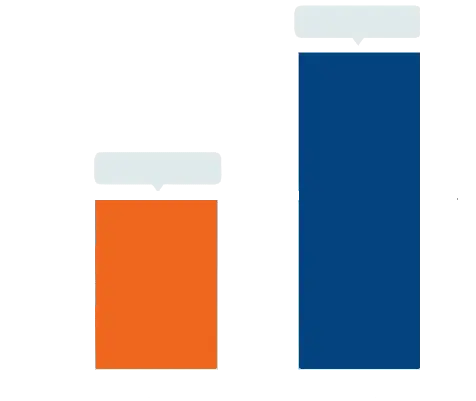 USD
38.95 Million
USD
147.40 Million
2025
2033
USD
38.95 Million
USD
147.40 Million
2025
2033
 Forecast Period Forecast Period |
2026 –2033 |
 Market Size (Base Year) Market Size (Base Year) |
USD 38.95 Million |
 Market Size (Forecast Year) Market Size (Forecast Year) |
USD 147.40 Million |
 CAGR CAGR |
% |
| Major Markets Players |
|
Middle East and Africa CBD Patch Market Size
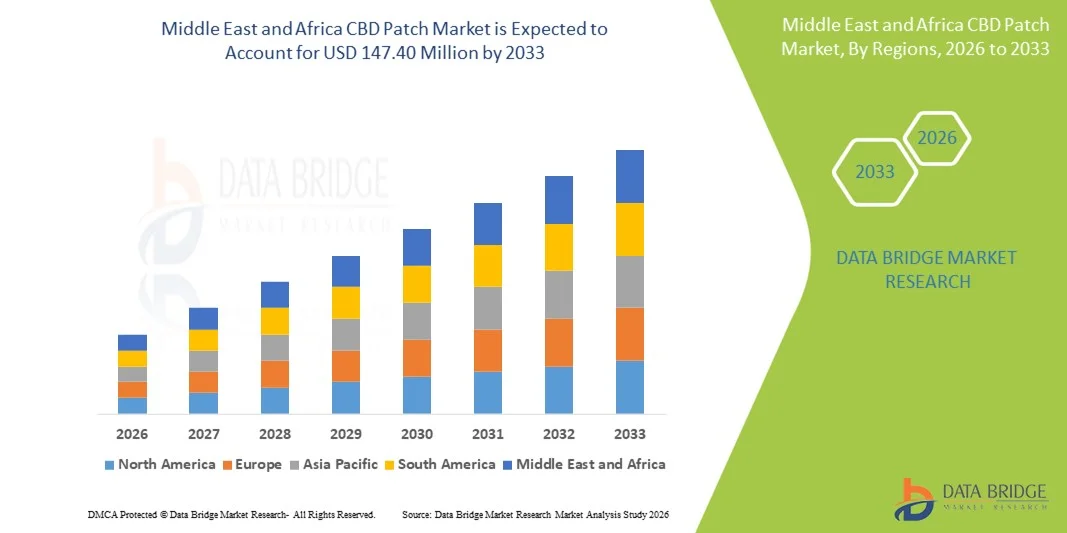
- The Middle East and Africa CBD patch market size was valued at USD 38.95 million in 2025 and is expected to reach USD 147.40 million by 2033, at a CAGR of 18.1% during the forecast period
- The market growth is largely fueled by rising awareness of cannabidiol-based wellness products and the gradual acceptance of alternative pain management and therapeutic solutions across the region
- Furthermore, increasing consumer preference for non-invasive, discreet, and easy-to-use transdermal delivery systems is positioning CBD patches as an emerging solution of choice. These converging factors are accelerating the adoption of CBD patch products, thereby significantly boosting the market’s overall growth trajectory
Middle East and Africa CBD Patch Market Analysis
- CBD patches, delivering cannabidiol through transdermal drug delivery systems, are gaining traction across the Middle East and Africa as non-invasive therapeutic solutions, offering controlled dosage delivery, prolonged efficacy, and improved patient compliance compared to oral or topical cannabinoid products
- The increasing demand for CBD patches is primarily driven by rising awareness of cannabinoid-based therapies, growing prevalence of chronic pain and anxiety-related conditions, and increasing consumer preference for discreet and easy-to-use wellness formats
- South Africa dominated the Middle East and Africa CBD patch market with the largest revenue share of 38.4% in 2025, supported by relatively progressive cannabis regulations, expanding medical cannabis infrastructure, and higher adoption of CBD products for chronic pain and anxiety management
- United Arab Emirates is expected to be the fastest growing country in the CBD patch market during the forecast period due to increasing demand for premium wellness products, expanding online distribution channels, and growing interest in regulated cannabinoid-derived formulations
- Cannabidiol (CBD) segment dominated the Middle East and Africa CBD patch market with a market share of 61.7% in 2025, driven by wider legal acceptance compared to THC, strong consumer trust in non-psychoactive formulations, and growing use of CBD patches for chronic pain and anxiety applications
Report Scope and Middle East and Africa CBD Patch Market Segmentation
|
Attributes |
Middle East and Africa CBD Patch Key Market Insights |
|
Segments Covered |
|
|
Countries Covered |
Middle East and Africa
|
|
Key Market Players |
|
|
Market Opportunities |
|
|
Value Added Data Infosets |
In addition to the insights on market scenarios such as market value, growth rate, segmentation, geographical coverage, and major players, the market reports curated by the Data Bridge Market Research also include in-depth expert analysis, patient epidemiology, pipeline analysis, pricing analysis, and regulatory framework |
Middle East and Africa CBD Patch Market Trends
Rising Preference for Discreet and Long-Acting Transdermal Wellness Solutions
- A significant and accelerating trend in the Middle East and Africa CBD patch market is the growing consumer preference for discreet, long-acting transdermal delivery formats that provide sustained cannabidiol release without the need for frequent dosing
- For instance, CBD patches are increasingly favored over oils and edibles due to their odorless, non-oral application, making them suitable for conservative markets and professional environments across the region
- Advancements in transdermal patch technology are enabling improved skin permeability, controlled dosage release, and enhanced bioavailability, allowing CBD patches to deliver consistent therapeutic effects over extended periods
- The integration of CBD patches into broader wellness routines, including stress management, sleep support, and chronic pain relief, is expanding their appeal beyond medical users to lifestyle-oriented consumers
- This trend toward convenient, compliant, and lifestyle-compatible CBD delivery systems is reshaping consumer expectations, encouraging manufacturers to focus on discreet packaging, precise dosage options, and skin-friendly formulations
- Increasing demand for CBD-only, THC-free formulations is influencing product development, as manufacturers align patch compositions with strict regional regulatory thresholds
- Premiumization of wellness products is driving interest in high-quality, dermatologist-tested CBD patches, particularly among urban and high-income consumer segments
Middle East and Africa CBD Patch Market Dynamics
Driver
Growing Demand for Non-Invasive Cannabinoid-Based Pain and Anxiety Management
- The increasing prevalence of chronic pain, anxiety, and arthritis-related conditions, combined with growing interest in alternative and plant-based therapies, is a major driver boosting demand for CBD patches across the region
- For instance, rising adoption of medical cannabis programs in South Africa has contributed to increased acceptance of cannabidiol-based products for chronic pain and anxiety management
- CBD patches offer advantages such as localized relief, steady drug delivery, and avoidance of gastrointestinal side effects, making them an attractive option compared to oral cannabinoid formulations
- Furthermore, increasing awareness of CBD’s non-psychoactive properties is encouraging wider adoption among consumers seeking therapeutic benefits without cognitive impairment
- The expansion of online pharmacies and regulated dispensaries is further supporting market growth by improving accessibility and consumer confidence in CBD patch products
- Growing endorsement of CBD-based wellness solutions by healthcare professionals and wellness practitioners is positively influencing consumer adoption
- Rising healthcare costs and demand for homecare-based management solutions are driving preference for self-administered CBD patches over clinic-based treatments
Restraint/Challenge
Regulatory Uncertainty and Skin Sensitivity Concerns
- Regulatory inconsistency across Middle East and Africa countries regarding cannabinoid content, labeling, and permissible CBD concentrations poses a significant challenge to market expansion
- For instance, strict cannabis control laws in several Middle Eastern countries limit product approvals, marketing activities, and cross-border distribution of CBD patches
- Concerns related to skin irritation, allergic reactions, or adhesive sensitivity can deter some consumers, particularly those with sensitive skin or dermatological conditions
- Addressing these concerns through dermatologically tested formulations, clear dosage labeling, and compliance with country-specific regulations is critical for building consumer trust
- Overcoming regulatory hurdles and safety perceptions through education, clinical validation, and transparent sourcing practices will be essential for sustained growth of the CBD patch market in the region
- Limited consumer awareness and misinformation around cannabinoid legality can slow adoption in conservative markets
- High compliance costs associated with multi-country regulatory approvals may restrict market entry for small and mid-sized manufacturers
Middle East and Africa CBD Patch Market Scope
The market is segmented on the basis of product type, cannabis strain (spice), packaging, dosage, derivatives, application, source type, end user, and distribution channel.
- By Product
On the basis of product type, the market is segmented into layer drug-in-adhesive, reservoir, and matrix. The Layer Drug-In-Adhesive segment dominated the market with the largest revenue share of 42.3% in 2025, owing to its ability to deliver controlled and consistent release of CBD over extended periods. Consumers prefer this type for homecare and hospital use due to its skin-friendly adhesive and reduced irritation risk. It is also widely compatible with different dosage levels, making it versatile for chronic pain and anxiety management. The patch design ensures accurate dosing and adherence, increasing patient compliance. Layer Drug-In-Adhesive patches are commonly adopted in urban areas where convenience and ease-of-use are highly valued. Additionally, its popularity is supported by strong awareness among clinicians and wellness consumers regarding reliable transdermal drug delivery formats.
The Matrix segment is expected to witness the fastest CAGR of 19.5% from 2026 to 2033, driven by the rising preference for flexible patches that conform to body contours and provide longer wear time. Matrix patches allow uniform drug distribution and are suitable for higher doses without compromising skin safety. Manufacturers are innovating with matrix designs to enhance bioavailability and skin comfort. This segment is gaining traction in both homecare and clinical applications for chronic conditions. Increasing online sales and e-commerce penetration are helping matrix patches reach wider audiences. Consumers also appreciate the discreet and aesthetic appeal of matrix designs, contributing to rapid adoption.
- By Spices
On the basis of cannabis strain, the market is segmented into cannabis indica, sativa, and hybrid. The Cannabis Sativa segment dominated the market with a revenue share of 47.6% in 2025, due to its popularity for mood elevation, energy support, and anxiety relief. Sativa-based CBD patches are widely used in homecare and clinics for stress management, providing non-psychoactive benefits. The segment benefits from regulatory acceptance in several African countries, facilitating easier market penetration. Consumers often choose Sativa patches for lifestyle wellness purposes as well as therapeutic needs. Its consistent efficacy in reducing mild-to-moderate anxiety enhances trust among users. Awareness campaigns and recommendations by wellness professionals further reinforce its dominance.
The Hybrid segment is expected to witness the fastest CAGR of 20.2% from 2026 to 2033, driven by the increasing demand for multi-symptom relief combining the relaxing effects of Indica with the uplifting benefits of Sativa. Hybrid patches are especially popular for chronic pain and stress management applications. Rising consumer interest in personalized and lifestyle-compatible cannabinoid products is supporting this growth. Manufacturers are innovating hybrid formulations to target multiple wellness outcomes. Online and pharmacy distribution is facilitating faster adoption in urban and semi-urban areas. The segment also benefits from positive consumer perception of tailored therapeutic effects in one patch.
- By Packaging
On the basis of packaging, the market is segmented into single patch, two to five patches, and more than five patches. The Two to Five Patches segment dominated with a 38.1% market share in 2025, as it provides convenience for controlled daily use while reducing wastage. Consumers prefer this format for homecare and clinical settings due to ease of storage and predictable dosing schedules. This packaging supports popular patch types such as Layer Drug-In-Adhesive and Matrix, enhancing compatibility. Retailers favor this segment as it balances affordability and convenience for consumers. Online pharmacies have driven growth by offering bundle packs of 2–5 patches. The format is also suitable for trial or first-time users who want to evaluate efficacy without committing to large packs.
The More Than Five Patches segment is expected to witness the fastest CAGR of 18.8% from 2026 to 2033, driven by rising demand for long-term therapy and bulk purchases. Consumers with chronic conditions prefer larger packs to reduce purchase frequency and cost. It is gaining traction through e-commerce and dispensary channels, particularly in South Africa and UAE. Bulk packaging supports consistent daily dosing and is ideal for homecare users. Manufacturers are increasingly offering multi-patch sets with different dosages in one pack. Consumer convenience and reduced logistical challenges contribute to rapid growth.
- By Dosage
On the basis of dosage, the market is segmented into below 30 mg, 30–40 mg, 40–50 mg, and above 50 mg. The 30–40 mg segment dominated with 44.2% market share in 2025, offering an optimal balance between therapeutic efficacy and safety. It is widely used for chronic pain, anxiety, and arthritis management. Clinicians and homecare users prefer this dosage as it minimizes side effects while providing consistent relief. The segment aligns with common regulatory dosage limits in the region. Availability of this dosage in multiple patch formats further enhances its adoption. Consumer trust is supported by widespread clinical evidence and product familiarity, making it the preferred choice across Middle East and Africa markets.
The Above 50 mg segment is expected to register the fastest CAGR of 21.1% from 2026 to 2033, driven by demand for higher-strength formulations in severe chronic conditions. Advanced patch designs now allow high-dose delivery without causing skin irritation, encouraging adoption in clinical and homecare settings. Professional healthcare providers are increasingly recommending these higher doses for patients with persistent pain or neurological conditions. The segment is supported by improved bioavailability and innovative patch materials. E-commerce and pharmacy channels are facilitating access to higher-dose patches. Consumer awareness of therapeutic benefits for stronger doses is expanding adoption.
- By Derivatives
On the basis of derivatives, the market is segmented into cannabidiol (CBD), tetrahydrocannabinol (THC), and others. The Cannabidiol (CBD) segment dominated with 61.7% market share in 2025, due to its non-psychoactive nature and broad regulatory acceptance. CBD patches are widely used in homecare, clinics, and hospitals for anxiety, pain, and arthritis management. The segment benefits from strong consumer trust and extensive availability across dispensaries and online channels. Increased awareness of CBD’s therapeutic properties further strengthens dominance. Layer Drug-In-Adhesive and Matrix designs are commonly used in CBD patches. Continuous research and clinical validation reinforce consumer confidence in the safety and efficacy of CBD formulations.
The THC segment is expected to witness the fastest CAGR of 23.4% from 2026 to 2033, primarily in countries with relaxed THC regulations or medical cannabis programs. THC patches are increasingly used in hospital and clinical settings for targeted pain relief, neurological disorders, and appetite stimulation. Professional supervision and controlled dosing promote consumer confidence. Growth is further supported by clinical research demonstrating efficacy for chronic conditions. Online and pharmacy distribution channels are expanding availability. Consumer adoption is rising due to enhanced understanding of therapeutic potential when combined with CBD.
- By Application
On the basis of application, the market is segmented into chronic pain, anxiety, arthritis, elevate mood, neurological pain, and others. The Chronic Pain segment dominated with a 39.5% market share in 2025, as CBD patches provide sustained and localized relief, which is highly valued by patients managing long-term musculoskeletal or arthritis-related pain. Homecare users and clinical patients prefer patches over oral formulations due to reduced gastrointestinal side effects. Chronic pain applications also benefit from strong clinical evidence supporting the effectiveness of transdermal CBD. The segment is further supported by increasing prevalence of chronic pain conditions in South Africa and UAE. Layer Drug-In-Adhesive and Matrix patches are commonly used for this purpose. Consistent dosing, ease of use, and comfort drive continued adoption across urban and semi-urban areas.
The Anxiety segment is expected to witness the fastest CAGR of 21.7% from 2026 to 2033, driven by rising awareness of CBD’s calming effects and preference for non-psychoactive stress management solutions. Consumers increasingly adopt CBD patches for discreet, daily use at home or work. Clinics and wellness centers are promoting transdermal anxiety management solutions. The segment growth is fueled by lifestyle stress, urbanization, and growing interest in alternative therapies. Online and pharmacy channels facilitate convenient access for first-time users. Hybrid and Sativa-based patches are particularly popular in this application.
- By Source Type
On the basis of source type, the market is segmented into natural and synthetic. The Natural segment dominated with a 72.1% market share in 2025, driven by consumer preference for plant-derived, organic, and minimally processed CBD patches. Natural sourcing enhances perceived safety and efficacy, making it attractive for homecare and clinical applications. Consumers in Middle East and African countries often prefer natural formulations due to trust in herbal and botanical therapies. Natural CBD patches also align with regulatory acceptance in most countries. The segment benefits from increasing cultivation of Cannabis Sativa for medicinal purposes in South Africa. Awareness campaigns and endorsements from wellness professionals further strengthen adoption.
The Synthetic segment is expected to witness the fastest CAGR of 20.9% from 2026 to 2033, as it enables precise control over cannabinoid composition, purity, and dosage. Synthetic CBD patches are increasingly adopted in clinical trials and R&D applications where consistency and standardization are critical. High adoption is seen in research centers and hospitals testing new therapeutic applications. Synthetic sourcing also supports hybrid and high-dosage patches. Consumer interest in lab-verified, pharmaceutical-grade products is rising. The segment growth is boosted by innovation in synthetic patch technologies with enhanced bioavailability.
- By End User
On the basis of end user, the market is segmented into homecare setting, research and development centers, hospital, clinics, rehab centers, and others. The Homecare Setting segment dominated with a 55.3% market share in 2025, due to the growing adoption of self-administered CBD patches for chronic pain, anxiety, and lifestyle wellness. Patches allow patients to manage conditions discreetly at home without frequent hospital visits. The convenience, ease of use, and prolonged relief provided by transdermal patches strengthen this segment. Homecare adoption is further supported by online and pharmacy availability. Consumers also prefer homecare use for privacy and comfort. The segment benefits from strong awareness and increasing trust in CBD therapies among urban populations.
The Research and Development Centers segment is expected to witness the fastest CAGR of 22.4% from 2026 to 2033, driven by increasing clinical trials and formulation innovation. R&D centers are experimenting with new patch designs, dosages, and hybrid cannabinoid combinations. This segment also supports the development of synthetic and high-dosage patches. Academic and pharmaceutical research in South Africa and UAE contributes to rapid adoption. Growth is further fueled by the expanding medical cannabis programs and government-backed clinical studies. R&D outcomes influence regulatory approvals and commercialization strategies for broader consumer use.
- By Distribution Channel
On the basis of distribution channel, the market is segmented into dispensaries & pharmacies, online, and conventional stores. The Dispensaries & Pharmacies segment dominated with a 49.6% market share in 2025, due to consumer trust in regulated, professional outlets for purchasing CBD patches. Pharmacies offer professional guidance, verified formulations, and consistent product quality. Dispensaries enhance accessibility for urban and semi-urban consumers. The segment is especially important in countries with stricter regulatory frameworks. Layer Drug-In-Adhesive and Matrix patches are widely available through pharmacies. Consumer confidence in product safety and dosage accuracy further drives adoption.
The Online segment is expected to witness the fastest CAGR of 23.1% from 2026 to 2033, driven by convenience, discreet ordering, and access to a wide range of brands and formulations. E-commerce platforms enable direct-to-consumer delivery, supporting homecare adoption across Middle East and Africa. Online sales are particularly favored by younger consumers and tech-savvy populations. Manufacturers are expanding digital marketing and online subscription models to boost sales. Rapid growth in internet penetration and smartphone usage fuels this segment. Online distribution also supports multi-pack and high-dosage patch offerings.
Middle East and Africa CBD Patch Market Regional Analysis
- South Africa dominated the Middle East and Africa CBD patch market with the largest revenue share of 38.4% in 2025, supported by relatively progressive cannabis regulations, expanding medical cannabis infrastructure, and higher adoption of CBD products for chronic pain and anxiety management
- Consumers in the region highly value the convenience, non-invasive application, and sustained-release benefits offered by CBD patches, which provide targeted relief for chronic pain, anxiety, and arthritis without psychoactive effects
- This widespread adoption is further supported by increasing healthcare awareness, urbanization, and expanding availability through regulated dispensaries, pharmacies, and online channels, establishing CBD patches as a preferred solution for both homecare and clinical applications
The South Africa CBD Patch Market Insight
The South Africa CBD patch market captured the largest revenue share of 38.4% in 2025 within the Middle East and Africa region, fueled by progressive cannabis regulations, growing medical cannabis programs, and rising consumer awareness of CBD-based wellness solutions. Consumers are increasingly prioritizing non-invasive, long-acting transdermal patches for chronic pain, anxiety, and arthritis management. The growing preference for homecare and clinic-based applications, combined with the expansion of regulated dispensaries and online pharmacies, further propels the CBD patch market. Moreover, the increasing availability of Layer Drug-In-Adhesive and Matrix patches, alongside Sativa and CBD-dominant formulations, is significantly contributing to market expansion.
United Arab Emirates CBD Patch Market Insight
The UAE CBD patch market is anticipated to grow at the fastest CAGR during the forecast period, driven by rising consumer interest in premium wellness products, urbanization, and increasing awareness of alternative therapies. The country’s affluent population and strong e-commerce infrastructure are supporting wider access to CBD patches for anxiety, pain relief, and mood elevation. Regulatory clarity and emerging medical wellness programs are further encouraging adoption across homecare and clinical settings. The integration of high-quality, dermatologist-tested patches and online distribution channels is also enhancing market penetration.
Nigeria CBD Patch Market Insight
The Nigeria CBD patch market is witnessing steady growth due to rising awareness of non-psychoactive CBD therapies for pain, arthritis, and anxiety management. Consumers increasingly favor discreet, homecare-friendly transdermal solutions over oral or topical products. Expansion of online pharmacies and health-focused retail stores is improving accessibility, while growing interest from clinics and rehab centers supports clinical adoption. Regulatory developments around medical cannabis are gradually facilitating controlled market expansion. Manufacturers are introducing both natural and synthetic CBD patches to cater to diverse consumer preferences.
Egypt CBD Patch Market Insight
The Egypt CBD patch market is poised to grow steadily due to increasing urbanization, rising disposable incomes, and growing health and wellness awareness. Consumers are increasingly adopting CBD patches for chronic pain and stress management applications. Online and pharmacy distribution channels are playing a key role in market penetration. Regulatory support for non-psychoactive cannabidiol products is slowly improving consumer confidence. The growing availability of multi-patch packaging and various dosage options enhances consumer convenience. Additionally, the adoption of Sativa and Hybrid-based patches is further driving market growth.
Middle East and Africa CBD Patch Market Share
The Middle East and Africa CBD Patch industry is primarily led by well-established companies, including:
- CBD Living, LLC (U.S.)
- Hempress Wellness (U.S.)
- Hempo Solutions (Switzerland)
- Binger Labs (U.S.)
- The Good Patch (U.S.)
- Simply CBD (U.K.)
- Healthcare International Research (U.K.)
- GenCanna (U.S.)
- Always Pure Organics Ltd (U.K.)
- Bioactive Solutions, Inc. (U.S.)
- Envy CBD (U.S.)
- GoGreen Hemp (U.S.)
- HempBombs.com (U.S.)
- PureKana (U.S.)
- Medterra CBD (U.S.)
- CBDistillery (U.S.)
- Charlotte’s Web Holdings, Inc. (U.S.)
- Natures Script (U.S.)
- Kangdi Overseas Business Co., Ltd. (China)
What are the Recent Developments in Middle East and Africa CBD Patch Market?
- In December 2025, the UAE government issued a Federal Decree‑Law that for the first time allows industrial hemp to be used in legitimately regulated medical products, effectively creating a regulated pathway for hemp‑derived CBD products (including transdermal CBD applications) under strict compliance and licensing conditions
- In November 2024, Ivory Medical officially launched CannaQure, a new range of medicinal cannabis products rich in cannabinoids (including CBD) in Harare, Zimbabwe, marking a milestone in the region’s regulated cannabis sector. The product line, crafted to meet strict Medicines Control Authority of Zimbabwe standards, provides alternative treatment options for chronic pain, stress, and sleep issues
- In October 2024, the CANNASEN® Pain Patch (same CBD transdermal product class relevant to MEA), was approved as a general medical device in Malaysia, indicating broader international regulatory traction for CBD patch technology that could influence regional players and future MEA approvals. Although not strictly MEA, it reflects regulatory momentum for transdermal CBD applications and was reported alongside regional policy update trends
- In June 2024, CS MEDICA Group successfully completed the product registration process for its entire CANNASEN® CBD‑infused medical device range in Israel following the patch’s initial approval signaling expansion of regulated CBD products beyond the initial launch
- In May 2023, CS MEDICA’s CANNASEN® Pain Patch, a CBD‑infused transdermal patch, received approval from Israel’s Ministry of Health as the first over‑the‑counter (OTC CBD product) in the country. This marked a significant milestone for CBD product availability in the region and opened the door for the broader CANNASEN® portfolio in Israel and potentially adjacent markets such as Palestine
SKU-
Get online access to the report on the World's First Market Intelligence Cloud
- Interactive Data Analysis Dashboard
- Company Analysis Dashboard for high growth potential opportunities
- Research Analyst Access for customization & queries
- Competitor Analysis with Interactive dashboard
- Latest News, Updates & Trend analysis
- Harness the Power of Benchmark Analysis for Comprehensive Competitor Tracking
Research Methodology
Data collection and base year analysis are done using data collection modules with large sample sizes. The stage includes obtaining market information or related data through various sources and strategies. It includes examining and planning all the data acquired from the past in advance. It likewise envelops the examination of information inconsistencies seen across different information sources. The market data is analysed and estimated using market statistical and coherent models. Also, market share analysis and key trend analysis are the major success factors in the market report. To know more, please request an analyst call or drop down your inquiry.
The key research methodology used by DBMR research team is data triangulation which involves data mining, analysis of the impact of data variables on the market and primary (industry expert) validation. Data models include Vendor Positioning Grid, Market Time Line Analysis, Market Overview and Guide, Company Positioning Grid, Patent Analysis, Pricing Analysis, Company Market Share Analysis, Standards of Measurement, Global versus Regional and Vendor Share Analysis. To know more about the research methodology, drop in an inquiry to speak to our industry experts.
Customization Available
Data Bridge Market Research is a leader in advanced formative research. We take pride in servicing our existing and new customers with data and analysis that match and suits their goal. The report can be customized to include price trend analysis of target brands understanding the market for additional countries (ask for the list of countries), clinical trial results data, literature review, refurbished market and product base analysis. Market analysis of target competitors can be analyzed from technology-based analysis to market portfolio strategies. We can add as many competitors that you require data about in the format and data style you are looking for. Our team of analysts can also provide you data in crude raw excel files pivot tables (Fact book) or can assist you in creating presentations from the data sets available in the report.