Global Wound Debridement Devices Market
Market Size in USD Million
CAGR :
% 
 USD
34.17 Million
USD
52.84 Million
2024
2032
USD
34.17 Million
USD
52.84 Million
2024
2032
 Forecast Period Forecast Period |
2025 –2032 |
 Market Size (Base Year) Market Size (Base Year) |
USD 34.17 Million |
 Market Size (Forecast Year) Market Size (Forecast Year) |
USD 52.84 Million |
 CAGR CAGR |
% |
| Major Markets Players |
|
Wound Debridement Devices Market Size
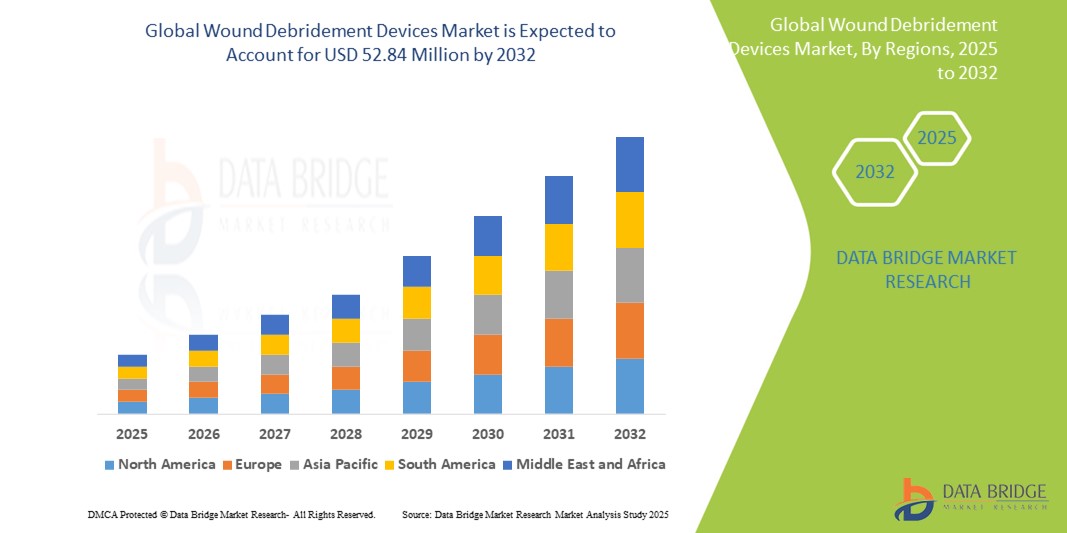
- The global wound debridement devices market size was valued at USD 34.17 million in 2024 and is expected to reach USD 52.84 million by 2032, at a CAGR of 5.60% during the forecast period
- The market growth is largely fueled by the growing adoption and technological progress within wound debridement devices and advanced wound care technology, leading to increased digitalization in both hospital and home care settings
- Furthermore, rising prevalence of chronic wounds such as diabetic foot ulcers, pressure ulcers, and venous leg ulcers, coupled with an increasing geriatric population and the rising incidence of diabetes, is establishing advanced wound debridement solutions as the modern standard of care. These converging factors are accelerating the uptake of wound debridement devices solutions, thereby significantly boosting the industry's growth
Wound Debridement Devices Market Analysis
- Wound debridement devices, offering mechanical, enzymatic, or autolytic removal of dead tissue, are increasingly vital components of modern wound care management in both hospital and home settings due to their enhanced efficacy in promoting healing, reducing infection risk, and seamless integration with comprehensive wound care protocols
- The escalating demand for wound debridement devices is primarily fueled by the widespread adoption of advanced wound care technologies, growing prevalence of chronic wounds among consumers, and a rising preference for effective and efficient debridement methods
- North America dominates the wound debridement devices market with the largest revenue share of 40.01% in 2025, characterized by early adoption of advanced wound care technologies, high healthcare expenditure, and a strong presence of key industry players
- Asia-Pacific is expected to be the fastest growing region in the wound debridement devices market with a CAGR of 24.1% during the forecast period, due to increasing healthcare awareness and access, rising disposable incomes, and a growing prevalence of chronic diseases
- The enzymatic segment is expected to dominate the wound debridement devices market with a market share of 43.2% in 2025, driven by its established reputation for selective tissue removal and ease of use across various wound types
Report Scope and Wound Debridement Devices Market Segmentation
|
Attributes |
Wound Debridement Devices Key Market Insights |
|
Segments Covered |
|
|
Countries Covered |
North America
Europe
Asia-Pacific
Middle East and Africa
South America
|
|
Key Market Players |
|
|
Market Opportunities |
|
|
Value Added Data Infosets |
In addition to the insights on market scenarios such as market value, growth rate, segmentation, geographical coverage, and major players, the market reports curated by the Data Bridge Market Research also include import export analysis, production capacity overview, production consumption analysis, price trend analysis, climate change scenario, supply chain analysis, value chain analysis, raw material/consumables overview, vendor selection criteria, PESTLE Analysis, Porter Analysis, and regulatory framework. |
Wound Debridement Devices Market Trends
“Enhanced Convenience Through AI and Digital Integration”
- A significant and accelerating trend in the global wound debridement devices market is the deepening integration with digital technologies and data analytics platforms. This fusion of technologies is significantly enhancing user convenience and control over their wound management
- For instance, advanced wound imaging devices seamlessly integrate with digital platforms, allowing clinicians to track wound healing progress with precision. Similarly, data from connected dressings can be accessed via secure interfaces, offering a discreet wound management solution
- Digital integration in wound debridement enables features such as analyzing wound characteristics to potentially suggest optimal debridement methods and providing more intelligent alerts based on healing trajectories. For instance, some AI-powered platforms utilize machine learning to improve wound assessment accuracy over time and can send intelligent notifications if healing stalls or complications are detected. Furthermore, remote monitoring capabilities offer users and clinicians the ease of hands-free operation, allowing them to track and manage wounds remotely using digital interfaces
- The seamless integration of wound debridement data with electronic health records and broader healthcare platforms facilitates centralized control over various aspects of the patient's care environment. Through a single interface, users can manage their wound care alongside medication adherence, activity levels, and other health metrics, creating a unified and proactive healing experience
- This trend towards more intelligent, intuitive, and interconnected wound management systems is fundamentally reshaping user expectations for healthcare. Consequently, companies such as Smith+Nephew and Medtronic are developing digitally-enabled wound debridement solutions with features such as remote monitoring of wound status and data analytics compatibility with hospital EHR systems
- The demand for wound debridement devices that offer seamless digital and data integration is growing rapidly across both hospital and home care sectors, as healthcare providers and patients increasingly prioritize convenience and comprehensive digital health functionality
Wound Debridement Devices Market Dynamics
Driver
“Growing Need Due to Rising Chronic Wound Prevalence and Advanced Healthcare Adoption”
- The increasing prevalence of chronic wounds among homeowners and businesses (referring to care facilities and home healthcare), coupled with the accelerating adoption of advanced healthcare ecosystems, is a significant driver for the heightened demand for wound debridement devices
- For instance, in April 2024, Smith+Nephew announced the launch of a new enzymatic debridement solution with enhanced efficacy, looking forward to integrating state-of-the-art formulations into their existing portfolio. Such strategies by key companies are expected to drive the Wound Debridement Devices industry growth in the forecast period
- As consumers (patients and healthcare providers) become more aware of the challenges associated with chronic wounds and seek enhanced solutions for their management, advanced debridement devices offer features such as targeted tissue removal, reduced healing times, and infection control benefits, providing a compelling upgrade over traditional wound care methods
- Furthermore, the growing popularity of advanced wound care protocols and the desire for interconnected healthcare solutions are making sophisticated debridement devices an integral component of these systems, offering seamless integration with other wound care products and platforms
- The convenience of effective and efficient debridement, remote monitoring capabilities for healthcare professionals, and the ability to manage wound care through advanced medical devices are key factors propelling the adoption of wound debridement devices in both hospital and home healthcare sectors. The trend towards advanced wound management practices and the increasing availability of user-friendly debridement options further contribute to market growth
Restraint/Challenge
“Concerns Regarding Infection Risks and High Treatment Costs”
- Concerns surrounding the potential for infection during debridement procedures and the overall high cost of advanced wound care pose a significant challenge to broader market penetration. As wound debridement involves tissue removal, there is a risk of introducing infections if proper sterilization and techniques are not followed, raising anxieties among patients and healthcare providers
- For instance, reports of post-debridement infections have made some patients and clinicians hesitant to adopt more aggressive or advanced wound debridement solutions
- Addressing these infection control concerns through stringent sterilization protocols, advanced antimicrobial technologies, and comprehensive training for healthcare professionals is crucial for building patient and provider trust. Companies such as Mölnlycke and Coloplast emphasize their sterile packaging and infection prevention features in their product offerings to reassure potential users
- In addition, the relatively high initial cost of some advanced wound debridement devices and therapies compared to traditional dressings can be a barrier to adoption for price-sensitive healthcare facilities and patients, particularly in developing regions or for budget-constrained individuals. While basic debridement tools remain available, premium technologies such as NPWT or advanced biologics often come with a higher price tag
- Overcoming these challenges through enhanced infection control measures, clear communication of the benefits of advanced debridement, and the development of more cost-effective wound debridement options will be vital for sustained market growth
Wound Debridement Devices Market Scope
The market is segmented on the basis of product, method, wound type, and end user.
- By Product
On the basis of product, the wound debridement devices market is segmented into hydrosurgical, low-frequency ultrasound, mechanical, larval therapy, and others. The mechanical segment dominates the largest market revenue share in 2025, driven by its established use in various wound types and ease of application. Healthcare providers often prioritize mechanical debridement for its direct and effective removal of non-viable tissue. The market also sees strong demand for mechanical methods due to their accessibility and applicability across different healthcare settings.
The hydrosurgical segment is anticipated to witness the fastest growth rate of 21.7% from 2025 to 2032, fueled by increasing adoption in hospitals and specialized wound care centers. Hydrosurgical devices offer precise and selective debridement, minimizing damage to surrounding healthy tissue, and their integration with advanced wound management protocols provides clinicians with enhanced control and outcomes. The effectiveness in complex wounds and the growing availability of advanced hydrosurgical systems also contribute to their rising popularity.
- By Method
On the basis of method, the wound debridement devices market is segmented into autolytic, surgical, enzymatic, mechanical, and maggot. The enzymatic method held the largest market revenue share of 43.2% in 2025, driven by its ability to selectively target and break down necrotic tissue without harming viable tissue, and the ease of application in various wound care settings. Enzymatic debridement is a popular choice for its non-invasive nature and effectiveness in chronic wounds.
The surgical segment is expected to witness the fastest CAGR from 2025 to 2032, driven by the increasing need for rapid and aggressive debridement in severe or infected wounds, particularly in hospital settings. Surgical debridement offers immediate removal of devitalized tissue and is often a critical step in managing complex wound cases.
- By Wound Type
On the basis of wound type, the wound debridement devices market is segmented into surgical wounds, diabetic ulcers, burns, pressure ulcers, venous ulcers, and others. The diabetic ulcers segment held the largest market revenue share in 2025, driven by the rising prevalence of diabetes globally and the associated increase in diabetic foot ulcers requiring advanced wound care and debridement. The growing awareness of the complications of diabetic ulcers and the need for effective management strategies contribute to this dominance.
The burns segment is expected to witness the fastest CAGR from 2025 to 2032, favored for the critical role of early and effective debridement in improving patient outcomes and reducing the risk of infection in burn injuries. Advances in burn care and the availability of specialized debridement techniques for burn wounds are driving this growth.
- By End User
On the basis of end user, the wound debridement devices market is segmented into hospitals, wound care centers, ambulatory centers, home healthcare, clinics, and community healthcare. The hospitals segment accounted for the largest market revenue share in 2024, driven by the high volume of surgical procedures, trauma cases, and the management of complex chronic wounds that require advanced debridement therapies. Hospitals are primary centers for acute and specialized wound care
The home healthcare segment is expected to witness the fastest CAGR from 2025 to 2032, driven by the increasing trend of patients receiving wound care at home, the growing availability of user-friendly debridement products suitable for home use, and the cost-effectiveness and convenience of home-based care for chronic wounds. The shift towards patient-centric care and the development of telehealth services further support this growth
Wound Debridement Devices Market Regional Analysis
- North America dominates the wound debridement devices market with the largest revenue share of 40.01% in 2024, driven by a growing demand for advanced wound care and management, as well as increased awareness of sophisticated debridement technologies
- Healthcare providers and patients in the region highly value the efficacy, improved healing outcomes, and reduced infection risks offered by advanced debridement devices compared to traditional methods
- This widespread adoption is further supported by high healthcare expenditure, a technologically advanced medical infrastructure, and the growing preference for minimally invasive and effective wound treatments, establishing advanced debridement solutions as a favored approach for both acute and chronic wound management
U.S. Wound Debridement Devices Market Insight
The U.S. wound debridement devices market captured the largest revenue share of 73.2% within North America in 2025, fueled by the swift uptake of advanced wound care technologies and the expanding trend of home healthcare. Healthcare providers are increasingly prioritizing the enhancement of patient outcomes through effective and efficient debridement solutions. The growing preference for advanced wound management protocols, combined with robust demand for minimally invasive techniques and home-based care options, further propels the wound debridement devices industry. Moreover, the increasing integration of digital health technologies and data analytics in wound care is significantly contributing to the market's expansion.
Europe Wound Debridement Devices Market Insight
The European wound debridement devices market is projected to expand at a substantial CAGR throughout the forecast period, primarily driven by stringent healthcare regulations and the escalating need for enhanced wound management in hospitals and home settings. The increase in the aging population, coupled with the demand for advanced medical devices, is fostering the adoption of smart debridement technologies. European healthcare systems are also drawn to the cost-effectiveness and improved patient outcomes these devices offer. The region is experiencing significant growth across hospital, wound care center, and home healthcare applications, with advanced debridement being incorporated into both standard care and specialized treatments.
U.K. Wound Debridement Devices Market Insight
The U.K. wound debridement devices market is anticipated to grow at a noteworthy CAGR during the forecast period, driven by the escalating trend of advanced wound care practices and a desire for heightened efficacy and convenience in wound management. In addition, concerns regarding chronic wound prevalence and the need for effective treatment are encouraging both hospitals and home healthcare providers to choose advanced debridement solutions. The UK’s embrace of innovative medical technologies, alongside its robust healthcare infrastructure, is expected to continue to stimulate market growth.
Germany Wound Debridement Devices Market Insight
The German wound debridement devices market is expected to expand at a considerable CAGR during the forecast period, fueled by increasing awareness of advanced wound care benefits and the demand for technologically advanced, patient-centric solutions. Germany’s well-developed healthcare system, combined with its emphasis on innovation and quality, promotes the adoption of sophisticated debridement devices, particularly in hospital and specialized clinics. The integration of advanced debridement with comprehensive wound management protocols is also becoming increasingly prevalent, with a strong preference for effective, evidence-based solutions aligning with local healthcare standards.
Asia-Pacific Wound Debridement Devices Market Insight
The Asia-Pacific wound debridement devices market is poised to grow at the fastest CAGR of 24.1% in 2025, driven by increasing healthcare awareness, rising disposable incomes, and technological advancements in countries such as China, Japan, and India. The region's growing inclination towards advanced medical treatments, supported by government initiatives promoting better healthcare access, is driving the adoption of advanced debridement technologies. Furthermore, as APAC emerges as a manufacturing hub for medical devices and components, the affordability and accessibility of wound debridement devices are expanding to a wider patient and provider base.
Japan Wound Debridement Devices Market Insight
The Japan wound debridement devices market is gaining momentum due to the country’s high-tech culture, rapid aging population, and demand for convenience in healthcare. The Japanese market places a significant emphasis on quality and patient comfort, and the adoption of advanced debridement is driven by the increasing number of chronic wound cases and the need for effective, less invasive treatments. The integration of advanced debridement with other IoT-enabled healthcare devices and remote monitoring systems is fueling growth. Moreover, Japan's aging population is likely to spur demand for easier-to-use, effective wound care solutions in both residential and healthcare facilities.
China Wound Debridement Devices Market Insight
The China wound debridement devices market is expected to witness the highest compound annual growth rate (CAGR) of 7.8% in the market, attributed to the country's expanding middle class, rapid urbanization, and high rates of technological adoption in healthcare. China stands as one of the largest markets for medical devices, and advanced wound debridement is becoming increasingly popular in hospitals, clinics, and home healthcare settings. The push towards improved healthcare infrastructure and the availability of affordable wound debridement devices options, alongside strong domestic manufacturers, are key factors propelling the market in China.
Wound Debridement Devices Market Share
The wound debridement devices industry is primarily led by well-established companies, including:
- Smith+Nephew (U.K.)
- Medtronic (Ireland)
- Zimmer Biomet (U.S.)
- Integra LifeSciences Corporation (U.S.)
- Abbott (U.S.)
- B. Braun SE (Germany)
- Mölnlycke Health Care AB (Sweden)
- Coloplast Group (Denmark)
- Organogenesis Inc. (U.S.)
- Bioventus LLC. (U.S.)
- Hollister Incorporated (U.S.)
- Lohmann & Rauscher GmbH & Co. KG (Germany)
- Arobella Medical (U.S.)
- Essity Aktiebolag (Sweden)
- Advanced Medical Solutions Group plc (U.K.)
- Brightwake Ltd (U.K.)
- BioMonde (U.K.)
- DeRoyal Industries, Inc. (U.S.)
- Italia Medica SRL (Italy)
- Söring GmbH (Germany)
- Olympus Corporation (Japan)
Latest Developments in Global Wound Debridement Devices Market
- In July 2024, Mölnlycke Health Care announced a USD 15 million investment in MediWound Ltd., a global leader in next-generation enzymatic therapeutics for non-surgical wound debridement. This strategic investment aligns with Mölnlycke's strategy to bring radical innovations into the wound care space and provide alternative solutions to traditional debridement, aiming to improve clinical outcomes and patient experience
- In April 2024, Mölnlycke also signed an agreement to acquire P.G.F. Industry Solutions GmbH, the Austrian manufacturer of Granudacyn wound cleansing and moisturising solutions. This acquisition further strengthens Mölnlycke's portfolio in wound care, including products that support the debridement process by cleansing the wound bed
- In September 2023, Medtronic launched its SurgiSleeve Wound Protector, which, while primarily a wound protector, plays a role in facilitating better surgical site exposure and protection during procedures, which can indirectly support effective debridement and wound management by minimizing contamination
- In October 2023, Zimmer Biomet highlighted new product introductions and advancements in its portfolio for musculoskeletal healthcare during its 2023 financial reports, often including surgical instruments and tools that support effective wound debridement in orthopedic procedures. While a specific debridement tool launch wasn't individually highlighted in their public summaries, their ongoing innovation in surgical solutions is relevant
SKU-
Get online access to the report on the World's First Market Intelligence Cloud
- Interactive Data Analysis Dashboard
- Company Analysis Dashboard for high growth potential opportunities
- Research Analyst Access for customization & queries
- Competitor Analysis with Interactive dashboard
- Latest News, Updates & Trend analysis
- Harness the Power of Benchmark Analysis for Comprehensive Competitor Tracking
Research Methodology
Data collection and base year analysis are done using data collection modules with large sample sizes. The stage includes obtaining market information or related data through various sources and strategies. It includes examining and planning all the data acquired from the past in advance. It likewise envelops the examination of information inconsistencies seen across different information sources. The market data is analysed and estimated using market statistical and coherent models. Also, market share analysis and key trend analysis are the major success factors in the market report. To know more, please request an analyst call or drop down your inquiry.
The key research methodology used by DBMR research team is data triangulation which involves data mining, analysis of the impact of data variables on the market and primary (industry expert) validation. Data models include Vendor Positioning Grid, Market Time Line Analysis, Market Overview and Guide, Company Positioning Grid, Patent Analysis, Pricing Analysis, Company Market Share Analysis, Standards of Measurement, Global versus Regional and Vendor Share Analysis. To know more about the research methodology, drop in an inquiry to speak to our industry experts.
Customization Available
Data Bridge Market Research is a leader in advanced formative research. We take pride in servicing our existing and new customers with data and analysis that match and suits their goal. The report can be customized to include price trend analysis of target brands understanding the market for additional countries (ask for the list of countries), clinical trial results data, literature review, refurbished market and product base analysis. Market analysis of target competitors can be analyzed from technology-based analysis to market portfolio strategies. We can add as many competitors that you require data about in the format and data style you are looking for. Our team of analysts can also provide you data in crude raw excel files pivot tables (Fact book) or can assist you in creating presentations from the data sets available in the report.