


What is the Vocational Rehabilitation Service Market Size and Overview?
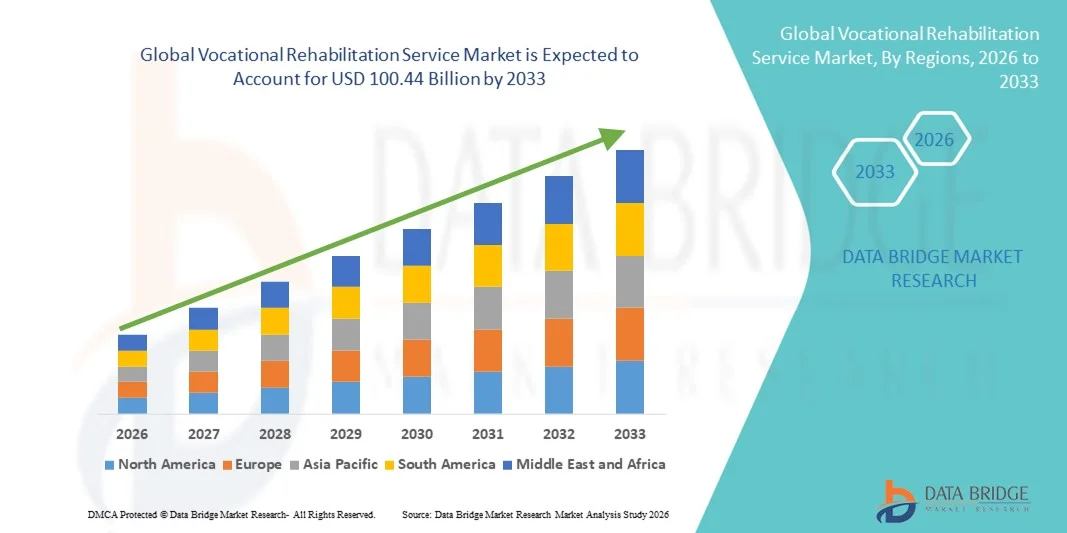
- The global vocational rehabilitation service market size was valued at USD 92.39 billion in 2025 and is expected to reach USD 100.44 billion by 2033, at a CAGR of 1.05% during the forecast period
- The market growth is largely fueled by increasing awareness of disability rights, government initiatives, and employer programs aimed at integrating differently-abled and injured individuals into the workforce, leading to higher adoption of vocational rehabilitation services across industries
- Furthermore, rising demand for personalized rehabilitation programs, career counseling, and skill development solutions is driving organizations and healthcare providers to implement comprehensive vocational support, thereby significantly boosting the industry's growth
Market Size & Forecast
- Global Market Value (2025): USD 92.39 billion
- Expected Market Value (2033): USD 100.44 billion
- Forecast CAGR (2025–2033): 1.05%
Vocational Rehabilitation Service Market Analysis
- Vocational rehabilitation services, providing structured support, training, and guidance for individuals with disabilities or work-related injuries, are increasingly essential in modern workforce management and inclusive employment strategies across both public and private sectors due to their role in enhancing employability, independence, and workplace integration.
- The escalating demand for vocational rehabilitation services is primarily fueled by growing awareness of disability inclusion, government policies promoting workforce reintegration, and rising employer initiatives to ensure equitable access to employment opportunities
- North America dominated the vocational rehabilitation service market with the largest revenue share of 40.6% in 2025, characterized by strong regulatory frameworks, early adoption of workplace inclusion programs, and a high concentration of specialized service providers, with the U.S. witnessing substantial growth in rehabilitation initiatives for veterans, injured workers, and individuals with disabilities, driven by public-private collaborations and technological adoption in service delivery
- Asia-Pacific is expected to be the fastest growing region in the vocational rehabilitation service market during the forecast period due to increasing government investments, rising awareness about workforce inclusion, and expanding demand for skill development programs among differently-abled populations
- Job search and placement assistance segment dominated the vocational rehabilitation service market with a market share of 45.9% in 2025, driven by its critical role in equipping individuals with practical skills, improving employment outcomes, and facilitating seamless workplace integration
Report Scope and Vocational Rehabilitation Service Market Segmentation
|
Attributes |
Vocational Rehabilitation Service Key Market Insights |
|
Segments Covered |
|
|
Countries Covered |
North America
Europe
Asia-Pacific
Middle East and Africa
South America
|
|
Key Market Players |
|
|
Market Opportunities |
|
|
Value Added Data Infosets |
|
What is the Key Trend in the Vocational Rehabilitation Service Market?
Digital Transformation Through Virtual and AI-Enabled Rehabilitation Services
- A significant and accelerating trend in the global vocational rehabilitation service market is the increasing adoption of digital platforms, tele-rehabilitation, and AI-enabled assessment tools that enhance service accessibility, personalization, and continuity of care across diverse populations
- For instance, several rehabilitation providers have introduced virtual vocational counseling and online skill-training programs that allow individuals with disabilities or work-related injuries to receive guidance, aptitude assessments, and career planning support remotely
- AI integration in vocational rehabilitation services enables data-driven evaluation of individual capabilities, identification of suitable career pathways, and personalized training recommendations. For instance, some platforms leverage AI-based analytics to match candidates with appropriate job roles based on functional abilities, prior experience, and labor market demand, while also monitoring rehabilitation progress
- The integration of vocational rehabilitation services with digital workforce development platforms facilitates centralized management of training, job placement, and employer coordination. Through a single digital interface, service providers can track rehabilitation outcomes, connect individuals with employers, and manage long-term employment support programs
- This trend toward more technology-enabled, scalable, and outcome-focused rehabilitation models is reshaping expectations for vocational support services. Consequently, organizations such as public rehabilitation agencies and private providers are increasingly investing in digital tools that enhance service efficiency, accessibility, and employment success rates
- The demand for digitally delivered vocational rehabilitation services is growing across both public and private sectors, as governments, insurers, and employers seek cost-effective solutions that improve workforce reintegration and long-term employment outcomes
- Increasing integration of vocational rehabilitation services with mental health and wellness programs is supporting more holistic and sustainable employment outcomes
Vocational Rehabilitation Service Market Dynamics
Driver
Increasing Focus on Workforce Reintegration and Inclusive Employment
- The rising emphasis on workforce reintegration for individuals with disabilities, chronic illnesses, or work-related injuries, combined with expanding inclusive employment policies, is a major driver fueling demand for vocational rehabilitation services globally
- For instance, in March 2025, several government agencies in North America and Europe expanded funding programs aimed at improving employment outcomes for injured workers and differently-abled individuals, encouraging greater utilization of vocational rehabilitation services
- As employers face labor shortages and growing regulatory pressure to adopt inclusive hiring practices, vocational rehabilitation services provide structured support such as job readiness training, functional assessments, and workplace accommodation guidance
- Furthermore, the growing recognition of vocational rehabilitation as a cost-effective alternative to long-term disability benefits is encouraging insurers and employers to integrate these services into return-to-work and employee wellness programs
- The ability of vocational rehabilitation services to reduce unemployment duration, improve productivity, and enhance long-term workforce participation is a key factor driving adoption across public agencies, healthcare systems, and corporate employers. The increasing collaboration between rehabilitation providers, employers, and policymakers further strengthens market growth
- Rising incidence of workplace injuries and chronic health conditions is increasing the need for structured rehabilitation and re-employment support services
- Expanding corporate social responsibility initiatives focused on disability inclusion are further accelerating employer-led demand for vocational rehabilitation programs
Restraint/Challenge
Service Accessibility Gaps and Regulatory Complexity
- Challenges related to uneven service accessibility, limited availability of trained rehabilitation professionals, and complex regulatory requirements pose significant barriers to the widespread adoption of vocational rehabilitation services in several regions
- For instance, rural and underserved areas in developing economies often face shortages of qualified vocational rehabilitation specialists, limiting access to structured rehabilitation and employment support services
- Addressing these challenges requires significant investment in workforce training, standardized service frameworks, and cross-sector coordination. While digital platforms can partially bridge accessibility gaps, regulatory differences across regions often complicate service delivery and reimbursement
- In addition, variations in disability classification standards, funding mechanisms, and employment laws can increase administrative burdens for service providers and slow program implementation. Smaller providers may struggle to comply with evolving regulatory requirements while maintaining service quality
- Although policy reforms and increased public funding are gradually improving access, inconsistencies in service quality and regulatory oversight continue to restrain market expansion. Overcoming these challenges through harmonized regulations, capacity building, and technology-enabled service delivery will be critical for sustained market growth
- Limited awareness among employers and beneficiaries regarding available vocational rehabilitation programs can restrict service uptake
- Fragmentation between healthcare, employment, and social welfare systems further complicates coordinated rehabilitation and job placement efforts
Vocational Rehabilitation Service Market Scope
The market is segmented on the basis of service, disability type, and care settings.
- By Service
On the basis of service, the global vocational rehabilitation service market is segmented into counselling and guidance, job search and placement assistance, vocational and other training services, evaluation of physical and mental impairments, on-the-job or personal assistance services, interpreter services, occupational licenses, technical assistance for self-employment, supported employment services, and others. The job search and placement assistance segment dominated the market with the largest revenue share of 45.9% in 2025, driven by its direct impact on employment outcomes and workforce reintegration. This service plays a critical role in matching rehabilitated individuals with suitable job opportunities based on their functional abilities, skills, and limitations. Governments, insurers, and employers prioritize placement-focused programs as they shorten unemployment duration and reduce long-term disability costs. In addition, the increasing collaboration between rehabilitation providers and employers has strengthened placement success rates. The growing use of digital job-matching platforms and employer networks further enhances the effectiveness of this segment. As employment is the ultimate objective of vocational rehabilitation, this segment continues to command strong demand globally.
The vocational and other training services segment is anticipated to witness the fastest growth rate during the forecast period, fueled by rapid changes in job skill requirements and labor market dynamics. Individuals undergoing rehabilitation increasingly require reskilling or upskilling to transition into less physically demanding or alternative occupations. This segment benefits from rising investments in technical training, digital literacy programs, and sector-specific certifications. Governments and workforce development agencies are expanding training initiatives to improve employability among disabled and injured individuals. The integration of online and hybrid training models further supports scalability and accessibility. As labor markets evolve, demand for adaptive vocational training services is expected to accelerate significantly.
- By Disability
On the basis of disability, the market is segmented into physical disability, mental disability, and disability occurred during the job. The physical disability segment dominated the vocational rehabilitation service market in 2025, driven by the high prevalence of mobility-related impairments, musculoskeletal injuries, and chronic physical conditions. Many individuals with physical disabilities require structured rehabilitation, workplace accommodation support, and job placement assistance to re-enter the workforce. This segment benefits from well-established rehabilitation frameworks, particularly in developed economies with strong disability support systems. Employers are more familiar with accommodating physical impairments compared to other disability types, facilitating smoother workforce reintegration. In addition, workplace injuries and age-related physical limitations continue to increase demand for physical rehabilitation services. As a result, this segment maintains a substantial share of overall market revenue.
The mental disability segment is expected to witness the fastest growth during the forecast period, driven by increasing awareness of mental health conditions and their impact on employability. Rising incidences of stress-related disorders, depression, anxiety, and cognitive impairments have heightened demand for specialized vocational rehabilitation programs. Governments and employers are increasingly recognizing the importance of mental health-inclusive employment policies. Advances in psychological assessment tools and counseling methodologies are improving rehabilitation outcomes for individuals with mental disabilities. Moreover, the integration of mental health support with vocational training is gaining traction. This growing recognition and reduced stigma are accelerating market growth for this segment.
- By Care Settings
On the basis of care settings, the vocational rehabilitation service market is segmented into in-patient and out-patient settings. The out-patient segment dominated the market in 2025, driven by its cost-effectiveness, flexibility, and suitability for long-term rehabilitation and employment support. Most vocational rehabilitation services, such as counseling, job training, and placement assistance, can be effectively delivered in out-patient settings. This model allows individuals to receive rehabilitation support while maintaining community and family engagement. Governments and insurers favor out-patient services as they reduce healthcare costs and infrastructure burden. The increasing adoption of tele-rehabilitation and digital counseling platforms further strengthens this segment. As a result, out-patient care remains the preferred setting for vocational rehabilitation services globally.
The in-patient segment is anticipated to experience the fastest growth rate during the forecast period, driven by rising cases of severe injuries, complex disabilities, and co-existing medical conditions requiring intensive rehabilitation. In-patient settings provide structured, multidisciplinary support involving medical professionals, therapists, and vocational counselors. This segment benefits from growing investments in specialized rehabilitation centers and hospitals. Patients with traumatic injuries or severe functional impairments often require in-patient care before transitioning to out-patient or community-based services. The emphasis on comprehensive recovery and early intervention supports segment growth. As rehabilitation models become more integrated, demand for in-patient vocational rehabilitation services is expected to increase steadily.
Vocational Rehabilitation Service Market Regional Analysis
- North America dominated the vocational rehabilitation service market with the largest revenue share of 40.6% in 2025, characterized by strong regulatory frameworks, early adoption of workplace inclusion programs, and a high concentration of specialized service providers
- Stakeholders in the region highly value structured rehabilitation pathways, employment-focused outcomes, and coordinated support services that facilitate the return of individuals with disabilities or work-related injuries to sustainable employment
- This widespread adoption is further supported by advanced healthcare infrastructure, high public and private funding levels, and growing collaboration between rehabilitation providers, employers, and policymakers, establishing vocational rehabilitation services as a critical component of inclusive workforce development strategies across the region
U.S. Vocational Rehabilitation Service Market Insight
The U.S. vocational rehabilitation service market captured the largest revenue share of 80% within North America in 2025, fueled by strong federal and state-funded rehabilitation programs and a well-established disability support ecosystem. The country places significant emphasis on workforce reintegration for individuals with physical and mental disabilities as well as work-related injuries. Growing collaboration between public agencies, insurers, and employers is strengthening service delivery and employment outcomes. Moreover, increasing adoption of digital rehabilitation tools and outcome-based service models is further contributing to market expansion across the U.S.
Europe Vocational Rehabilitation Service Market Insight
The Europe vocational rehabilitation service market is projected to expand at a substantial CAGR throughout the forecast period, primarily driven by stringent labor protection laws and strong social welfare systems. Increasing focus on inclusive employment, aging workforce challenges, and rising prevalence of chronic health conditions are fostering demand for vocational rehabilitation services. European countries are actively investing in skill redevelopment and workforce reintegration initiatives. The region is experiencing steady growth across public healthcare systems, employer-led programs, and community-based rehabilitation services, supported by coordinated policy frameworks.
U.K. Vocational Rehabilitation Service Market Insight
The U.K. vocational rehabilitation service market is anticipated to grow at a noteworthy CAGR during the forecast period, driven by increasing emphasis on return-to-work programs and disability-inclusive employment policies. Government-backed initiatives aimed at reducing long-term unemployment among disabled individuals are encouraging service adoption. Employers in the U.K. are increasingly integrating vocational rehabilitation into occupational health and wellness strategies. In addition, rising awareness of mental health-related work impairments is expected to further stimulate market growth across both public and private sectors.
Germany Vocational Rehabilitation Service Market Insight
The Germany vocational rehabilitation service market is expected to expand at a considerable CAGR during the forecast period, fueled by a strong social insurance system and proactive labor market reintegration policies. Germany’s structured approach to disability management and workforce participation supports consistent demand for rehabilitation services. The country emphasizes early intervention, skill retraining, and long-term employability for individuals with disabilities. Integration of vocational rehabilitation within healthcare and employment systems, along with a focus on quality and compliance, is driving sustained market growth.
Asia-Pacific Vocational Rehabilitation Service Market Insight
The Asia-Pacific vocational rehabilitation service market is poised to grow at the fastest CAGR during the forecast period, driven by rising awareness of disability inclusion, expanding healthcare access, and increasing government investments in workforce development. Rapid urbanization and economic growth in countries such as China, Japan, and India are increasing demand for structured rehabilitation and employment support services. Governments across the region are strengthening policies focused on skill development and social inclusion. In addition, improving healthcare infrastructure is enhancing access to vocational rehabilitation services for a broader population base.
Japan Vocational Rehabilitation Service Market Insight
The Japan vocational rehabilitation service market is gaining momentum due to the country’s aging population, high workforce participation expectations, and strong emphasis on social inclusion. Demand is driven by the need to support older workers and individuals with physical or cognitive impairments in maintaining employment. Japan’s structured healthcare and employment systems facilitate integrated rehabilitation and job placement services. The growing use of technology-enabled rehabilitation tools and employer-supported reintegration programs is further fueling market growth in the country.
India Vocational Rehabilitation Service Market Insight
The India vocational rehabilitation service market accounted for the largest revenue share in Asia Pacific in 2025, supported by a large working-age population and increasing policy focus on disability inclusion. Rapid urbanization, expanding healthcare access, and rising awareness of vocational rehabilitation benefits are driving market growth. Government initiatives promoting skill development and employment for persons with disabilities are strengthening service adoption. In addition, the growing involvement of non-governmental organizations and private service providers is improving access to vocational rehabilitation services across both urban and semi-urban regions.
Which are the Top Companies in Vocational Rehabilitation Service Market?
The Vocational Rehabilitation Service industry is primarily led by well-established companies, including:
- Ingeus UK (U.K.)
- Fedcap (U.S.)
- European Platform for Rehabilitation (Belgium)
- Association of Vocational Rehabilitation Service Providers, Inc. (U.S.)
- Vocational Rehabilitation Association (VRA) (U.K.)
- Easterseals Northern Indiana Inc. (U.S.)
- RISE Inc. (U.S.)
- Georgia Vocational Rehabilitation Agency (U.S.)
- Alabama Department of Rehabilitation Services (U.S.)
- Alaska Department of Labor and Workforce Development – VR (U.S.)
- Arizona Rehabilitation Services Administration (U.S.)
- Arkansas Rehabilitation Services (U.S.)
- California Department of Rehabilitation (U.S.)
- Colorado Division of Vocational Rehabilitation (U.S.)
- Connecticut Department of Rehabilitation Services (U.S.)
- Delaware Division of Vocational Rehabilitation (U.S.)
- District of Columbia Vocational Rehabilitation Services (U.S.)
- Samarthanam Trust for the Disabled (India)
- VRNet International (U.S.)
What are the Recent Developments in Global Vocational Rehabilitation Service Market?
- In December 2025, the Uttar Pradesh government in India received cabinet approval to establish Divyangjan Empowerment Centres in all 18 divisional headquarters, offering disability identification, counselling, rehabilitation, assistive technology, and vocational training to improve skill development and employment opportunities
- In December 2025, the U.S. Department of Veterans Affairs modernized its Vocational Rehabilitation and Employment (VR&E) program with a new case management system, Readiness and Employment System (RES), completing phase 1 rollout ahead of schedule to improve support for veterans in preparing for, finding, and maintaining meaningful employment; the system reduces manual processes and cuts application processing times significantly, allowing veterans to begin individualized rehabilitation plans faster
- In September 2025, Uttarakhand inaugurated its first modern multi-purpose District Disability Rehabilitation Centre (DDRC) in Dehradun, providing vocational training, counselling, assistive device distribution, and employment support services under one roof to improve workforce inclusion
- In July 2025, the Georgia Vocational Rehabilitation Agency (GVRA) announced serving over 24,700 students with disabilities in fiscal year 2025 a 36% increase from 2024 through enhanced pre-employment transition services including job readiness training, work exploration, and work-based learning
- In June 2025, the U.S. Department of Education issued a Federal Register notice prioritizing the development of innovative and improved training programs for vocational rehabilitation personnel and service delivery, aimed at quality employment outcomes for individuals with disabilities

- Interactive Data Analysis Dashboard
- Company Analysis Dashboard for high growth potential opportunities
- Research Analyst Access for customization & queries
- Competitor Analysis with Interactive dashboard
- Latest News, Updates & Trend analysis
- Harness the Power of Benchmark Analysis for Comprehensive Competitor Tracking
Data collection and base year analysis are done using data collection modules with large sample sizes. The stage includes obtaining market information or related data through various sources and strategies. It includes examining and planning all the data acquired from the past in advance. It likewise envelops the examination of information inconsistencies seen across different information sources. The market data is analysed and estimated using market statistical and coherent models. Also, market share analysis and key trend analysis are the major success factors in the market report. To know more, please request an analyst call or drop down your inquiry.
The key research methodology used by DBMR research team is data triangulation which involves data mining, analysis of the impact of data variables on the market and primary (industry expert) validation. Data models include Vendor Positioning Grid, Market Time Line Analysis, Market Overview and Guide, Company Positioning Grid, Patent Analysis, Pricing Analysis, Company Market Share Analysis, Standards of Measurement, Global versus Regional and Vendor Share Analysis. To know more about the research methodology, drop in an inquiry to speak to our industry experts.
Data Bridge Market Research is a leader in advanced formative research. We take pride in servicing our existing and new customers with data and analysis that match and suits their goal. The report can be customized to include price trend analysis of target brands understanding the market for additional countries (ask for the list of countries), clinical trial results data, literature review, refurbished market and product base analysis. Market analysis of target competitors can be analyzed from technology-based analysis to market portfolio strategies. We can add as many competitors that you require data about in the format and data style you are looking for. Our team of analysts can also provide you data in crude raw excel files pivot tables (Fact book) or can assist you in creating presentations from the data sets available in the report.













