


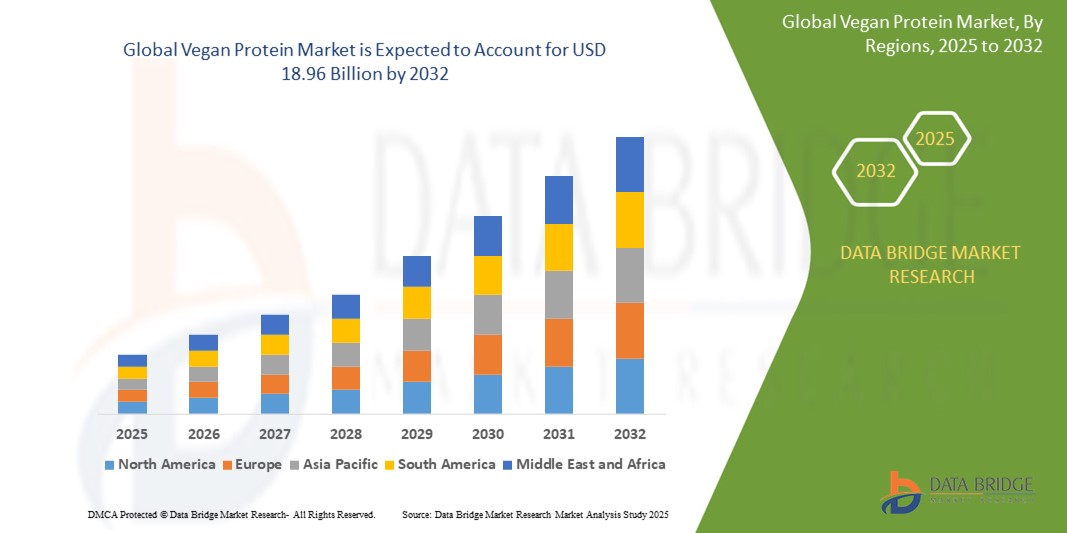
Vegan Protein Market Size
- The global vegan protein market was valued at USD 10.90 billion in 2024 and is expected to reach USD 18.96 billion by 2032
- During the forecast period of 2025 to 2032 the market is likely to grow at a CAGR of 7.17%, primarily driven by increasing awareness towards health benefits of plant-based diets
- This growth is driven by factors such as disease prevention, better digestion, and social influence
Vegan Protein Market Analysis
- The vegan protein market encompasses the production and sale of protein products derived from plant sources, excluding any animal-derived ingredients. This market includes a variety of protein sources such as peas, soy, rice, hemp, and legumes, catering to the increasing demand for health-conscious, sustainable, and ethical food options
- The vegan protein market is experiencing rapid growth, driven by increasing health consciousness, environmental concerns, and ethical considerations. Consumers are shifting towards plant-based diets, seeking alternatives to animal-derived proteins for both health benefits and sustainability
- Key players are expanding their product lines to include diverse sources such as pea, soy, rice, and hemp proteins. Innovations in taste and texture are enhancing appeal, particularly in snacks, beverages, and meal replacements
- For instance, Beyond Meat, a prominent plant-based protein company, partnered with Starbucks in China to launch vegan meat alternatives across over 3,000 locations. This move reflects how major brands are capitalizing on vegan protein trends to tap into health-conscious and environmentally aware consumers in fast-growing markets such as Asia-Pacific
- In addition, the rise of flexitarian diets is broadening the consumer base. Overall, the vegan protein market is poised for continued expansion, reflecting a significant trend in dietary preferences worldwide
Report Scope and Vegan Protein Market Segmentation
|
Attributes |
Vegan Protein Market Key Market Insights |
|
|
|
Countries Covered |
North America
Europe
Asia-Pacific
Middle East and Africa
South America
|
|
Key Market Players |
|
|
Market Opportunities |
|
|
Value Added Data Infosets |
In addition to the insights on market scenarios such as market value, growth rate, segmentation, geographical coverage, and major players, the market reports curated by the Data Bridge Market Research also include in-depth expert analysis, pricing analysis, brand share analysis, consumer survey, demography analysis, supply chain analysis, value chain analysis, raw material/consumables overview, vendor selection criteria, PESTLE Analysis, Porter Analysis, and regulatory framework. |
Vegan Protein Market Trends
“Increasing Health Consciousness”
- One prominent trend in the global vegan protein market is the increasing health consciousness
- This trend is driven by the growing awareness of the benefits of plant-based diets, including better heart health, weight management, lower cholesterol levels, and reduced risk of chronic diseases
- For instance, brands such as Orgain and Vega are capitalizing on this trend by offering clean-label, high-protein supplements that cater to fitness-focused and health-aware consumers
- The rising demand for natural, allergen-free, and easy-to-digest protein sources is accelerating the shift from animal-based to plant-based protein alternatives
- As consumers continue to prioritize holistic wellness, sustainable nutrition, and active lifestyles, health consciousness is expected to remain a key trend, driving innovation, broadening product portfolios, and reshaping the future of protein consumption
Vegan Protein Market Dynamics
Driver
“Rising Shift Towards Veganism and Flexitarian Diets”
- The growing shift towards veganism and flexitarian diets is a significant driver of the global vegan protein market, driven by increasing consumer awareness of health, environmental, and ethical issues
- As more individuals seek alternatives to animal-based products, plant-based proteins are gaining popularity due to their perceived health benefits and their alignment with sustainable and cruelty-free living
- One of the primary factors contributing to the rise of veganism and flexitarians is the growing research highlighting the health advantages of plant-based diets. Studies have shown that plant protein can reduce the risk of chronic diseases, such as heart disease, diabetes, and certain cancers, while also aids in weight management and improving overall well-being
- Consumers, especially in developed markets, are becoming more conscious of their dietary choices and are actively seeking products that promote health and longevity
- This shift in preferences is encouraging food manufacturers to develop innovative vegan protein products, ranging from protein powders and bars to plant-based meat substitutes, driving growth in the global market
For instance,
- A 2024 report by The Vegan Society found that 36% of U.S. consumers identify as flexitarians, choosing plant-based options several times a week. This has led to mainstream grocery chains such as Walmart and Tesco expanding their vegan protein product lines to meet demand.
- In Germany, known for its high meat consumption, the number of vegans quadrupled between 2016 and 2023. Brands such as Rügenwalder Mühle, a traditional meat company, reported that over 50% of its revenue now comes from plant-based products, including vegan protein-rich items such as soy schnitzels and lentil-based sausages
- As concerns over climate change and sustainability continue to rise, many consumers are opting for more eco-friendly dietary choices. Vegan and flexitarian diets, which emphasize plant-based proteins, are seen as a sustainable alternative to traditional meat and dairy products. This environmental consciousness is pushing manufacturers to expand their portfolios with sustainable protein options, which in turn is propelling the vegan protein market forward
Opportunity
“Diversifications in Functional Foods and Food Technology”
- The diversification of functional foods and advancements in food technology present a significant opportunity in the vegan protein market. This innovation is transforming plant-based proteins into more functional, nutritious, and versatile products that cater to evolving consumer needs
- Functional food ingredients such as prebiotics, probiotics, omega-3s, and superfoods are being integrated into vegan protein products to enhance their health benefits, including digestive health, immunity, and cognitive function
- This integration also allows for the development of new product forms such as vegan protein-enriched snacks, meal replacements, and ready-to-drink beverages, expanding the market's reach
For instance,
- Brands such as Huel and Soylent are incorporating vegan protein along with other functional ingredients such as vitamins, minerals, and fibers to create complete meal solutions
- Beyond Meat and Impossible Foods are improving their plant-based burgers along with exploring enhancements with added vitamins and lower sodium levels for health-conscious consumers
- As advancements in food technology continue, the ability to craft more personalized, nutrient-dense, and convenient plant-based protein options will drive further growth in the market, making plant-based foods more mainstream and functional
Restraint/Challenge
“Higher Costs of Vegan Protein Products”
- The global vegan protein market faces a significant challenge due to the higher costs associated with plant-based protein products. While the demand for vegan proteins continues to rise, driven by health consciousness, dietary preferences, and environmental concerns, the elevated price of these products poses a notable restraint on market growth
- The primary factor contributing to the higher costs of vegan protein products is the expense of raw materials. Plant-based proteins, such as those derived from peas, soy, and other legumes, often require specialized processing techniques to extract and refine the protein
- In addition, sourcing high-quality, non-GMO, and organic plant-based ingredients can further drive-up costs, as these ingredients are often more expensive than conventional alternatives
For instance,
- In July 2022, according to an article published by Corporate Knights, a study by Dalhousie University's Agri-Food Analytics Lab revealed that plant-based meat alternatives in Canada cost, on average, 38% more than their animal-based counterparts
- The rising demand for vegan proteins is tempered by the higher costs of raw materials, specialized processing, and premium ingredients. These factors make plant-based products more expensive than their animal-based counterparts. To foster market growth, improvements in production efficiency and sourcing practices will be crucial to reduce costs and increase accessibility
Vegan Protein Market Scope
The market is segmented on the basis of source, protein type, level of hydrolisation, form, nature, function, and application.
|
Segmentation |
Sub-Segmentation |
|
By Source |
|
|
By Protein Type |
|
|
By Level of Hydrolisation |
|
|
By Form
|
|
|
By Nature |
|
|
By Function |
|
|
By Application |
|
Vegan Protein Market Regional Analysis
“North America is the Dominant Region in the Vegan Protein Market”
- North America dominates the vegan protein market, driven by the increasing shifts towards veganism and flexitarian diets, alongside growing health consciousness and sustainability awareness
- U.S. holds a significant share due to its well-established market for plant-based proteins, advanced food technologies, and a growing consumer base seeking healthier, environmentally friendly options
- Increased investments in product innovation and health-conscious consumer trends continue to propel the demand for plant-based protein products across both retail and foodservice channels
- With strong infrastructure, technological advancements, and a focus on sustainable food practices, North America is poised to maintain its leadership in the vegan protein market throughout the forecast period of 2025-2032
“Asia-Pacific is Projected to Register the Highest Growth Rate”
- Asia-Pacific is expected to witness the highest growth rate in the vegan protein market, driven by increasing health-consciousness and growing interest in plant-based diets across the region
- Countries such as China, Japan, and South Korea are leading regional growth, with rapid product innovations and collaborations between vegan protein manufacturers and foodservice companies expanding market access
- The region is benefiting from a rising middle class, increasing investments in functional foods, and a shift towards more sustainable and nutritious eating habits, especially in emerging economies such as India and Vietnam
- With favorable regulatory environments, strong demand for new food technologies, and increasing focus on plant-based food diversification, Asia-Pacific is expected to emerge as the fastest-growing region for the vegan protein market through 2032
Vegan Protein Market Share
The market competitive landscape provides details by competitor. Details included are company overview, company financials, revenue generated, market potential, investment in research and development, new market initiatives, global presence, production sites and facilities, production capacities, company strengths and weaknesses, product launch, product width and breadth, application dominance. The above data points provided are only related to the companies' focus related to market.
The Major Market Leaders Operating in the Market Are:
- ADM (U.S.)
- Wilmar International Ltd (Singapore)
- Axiom Foods, Inc. (U.S.)
- Golden Grain Group Limited (China)
- Pioneer Industries Private Limited (India)
- Creative Enzymes. (U.S.)
- Sweet Additions (U.S.)
- The Green Labs LLC. (U.S.)
- Tiba Trade (Egypt)
- ETChem (China)
- Ingredion, Incorporated (U.S.)
- Z-COMPANY (Netherlands)
- Kerry Group plc. (Ireland)
- Cargill, Incorporated. (U.S.)
- BENEO (Germany)
Latest Developments in Vegan Protein Market
- In October 2024, an article published by Elsevier B.V. examines recent trends in plant-based diets and their impact on sustainability and health. It highlights the growing consumer interest in vegan proteins driven by their environmental and health benefits. Advances in food technology and product innovation offer significant opportunities for growth in the vegan protein market
- In March 2023, an article published by the National Library of Medicine explores the role of plant-based diets in promoting health and reducing environmental impacts. It emphasizes the rising consumer demand for vegan proteins due to their health benefits and sustainability. The advancement of plant-based products and food technology presents significant growth opportunities in the market

- Interactive Data Analysis Dashboard
- Company Analysis Dashboard for high growth potential opportunities
- Research Analyst Access for customization & queries
- Competitor Analysis with Interactive dashboard
- Latest News, Updates & Trend analysis
- Harness the Power of Benchmark Analysis for Comprehensive Competitor Tracking
Global Vegan Protein Market, Supply Chain Analysis and Ecosystem Framework
To support market growth and help clients navigate the impact of geopolitical shifts, DBMR has integrated in-depth supply chain analysis into its Global Vegan Protein Market research reports. This addition empowers clients to respond effectively to global changes affecting their industries. The supply chain analysis section includes detailed insights such as Global Vegan Protein Market consumption and production by country, price trend analysis, the impact of tariffs and geopolitical developments, and import and export trends by country and HSN code. It also highlights major suppliers with data on production capacity and company profiles, as well as key importers and exporters. In addition to research, DBMR offers specialized supply chain consulting services backed by over a decade of experience, providing solutions like supplier discovery, supplier risk assessment, price trend analysis, impact evaluation of inflation and trade route changes, and comprehensive market trend analysis.
Data collection and base year analysis are done using data collection modules with large sample sizes. The stage includes obtaining market information or related data through various sources and strategies. It includes examining and planning all the data acquired from the past in advance. It likewise envelops the examination of information inconsistencies seen across different information sources. The market data is analysed and estimated using market statistical and coherent models. Also, market share analysis and key trend analysis are the major success factors in the market report. To know more, please request an analyst call or drop down your inquiry.
The key research methodology used by DBMR research team is data triangulation which involves data mining, analysis of the impact of data variables on the market and primary (industry expert) validation. Data models include Vendor Positioning Grid, Market Time Line Analysis, Market Overview and Guide, Company Positioning Grid, Patent Analysis, Pricing Analysis, Company Market Share Analysis, Standards of Measurement, Global versus Regional and Vendor Share Analysis. To know more about the research methodology, drop in an inquiry to speak to our industry experts.
Data Bridge Market Research is a leader in advanced formative research. We take pride in servicing our existing and new customers with data and analysis that match and suits their goal. The report can be customized to include price trend analysis of target brands understanding the market for additional countries (ask for the list of countries), clinical trial results data, literature review, refurbished market and product base analysis. Market analysis of target competitors can be analyzed from technology-based analysis to market portfolio strategies. We can add as many competitors that you require data about in the format and data style you are looking for. Our team of analysts can also provide you data in crude raw excel files pivot tables (Fact book) or can assist you in creating presentations from the data sets available in the report.













