


What is the Two-Hybrid Systems Market Size and Growth Rate?
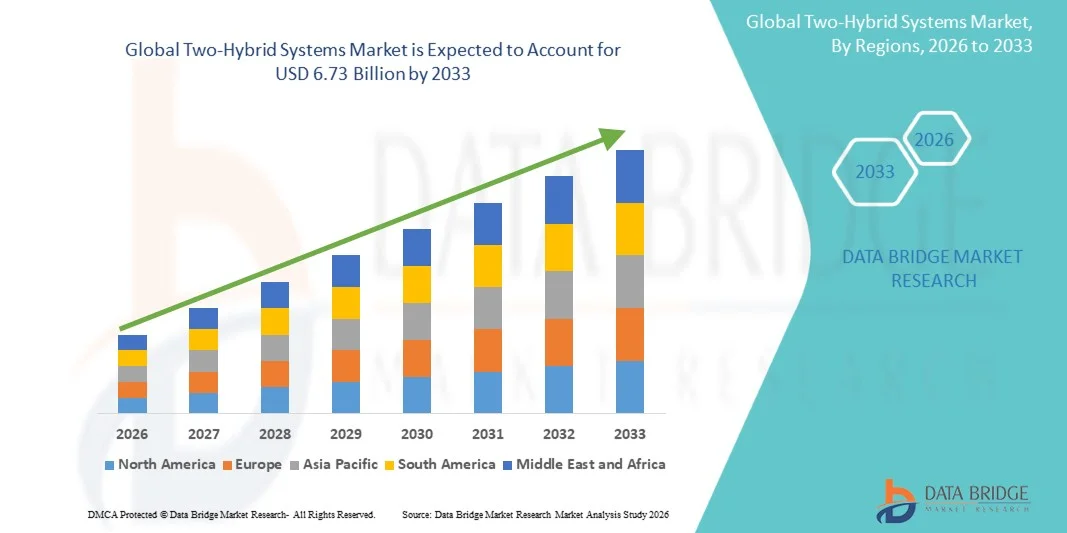
- As per Data Bridge Market Research Analysis the global two-hybrid systems market size was valued at USD 2.86 billion in 2025 and is expected to reach USD 6.73 billion by 2033, at a CAGR of 11.30% during the forecast period
- The market growth is largely fueled by the increasing demand for advanced molecular biology tools used to study protein–protein interactions, along with the growing expansion of biotechnology and life science research worldwide
- Furthermore, rising investments in genomics, proteomics, and drug discovery research, coupled with the increasing adoption of innovative screening technologies in academic institutes and pharmaceutical companies, are establishing two-hybrid systems as essential platforms for interaction analysis. These converging factors are accelerating the adoption of two-hybrid technologies, thereby significantly boosting the industry's growth
Market Size & Forecast
- Global Market Value (2025): USD 2.86 billion in 2025
- Expected Market Value (2033): USD 6.73 billion by 2033
- Forecast CAGR (2026–2033): 11.30%
Two-Hybrid Systems Market Analysis
- Two-hybrid systems, widely used molecular biology techniques for detecting and analyzing protein–protein interactions within living cells, are increasingly essential tools in biotechnology, pharmaceutical research, and academic laboratories due to their efficiency in identifying functional protein networks and gene interactions
- The escalating demand for two-hybrid systems is primarily fueled by the rapid expansion of proteomics and genomics research, increasing focus on understanding cellular signaling pathways, and the growing need for advanced tools in drug discovery and target validation studies
- North America dominated the two-hybrid systems market with the largest revenue share of 41.12% in 2025, characterized by strong biotechnology and pharmaceutical research infrastructure, significant funding for life science research, and the presence of leading research institutions and technology providers, with the U.S. experiencing strong adoption in drug discovery programs and academic proteomics studies
- Asia-Pacific is expected to be the fastest growing region in the two-hybrid systems market during the forecast period due to expanding biotechnology industries, rising government investments in life science research, and increasing collaborations between academic institutions and biopharmaceutical companies
- Yeast-based two-hybrid system segment dominated the two-hybrid systems market with a market share of 46.7% in 2025, driven by its widespread use in protein interaction screening, cost-effectiveness, and strong reliability for large-scale genetic and proteomic studies
Report Scope and Two-Hybrid Systems Market Segmentation
|
Attributes |
Two-Hybrid Systems Key Market Insights |
|
Segments Covered |
|
|
Countries Covered |
North America
Europe
Asia-Pacific
Middle East and Africa
South America
|
|
Key Market Players |
|
|
Market Opportunities |
|
|
Value Added Data Infosets |
In addition to the insights on market scenarios such as market value, growth rate, segmentation, geographical coverage, and major players, the market reports curated by the Data Bridge Market Research also include in-depth expert analysis, patient epidemiology, pipeline analysis, pricing analysis, and regulatory framework |
What is the Key Trend in the Two-Hybrid Systems Market?
“Advancement in High-Throughput Protein Interaction Screening Technologies”
- A significant and accelerating trend in the global two-hybrid systems market is the growing integration of high-throughput screening technologies with advanced molecular biology platforms, enabling researchers to analyze large numbers of protein–protein interactions simultaneously with greater efficiency and accuracy. This technological evolution is significantly improving research productivity and data generation capabilities
- For instance, the Takara Bio Inc. Matchmaker Gold Yeast Two-Hybrid System provides enhanced reporter sensitivity and reduced background noise, allowing scientists to detect subtle protein interactions. Similarly, advanced screening kits from Thermo Fisher Scientific Inc. are designed to improve detection accuracy in large-scale interaction studies
- Integration of automation and next-generation sequencing technologies within two-hybrid systems enables large-scale interaction mapping and efficient identification of novel biological pathways. For instance, modern yeast two-hybrid screening platforms allow automated colony selection and sequencing of interacting partners, significantly accelerating the process of identifying functional protein networks. Furthermore, advanced screening technologies enable researchers to analyze thousands of interaction candidates simultaneously while maintaining high accuracy and reproducibility
- The integration of two-hybrid systems with genomics and proteomics research platforms facilitates comprehensive analysis of complex biological processes. Through integrated laboratory workflows, researchers can study protein interactions alongside gene expression patterns, metabolic pathways, and disease mechanisms, creating a unified research environment for molecular biology investigations
- This trend toward more efficient, scalable, and data-rich interaction screening platforms is fundamentally transforming how scientists investigate cellular functions and disease mechanisms. Consequently, companies such as Creative BioMart are developing advanced two-hybrid screening services with improved detection technologies and expanded protein libraries for interaction analysis
- The demand for high-throughput two-hybrid systems capable of delivering rapid and reliable protein interaction data is growing rapidly across academic research institutes and pharmaceutical laboratories, as scientists increasingly prioritize advanced technologies that accelerate drug discovery and functional genomics research
- The expansion of contract research organizations and specialized life science service providers offering two-hybrid screening services is also contributing to the broader accessibility of these technologies for pharmaceutical and biotechnology companies worldwide
Two-Hybrid Systems Market Dynamics
Driver
“Growing Demand from Expanding Proteomics and Drug Discovery Research”
- The increasing focus on understanding protein–protein interactions in complex biological systems, coupled with the rapid expansion of proteomics and drug discovery research, is a significant driver for the heightened demand for two-hybrid systems
- For instance, in March 2024, Takara Bio Inc. expanded its molecular biology product portfolio with improved yeast two-hybrid screening kits designed to support advanced protein interaction studies in pharmaceutical and academic research laboratories. Such strategies by key companies are expected to drive the two-hybrid systems industry growth in the forecast period
- As researchers seek to identify new therapeutic targets and understand disease-related signaling pathways, two-hybrid systems provide efficient tools for detecting protein interactions, enabling scientists to analyze molecular mechanisms that play critical roles in disease development and treatment discovery
- Furthermore, the growing investment in biotechnology research and the increasing number of collaborative research initiatives between universities and pharmaceutical companies are encouraging the widespread adoption of advanced interaction analysis technologies such as two-hybrid systems
- The capability of two-hybrid systems to perform large-scale protein interaction screening, support functional genomics studies, and facilitate early-stage drug discovery programs are key factors propelling their adoption in research laboratories worldwide. The increasing availability of improved detection kits, automated platforms, and high-throughput screening systems further contributes to market growth
- Rising government funding for life science research and national genomics initiatives in countries such as the U.S., China, and Germany is further strengthening the demand for advanced molecular interaction analysis technologies including two-hybrid systems
- In addition, the increasing prevalence of complex diseases such as cancer and neurodegenerative disorders is encouraging researchers to investigate protein interaction networks more deeply, thereby driving the adoption of two-hybrid screening technologies in biomedical research programs
Restraint/Challenge
“Technical Complexity and Experimental Limitations in Interaction Detection”
- Concerns surrounding the technical limitations and experimental complexities associated with two-hybrid systems pose a significant challenge to broader adoption of these technologies in certain research applications. While widely used, these systems may produce false positive or false negative interaction results due to limitations in experimental design and protein expression conditions
- For instance, some protein interactions that occur in mammalian cellular environments may not be accurately replicated in yeast-based systems, creating potential challenges for researchers attempting to study complex signaling pathways using traditional yeast two-hybrid methods
- Addressing these technical challenges through improved assay design, optimized reporter systems, and advanced validation techniques is crucial for ensuring reliable experimental outcomes. Companies such as Thermo Fisher Scientific Inc. and Merck KGaA are developing enhanced screening kits and reagents to reduce background noise and improve detection accuracy in interaction studies. In addition, the relatively high cost of specialized reagents, screening libraries, and laboratory equipment required for large-scale two-hybrid experiments can be a barrier to adoption for smaller research institutions or laboratories with limited funding
- While ongoing technological advancements are improving reliability and reducing experimental limitations, the complexity of experimental setup and the need for specialized expertise can still hinder broader adoption among new researchers entering the field of protein interaction studies
- Overcoming these challenges through improved assay technologies, expanded protein libraries, enhanced experimental protocols, and greater researcher training will be vital for sustaining the long-term growth of the two-hybrid systems market
- Furthermore, variability in experimental reproducibility across laboratories due to differences in experimental conditions, reagents, and screening libraries can create challenges in validating protein interaction results across multiple studies
Two-Hybrid Systems Market Scope
The market is segmented on the basis of type, application, and end user.
- By Type
On the basis of type, the two-hybrid systems market is segmented into bacterial-two-hybrid system and yeast-two-hybrid system. The yeast-two-hybrid system segment dominated the market with the largest market revenue share of 46.7% in 2025, driven by its extensive use in studying protein–protein interactions in eukaryotic organisms. Yeast-based systems provide reliable detection of interactions within a cellular environment that closely mimics biological processes, making them highly valuable for molecular biology and functional genomics research. Researchers widely utilize yeast-two-hybrid systems in large-scale screening studies to identify unknown protein partners and signaling pathways. The method is also cost-effective and compatible with high-throughput screening technologies, allowing researchers to analyze thousands of interactions simultaneously. In addition, the availability of well-established protocols and commercial screening kits has strengthened the adoption of yeast-two-hybrid systems across academic institutions and pharmaceutical research laboratories worldwide.
The bacterial-two-hybrid system segment is anticipated to witness the fastest growth rate during the forecast period, fueled by its increasing application in studying protein interactions that occur in prokaryotic environments. Bacterial systems offer advantages such as faster growth cycles, simplified experimental procedures, and reduced experimental costs compared with eukaryotic systems. These systems are particularly useful for studying membrane proteins and protein complexes that may not function efficiently in yeast environments. Furthermore, bacterial-two-hybrid systems allow researchers to analyze protein interactions in conditions that closely resemble bacterial cellular environments, improving the accuracy of certain biological studies. The rising interest in microbiology, antibiotic resistance research, and bacterial signaling pathways is further accelerating the adoption of bacterial-two-hybrid technologies in research laboratories.
- By Application
On the basis of application, the two-hybrid systems market is segmented into deoxyribonucleic acid (DNA)-binding, positron emission tomography, bioluminescence imaging, and drug discovery. The drug discovery segment dominated the market with the largest market revenue share in 2025, driven by the growing need to identify and validate novel therapeutic targets through protein–protein interaction studies. Two-hybrid systems enable researchers to map complex interaction networks that play critical roles in disease development and progression. Pharmaceutical and biotechnology companies rely heavily on these systems to screen potential drug targets and understand molecular mechanisms associated with cancer, neurological disorders, and metabolic diseases. The technology also supports early-stage drug development by enabling high-throughput screening of protein interaction partners. In addition, increasing investments in precision medicine and targeted therapies are encouraging the adoption of two-hybrid systems in drug discovery programs.
The bioluminescence imaging segment is expected to witness the fastest growth rate during the forecast period, driven by increasing demand for advanced imaging technologies that allow real-time monitoring of protein interactions in living cells. Bioluminescence-based two-hybrid systems provide highly sensitive detection methods that enable scientists to visualize molecular interactions within biological systems. This approach is gaining popularity in biomedical research due to its ability to generate accurate and quantifiable interaction data. Moreover, advancements in imaging technologies and molecular probes are expanding the capabilities of bioluminescence systems in biological research. The growing use of these techniques in studying disease mechanisms and evaluating therapeutic responses is further accelerating their adoption in academic and pharmaceutical research environments.
- By End User
On the basis of end user, the two-hybrid systems market is segmented into hospitals, specialty clinics, and pharmacies. The hospitals segment dominated the market with the largest market revenue share in 2025, primarily due to the increasing involvement of hospital-based research laboratories in molecular biology and biomedical research. Large hospitals often collaborate with academic institutions and biotechnology companies to conduct research focused on disease mechanisms, biomarker discovery, and therapeutic development. Two-hybrid systems support these research initiatives by enabling scientists to analyze protein interactions associated with disease pathways. In addition, hospitals equipped with advanced research infrastructure are increasingly adopting molecular biology technologies to support translational research programs. The growing emphasis on personalized medicine and targeted therapies also contributes to the adoption of interaction analysis tools within hospital research laboratories.
The specialty clinics segment is expected to witness the fastest growth rate during the forecast period, fueled by the increasing expansion of specialized diagnostic and research centers focusing on genetic and molecular testing. Many specialty clinics are adopting advanced molecular analysis technologies to support research on rare diseases, cancer biomarkers, and targeted treatment strategies. Two-hybrid systems provide valuable tools for investigating protein interactions that influence disease progression and therapeutic response. Furthermore, collaborations between specialty clinics and pharmaceutical companies are driving the adoption of advanced molecular screening technologies. The rising demand for precision diagnostics and the integration of research-focused capabilities within specialty clinics are expected to further accelerate market growth in this segment.
Two-Hybrid Systems Market Regional Analysis
- North America dominated the two-hybrid systems market with the largest revenue share of 41.12% in 2025, characterized by strong biotechnology and pharmaceutical research infrastructure, significant funding for life science research, and the presence of leading research institutions and technology providers
- Researchers and institutions in the region highly value the advanced capabilities offered by two-hybrid systems for studying protein–protein interactions and identifying molecular pathways involved in disease development
- This widespread adoption is further supported by well-established research infrastructure, substantial government funding for life science research, and the growing focus on drug discovery and functional genomics studies, establishing two-hybrid systems as an essential technology for both academic and pharmaceutical research applications
U.S. Two-Hybrid Systems Market Insight
The U.S. two-hybrid systems market captured the largest revenue share of 80% in 2025 within North America, fueled by strong investments in biotechnology, genomics, and proteomics research. Research institutions and pharmaceutical companies are increasingly prioritizing advanced molecular tools to study protein–protein interactions and disease mechanisms. The growing presence of leading biotechnology companies and well-funded academic research programs further propels the two-hybrid systems industry. Moreover, the increasing integration of advanced molecular biology technologies with drug discovery and functional genomics research is significantly contributing to the market's expansion.
Europe Two-Hybrid Systems Market Insight
The Europe two-hybrid systems market is projected to expand at a substantial CAGR throughout the forecast period, primarily driven by increasing research activities in molecular biology and strong funding support for life science innovation. The rise in collaborative research projects between universities, biotechnology firms, and pharmaceutical companies is fostering the adoption of advanced protein interaction analysis technologies. European research institutions are also focused on understanding disease pathways and identifying novel therapeutic targets. The region is experiencing significant growth in biomedical and pharmaceutical research, with two-hybrid systems being incorporated into both academic laboratories and biotechnology research programs.
U.K. Two-Hybrid Systems Market Insight
The U.K. two-hybrid systems market is anticipated to grow at a noteworthy CAGR during the forecast period, driven by the expanding biotechnology sector and increasing government funding for scientific research. In addition, growing research on genetic disorders, cancer biology, and molecular signaling pathways is encouraging the use of advanced protein interaction analysis technologies. The U.K.’s strong academic research ecosystem, alongside collaborations between universities and pharmaceutical companies, is expected to continue to stimulate market growth.
Germany Two-Hybrid Systems Market Insight
The Germany two-hybrid systems market is expected to expand at a considerable CAGR during the forecast period, fueled by the country’s strong biotechnology industry and its emphasis on scientific innovation. Germany’s well-developed research infrastructure, combined with substantial funding for molecular biology and life science research, promotes the adoption of advanced interaction analysis tools. The increasing number of research initiatives focused on proteomics, drug discovery, and disease pathway analysis is also contributing to market growth. The integration of two-hybrid systems into biotechnology and pharmaceutical research programs is becoming increasingly prevalent.
Asia-Pacific Two-Hybrid Systems Market Insight
The Asia-Pacific two-hybrid systems market is poised to grow at the fastest CAGR during the forecast period of 2026 to 2033, driven by rapid expansion of biotechnology industries and increasing government investments in life science research across countries such as China, Japan, and India. The region's growing focus on genomic research, biomedical innovation, and drug development is driving the adoption of advanced protein interaction technologies. Furthermore, as Asia-Pacific emerges as a major hub for biotechnology manufacturing and research, the accessibility and adoption of advanced molecular biology tools such as two-hybrid systems are expanding across academic and pharmaceutical laboratories.
Japan Two-Hybrid Systems Market Insight
The Japan two-hybrid systems market is gaining momentum due to the country’s advanced research infrastructure, strong biotechnology sector, and increasing focus on precision medicine. The Japanese market places a significant emphasis on scientific innovation, and the adoption of two-hybrid systems is driven by the growing number of genomics and proteomics research projects. The integration of advanced molecular biology technologies with pharmaceutical research and drug discovery programs is fueling growth. Moreover, Japan's strong collaboration between academic institutions and biotechnology companies is likely to spur demand for advanced protein interaction analysis tools in both research and clinical development sectors.
India Two-Hybrid Systems Market Insight
The India two-hybrid systems market accounted for the largest market revenue share in Asia Pacific in 2025, attributed to the country's expanding biotechnology sector, rising research funding, and increasing focus on genomics and biomedical research. India stands as one of the fastest-growing markets for life science research technologies, and two-hybrid systems are becoming increasingly adopted in academic laboratories and biotechnology companies. The expansion of biotechnology parks and research institutes, alongside government initiatives supporting life science innovation, are key factors propelling the market in India.
Which are the Top Companies in Two-Hybrid Systems Market?
The Two-Hybrid Systems industry is primarily led by well-established companies, including:
- Thermo Fisher Scientific Inc. (U.S.)
- Takara Bio Inc. (Japan)
- Promega Corporation (U.S.)
- Agilent Technologies, Inc. (U.S.)
- Bio-Rad Laboratories, Inc. (U.S.)
- Abcam plc (U.K.)
- OriGene Technologies, Inc. (U.S.)
- Addgene, Inc. (U.S.)
- Merck KGaA (Germany)
- PerkinElmer Inc. (U.S.)
- GenScript Biotech Corporation (China)
- Creative BioMart (U.S.)
- Hybrigenics Services SAS (France)
- AMS Biotechnology (Europe) Ltd. (U.K.)
- Genecopoeia, Inc. (U.S.)
- Canvax Biotech S.L. (Spain)
- ProSpec-Tany Technogene Ltd. (Israel)
- Rockland Immunochemicals, Inc. (U.S.)
- Biomatik Corporation (Canada)
- Alpha Lifetech Inc. (U.S.)
What are the Recent Developments in Global Two-Hybrid Systems Market?
- In January 2026, Creative Biolabs announced the launch of a new suite of yeast two-hybrid (Y2H) technologies designed to help researchers map complex protein interaction networks inside living cells. The platform includes multiple interaction analysis approaches such as yeast two-hybrid, mammalian two-hybrid, bacterial two-hybrid, and reverse yeast two-hybrid systems
- In July 2025, researchers published a study demonstrating the use of a yeast-two-hybrid–based high-throughput screening system to identify inhibitors targeting SARS-CoV-2 viral fusion mechanisms. The system enabled scientists to screen compounds that disrupt the HR1–HR2 protein interaction critical for viral entry into host cells
- In September 2024, Takara Bio Europe unveiled the Shasta™ Single-Cell System, a high-throughput genomics and transcriptomics platform designed to accelerate biomarker discovery and molecular research. The system can process up to 1,500 single cells per run and supports large-scale genomic analysis using advanced sequencing technologies
- In May 2024, Takara Bio USA launched the Lenti-X™ Transduction Sponge, a microfluidic transduction enhancer that improves the efficiency of viral gene delivery in research laboratories. The product enables simplified workflows and improved transduction efficiency across different cell types, supporting advanced molecular biology and gene therapy research
- In September 2023, Takara Bio Europe introduced a new range of high-quality enzymes for mRNA vaccine and therapeutic development, including T7 RNA polymerase and recombinant RNase inhibitor products. These enzymes are designed to support pre-clinical and process development stages in biotechnology and vaccine research. The development strengthens molecular biology toolkits used in genomics, transcriptomics, and protein interaction research workflows where technologies such as two-hybrid systems are widely applied

- Interactive Data Analysis Dashboard
- Company Analysis Dashboard for high growth potential opportunities
- Research Analyst Access for customization & queries
- Competitor Analysis with Interactive dashboard
- Latest News, Updates & Trend analysis
- Harness the Power of Benchmark Analysis for Comprehensive Competitor Tracking
Data collection and base year analysis are done using data collection modules with large sample sizes. The stage includes obtaining market information or related data through various sources and strategies. It includes examining and planning all the data acquired from the past in advance. It likewise envelops the examination of information inconsistencies seen across different information sources. The market data is analysed and estimated using market statistical and coherent models. Also, market share analysis and key trend analysis are the major success factors in the market report. To know more, please request an analyst call or drop down your inquiry.
The key research methodology used by DBMR research team is data triangulation which involves data mining, analysis of the impact of data variables on the market and primary (industry expert) validation. Data models include Vendor Positioning Grid, Market Time Line Analysis, Market Overview and Guide, Company Positioning Grid, Patent Analysis, Pricing Analysis, Company Market Share Analysis, Standards of Measurement, Global versus Regional and Vendor Share Analysis. To know more about the research methodology, drop in an inquiry to speak to our industry experts.
Data Bridge Market Research is a leader in advanced formative research. We take pride in servicing our existing and new customers with data and analysis that match and suits their goal. The report can be customized to include price trend analysis of target brands understanding the market for additional countries (ask for the list of countries), clinical trial results data, literature review, refurbished market and product base analysis. Market analysis of target competitors can be analyzed from technology-based analysis to market portfolio strategies. We can add as many competitors that you require data about in the format and data style you are looking for. Our team of analysts can also provide you data in crude raw excel files pivot tables (Fact book) or can assist you in creating presentations from the data sets available in the report.












