


Transdermal Gel Market Size
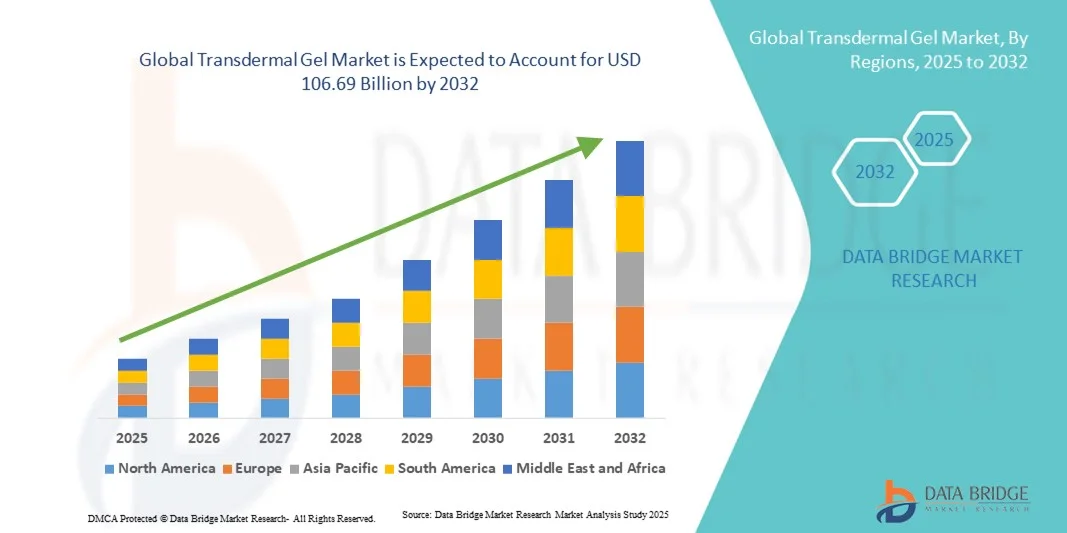
- The global Transdermal Gel market size was valued at USD 42.00 billion in 2024 and is expected to reach USD 106.69 billion by 2032, at a CAGR of 12.36% during the forecast period
- The market growth is largely fueled by the increasing prevalence of chronic diseases and the growing preference for non-invasive drug delivery methods, which have accelerated the adoption of transdermal gel formulations for sustained and controlled drug release
- Furthermore, rising consumer demand for pain-free, convenient, and patient-compliant treatment options is establishing transdermal gels as a preferred alternative to oral and injectable drug delivery systems. These converging factors are accelerating the uptake of Transdermal Gel solutions, thereby significantly boosting the industry's growth
Transdermal Gel Market Analysis
- The Transdermal Gel market, offering advanced topical formulations for controlled and sustained drug delivery through the skin, is becoming an essential component of modern pharmaceutical and therapeutic practices due to its enhanced bioavailability, patient compliance, and ease of administration
- The escalating demand for transdermal gels is primarily fueled by the growing prevalence of chronic diseases such as hormonal disorders, pain management conditions, and cardiovascular diseases, along with the increasing preference for non-invasive drug delivery systems
- North America dominated the transdermal gel market with the largest revenue share of 38.5% in 2024, characterized by a strong pharmaceutical research infrastructure, increasing regulatory approvals for transdermal products, and a robust presence of leading industry players. The U.S. is witnessing substantial growth in transdermal gel adoption, particularly for hormone replacement therapy and pain management, driven by advancements in formulation technologies and expanding clinical applications
- Asia-Pacific is expected to be the fastest-growing region in the transdermal gel market during the forecast period, with a projected CAGR of 25.6%, due to the increasing patient population, rising healthcare expenditure, and growing awareness regarding novel drug delivery systems in countries such as India, China, and Japan
- The iontophoresis segment held the largest market revenue share of 44.3% in 2024, attributed to its high efficiency in enhancing skin permeability through controlled electrical stimulation. Iontophoresis provides precise drug delivery for both localized and systemic treatments, minimizing side effects compared to oral or injectable routes
Report Scope and Transdermal Gel Market Segmentation
|
Attributes |
Transdermal Gel Key Market Insights |
|
Segments Covered |
|
|
Countries Covered |
North America
Europe
Asia-Pacific
Middle East and Africa
South America
|
|
Key Market Players |
|
|
Market Opportunities |
|
|
Value Added Data Infosets |
In addition to the insights on market scenarios such as market value, growth rate, segmentation, geographical coverage, and major players, the market reports curated by the Data Bridge Market Research also include in-depth expert analysis, patient epidemiology, pipeline analysis, pricing analysis, and regulatory framework. |
Transdermal Gel Market Trends
Advancements in Drug Delivery Through AI and Formulation Innovation
- A significant and accelerating trend in the global Transdermal Gel market is the increasing integration of artificial intelligence (AI) and advanced formulation technologies for enhancing drug delivery precision and patient compliance. This technological fusion is transforming transdermal therapy by optimizing dosage accuracy, improving skin permeability, and enabling personalized treatment regimens
- For instance, in 2024, several pharmaceutical companies began adopting AI-driven predictive modeling to design transdermal gels with enhanced absorption profiles, reducing variability in drug plasma levels. Similarly, advancements in smart patch-integrated gel systems are allowing real-time monitoring of drug release rates, ensuring consistent therapeutic outcomes
- AI-assisted formulation in transdermal gels helps analyze patient-specific factors such as skin type, metabolism, and sensitivity to predict the most effective formulation composition and dosage schedule. This innovation enables targeted drug delivery while minimizing side effects and wastage. Furthermore, intelligent sensors embedded in some next-generation transdermal systems can provide feedback on temperature, pH, and adherence duration, offering more controlled and effective treatment outcomes
- The seamless integration of these technologies into transdermal platforms allows healthcare providers to manage multiple aspects of therapy from a single interface. Through digital monitoring systems, clinicians can track adherence, adjust dosage remotely, and integrate patient data into electronic health records, creating a connected and efficient care ecosystem
- This trend toward intelligent, data-driven, and patient-centered drug delivery systems is fundamentally reshaping expectations in topical and transdermal therapeutics. Consequently, major companies such as Novartis AG, Hisamitsu Pharmaceutical Co., and GlaxoSmithKline are focusing on AI-assisted formulation development and enhanced biocompatible gels for improved skin tolerability and long-acting therapeutic benefits
- The demand for advanced transdermal gels offering controlled release, non-invasive administration, and higher patient compliance is growing rapidly across therapeutic areas such as pain management, hormone replacement therapy, and neurological disorders, as patients increasingly seek convenient and effective alternatives to oral or injectable medications
Transdermal Gel Market Dynamics
Driver
Increasing Adoption of Non-Invasive Drug Delivery Systems and Technological Advancements
- The growing preference for non-invasive, pain-free drug delivery methods among patients and healthcare providers is a major driver for the expansion of the transdermal gel market. Transdermal gels eliminate the need for injections or frequent dosing, offering a steady release of drugs into the bloodstream
- For instance, in March 2024, Hisamitsu Pharmaceutical introduced a next-generation diclofenac transdermal gel formulation featuring improved skin adhesion and enhanced drug absorption, marking a major step in non-invasive pain management innovation. Such developments are expected to propel the market’s growth trajectory in the forecast period
- As chronic diseases such as arthritis, hormonal imbalances, and cardiovascular conditions rise, the need for convenient, self-administered treatment options continues to expand. Transdermal gels, with their sustained-release capabilities, align well with these therapeutic demands
- Furthermore, ongoing research into nanotechnology, permeation enhancers, and bioadhesive polymers is enabling better skin penetration and higher bioavailability of drugs. The introduction of personalized formulations through AI-based modeling and 3D-printed gel systems further enhances treatment outcomes and patient satisfaction
- The convenience, safety, and ability to avoid first-pass metabolism make transdermal gels increasingly preferred for both acute and chronic treatments. The growing presence of e-pharmacies and the availability of user-friendly over-the-counter transdermal gel options are also contributing to market expansion
Restraint/Challenge
Skin Irritation Issues and High Formulation Development Costs
- Challenges related to skin irritation, sensitivity, and allergic reactions remain significant restraints for the transdermal gel market. As these gels rely on skin permeability, certain formulations may cause redness, itching, or discomfort in sensitive users, hindering repeat usage
- For instance, clinical evaluations in 2023 revealed that formulations containing high concentrations of ethanol-based penetration enhancers led to mild-to-moderate skin irritation in some patients, highlighting the need for safer excipient combinations
- Addressing these concerns requires continuous research and investment in biocompatible, non-irritant formulation technologies and improved patch-gel interfaces. Companies are increasingly focusing on developing hypoallergenic gels with plant-based and silicone-based carriers to enhance tolerability
- In addition, the high cost of research, clinical trials, and regulatory approvals for new transdermal formulations poses a challenge to smaller manufacturers. Developing gels that maintain consistent performance across varying skin types and environmental conditions adds further complexity and expense
- While technological advancements are gradually overcoming these barriers, achieving large-scale affordability and consistent therapeutic efficacy remains a key challenge. Overcoming these issues through improved formulation stability, cost-effective production techniques, and robust clinical validation will be crucial for sustained market growth
Transdermal Gel Market Scope
The market is segmented on the basis of end-user, technique, and application.
- By End-User
On the basis of end-user, the Transdermal Gel market is segmented into home care settings, hospitals, and clinics. The home care settings segment dominated the largest market revenue share of 57.8% in 2024, driven by the rising shift toward self-administered drug delivery and the growing preference for convenient, non-invasive treatment options. Increasing cases of chronic conditions such as arthritis, hormonal imbalances, and pain disorders have boosted demand for transdermal systems that enable consistent and sustained drug release at home. The affordability, ease of use, and improved patient adherence make transdermal gels an appealing option for home-based therapy. In addition, the growing elderly population, telehealth integration, and product advancements in adhesion and controlled release further enhance adoption in domestic healthcare environments.
The hospitals and clinics segment is anticipated to witness the fastest growth rate of 19.4% from 2025 to 2032, fueled by the increasing use of transdermal gels in professional healthcare settings for precision-based treatments. Hospitals prefer transdermal delivery systems for their ability to deliver steady, controlled dosages for acute and chronic conditions. The segment benefits from rising adoption in post-surgical pain management, hormonal regulation, and cardiovascular therapies. Moreover, growing R&D in clinical-grade formulations, coupled with the availability of advanced monitoring systems, is supporting expansion. Increasing healthcare infrastructure investment and greater clinical validation of transdermal effectiveness are expected to drive strong growth throughout the forecast period.
- By Technique
On the basis of technique, the Transdermal Gel market is segmented into iontophoresis, electroporation, and sonophoresis. The iontophoresis segment held the largest market revenue share of 44.3% in 2024, attributed to its high efficiency in enhancing skin permeability through controlled electrical stimulation. Iontophoresis provides precise drug delivery for both localized and systemic treatments, minimizing side effects compared to oral or injectable routes. The segment benefits from rising use in physiotherapy, sports medicine, and pain management, supported by advancements in wearable iontophoretic devices. Its proven compatibility with a wide range of drug molecules and cost-effective performance reinforces dominance. The growing popularity of portable iontophoresis systems for personal and clinical applications further strengthens market growth.
The electroporation segment is projected to witness the fastest CAGR of 20.7% from 2025 to 2032, driven by increasing adoption of this advanced technology for macromolecular drug delivery. Electroporation creates temporary microchannels in the skin, allowing large therapeutic molecules like peptides and nucleic acids to penetrate effectively. Its expanding use in research, gene therapy, and targeted transdermal delivery makes it a transformative innovation. Rising investment in bioelectronic drug delivery and integration with smart wearable platforms are boosting its market potential. Furthermore, ongoing technological improvements in safety, portability, and precision are expected to accelerate the widespread clinical and commercial adoption of electroporation-based transdermal gels.
- By Application
On the basis of application, the Transdermal Gel market is segmented into pain management, hormonal applications, central nervous system disorders, and cardiovascular diseases. The pain management segment dominated the largest market revenue share of 39.5% in 2024, primarily due to the rising global burden of chronic pain and musculoskeletal disorders. Transdermal gels provide continuous, localized pain relief while avoiding gastrointestinal side effects common in oral formulations. The convenience of self-administration, sustained drug release, and improved compliance have made these formulations a preferred choice among elderly patients and athletes. Rapid innovation in polymer and penetration enhancer technology has also increased absorption efficiency. The growing awareness of non-opioid pain management options and the introduction of combination gels further reinforce this segment’s leadership.
The hormonal applications segment is expected to witness the fastest CAGR of 21.2% from 2025 to 2032, driven by the increasing demand for hormone replacement therapy (HRT) and contraceptive solutions. Transdermal gels ensure consistent, steady hormone release, providing superior safety and tolerance compared to oral or injectable methods. Rising prevalence of menopausal disorders, hormonal deficiencies, and reproductive health concerns among both men and women are key growth drivers. The segment is also supported by the introduction of improved formulations offering enhanced skin permeability and minimal irritation. Growing healthcare awareness, along with the expansion of gender-specific wellness programs and personalized hormonal therapies, continues to propel this segment’s rapid expansion across global markets.
Transdermal Gel Market Regional Analysis
- North America dominated the transdermal gel market with the largest revenue share of 38.5% in 2024, characterized by a strong pharmaceutical research infrastructure, increasing regulatory approvals for transdermal products, and a robust presence of leading industry players
- The region’s emphasis on patient compliance and innovation in drug delivery methods has accelerated the adoption of transdermal gels for various therapeutic applications, including hormone replacement therapy, pain management, and neurological disorders
- In addition, growing consumer preference for non-invasive and controlled drug delivery solutions continues to strengthen market expansion across the U.S. and Canada
U.S. Transdermal Gel Market Insight
The U.S. transdermal gel market captured the largest revenue share in 2024 within North America, driven by advancements in formulation technologies, a growing demand for personalized medication delivery, and strong clinical adoption for chronic pain and hormone therapies. The country’s well-established pharmaceutical infrastructure, high healthcare spending, and increasing FDA approvals for new transdermal formulations are fueling steady growth. Furthermore, the rising preference for topical and transdermal alternatives to oral medications is enhancing patient adherence and expanding therapeutic usage across key indications.
Europe Transdermal Gel Market Insight
The Europe transdermal gel market is projected to grow at a substantial CAGR during the forecast period, primarily supported by a rising prevalence of chronic diseases, growing demand for advanced drug delivery systems, and favorable regulatory frameworks for transdermal formulations. European pharmaceutical companies are increasingly focusing on innovative gel matrices and penetration enhancers to improve efficacy and bioavailability. Moreover, the shift toward patient-centric care and self-administration of drugs is promoting the adoption of transdermal gel products across major markets such as Germany, the U.K., and France.
U.K. Transdermal Gel Market Insight
The U.K. transdermal gel market is expected to expand at a noteworthy CAGR over the forecast period, supported by increasing awareness of non-invasive drug delivery systems and the growing use of hormone and pain management therapies. The expanding geriatric population and the focus on improving patient compliance are driving demand for convenient dosage forms such as transdermal gels. Moreover, strong R&D activity and collaborations between pharmaceutical companies and academic institutions are expected to stimulate market innovation and growth.
Germany Transdermal Gel Market Insight
The Germany transdermal gel market is anticipated to witness significant growth during the forecast period, driven by a robust pharmaceutical manufacturing base, rising investment in formulation research, and growing adoption of topical delivery solutions. The country’s focus on precision medicine and advanced formulation development is fostering the introduction of enhanced gel-based therapies. In addition, increasing preference for localized drug delivery and reduced systemic side effects is supporting the market’s expansion across multiple therapeutic areas.
Asia-Pacific Transdermal Gel Market Insight
The Asia-Pacific transdermal gel market is projected to grow at the fastest CAGR of 25.6% during the forecast period of 2025 to 2032, driven by rising healthcare expenditure, expanding patient population, and growing awareness regarding novel drug delivery systems in countries such as India, China, and Japan. The region’s pharmaceutical industry is witnessing rapid advancements in formulation technology and large-scale manufacturing, making transdermal gels increasingly accessible and affordable. Government initiatives promoting healthcare innovation and the expansion of chronic disease management programs are further accelerating market growth.
Japan Transdermal Gel Market Insight
The Japan transdermal gel market is growing steadily due to the country’s strong focus on innovation in drug delivery, an aging population, and increasing preference for pain relief and hormone therapies. The widespread acceptance of transdermal systems in Japan’s healthcare landscape, supported by high R&D investments and favorable reimbursement policies, continues to drive adoption. Moreover, Japanese pharmaceutical firms are actively developing new polymer technologies and formulations aimed at improving drug absorption and efficacy.
China Transdermal Gel Market Insight
The Chin transdermal gel market accounted for the largest market revenue share in Asia-Pacific in 2024, attributed to the country’s expanding middle-class population, rising prevalence of chronic conditions, and increasing investment in advanced pharmaceutical manufacturing. The market is witnessing growing adoption of transdermal gel therapies for hormone regulation, localized pain management, and anti-inflammatory applications. Strong government support for healthcare modernization, along with the rapid expansion of domestic drug manufacturers, is further propelling China’s position as a key hub for transdermal gel production and innovation.
Transdermal Gel Market Share
The Transdermal Gel industry is primarily led by well-established companies, including:
- Johnson & Johnson and its affiliates (U.S.)
- Novartis AG (Switzerland)
- GSK plc (U.K.)
- Teva Pharmaceutical Industries Ltd. (Israel)
- Boehringer Ingelheim International GmbH (Germany)
- 3M Company (U.S.)
- Ascend Therapeutics (U.S.)
- Antares Pharma, Inc. (U.S.)
- Noven Pharmaceuticals, Inc. (U.S.)
- Luye Pharma Group Ltd. (China)
- IBSA Institut Biochimique SA (Switzerland)
- Endo International plc (Ireland)
- MedPharm Ltd. (U.K.)
- Hisamitsu Pharmaceutical Co., Inc. (Japan)
- Tesa Labtec GmbH (Germany)
- Amneal Pharmaceuticals LLC (U.S.)
- Cadila Pharmaceuticals Ltd. (India)
- Glenmark Pharmaceuticals Ltd. (India)
Latest Developments in Global Transdermal Gel Market
- In March 2024, researchers developed and evaluated a novel transdermal gel formulation for pain relief using aspirin and paracetamol. The study highlighted the gel’s improved spreadability, enhanced skin absorption, and sustained release compared to conventional oral medications, marking a significant step in patient-friendly topical pain management
- In October 2024, a study focused on a naproxen-based transdermal gel demonstrated optimized polymer matrices and skin penetration enhancers. This innovation improved the drug’s release profile and tolerability, suggesting potential for more effective and convenient treatment options for inflammatory conditions
- In June 2025, academic research explored advanced gel delivery systems for meloxicam, including lipogels, niosomal gels, and nanostructured carriers. These developments reflected a growing trend toward sophisticated transdermal platforms designed for controlled and targeted drug delivery
- In July 2025, a review article highlighted emerging transdermal gel technologies, such as smart polymeric networks and hydrogel-based systems, which improve drug penetration and prolong release duration. The report emphasized the increasing focus on patient-centric, efficient, and stable topical drug formulations

- Interactive Data Analysis Dashboard
- Company Analysis Dashboard for high growth potential opportunities
- Research Analyst Access for customization & queries
- Competitor Analysis with Interactive dashboard
- Latest News, Updates & Trend analysis
- Harness the Power of Benchmark Analysis for Comprehensive Competitor Tracking
Data collection and base year analysis are done using data collection modules with large sample sizes. The stage includes obtaining market information or related data through various sources and strategies. It includes examining and planning all the data acquired from the past in advance. It likewise envelops the examination of information inconsistencies seen across different information sources. The market data is analysed and estimated using market statistical and coherent models. Also, market share analysis and key trend analysis are the major success factors in the market report. To know more, please request an analyst call or drop down your inquiry.
The key research methodology used by DBMR research team is data triangulation which involves data mining, analysis of the impact of data variables on the market and primary (industry expert) validation. Data models include Vendor Positioning Grid, Market Time Line Analysis, Market Overview and Guide, Company Positioning Grid, Patent Analysis, Pricing Analysis, Company Market Share Analysis, Standards of Measurement, Global versus Regional and Vendor Share Analysis. To know more about the research methodology, drop in an inquiry to speak to our industry experts.
Data Bridge Market Research is a leader in advanced formative research. We take pride in servicing our existing and new customers with data and analysis that match and suits their goal. The report can be customized to include price trend analysis of target brands understanding the market for additional countries (ask for the list of countries), clinical trial results data, literature review, refurbished market and product base analysis. Market analysis of target competitors can be analyzed from technology-based analysis to market portfolio strategies. We can add as many competitors that you require data about in the format and data style you are looking for. Our team of analysts can also provide you data in crude raw excel files pivot tables (Fact book) or can assist you in creating presentations from the data sets available in the report.













