Global Topical Corticosteroids Market
Market Size in USD Billion
CAGR :
% 
 USD
4.49 Billion
USD
7.22 Billion
2024
2032
USD
4.49 Billion
USD
7.22 Billion
2024
2032
 Forecast Period Forecast Period |
2025 –2032 |
 Market Size (Base Year) Market Size (Base Year) |
USD 4.49 Billion |
 Market Size (Forecast Year) Market Size (Forecast Year) |
USD 7.22 Billion |
 CAGR CAGR |
% |
| Major Markets Players |
|
Topical Corticosteroids Market Size
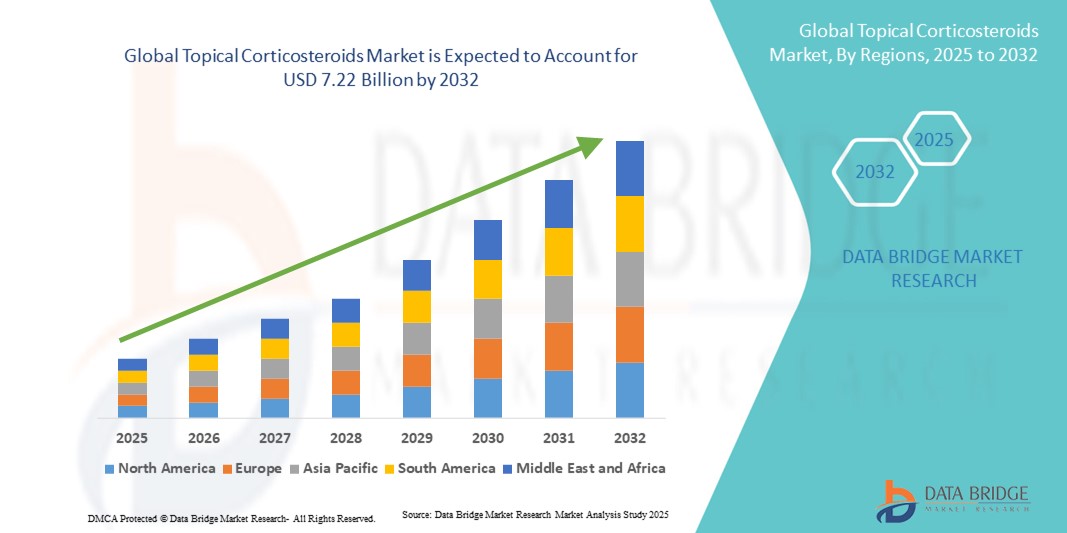
- The global topical corticosteroids market size was valued at USD 4.49 billion in 2024 and is expected to reach USD 7.22 billion by 2032, at a CAGR of 6.10% during the forecast period
- The market growth is largely fueled by the rising prevalence of dermatological conditions such as eczema, psoriasis, and dermatitis, coupled with increasing awareness about effective treatment options among patients and healthcare providers
- Furthermore, advancements in formulation technologies, including creams, ointments, gels, and lotions, are enabling better skin absorption, reduced side effects, and improved patient compliance. These factors are accelerating the adoption of Topical Corticosteroids solutions, thereby significantly boosting the industry's growth
Topical Corticosteroids Market Analysis
- The Topical Corticosteroids market is witnessing robust growth due to the increasing prevalence of dermatological disorders such as eczema, psoriasis, and dermatitis, which require effective anti-inflammatory treatments
- The escalating prevalence of skin disorders and growing awareness about effective dermatological treatments are driving the demand for topical corticosteroids in both prescription and over-the-counter formulations
- North America dominated the topical corticosteroids market with the largest revenue share of 41.0% in 2024, supported by advanced healthcare infrastructure, high patient awareness, and strong presence of key market players. The U.S., in particular, is witnessing substantial adoption due to rising cases of eczema, psoriasis, and other inflammatory skin conditions, along with widespread access to dermatology specialists and well-established pharmaceutical distribution networks
- Asia-Pacific is expected to be the fastest-growing region in the topical corticosteroids market during the forecast period, driven by increasing urbanization, rising disposable incomes, and expanding healthcare access in countries such as China, India, and Japan. Growing awareness about dermatological health and greater affordability of treatments are further boosting adoption in the region
- The Moderate Potency segment dominated the topical corticosteroids market with a 35% share in 2024, due to its broad applicability in treating a variety of skin disorders, ranging from mild eczema to moderate dermatitis. It offers a balanced combination of efficacy and safety, making it suitable for long-term use, including in pediatric and sensitive populations
Report Scope and Topical Corticosteroids Market Segmentation
|
Attributes |
Topical Corticosteroids Key Market Insights |
|
Segments Covered |
|
|
Countries Covered |
North America
Europe
Asia-Pacific
Middle East and Africa
South America
|
|
Key Market Players |
|
|
Market Opportunities |
|
|
Value Added Data Infosets |
In addition to the insights on market scenarios such as market value, growth rate, segmentation, geographical coverage, and major players, the market reports curated by the Data Bridge Market Research also include in-depth expert analysis, pricing analysis, brand share analysis, consumer survey, demography analysis, supply chain analysis, value chain analysis, raw material/consumables overview, vendor selection criteria, PESTLE Analysis, Porter Analysis, and regulatory framework. |
Topical Corticosteroids Market Trends
Rising Adoption Driven by Dermatological Awareness and Treatment Accessibility
- A significant trend in the global topical corticosteroids market is the increasing adoption of advanced formulations and patient-friendly delivery systems, enhancing treatment effectiveness and compliance
- For instance, prescription-strength creams and ointments are being increasingly recommended by dermatologists for chronic conditions such as eczema, psoriasis, and dermatitis, ensuring targeted relief and reduced side effects
- The availability of combination therapies, such as corticosteroids with moisturizers or antibiotics, is improving treatment outcomes and patient satisfaction, particularly for complex or long-term skin conditions
- Over-the-counter options are gaining traction among consumers seeking convenient, self-administered solutions for mild dermatological issues, supported by growing awareness campaigns and educational initiatives on proper usage
- Pharmaceutical companies are focusing on developing formulations with enhanced skin absorption, minimal irritation, and longer duration of action, catering to diverse patient needs across age groups and skin types
- Increasing dermatology consultations, rising prevalence of skin disorders, and higher healthcare accessibility are fueling the overall adoption of topical corticosteroid therapies worldwide
- The demand for topical corticosteroids is particularly high in regions with advanced healthcare infrastructure and strong dermatology networks, ensuring timely diagnosis, prescription, and monitoring of treatment outcomes
- This trend towards more effective, accessible, and patient-centric therapies is reshaping market expectations and driving growth across both developed and emerging regions
Topical Corticosteroids Market Dynamics
Driver
Growing Need Due to Rising Prevalence of Dermatological Disorders and Increasing Awareness
- The rising incidence of skin conditions such as eczema, psoriasis, dermatitis, and allergic reactions, coupled with growing awareness of treatment options, is a significant driver for the heightened demand for topical corticosteroids
- For instance, in April 2024, a leading pharmaceutical company announced the launch of an advanced topical corticosteroid formulation designed for enhanced absorption and reduced side effects. Such initiatives by key companies are expected to drive the Topical Corticosteroids market growth during the forecast period
- As patients and healthcare providers increasingly seek effective and targeted treatment options, topical corticosteroids offer benefits such as anti-inflammatory action, reduction of redness and itching, and rapid symptom relief, providing a compelling alternative to oral or systemic therapies
- Furthermore, the growing popularity of self-care dermatology products and the increasing adoption of telemedicine consultations are making topical corticosteroids a convenient and accessible treatment choice for various patient demographics
- The ease of application, availability in multiple strengths and formulations (creams, ointments, gels, and lotions), and the ability to manage chronic skin conditions effectively are key factors propelling the adoption of topical corticosteroids in both clinical and home care settings. The trend towards personalized dermatological care and the increasing availability of over-the-counter options further contribute to market growth
Restraint/Challenge
Concerns Regarding Side Effects and Regulatory Restrictions
- Concerns surrounding potential side effects of long-term or improper use of topical corticosteroids, such as skin thinning, pigmentation changes, or systemic absorption, pose a significant challenge to broader market penetration
- For instance, regulatory warnings and advisories regarding corticosteroid potency limits and duration of use have made some consumers and healthcare providers cautious about prolonged applications
- Addressing these concerns through proper labeling, patient education, and development of safer formulations is crucial for building consumer trust. Companies such as Pfizer and Sanofi emphasize their dermatology research, low-potency options, and safety features in their marketing to reassure potential users
- In addition, regulatory restrictions and approval processes in certain regions can limit the availability of newer or high-potency corticosteroid products
- While newer formulations with reduced side effects are gradually entering the market, perceived risks and stringent regulations can still hinder widespread adoption, particularly in sensitive patient groups such as children or the elderly
- Overcoming these challenges through enhanced safety profiles, clinical awareness campaigns, and expansion of accessible, affordable topical corticosteroid options will be vital for sustained market growth
Topical Corticosteroids Market Scope
The market is segmented on the basis of molecule name, potency class, medication type, application, distribution channel and end user.
- By Molecule Name
On the basis of molecule name, the topical corticosteroids market is segmented into Fludroxycortide, Triamcinolone Acetonide, Fluocinolone Acetonide, Antiseptics, Betamethasone, Clobetasone Propionate, Clobetasone Butyrate, Halobetasone, Mometasone, and Others. The Fludroxycortide segment dominated the largest market revenue share of 20% in 2024, owing to its proven effectiveness in managing chronic inflammatory skin conditions such as eczema, dermatitis, and other persistent dermatological disorders. Its rapid action provides noticeable symptomatic relief, which makes it highly preferred among dermatologists. The segment benefits from compatibility with various formulation types, including creams, ointments, and gels, increasing its flexibility for different patient needs. Patients appreciate its ease of application and consistent therapeutic outcomes. Strong adoption in developed regions with higher dermatology awareness further reinforces its market dominance. The segment also sees sustained demand due to ongoing clinical recommendations and inclusion in standard dermatological treatment protocols.
The triamcinolone acetonide segment is anticipated to witness the fastest CAGR of 10.5% from 2025 to 2032, driven by growing demand across both emerging and mature markets. Its moderate potency makes it suitable for long-term management of sensitive areas, providing effective relief without significant side effects. Rising awareness of corticosteroid therapy for conditions such as acne, dermatitis, and psoriasis is contributing to higher prescriptions. The molecule is increasingly used in combination therapies, which enhances its therapeutic efficiency and broadens its market appeal. The segment also benefits from strong adoption in dermatology clinics and hospital settings, where its versatility and safety profile make it a preferred choice. Growing consumer education about skin health and accessibility of prescription treatments are expected to further accelerate segment growth.
- By Potency Class
On the basis of potency, the market is segmented into ultra-high, high, moderate, and low potency. The moderate potency segment dominated the market with a 35% share in 2024, due to its broad applicability in treating a variety of skin disorders, ranging from mild eczema to moderate dermatitis. It offers a balanced combination of efficacy and safety, making it suitable for long-term use, including in pediatric and sensitive populations. Healthcare professionals prefer moderate potency corticosteroids for daily management of skin conditions, as they minimize risks such as skin thinning or irritation. This segment is widely prescribed across both hospital and outpatient care settings. Its versatility in being available in multiple formulations, such as creams, ointments, and lotions, enhances patient compliance and convenience. The segment also benefits from its strong presence in established dermatology treatment protocols and consistent consumer trust.
The high potency segment is expected to witness the fastest growth rate of 12% from 2025 to 2032, propelled by rising prevalence of severe skin conditions such as psoriasis, severe dermatitis, and resistant inflammatory lesions. Physicians increasingly recommend high potency corticosteroids for short-term, intensive treatment due to their rapid effectiveness. Awareness campaigns and education regarding potent corticosteroid therapies in emerging markets are contributing to market expansion. Advanced formulation technologies also improve safety and usability, boosting adoption. Strong utilization in hospital pharmacies, dermatology clinics, and specialized care centers further accelerates segment growth. Rising demand for effective solutions in chronic and difficult-to-treat cases supports continued revenue expansion in this segment.
- By Medication Type
On the basis of medication type, the market is segmented into ointments, creams, liquid and solutions, lotions, gel, oils, pastes, sprays, and others. The ointments segment dominated the largest revenue share of 28% in 2024, owing to their occlusive properties that lock in moisture and enhance corticosteroid absorption. They are highly effective for treating dry, scaly lesions and chronic skin disorders. Physicians prefer ointments because their prolonged contact time on the skin improves treatment outcomes. Ointments can be formulated with moderate and high potency corticosteroids, making them versatile across multiple conditions. Hospital pharmacies and dermatology clinics widely prescribe them due to clinical trust and efficacy. Patients also perceive ointments as reliable for persistent skin issues, which drives consistent demand. Their compatibility with other topical therapies further strengthens market adoption.
The creams segment is expected to witness the fastest CAGR of 11% from 2025 to 2032, attributed to their ease of application and non-greasy texture. Creams are suitable for moist and sensitive skin areas, making them highly versatile. Rising consumer preference for cosmetic-friendly formulations and increasing outpatient treatments for acne, dermatitis, and hyperpigmentation are key growth drivers. Their wide availability in retail pharmacies and online channels further boosts adoption. Dermatologists recommend creams for pediatric and geriatric patients due to their mild and non-irritating nature. Ease of absorption and aesthetic appeal make creams ideal for urban consumers seeking convenient, everyday treatment options. The growing trend of self-medication and homecare applications also supports their expansion.
- By Application
On the basis of application, the market is segmented into acne, dermatitis, psoriasis, skin infection, hyperpigmentation, melasma, and others. The dermatitis segment dominated the largest market revenue share of 25% in 2024, driven by the high prevalence of allergic and irritant dermatitis worldwide. Topical corticosteroids effectively reduce inflammation, redness, and itching, making them the first-line treatment for dermatologists. Patient awareness and physician preference for corticosteroid therapy have contributed to widespread adoption. This segment benefits from growth in both pediatric and adult populations. Hospital pharmacies, dermatology clinics, and homecare treatments collectively drive revenue. Chronic dermatitis cases often require repeated or prolonged therapy, sustaining high demand. Research into safer, low-potency formulations for sensitive skin further enhances adoption.
The acne segment is anticipated to witness the fastest CAGR of 13% from 2025 to 2032, fueled by rising adolescent and adult cases, especially in urban regions. Combination therapies involving corticosteroids for acne management are gaining popularity. Increasing awareness of skin health and aesthetic treatment options is driving demand. Online pharmacy availability and cosmetic dermatology applications further expand market penetration. The growth of teledermatology and homecare services supports wider access to acne treatments. Urban lifestyle factors, such as stress and pollution, are also contributing to increased incidence. Consumers increasingly prefer prescription-strength solutions over traditional OTC treatments, accelerating segment growth.
- By Distribution Channel
On the basis of distribution channel, the market is segmented into hospital pharmacies, pharmacy stores, online pharmacies, and others. The pharmacy stores segment dominated the largest market revenue share in 2024, as retail pharmacies are the most accessible channel for consumers to purchase prescribed topical corticosteroids. Their wide geographical coverage ensures availability across urban and rural areas. Pharmacies provide convenience, immediate access, and guidance from pharmacists, driving consumer preference. Over-the-counter availability for mild potency steroids also contributes to market share. Hospital prescriptions often direct patients to these pharmacies, reinforcing their dominance. Established networks and repeat customer loyalty further strengthen their position. Both prescription and self-medication trends continue to favor this channel.
The online pharmacies segment is expected to witness the fastest CAGR of 15% from 2025 to 2032, driven by growing e-commerce penetration, convenience, and home delivery services. Consumers increasingly prefer digital platforms for purchasing medications, particularly in urban areas. Online availability supports both prescription and non-prescription products. Rising awareness of teledermatology and homecare treatments also propels growth. Urban, tech-savvy populations are adopting online channels for ease of access and privacy. The ability to compare products and read reviews enhances consumer confidence. Integration with mobile apps and digital health platforms strengthens market penetration.
- By End User
On the basis of end user, the market is segmented into hospitals, dermatology clinics, homecare, and others. The dermatology clinics segment dominated the largest market revenue share in 2024, owing to the specialized care provided by dermatologists for managing various skin disorders that require corticosteroid therapy. These clinics offer precise, targeted treatment along with monitoring and follow-up care, making them the preferred choice for patients with chronic or recurring conditions. Dermatologists’ expertise in selecting the appropriate potency and formulation ensures higher patient compliance and better treatment outcomes. The segment benefits from an increasing number of outpatient visits, rising awareness about skin health, and the growth of aesthetic and cosmetic dermatology treatments. Dermatology clinics also facilitate access to both moderate and high potency corticosteroids, catering to diverse patient needs and treatment protocols. Strong consumer trust and professional guidance further reinforce the dominance of this segment.
The homecare segment is expected to witness the fastest CAGR of 14% from 2025 to 2032, driven by growing patient preference for self-administered treatments under physician guidance. Convenience, accessibility, and the rise of telehealth services contribute significantly to the growth of this segment. Patients increasingly opt for homecare treatments, particularly for moderate potency corticosteroids and cream formulations that are easy to apply. Rising awareness about personal skincare routines, combined with the ability to manage minor skin conditions at home, further boosts adoption. The segment also benefits from online pharmacy availability, which facilitates delivery and enhances patient convenience. Homecare adoption is expected to expand rapidly in both developed and emerging markets, driven by increasing consumer education and comfort with self-managed dermatological care.
Topical Corticosteroids Market Regional Analysis
- North America dominated the topical corticosteroids market with the largest revenue share of 41.0% in 2024, supported by advanced healthcare infrastructure, high patient awareness, and the strong presence of key market players
- Witnessing substantial adoption due to rising cases of eczema, psoriasis, and other inflammatory skin conditions, along with widespread access to dermatology specialists and well-established pharmaceutical distribution networks
- The region’s well-developed healthcare ecosystem, coupled with a growing focus on preventive dermatological care, is driving robust demand for topical corticosteroid therapies
U.S. Topical Corticosteroids Market Insight
The U.S. topical corticosteroids market captured the largest revenue share in 2024 within North America, fueled by the increasing prevalence of chronic skin disorders and growing patient awareness about effective treatments. The availability of advanced formulations, such as low-potency creams, ointments, and newer drug-delivery systems, along with strong support from dermatologists and healthcare providers, further propels the market. In addition, robust pharmaceutical distribution channels and telemedicine adoption are enhancing accessibility to topical corticosteroids across both urban and rural populations.
Europe Topical Corticosteroids Market Insight
The Europe topical corticosteroids market is projected to expand at a substantial CAGR throughout the forecast period, primarily driven by rising incidence of dermatological conditions and increasing awareness among patients and healthcare providers. Countries such as Germany, France, and the U.K. are witnessing strong adoption due to well-established healthcare infrastructure, increasing dermatology visits, and growing focus on early treatment of inflammatory skin diseases. The market is seeing significant growth in both prescription and over-the-counter segments, supported by research-driven product launches and patient education initiatives.
U.K. Topical Corticosteroids Market Insight
The U.K. topical corticosteroids market is anticipated to grow at a noteworthy CAGR during the forecast period, driven by increasing cases of eczema and psoriasis, along with a heightened focus on effective dermatological care. The country’s robust healthcare system, widespread access to dermatologists, and awareness campaigns promoting early treatment of skin disorders are expected to continue stimulating market growth. Over-the-counter availability of low- to mid-potency topical corticosteroids is also enhancing adoption among patients with mild conditions.
Germany Topical Corticosteroids Market Insight
The Germany topical corticosteroids market is expected to expand at a considerable CAGR during the forecast period, fueled by rising patient awareness, increasing prevalence of chronic inflammatory skin diseases, and growing emphasis on evidence-based dermatological care. Well-developed healthcare infrastructure and a strong network of pharmacies and hospitals support market growth, while new formulations and research initiatives from key pharmaceutical companies further enhance adoption.
Asia-Pacific Topical Corticosteroids Market Insight
The Asia-Pacific topical corticosteroids market is expected to be the fastest-growing region during the forecast period, driven by increasing urbanization, rising disposable incomes, and expanding healthcare access in countries such as China, India, and Japan. Growing awareness about dermatological health, coupled with improved affordability of treatments, is boosting adoption in the region. Government initiatives to expand healthcare coverage, along with rising availability of prescription and over-the-counter topical corticosteroids, are further supporting market growth.
Japan Topical Corticosteroids Market Insight
The Japan topical corticosteroids market is gaining momentum due to high patient awareness, increasing incidence of skin disorders, and demand for convenient and effective treatment options. The presence of a well-established healthcare system, coupled with rising urbanization and adoption of advanced dermatological therapies, is driving market expansion.
China Topical Corticosteroids Market Insight
The China topical corticosteroids market accounted for the largest market revenue share in Asia-Pacific in 2024, attributed to rapid urbanization, an expanding middle class, rising disposable incomes, and growing awareness about skin health. The increasing prevalence of eczema, psoriasis, and other inflammatory skin conditions, along with greater access to dermatology specialists, is driving demand. Affordable treatment options and strong local pharmaceutical manufacturing capabilities further support market growth in the country.
Topical Corticosteroids Market Share
The topical corticosteroids industry is primarily led by well-established companies, including:
- GSK plc (U.K.)
- Almirall, S.A (Spain)
- Merck & Co., Inc. (Germany)
- Bausch Health Companies Inc. (Canada)
- Sandoz International GmbH (Germany)
- Pfizer Inc. (U.S.)
- AstraZeneca (U.K.)
- Sanofi (France)
- Bayer AG (Germany)
- McKesson Corporation (U.S.)
- Regeneron Pharmaceuticals Inc. (U.S.)
- Medtronic (Ireland)
- AbbVie Inc. (U.S.)
- GALDERMA LABORATORIES, L.P. (U.S.)
- Novartis AG (Switzerland)
- LEO Pharma A/S (Denmark)
- Cipla Inc. (U.S.)
- Johnson & Johnson and its affiliates (U.S.)
- Bristol-Myers Squibb Company (U.S.)
Latest Developments in Global Topical Corticosteroids Market
- In July 2025, LEO Pharma announced that the U.S. Food and Drug Administration (FDA) approved ANZUPGO (delgocitinib) cream for the treatment of adults with moderate-to-severe chronic hand eczema when topical corticosteroids are not advisable or produce an inadequate response. This approval marks ANZUPGO as the first and only FDA-approved treatment for chronic hand eczema
- In December 2024, Galderma received FDA approval for Nemluvio (nemolizumab), a treatment for moderate-to-severe atopic dermatitis in patients aged 12 and older. This approval allows Nemluvio to be used in combination with topical corticosteroids and/or calcineurin inhibitors when the disease is not adequately controlled with topical prescription therapies
SKU-
Get online access to the report on the World's First Market Intelligence Cloud
- Interactive Data Analysis Dashboard
- Company Analysis Dashboard for high growth potential opportunities
- Research Analyst Access for customization & queries
- Competitor Analysis with Interactive dashboard
- Latest News, Updates & Trend analysis
- Harness the Power of Benchmark Analysis for Comprehensive Competitor Tracking
Research Methodology
Data collection and base year analysis are done using data collection modules with large sample sizes. The stage includes obtaining market information or related data through various sources and strategies. It includes examining and planning all the data acquired from the past in advance. It likewise envelops the examination of information inconsistencies seen across different information sources. The market data is analysed and estimated using market statistical and coherent models. Also, market share analysis and key trend analysis are the major success factors in the market report. To know more, please request an analyst call or drop down your inquiry.
The key research methodology used by DBMR research team is data triangulation which involves data mining, analysis of the impact of data variables on the market and primary (industry expert) validation. Data models include Vendor Positioning Grid, Market Time Line Analysis, Market Overview and Guide, Company Positioning Grid, Patent Analysis, Pricing Analysis, Company Market Share Analysis, Standards of Measurement, Global versus Regional and Vendor Share Analysis. To know more about the research methodology, drop in an inquiry to speak to our industry experts.
Customization Available
Data Bridge Market Research is a leader in advanced formative research. We take pride in servicing our existing and new customers with data and analysis that match and suits their goal. The report can be customized to include price trend analysis of target brands understanding the market for additional countries (ask for the list of countries), clinical trial results data, literature review, refurbished market and product base analysis. Market analysis of target competitors can be analyzed from technology-based analysis to market portfolio strategies. We can add as many competitors that you require data about in the format and data style you are looking for. Our team of analysts can also provide you data in crude raw excel files pivot tables (Fact book) or can assist you in creating presentations from the data sets available in the report.