Global Sustainable Toys Market
Market Size in USD Billion
CAGR :
% 
 USD
42.12 Billion
USD
97.07 Billion
2025
2033
USD
42.12 Billion
USD
97.07 Billion
2025
2033
 Forecast Period Forecast Period |
2026 –2033 |
 Market Size (Base Year) Market Size (Base Year) |
USD 42.12 Billion |
 Market Size (Forecast Year) Market Size (Forecast Year) |
USD 97.07 Billion |
 CAGR CAGR |
% |
| Major Markets Players |
|
Sustainable Toys Market Size
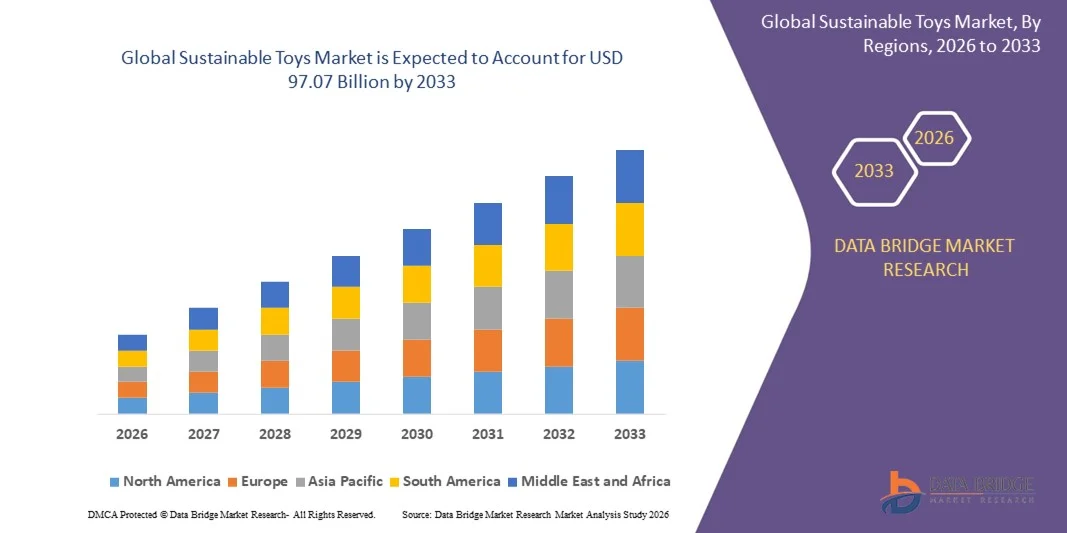
- The global sustainable toys market size was valued at USD 42.12 billion in 2025 and is expected to reach USD 97.07 billion by 2033, at a CAGR of 11.00% during the forecast period
- The market growth is largely fuelled by increasing consumer preference for eco-friendly, non-toxic, and ethically produced toys, driven by rising environmental awareness among parents and caregivers
- Growing emphasis on early childhood development, safety standards, and the use of biodegradable, recycled, and renewable materials is further supporting market expansion
Sustainable Toys Market Analysis
- The market is witnessing steady growth as manufacturers increasingly shift toward sustainable materials such as wood, organic cotton, recycled plastics, and plant-based polymers to reduce environmental impact
- Rising demand for educational, STEM-based, and creative toys made from sustainable materials is enhancing product differentiation and encouraging innovation across the global toy industry
- North America dominated the global sustainable toys market with the largest revenue share in 2025 driven by high consumer awareness regarding environmental sustainability, strong purchasing power, and growing preference for non-toxic and eco-friendly products
- Asia-Pacific region is expected to witness the highest growth rate in the global sustainable toys market, driven by expanding middle-class populations, increasing adoption of sustainable consumer products, and improving availability of eco-friendly toys across emerging economies
- The renewable wood segment held the largest market revenue share in 2025 driven by its durability, natural aesthetic appeal, and widespread consumer trust in wooden toys as safe and long-lasting alternatives to plastic. Renewable wood toys are often perceived as premium, environmentally responsible products, making them a preferred choice among eco-conscious parents and educational institutions
Report Scope and Sustainable Toys Market Segmentation
|
Attributes |
Sustainable Toys Key Market Insights |
|
Segments Covered |
|
|
Countries Covered |
North America
Europe
Asia-Pacific
Middle East and Africa
South America
|
|
Key Market Players |
|
|
Market Opportunities |
|
|
Value Added Data Infosets |
In addition to the insights on market scenarios such as market value, growth rate, segmentation, geographical coverage, and major players, the market reports curated by the Data Bridge Market Research also include in-depth expert analysis, pricing analysis, brand share analysis, consumer survey, demography analysis, supply chain analysis, value chain analysis, raw material/consumables overview, vendor selection criteria, PESTLE Analysis, Porter Analysis, and regulatory framework. |
Sustainable Toys Market Trends
Rising Demand For Eco-Friendly And Ethical Toy Products
- The increasing focus on environmentally responsible consumption is significantly shaping the sustainable toys market, as parents and caregivers prefer toys made from natural, recycled, biodegradable, and non-toxic materials. Sustainable toys are gaining strong traction due to their ability to offer safety, durability, and educational value while aligning with eco-conscious purchasing behavior. This trend is strengthening adoption across wooden toys, organic fabric toys, and recycled plastic toys, encouraging manufacturers to innovate with greener designs and materials
- Growing awareness around child safety, environmental protection, and ethical manufacturing has accelerated demand for sustainable toys across educational, learning, and developmental categories. Parents are actively seeking toys that minimize environmental impact while supporting creativity and cognitive development, prompting brands to prioritize responsible sourcing, low-impact manufacturing, and sustainable packaging
- Sustainability and transparency trends are influencing purchasing decisions, with manufacturers emphasizing eco-certifications, recyclable packaging, and ethically sourced raw materials. These factors help brands differentiate their offerings in a competitive market, build long-term consumer trust, and strengthen brand loyalty. Marketing strategies increasingly highlight sustainability credentials to appeal to environmentally conscious families
- For instance, in 2024, leading toy brands expanded their sustainable toy portfolios by introducing toys made from FSC-certified wood, recycled plastics, and organic fabrics in response to rising demand for eco-friendly play products. These launches were supported by retail, specialty toy stores, and online distribution, reinforcing brand positioning as responsible and child-safe manufacturers
- While demand for sustainable toys is rising, long-term market growth depends on cost optimization, consistent material availability, and maintaining product quality comparable to conventional toys. Manufacturers are focusing on scalable production, supply chain efficiency, and innovation to balance affordability, safety, and sustainability
Sustainable Toys Market Dynamics
Driver
Growing Preference For Eco-Friendly And Safe Toys
- Increasing consumer preference for non-toxic, eco-friendly, and ethically produced toys is a key driver for the sustainable toys market. Manufacturers are shifting away from conventional plastic-based toys toward sustainable alternatives to meet regulatory standards, enhance product appeal, and address parental safety concerns. This trend is also encouraging innovation in bio-based and recycled toy materials
- Expanding adoption of educational and developmental toys made from sustainable materials is supporting market growth. Sustainable toys offer durability, safety, and learning benefits, enabling manufacturers to meet consumer expectations for high-quality and environmentally responsible products. The rising emphasis on early childhood education further reinforces this demand
- Toy manufacturers and retailers are actively promoting sustainable toy lines through product innovation, eco-labeling, and awareness campaigns. These efforts are aligned with growing consumer interest in sustainability and responsible consumption, while also fostering collaborations between material suppliers and toy brands to reduce environmental impact
- For instance, in 2023, several global toy manufacturers reported increased sales of sustainable toy collections driven by rising demand for eco-friendly and educational products. These initiatives improved brand differentiation, increased repeat purchases, and strengthened consumer trust through transparent sustainability messaging
- Although sustainability trends strongly support growth, broader adoption relies on affordable pricing, material scalability, and efficient manufacturing processes. Continued investment in sustainable materials, production technology, and supply chain resilience will be essential to maintain competitiveness
Restraint/Challenge
Higher Cost And Limited Awareness Compared To Conventional Toys
- The higher cost of sustainable toys compared to conventional plastic toys remains a major challenge, particularly among price-sensitive consumers. Eco-friendly raw materials, certification requirements, and specialized manufacturing processes contribute to elevated product prices, limiting mass-market penetration
- Consumer awareness regarding the long-term environmental and safety benefits of sustainable toys remains uneven, especially in emerging markets. Limited understanding of sustainability claims and material advantages can slow adoption across certain consumer segments
- Supply chain and sourcing challenges also affect market growth, as sustainable toys rely on certified raw materials and ethical suppliers. Variability in material availability and higher logistics costs can impact production timelines and pricing consistency
- For instance, in 2024, several retailers reported slower sales of premium sustainable toys due to higher prices and limited consumer awareness of their benefits compared to conventional toys. Shelf space constraints and cost sensitivity also affected visibility and adoption
- Addressing these challenges will require cost-efficient manufacturing, stronger consumer education initiatives, and expanded distribution networks. Collaboration with retailers, certification bodies, and educational institutions can help unlock long-term growth potential and improve adoption of sustainable toys globally
Sustainable Toys Market Scope
The market is segmented on the basis of material, type, age group, and distribution channel
- By Material
On the basis of material, the global sustainable toys market is segmented into Renewable Wood, Cotton, Bamboo, Wool, and Others. The renewable wood segment held the largest market revenue share in 2025 driven by its durability, natural aesthetic appeal, and widespread consumer trust in wooden toys as safe and long-lasting alternatives to plastic. Renewable wood toys are often perceived as premium, environmentally responsible products, making them a preferred choice among eco-conscious parents and educational institutions.
The bamboo segment is expected to witness the fastest growth rate from 2026 to 2033 driven by its rapid renewability, lightweight nature, and increasing use in innovative toy designs. Bamboo-based toys are gaining traction due to their low environmental impact and suitability for modern sustainable manufacturing practices.
- By Type
On the basis of type, the sustainable toys market is segmented into Dolls and Action Figures, Outdoor and Sports Toys, Building and Construction Set, Infant and Preschool Toys, Games and Puzzles, and Others. The infant and preschool toys segment accounted for the largest revenue share in 2025 supported by rising parental focus on early childhood development and the preference for non-toxic, safe play materials. Sustainable infant toys are widely adopted for sensory development and learning activities during early growth stages.
The building and construction set segment is expected to witness the fastest growth rate from 2026 to 2033 owing to increasing demand for educational and skill-based toys. These toys encourage creativity, problem-solving, and motor skill development while aligning with sustainability values.
- By Age Group
Based on age group, the global sustainable toys market is segmented into 0-3 Years, 3-5 Years, 5-12 Years, and 12-18 Years. The 3-5 years segment dominated the market in 2025 driven by higher spending on learning-oriented toys that support cognitive and social development. Parents increasingly prefer sustainable toys for this age group due to safety concerns and growing awareness of environmental responsibility.
The 5-12 years segment is anticipated to register the fastest growth from 2026 to 2033 supported by rising demand for eco-friendly educational toys and games. Sustainable toys for this age group often combine entertainment with learning, making them attractive for both home and school use.
- By Distribution Channel
On the basis of distribution channel, the sustainable toys market is segmented into Super Market and Hyper Market, Specialty Stores, Online Retail, and Others. Specialty stores held the largest market share in 2025 attributed to their curated product offerings, strong focus on quality, and availability of certified sustainable toy brands. These stores often provide detailed product information, influencing informed purchase decisions.
The online retail segment is expected to witness the fastest growth rate from 2026 to 2033 driven by expanding e-commerce platforms, wider product accessibility, and increasing preference for convenient shopping. Online channels enable consumers to compare sustainable certifications, materials, and pricing, further accelerating market growth.
Sustainable Toys Market Regional Analysis
- North America dominated the global sustainable toys market with the largest revenue share in 2025 driven by high consumer awareness regarding environmental sustainability, strong purchasing power, and growing preference for non-toxic and eco-friendly products
- Consumers in the region place significant value on sustainable materials, product safety, and educational benefits, leading to increased adoption of toys made from renewable and biodegradable resources
- This strong market position is further supported by the presence of established sustainable toy brands, well-developed retail infrastructure, and rising demand for environmentally responsible products across both residential and institutional buyers
U.S. Sustainable Toys Market Insight
The U.S. sustainable toys market captured the largest revenue share in 2025 within North America fueled by rising environmental consciousness among parents and increased spending on premium, eco-friendly toys. Consumers are increasingly prioritizing child safety, ethical sourcing, and durability when purchasing toys. The growing trend of educational and Montessori-based toys, combined with strong online retail penetration and brand-driven marketing, continues to propel the sustainable toys market in the U.S.
Europe Sustainable Toys Market Insight
The Europe sustainable toys market is expected to witness the fastest growth rate from 2026 to 2033 primarily driven by stringent environmental regulations, strong emphasis on sustainability, and high adoption of eco-labeled products. Increasing awareness of plastic waste reduction and carbon footprint is encouraging consumers to shift toward sustainable toys. Growth is evident across residential, educational, and specialty retail channels, with sustainable toys increasingly featured in both new product launches and replacement purchases.
U.K. Sustainable Toys Market Insight
The U.K. sustainable toys market is expected to witness the fastest growth rate from 2026 to 2033 driven by rising demand for ethical and environmentally friendly consumer products. Growing concerns about plastic pollution, combined with strong parental focus on child health and safety, are accelerating the adoption of sustainable toys. The country’s robust e-commerce ecosystem and widespread availability of specialty toy stores further support market expansion.
Germany Sustainable Toys Market Insight
The Germany sustainable toys market is expected to witness the fastest growth rate from 2026 to 2033 supported by strong consumer awareness regarding sustainability and preference for high-quality, durable products. Germany’s focus on environmental responsibility, coupled with its well-established manufacturing base, promotes the adoption of sustainable toys across residential and educational applications. Demand is particularly strong for wooden and natural material toys aligned with eco-conscious consumer values.
Asia-Pacific Sustainable Toys Market Insight
The Asia-Pacific sustainable toys market is expected to witness the fastest growth rate from 2026 to 2033 driven by rising urbanization, increasing disposable incomes, and growing awareness of environmental issues in countries such as China, Japan, and India. Expanding middle-class populations and increasing emphasis on early childhood education are supporting demand for sustainable toys. In addition, the region’s expanding manufacturing capabilities are improving product availability and affordability.
Japan Sustainable Toys Market Insight
The Japan sustainable toys market is expected to witness the fastest growth rate from 2026 to 2033 due to the country’s strong focus on quality, safety, and innovation. Japanese consumers place high importance on child development and environmentally responsible products, driving demand for sustainable toys. The integration of traditional craftsmanship with modern sustainable materials is gaining popularity, particularly in educational and indoor play segments.
China Sustainable Toys Market Insight
The China sustainable toys market accounted for the largest market revenue share in Asia Pacific in 2025 attributed to rapid urbanization, an expanding middle class, and increasing awareness of environmental sustainability. China represents one of the largest consumer bases for toys, with growing demand for safe, non-toxic, and eco-friendly options across residential, educational, and commercial applications. The availability of cost-effective sustainable toy products and the presence of strong domestic manufacturers are key factors driving market growth in China.
Sustainable Toys Market Share
The Sustainable Toys industry is primarily led by well-established companies, including:
- Green Toys Inc. (U.S.)
- Begin Again Toys (U.S.)
- PUREPLAYKIDS (U.K.)
- eco-kids (U.S.)
- North Star Toys (U.S.)
- TEGU (U.S.)
- HABA USA (U.S.)
- Dr Zigs (U.K.)
- Luke’s Toy Factory (U.S.)
- green+simple (U.S.)
- Etsy Inc. (U.S.)
- BiOBUDDi Group B.V. (Netherlands)
- APPLE PARK LLC (U.S.)
- PlanToys (Thailand)
- Hape Toys (Germany)
- Ökonorm GmbH (Germany)
- Tender Leaf (U.K.)
- Toyi Inc. (Turkey)
- Marioinex (Poland)
- Once Kids (U.S.)
SKU-
Get online access to the report on the World's First Market Intelligence Cloud
- Interactive Data Analysis Dashboard
- Company Analysis Dashboard for high growth potential opportunities
- Research Analyst Access for customization & queries
- Competitor Analysis with Interactive dashboard
- Latest News, Updates & Trend analysis
- Harness the Power of Benchmark Analysis for Comprehensive Competitor Tracking
Research Methodology
Data collection and base year analysis are done using data collection modules with large sample sizes. The stage includes obtaining market information or related data through various sources and strategies. It includes examining and planning all the data acquired from the past in advance. It likewise envelops the examination of information inconsistencies seen across different information sources. The market data is analysed and estimated using market statistical and coherent models. Also, market share analysis and key trend analysis are the major success factors in the market report. To know more, please request an analyst call or drop down your inquiry.
The key research methodology used by DBMR research team is data triangulation which involves data mining, analysis of the impact of data variables on the market and primary (industry expert) validation. Data models include Vendor Positioning Grid, Market Time Line Analysis, Market Overview and Guide, Company Positioning Grid, Patent Analysis, Pricing Analysis, Company Market Share Analysis, Standards of Measurement, Global versus Regional and Vendor Share Analysis. To know more about the research methodology, drop in an inquiry to speak to our industry experts.
Customization Available
Data Bridge Market Research is a leader in advanced formative research. We take pride in servicing our existing and new customers with data and analysis that match and suits their goal. The report can be customized to include price trend analysis of target brands understanding the market for additional countries (ask for the list of countries), clinical trial results data, literature review, refurbished market and product base analysis. Market analysis of target competitors can be analyzed from technology-based analysis to market portfolio strategies. We can add as many competitors that you require data about in the format and data style you are looking for. Our team of analysts can also provide you data in crude raw excel files pivot tables (Fact book) or can assist you in creating presentations from the data sets available in the report.