


Spelt Milk Market Size
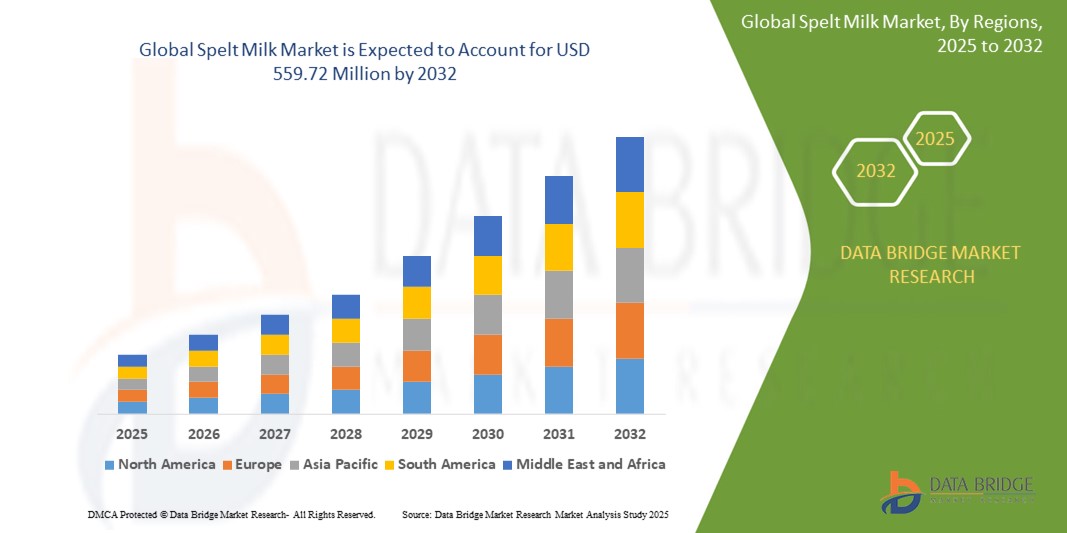
- The global spelt milk market size was valued at USD 255.48 million in 2024 and is expected to reach USD 559.72 million by 2032, at a CAGR of 10.30% during the forecast period
- The market growth is largely fueled by rising consumer preference for plant-based and lactose-free alternatives, driven by increasing cases of lactose intolerance, dairy allergies, and growing adherence to vegan and flexitarian lifestyles
- Furthermore, heightened awareness of spelt’s nutritional value—rich in fiber, protein, and essential minerals—is positioning spelt milk as a wholesome dairy substitute. These converging factors are accelerating the adoption of spelt milk products, thereby significantly boosting the industry's growth
Spelt Milk Market Analysis
- Spelt milk is a non-dairy, plant-based milk alternative made from spelt, an ancient grain related to wheat. It is produced by soaking spelt grains in water, blending them, and then straining the mixture to remove solids. Spelt milk is naturally lactose-free and is often chosen as a dairy alternative by individuals with lactose intolerance or those following a vegan diet. It is rich in nutrients such as fiber, vitamins, and minerals, and has a slightly sweet and nutty flavor
- The escalating demand for spelt milk is primarily fueled by the growing prevalence of lactose intolerance, rising vegan and flexitarian dietary trends, and a broader shift toward sustainable, non-dairy milk options among environmentally aware consumers
- Europe dominated the spelt milk market with a share of 38.9% in 2024, due to a strong consumer base for organic and plant-based products, widespread lactose intolerance, and a well-established retail infrastructure for health-focused beverages
- North America is expected to be the fastest growing region in the spelt milk market during the forecast period due to increasing lactose intolerance, growing vegan and flexitarian populations, and a surge in demand for nutritious dairy alternatives
- Liquid segment dominated the market with a market share of 68.9% due to its ready-to-consume format, growing demand for non-dairy milk alternatives in cafes and households, and its application in smoothies, cereals, and baking. Liquid spelt milk's convenience and flavor appeal are major contributors to its preference in urban markets, where consumers seek healthy, quick, and versatile beverage options
Report Scope and Spelt Milk Market Segmentation
|
Attributes |
Spelt Milk Key Market Insights |
|
Segments Covered |
|
|
Countries Covered |
North America
Europe
Asia-Pacific
Middle East and Africa
South America
|
|
Key Market Players |
|
|
Market Opportunities |
|
|
Value Added Data Infosets |
In addition to the insights on market scenarios such as market value, growth rate, segmentation, geographical coverage, and major players, the market reports curated by the Data Bridge Market Research also include in-depth expert analysis, pricing analysis, brand share analysis, consumer survey, demography analysis, supply chain analysis, value chain analysis, raw material/consumables overview, vendor selection criteria, PESTLE Analysis, Porter Analysis, and regulatory framework. |
Spelt Milk Market Trends
“Increasing Demand for Plant-Based Milk Alternatives”
- A significant and accelerating trend in the spelt milk market is the growing shift towards plant-based diets, driven by health consciousness, sustainability concerns, and ethical considerations related to animal welfare. Spelt milk, derived from the ancient grain spelt, is increasingly viewed as a nutritious, easily digestible alternative to dairy and other plant-based milks such as soy or almond
- For instance, brands such as Sharpham Park have expanded their spelt-based beverage offerings, such as Spelt Barista and Naked Oats & Spelt, targeting health-conscious consumers and specialty cafes seeking dairy-free, creamy milk alternatives
- Spelt milk’s natural nutritional profile—rich in fiber, essential minerals, and low allergenic potential—positions it as a functional beverage, gaining popularity among individuals with dairy or soy sensitivities
- The product's growing appeal is also supported by the clean-label movement, with consumers increasingly seeking beverages made with minimal, organic, and recognizable ingredients
- The rise in specialty coffee culture and the demand for dairy-free milk suitable for steaming and frothing has led to tailored innovations in spelt milk, especially barista-grade formulations
- This trend is reshaping the plant-based beverage segment, as consumers seek diversity beyond mainstream options, creating opportunities for product innovation, premiumization, and niche targeting in the spelt milk space
Spelt Milk Market Dynamics
Driver
“Rise in Vegan and Vegetarian Diets”
- The growing adoption of veganism and flexitarianism globally is a major driver propelling the spelt milk market, as consumers actively seek alternatives to dairy products that align with their ethical, environmental, and health-oriented values
- For instance, rising awareness about the carbon footprint of the dairy industry and the benefits of ancient grains has led to an upsurge in demand for grain-based milk options such as spelt, which offers a naturally sweet flavor and digestibility advantage
- The expansion of the plant-based product portfolio by health food brands and specialty retailers has also increased the visibility and accessibility of spelt milk in both online and offline channels, catering to diverse consumer preferences and dietary restrictions
- Moreover, spelt’s lower gluten content compared to wheat makes spelt milk a compelling option for individuals with mild gluten sensitivity, boosting its adoption among niche health-conscious groups
- The push toward environmental responsibility and animal welfare strongly supports market penetration in Europe and North America, where ethical consumption habits are particularly pronounced
Restraint/Challenge
“Limited Availability and Distribution of Spelt Milk”
- One of the primary challenges facing the spelt milk market is limited product availability and distribution, especially outside Western Europe where it remains a niche segment. The relatively low consumer awareness of spelt compared to oat or almond milk, along with limited shelf presence, hampers broader adoption
- For instance, while some brands such as The Bridge S.R.L and Isola Bio offer spelt milk across Europe, distribution in North America, Asia, and other regions remains sparse. Retail penetration is often confined to specialty stores or online platforms, limiting mainstream consumer access
- Overcoming this distribution bottleneck requires expanded investment in supply chain logistics, retail partnerships, and marketing efforts to educate consumers on the unique benefits of spelt milk
- Price competitiveness is also a factor, as spelt milk typically commands a premium compared to more established dairy-free alternatives
- As spelt is not as widely grown as oats or soy, raw material sourcing can also be a constraint, particularly for large-scale expansion. Companies must ensure reliable and scalable production capabilities while maintaining product quality and organic standards to meet growing demand
Spelt Milk Market Scope
The market is segmented on the basis of ingredient, distribution channel, form, and flavor.
• By Ingredient
On the basis of ingredient, the spelt milk market is segmented into fiber, gluten, proteins, vitamins, and minerals. The protein segment accounted for the largest market revenue share in 2024, driven by increasing consumer focus on plant-based protein sources for muscle development, metabolic health, and satiety. Spelt milk is naturally rich in proteins compared to other grain-based alternatives, making it a preferred choice for health-conscious individuals and fitness enthusiasts seeking dairy substitutes that support nutritional needs. The high digestibility of spelt protein and its compatibility with vegetarian and vegan diets further enhance its market demand.
The fiber segment is anticipated to witness the fastest growth rate from 2025 to 2032, fueled by rising awareness of gut health and the benefits of dietary fiber in managing cholesterol levels and promoting digestive well-being. Consumers seeking functional beverages are increasingly turning to spelt milk due to its soluble and insoluble fiber content. The shift toward clean-label, high-fiber plant-based products, especially among aging populations and individuals managing lifestyle-related disorders, is further accelerating the growth of this segment.
• By Distribution Channel
On the basis of distribution channel, the spelt milk market is segmented into online and offline. The offline segment held the largest market revenue share in 2024, supported by the strong presence of plant-based beverage options in supermarkets, hypermarkets, and health food stores. In-store promotions, immediate product availability, and the growing footprint of organic and specialty food retailers have made offline channels a key driver of consumer purchases, especially in North America and Europe.
The online segment is expected to witness the fastest CAGR from 2025 to 2032, driven by increasing digitalization, convenience in ordering, and expanding e-commerce platforms offering niche plant-based products. The availability of a wider product range, coupled with subscription services and home delivery options, is encouraging consumers to explore spelt milk brands online. Social media influence and health-focused digital marketing campaigns are further propelling online sales.
• By Form
On the basis of form, the spelt milk market is segmented into dry and liquid. The liquid segment held the largest revenue share of 68.9% in 2024, attributed to its ready-to-consume format, growing demand for non-dairy milk alternatives in cafes and households, and its application in smoothies, cereals, and baking. Liquid spelt milk's convenience and flavor appeal are major contributors to its preference in urban markets, where consumers seek healthy, quick, and versatile beverage options.
The dry form segment is projected to grow at the fastest rate during the forecast period, driven by longer shelf life, easy storage and transport, and increasing use in industrial applications such as bakery mixes, infant nutrition, and dietary supplements. Dry spelt milk is gaining traction in emerging markets where refrigeration infrastructure may be limited, and among manufacturers looking for shelf-stable, cost-effective dairy alternatives.
• By Flavor
On the basis of flavor, the spelt milk market is segmented into natural, almond, and others. The natural flavor segment held the largest market share in 2024, driven by a rising preference for clean-label products and minimally processed food items. Consumers increasingly favor natural spelt milk for its mild, nutty taste and nutritional purity, aligning with trends in organic, allergen-free, and additive-free beverages. This segment benefits from high trust among health-conscious buyers and parents seeking natural options for children.
The almond flavor segment is expected to witness the fastest CAGR from 2025 to 2032, fueled by growing demand for flavored plant-based drinks that offer both taste and nutrition. Almond-flavored spelt milk appeals to consumers transitioning from traditional flavored dairy milk, offering familiarity along with a plant-based profile. Its popularity is also enhanced by its appeal in specialty drinks, coffee, and dessert recipes across urban and premium markets.
Spelt Milk Market Regional Analysis
- Europe dominated the spelt milk market with the largest revenue share of 38.9% in 2024, driven by a strong consumer base for organic and plant-based products, widespread lactose intolerance, and a well-established retail infrastructure for health-focused beverages
- Consumer demand in Europe is shaped by heightened awareness of sustainability, clean-label nutrition, and animal welfare, which has led to increased adoption of dairy alternatives such as spelt milk
- Government initiatives supporting sustainable agriculture and the promotion of organic farming, along with rising vegan and flexitarian lifestyles, are accelerating spelt milk consumption in both retail and foodservice channels
Germany Spelt Milk Market Insight
The Germany spelt milk market captured the largest revenue share within Europe in 2024, fueled by the country’s emphasis on organic nutrition, environmental sustainability, and food traceability. German consumers increasingly favor ancient grains such as spelt for their nutritional benefits, and the demand for plant-based beverages continues to rise across supermarkets and health food chains. Local producers are expanding their spelt-based product lines to cater to this growing demand.
U.K. Spelt Milk Market Insight
The U.K. spelt milk market is expected to expand steadily over the forecast period due to increasing consumer preference for dairy-free beverages and the growing popularity of plant-based diets. British consumers are drawn to spelt milk for its nutty taste, ease of digestion, and suitability for sustainable consumption. The availability of spelt milk in both mainstream and premium retail channels, coupled with rising health awareness, is supporting market growth.
North America Spelt Milk Market Insight
North America is projected to witness the fastest CAGR from 2025 to 2032, driven by increasing lactose intolerance, growing vegan and flexitarian populations, and a surge in demand for nutritious dairy alternatives. Spelt milk is gaining popularity among health-conscious consumers looking for unique, nutrient-dense non-dairy options. The expansion of health and wellness trends, coupled with innovation in flavor varieties and clean-label spelt milk offerings, is further stimulating adoption across both online and offline channels
U.S. Spelt Milk Market Insight
The U.S. spelt milk market held the largest revenue share in North America in 2024, supported by increasing consumer interest in ancient grains, plant-based lifestyles, and clean-label beverages. The presence of major health food retailers, strong distribution networks, and an evolving preference for high-fiber, protein-rich drinks contribute to market expansion. Product innovations such as flavored spelt milk and fortified variants are also gaining traction among urban, health-conscious consumers.
Asia-Pacific Spelt Milk Market Insight
The Asia-Pacific spelt milk market is anticipated to grow at a notable pace during the forecast period, driven by rising health awareness, dietary diversification, and a growing middle class. Although traditionally rice and soy milk dominate, consumer curiosity about ancient grains and imported plant-based options is gradually opening new growth avenues. Spelt milk is being introduced in niche health stores and e-commerce platforms, particularly in urban centers of countries such as Japan, South Korea, and Australia.
Spelt Milk Market Share
The spelt milk industry is primarily led by well-established companies, including:
- THE BRIDGE S.R.L (Italy)
- Allos (Germany)
- Natumi Organic (Germany)
- Provamel (Belgium)
- Ecomil (France)
- Isola Bio (AbafoodsSrl) (Italy)
- Poggio Organic (Italy)
- BioSophia (Germany)
- Blue Diamond Growers, Inc. (U.S.)
- Califia Farms (U.S.)
- Oatly (Sweden)
- Rude Health (U.K.)
- Alpro (Belgium)
Latest Developments in Global Spelt Milk Market
- In April 2022, U.K.-based spelt specialist Sharpham Park expanded its product line with the launch of two new organic milk alternatives—Spelt Barista and Naked Oats & Spelt. These beverages, developed using organically grown spelt from Somerset, cater to rising demand for clean-label, barista-grade plant-based options. Their launch reflects the growing consumer shift toward specialty spelt-based drinks and contributes to increased visibility and premium positioning of spelt milk in the European plant-based beverage market
- In June 2020, Bellwether Farms, a family-owned dairy producer in California, launched Project Spilled Milk via Indiegogo, aiming to raise $50,000 to purchase milk from local producers and convert it into yogurt for donation to Northern California food banks. This initiative supported struggling dairy farmers during supply chain disruptions and also highlighted the role of socially responsible campaigns in strengthening brand image and increasing consumer trust in dairy-alternative producers

- Interactive Data Analysis Dashboard
- Company Analysis Dashboard for high growth potential opportunities
- Research Analyst Access for customization & queries
- Competitor Analysis with Interactive dashboard
- Latest News, Updates & Trend analysis
- Harness the Power of Benchmark Analysis for Comprehensive Competitor Tracking
Global Spelt Milk Market, Supply Chain Analysis and Ecosystem Framework
To support market growth and help clients navigate the impact of geopolitical shifts, DBMR has integrated in-depth supply chain analysis into its Global Spelt Milk Market research reports. This addition empowers clients to respond effectively to global changes affecting their industries. The supply chain analysis section includes detailed insights such as Global Spelt Milk Market consumption and production by country, price trend analysis, the impact of tariffs and geopolitical developments, and import and export trends by country and HSN code. It also highlights major suppliers with data on production capacity and company profiles, as well as key importers and exporters. In addition to research, DBMR offers specialized supply chain consulting services backed by over a decade of experience, providing solutions like supplier discovery, supplier risk assessment, price trend analysis, impact evaluation of inflation and trade route changes, and comprehensive market trend analysis.
Data collection and base year analysis are done using data collection modules with large sample sizes. The stage includes obtaining market information or related data through various sources and strategies. It includes examining and planning all the data acquired from the past in advance. It likewise envelops the examination of information inconsistencies seen across different information sources. The market data is analysed and estimated using market statistical and coherent models. Also, market share analysis and key trend analysis are the major success factors in the market report. To know more, please request an analyst call or drop down your inquiry.
The key research methodology used by DBMR research team is data triangulation which involves data mining, analysis of the impact of data variables on the market and primary (industry expert) validation. Data models include Vendor Positioning Grid, Market Time Line Analysis, Market Overview and Guide, Company Positioning Grid, Patent Analysis, Pricing Analysis, Company Market Share Analysis, Standards of Measurement, Global versus Regional and Vendor Share Analysis. To know more about the research methodology, drop in an inquiry to speak to our industry experts.
Data Bridge Market Research is a leader in advanced formative research. We take pride in servicing our existing and new customers with data and analysis that match and suits their goal. The report can be customized to include price trend analysis of target brands understanding the market for additional countries (ask for the list of countries), clinical trial results data, literature review, refurbished market and product base analysis. Market analysis of target competitors can be analyzed from technology-based analysis to market portfolio strategies. We can add as many competitors that you require data about in the format and data style you are looking for. Our team of analysts can also provide you data in crude raw excel files pivot tables (Fact book) or can assist you in creating presentations from the data sets available in the report.













