


Skin Tightening Market Size
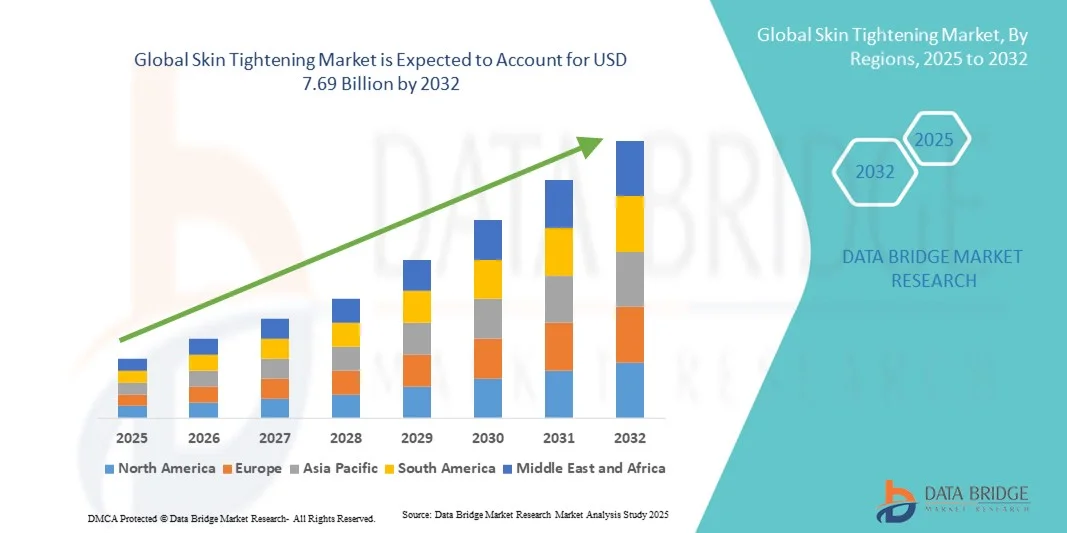
- The global skin tightening market size was valued at USD 3.82 billion in 2024 and is expected to reach USD 7.69 billion by 2032, at a CAGR of 9.15% during the forecast period
- The market growth is largely fueled by increasing consumer focus on aesthetics, wellness, and non-invasive cosmetic procedures, driving the adoption of advanced skin tightening technologies in both clinical and home-use settings
- Furthermore, rising awareness about minimally invasive treatments, growing disposable incomes, and the popularity of anti-aging solutions are accelerating the uptake of Skin Tightening solutions, thereby significantly boosting the industry's growth
Skin Tightening Market Analysis
- Non-invasive skin tightening treatments, offering advanced aesthetic solutions for facial and body contouring, are becoming increasingly popular due to their safety, minimal downtime, and effective results. These treatments are widely adopted in both clinical and medspa settings, driven by growing consumer awareness and technological innovations in radiofrequency, ultrasound, and laser-based procedures
- The escalating demand for skin tightening procedures is primarily fueled by rising aging populations, increasing disposable incomes, growing focus on personal appearance, and heightened awareness about non-surgical cosmetic treatments
- North America dominated the skin tightening market with the largest revenue share of 41.5% in 2024, supported by well-established cosmetic clinics, high healthcare expenditure, and strong adoption of technologically advanced treatment devices. The U.S., in particular, witnessed substantial growth due to increasing investment in aesthetic clinics, rising awareness of non-invasive treatments, and strong participation of both established companies and startups developing innovative skin tightening systems
- Asia-Pacific is expected to be the fastest-growing region in the skin tightening market during the forecast period, with a CAGR of 11.2% from 2025 to 2030, driven by increasing urbanization, rising disposable incomes, expanding medical tourism, and growing adoption of advanced aesthetic technologies in countries such as China, India, and Japan. The region’s developing cosmetic market and increasing awareness about minimally invasive procedures further propel demand
- The Non-Invasive segment dominated the skin tightening market with a revenue share of 60.4% in 2024, due to its minimal risk, no downtime, and broad acceptance among patients seeking subtle and natural-looking results
Report Scope and Skin Tightening Market Segmentation
|
Attributes |
Skin Tightening Key Market Insights |
|
Segments Covered |
|
|
Countries Covered |
North America
Europe
Asia-Pacific
Middle East and Africa
South America
|
|
Key Market Players |
|
|
Market Opportunities |
|
|
Value Added Data Infosets |
In addition to the insights on market scenarios such as market value, growth rate, segmentation, geographical coverage, and major players, the market reports curated by the Data Bridge Market Research also include in-depth expert analysis, pricing analysis, brand share analysis, consumer survey, demography analysis, supply chain analysis, value chain analysis, raw material/consumables overview, vendor selection criteria, PESTLE Analysis, Porter Analysis, and regulatory framework. |
Skin Tightening Market Trends
Enhanced Convenience Through Technological Advancements in Skin Tightening
- A significant and accelerating trend in the global skin tightening market is the adoption of advanced technologies such as high-intensity focused ultrasound (HIFU), radiofrequency (RF), and laser-based systems. These innovations are improving treatment efficacy, reducing recovery times, and offering patients non-invasive alternatives to surgical procedures
- For instance, in 2023, Ulthera by Merz Aesthetics introduced an upgraded HIFU system with real-time imaging for more precise facial treatments, allowing practitioners to target deeper tissue layers with enhanced accuracy
- Modern devices increasingly incorporate AI-driven treatment protocols that adjust energy levels automatically based on skin type, age, and tissue resistance, improving both safety and effectiveness
- Clinics and medspas are also integrating cloud-based patient management systems, enabling better monitoring of treatment progress and personalized follow-ups
- The trend toward combining multiple modalities (e.g., RF + ultrasound) for synergistic effects is gaining traction, providing comprehensive skin tightening and lifting in a single session
- Overall, these technological advancements are reshaping patient expectations, driving demand for safer, faster, and more effective non-invasive skin tightening treatments globally
Skin Tightening Market Dynamics
Driver
Rising Demand for Non-Invasive Aesthetic Treatments
- The global Skin Tightening market is witnessing strong growth due to the increasing preference for non-invasive aesthetic procedures over traditional surgical interventions. Consumers are becoming more conscious of their appearance and are seeking treatments that provide visible improvements with minimal recovery time and reduced risk
- For instance, in March 2024, Cynosure, Inc. reported a notable increase in adoption of its RF-based skin tightening devices across North America, reflecting the rising popularity of non-surgical procedures among both dermatologists and medspa chains
- High disposable incomes, increasing awareness through social media, and a growing aging population contribute to heightened demand for effective, minimally invasive skin rejuvenation solutions
- Medical professionals are increasingly recommending skin tightening treatments as preventive anti-aging solutions, broadening the customer base beyond traditional cosmetic clientele
- The availability of multi-modal devices that combine technologies such as HIFU and radiofrequency allows clinics to offer comprehensive treatments in a single session, enhancing patient satisfaction and repeat visits
- Collaborations between device manufacturers and leading aesthetic clinics are also facilitating wider access to advanced technologies, driving market penetration
- The convenience of in-office procedures that do not require hospitalization or extensive downtime is an important factor contributing to adoption
- Consumers are increasingly motivated by results that are natural-looking and long-lasting, boosting the overall appeal of non-invasive treatments
- Government and private investments in medical aesthetics research and advanced device development further strengthen market growth
- Overall, the combination of technological innovation, patient preference for non-invasive procedures, and rising awareness is propelling the global Skin Tightening market forward
Restraint/Challenge
High Initial Costs and Regulatory Concerns
- Despite rising demand, the skin tightening market faces challenges due to the high capital investment required for advanced treatment devices, making them less accessible to smaller clinics and emerging markets
- For instance, Thermage FLX systems often cost over USD 100,000, which can be prohibitive for small or mid-sized aesthetic centers, limiting widespread adoption despite patient interest
- In addition, regulatory requirements in different countries can delay product approvals, increase operational costs, and create barriers for manufacturers attempting to enter new regions
- Patients sometimes remain hesitant due to concerns about side effects, variable efficacy, and lack of awareness regarding technological advancements in non-invasive treatments
- Training and certification requirements for clinicians to operate sophisticated devices add another layer of complexity, increasing costs and slowing adoption rates
- The need for regular maintenance, software updates, and consumable replacement further contributes to the total cost of ownership, deterring smaller clinics
- Some emerging markets also face limited availability of advanced devices, restricting patient access and limiting market expansion in those regions
- Addressing these challenges requires manufacturers to offer financing options, cost-effective device models, and comprehensive clinician training programs
- Patient education campaigns highlighting safety, efficiency, and minimally invasive benefits are essential to alleviate hesitations and increase confidence in these treatments
- Overall, high initial costs and regulatory complexities remain key challenges to broader market growth, though gradual adoption and education are expected to mitigate these restraints over time
Skin Tightening Market Scope
The market is segmented on the basis of product type, portability, treatment type, application, end user, and distribution channel.
- By Product Type
On the basis of product type, the skin tightening market is segmented into radio frequency skin tightening, laser skin tightening, and ultrasound skin tightening. The Radio Frequency Skin Tightening segment dominated the market with the largest revenue share of 45.6% in 2024, driven by its proven efficacy in reducing sagging and improving skin elasticity without downtime. Clinics prefer RF-based devices due to their versatility for both facial and body treatments, and their compatibility with multi-session regimens enhances patient satisfaction. Moreover, continuous technological advancements, such as fractional RF and combination therapies, have further increased adoption. The segment also benefits from strong endorsements by dermatologists and beauty professionals, making it a preferred choice in North America and Europe. Availability of portable RF devices for smaller clinics and homecare use is expanding market reach. Patients increasingly seek non-invasive solutions that provide noticeable results, driving repeat treatments. Marketing initiatives highlighting minimal side effects and gradual visible improvements also attract more users.
The laser skin tightening segment is expected to witness the fastest CAGR of 10.8% from 2025 to 2032, driven by advancements in non-ablative and fractional laser technologies that offer significant skin rejuvenation results with minimal downtime. Laser devices are increasingly being adopted for targeted treatments such as wrinkle reduction, skin tone improvement, and mild lifting effects. Clinics and dermatology centers favor laser devices for their precision and reproducibility. Rising consumer awareness through social media and aesthetic blogs has significantly boosted adoption rates. Countries in Asia-Pacific, including China, Japan, and South Korea, are witnessing rapid expansion due to increased investments in dermatology clinics and cosmetic centers. New product launches and hybrid devices combining laser with RF or ultrasound further enhance efficacy and appeal. Marketing campaigns emphasizing visible improvements in fewer sessions also contribute to growth. The segment’s adoption is further strengthened by partnerships between device manufacturers and beauty chains, providing easier access for end users.
- By Portability
On the basis of portability, the skin tightening market is segmented into portable and standalone devices. The Standalone segment dominated the market with a revenue share of 52.3% in 2024, attributed to its suitability for clinic-based treatments, higher power output, and multi-functionality. These devices offer consistent results across multiple treatment areas, making them attractive for dermatology clinics and hospitals. Clinics also prefer standalone systems due to their reliability, larger treatment head options, and compatibility with various treatment protocols. The segment benefits from higher patient throughput and repeat sessions, enhancing revenue potential. Integration with monitoring systems and software for session tracking supports precision treatment. Strong marketing support, aesthetic training programs, and regulatory compliance further reinforce adoption. End users perceive standalone systems as professional-grade devices that deliver superior results. Increasing demand for non-invasive procedures and the growing number of cosmetic centers worldwide continue to drive growth.
The Portable segment is anticipated to witness the fastest CAGR of 11.2% from 2025 to 2032, driven by demand for homecare solutions and flexible clinic-based applications. Compact and easy-to-use devices allow dermatologists and beauty professionals to offer on-demand treatments in smaller spaces or during mobile service sessions. The rising popularity of self-care routines and at-home aesthetic treatments supports market growth. Consumer preference for devices that can provide visible results without clinic visits is increasing. Technological innovation, such as battery-operated RF or laser devices with safety features, encourages adoption. Affordable pricing and easy availability through online channels further expand reach. Growing urbanization, rising disposable incomes, and increasing awareness of anti-aging treatments are accelerating adoption, particularly in Asia-Pacific. The segment benefits from influencer-led marketing campaigns that highlight convenience, effectiveness, and gradual skin improvements. Partnerships with beauty salons and cosmetic retailers facilitate wider access. In addition, product designs with intuitive user interfaces improve safety and usability, boosting consumer confidence. Increasing R&D investments ensure continual innovation in portable devices, further propelling growth.
- By Treatment Type
On the basis of treatment type, the skin tightening market is segmented into non-invasive and minimally invasive treatments. The non-invasive segment dominated with a revenue share of 60.4% in 2024, due to its minimal risk, no downtime, and broad acceptance among patients seeking subtle and natural-looking results. These treatments are widely preferred for facial rejuvenation, body contouring, and wrinkle reduction. Dermatology clinics, medspas, and cosmetic centers favor non-invasive procedures for their safety, repeatability, and predictable outcomes. Patient preference for non-surgical options, coupled with effective marketing highlighting gradual improvements, drives demand. Strong adoption in North America and Europe is supported by well-established clinics and robust healthcare infrastructure.
The minimally invasive segment is expected to witness the fastest CAGR of 9.8% from 2025 to 2032, driven by demand for procedures such as microneedling RF and laser-assisted treatments that combine minimal downtime with enhanced efficacy. Adoption is fueled by clinics targeting patients seeking quicker and more pronounced results than non-invasive options alone. Integration of advanced technologies, increasing availability of combined treatment modalities, and rising awareness of anti-aging solutions support market expansion. Growth is further accelerated by strategic product launches and rising investments in aesthetic clinics in emerging markets.
- By Application
On the basis of application, the skin tightening market is segmented into reduce wrinkles, face lifting, body lifting, anti-aging, and others. The reduce wrinkles segment dominated the market with a revenue share of 48.7% in 2024, driven by the increasing aging population worldwide and a growing emphasis on maintaining youthful facial appearances. Patients are increasingly seeking early interventions to address fine lines and wrinkles, which has led clinics and dermatology centers to prioritize wrinkle reduction treatments. The segment benefits from strong repeat treatment rates, as multiple sessions are often recommended for optimal results, enhancing revenue opportunities for service providers. Rising awareness through dermatology campaigns, beauty magazines, and online platforms has also fueled demand. Technological advancements in radiofrequency, laser, and ultrasound devices specifically targeting wrinkle reduction further reinforce the segment’s dominance. The widespread adoption in developed regions such as North America and Europe, along with emerging interest in Asia-Pacific, strengthens the segment’s market position.
The Face Lifting segment is projected to witness the fastest CAGR of 10.5% from 2025 to 2032, driven by rising demand for non-surgical lifting solutions among younger consumers, working professionals, and those seeking minimally invasive enhancements. Awareness campaigns, social media influence, and endorsements from dermatologists and beauty influencers highlight the effectiveness of face-lifting procedures, contributing to adoption. Multi-modal devices that combine radiofrequency, ultrasound, and laser technologies provide precise lifting and toning, increasing appeal among patients. Rapid urbanization and rising disposable incomes in emerging markets such as India, China, and Southeast Asia are creating new opportunities for clinic-based treatments. Clinics and beauty centers are investing in modern equipment to offer safe and effective face-lifting solutions with minimal downtime. Increasing awareness of anti-aging benefits and the desire for youthful facial contours drive repeat sessions and customer loyalty. Regulatory approvals for innovative lifting devices in major regions ensure safety and build consumer confidence.
- By End User
On the basis of end user, the Skin Tightening market is segmented into Dermatology Clinics, Hospitals, Beauty Salons & Cosmetic Centers, and Homecare. The Dermatology Clinics segment dominated with a revenue share of 42.9% in 2024, driven by established trust, professional supervision, and access to advanced treatment devices. Clinics provide personalized treatment plans, professional monitoring, and follow-up sessions, ensuring optimal results and patient satisfaction. The preference for clinic-based treatments stems from the availability of multi-modal equipment capable of targeting different skin concerns, from wrinkles to body lifting. Clinics also benefit from repeat visits, creating consistent revenue streams. Increasing awareness about the efficacy of non-invasive and minimally invasive procedures encourages patients to seek professional services. Strong adoption in North America and Europe, coupled with rising investments in dermatology infrastructure, reinforces the segment’s dominance. Partnerships between clinics and device manufacturers for training and technical support further facilitate adoption. Patient education on safety, efficacy, and long-term benefits enhances market penetration.
The Beauty Salons & Cosmetic Centers segment is expected to witness the fastest CAGR of 10.9% from 2025 to 2032, fueled by rising adoption of aesthetic services in urban areas and smaller towns. Salons and cosmetic centers provide accessible and affordable treatment options compared to hospitals, making them appealing to younger demographics. Marketing campaigns highlighting non-invasive procedures, short recovery times, and visible improvements drive consumer interest. Increasing consumer disposable income and awareness about beauty and anti-aging treatments support growth. Technological advancements have enabled salons to offer multi-functional devices that provide wrinkle reduction, face lifting, and body toning, further boosting adoption. The segment is also benefiting from training programs that equip beauty professionals to safely administer skin tightening treatments. Growth in the e-commerce space for booking appointments and treatment packages accelerates market penetration. Expansion of beauty centers in emerging markets such as Asia-Pacific, Latin America, and the Middle East provides new revenue opportunities. Rising interest in self-care routines and wellness trends ensures repeat usage and long-term segment growth.
- By Distribution Channel
On the basis of distribution channel, the Skin Tightening market is segmented into Direct, Tenders, and Retail. The Direct segment dominated the market with a share of 51.2% in 2024, driven by strong relationships between device manufacturers and end users such as dermatology clinics, hospitals, and large cosmetic centers. Direct sales allow manufacturers to provide training, technical support, and maintenance services, ensuring optimal device performance. Promotional campaigns and hands-on demonstrations enhance buyer confidence. The segment benefits from bulk sales to professional establishments and long-term service contracts, providing a stable revenue stream. Strong brand presence, regulatory approvals, and targeted marketing strategies further support adoption. The preference for direct procurement is higher among large clinics and hospital chains due to guaranteed authenticity, support, and warranty services.
The Retail segment is expected to witness the fastest CAGR of 11.5% from 2025 to 2032, driven by growing availability of homecare skin tightening devices, online marketplaces, and consumer preference for self-administered treatments. E-commerce penetration allows wider accessibility of devices and educational content about their safe usage. Rising awareness about non-invasive aesthetic procedures and self-care routines further drives adoption. Affordably priced devices targeting wrinkle reduction, face lifting, and anti-aging treatments are becoming increasingly popular. Marketing campaigns on social media and influencer endorsements enhance visibility and create demand. Retail channels also benefit from innovative packaging, user-friendly designs, and warranty offerings that increase consumer confidence. Growth in emerging markets, coupled with rising disposable incomes, provides additional opportunities for retail expansion.
Skin Tightening Market Regional Analysis
- North America dominated the skin tightening market with the largest revenue share of 41.5% in 2024, supported by well-established cosmetic clinics, high healthcare expenditure, and strong adoption of technologically advanced treatment devices
- The U.S., in particular, witnessed substantial growth due to increasing investment in aesthetic clinics, rising awareness of non-invasive treatments, and strong participation of both established companies and startups developing innovative skin tightening systems
- High consumer spending on beauty and wellness, coupled with an aging population seeking minimally invasive solutions, is further driving market expansion in the region
U.S. Skin Tightening Market Insight
The U.S. skin tightening market captured the largest revenue share within North America in 2024, fueled by the increasing adoption of advanced devices and systems for non-invasive and minimally invasive treatments. Growing awareness of aesthetic procedures, along with rising demand for effective wrinkle reduction, face lifting, and body contouring solutions, is boosting market growth. In addition, investment in research and development by cosmetic technology companies is enhancing device efficacy and safety, further propelling market adoption.
Europe Skin Tightening Market Insight
The Europe skin tightening market is projected to expand at a substantial CAGR during the forecast period, driven by well-established cosmetic clinics, increasing urbanization, and rising preference for non-invasive aesthetic procedures. Consumers in Europe are increasingly seeking advanced skin tightening solutions for anti-aging and body contouring purposes. The market growth is further supported by strong healthcare infrastructure, favorable reimbursement policies, and the expansion of cosmetic services in both metropolitan and regional areas.
U.K. Skin Tightening Market Insight
The U.K. skin tightening market is anticipated to grow at a noteworthy CAGR during the forecast period, driven by increasing awareness of aesthetic procedures and rising adoption of non-invasive and minimally invasive treatments. Growing concerns about aging, along with increasing disposable income, are encouraging both individuals and clinics to invest in innovative skin tightening technologies. The expansion of dermatology and cosmetic clinics across the country further supports market development.
Germany Skin Tightening Market Insight
The Germany skin tightening market is expected to expand at a considerable CAGR during the forecast period, fueled by rising awareness about aesthetic wellness, advanced cosmetic clinics, and adoption of high-tech skin tightening devices. Increasing consumer preference for non-invasive procedures for wrinkle reduction, face lifting, and body contouring is driving growth. Government support for medical innovation and well-established healthcare infrastructure also contribute to market expansion in Germany.
Asia-Pacific Skin Tightening Market Insight
The Asia-Pacific skin tightening market is expected to be the fastest-growing region during the forecast period, with a CAGR of 11.2% from 2025 to 2030. Growth is driven by increasing urbanization, rising disposable incomes, expanding medical tourism, and growing adoption of advanced aesthetic technologies in countries such as China, India, and Japan. The region’s developing cosmetic market, rising awareness about minimally invasive procedures, and expansion of dermatology and beauty clinics further propel demand.
Japan Skin Tightening Market Insight
The Japan skin tightening market is gaining momentum due to a high-tech healthcare environment, increasing aging population, and growing demand for non-invasive aesthetic treatments. Consumers are increasingly adopting advanced skin tightening procedures for wrinkle reduction, face lifting, and anti-aging purposes. The presence of well-equipped cosmetic and dermatology clinics, along with technological innovations in treatment devices, is further driving market growth.
China Skin Tightening Market Insight
The China skin tightening market accounted for the largest revenue share in Asia-Pacific in 2024, attributed to rapid urbanization, increasing disposable incomes, and strong adoption of advanced aesthetic treatment technologies. Expanding medical tourism, rising awareness of minimally invasive procedures, and government support for healthcare innovations are key factors driving market growth. The growing number of cosmetic clinics and technological advancements in skin tightening devices further support the market’s expansion in China.
Skin Tightening Market Share
The Skin Tightening industry is primarily led by well-established companies, including:
- Lumenis Be Ltd. (Israel)
- Cynosure (U.S.)
- Cutera, Inc. (U.S.)
- BTL Group of Companies (Slovakia)
- Alma Lasers (Israel)
- Candela Corporation (U.S.)
- Jeisys Medical Inc. (South Korea)
- Venus Concept (Canada)
- Sciton (U.S.)
- InMode Ltd. (Israel)
- EndyMed (Israel)
- Fotona (Slovenia)
- Hologic, Inc. (U.S.)
- Merz North America, Inc. (U.S.)
Latest Developments in Global Skin Tightening Market
- In July 2021, NuFACE launched its IonPlex Ionized Skincare Activators, a line of skincare products designed to enhance the effectiveness of microcurrent devices. These activators are formulated with electrolytes to promote ionic balance on the skin's surface, aiming to strengthen the skin's moisture barrier and improve overall skin appearance
- In September 2024, Merz Aesthetics introduced the Ultherapy PRIME platform, an advanced FDA-cleared ultrasound technology for non-surgical skin lifting. This platform features real-time imaging capabilities, allowing for personalized treatment targeting specific tissue layers to achieve a more youthful appearance
- In January 2025, NuFACE launched the FIX MicroWand, a portable microcurrent device designed for targeted treatments of the eyes, lips, and fine lines. The device offers instant visible results and is marketed as a convenient solution for on-the-go beauty enthusiasts
- In September 2025, Cartessa Aesthetics announced the launch of the Ultraformer MPT in Canada. This device utilizes High-Intensity Focused Ultrasound (HIFU) technology for non-invasive skin tightening and lifting treatments. With over 19,000 units placed globally, the Ultraformer MPT is now available to Canadian practitioners
- In September 2025, Cartessa Aesthetics highlighted the growing demand for non-surgical skin tightening treatments, projecting the market to grow from USD1 billion in 2023 to USD1.62 billion by 2029. This growth is attributed to advancements in technologies such as monopolar RF with water cooling, which enhance treatment precision and patient comfort

- Interactive Data Analysis Dashboard
- Company Analysis Dashboard for high growth potential opportunities
- Research Analyst Access for customization & queries
- Competitor Analysis with Interactive dashboard
- Latest News, Updates & Trend analysis
- Harness the Power of Benchmark Analysis for Comprehensive Competitor Tracking
Data collection and base year analysis are done using data collection modules with large sample sizes. The stage includes obtaining market information or related data through various sources and strategies. It includes examining and planning all the data acquired from the past in advance. It likewise envelops the examination of information inconsistencies seen across different information sources. The market data is analysed and estimated using market statistical and coherent models. Also, market share analysis and key trend analysis are the major success factors in the market report. To know more, please request an analyst call or drop down your inquiry.
The key research methodology used by DBMR research team is data triangulation which involves data mining, analysis of the impact of data variables on the market and primary (industry expert) validation. Data models include Vendor Positioning Grid, Market Time Line Analysis, Market Overview and Guide, Company Positioning Grid, Patent Analysis, Pricing Analysis, Company Market Share Analysis, Standards of Measurement, Global versus Regional and Vendor Share Analysis. To know more about the research methodology, drop in an inquiry to speak to our industry experts.
Data Bridge Market Research is a leader in advanced formative research. We take pride in servicing our existing and new customers with data and analysis that match and suits their goal. The report can be customized to include price trend analysis of target brands understanding the market for additional countries (ask for the list of countries), clinical trial results data, literature review, refurbished market and product base analysis. Market analysis of target competitors can be analyzed from technology-based analysis to market portfolio strategies. We can add as many competitors that you require data about in the format and data style you are looking for. Our team of analysts can also provide you data in crude raw excel files pivot tables (Fact book) or can assist you in creating presentations from the data sets available in the report.













