


Scanning Laser Ophthalmoscope Market Overview
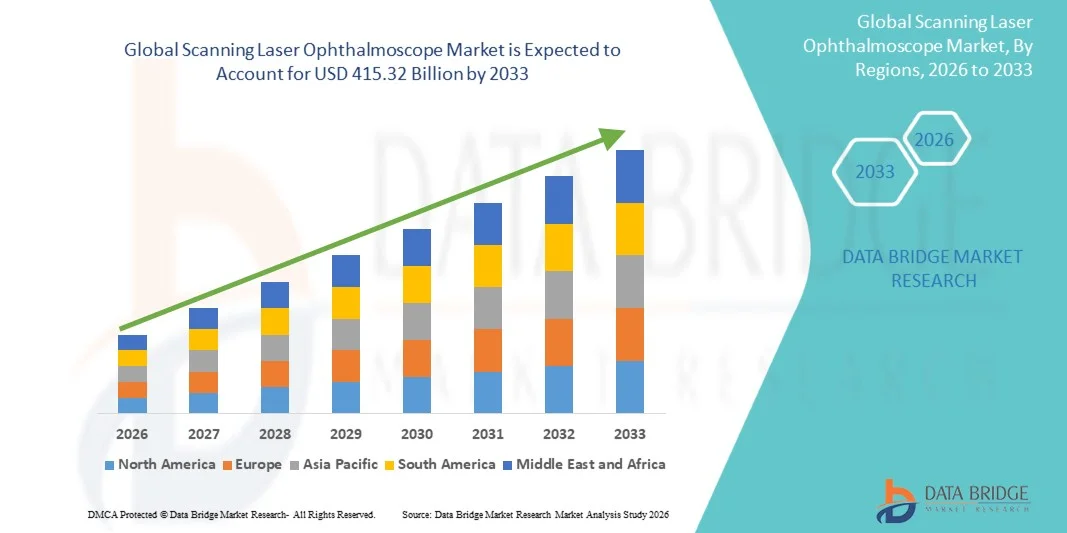
The Scanning Laser Ophthalmoscope Market was valued at USD 185.50 billion in 2025 and is projected to reach USD 415.32 billion by 2033, growing at a CAGR of 10.60% from 2026 to 2033. The Scanning Laser Ophthalmoscope Market is experiencing steady growth driven by the rising prevalence of retinal disorders, increasing demand for advanced ophthalmic diagnostic technologies, and continuous advancements in retinal imaging systems. Growing awareness regarding early detection of vision-threatening diseases, coupled with expanding investments in eye care infrastructure, is further supporting market expansion across developed and emerging healthcare markets.
The increasing incidence of age-related macular degeneration (AMD), diabetic retinopathy, glaucoma, and other retinal diseases is encouraging hospitals, ophthalmology clinics, and diagnostic centers to adopt advanced scanning laser ophthalmoscope systems for high-resolution retinal imaging and disease monitoring. Scanning laser ophthalmoscopes provide detailed visualization of retinal structures, enabling earlier diagnosis, improved treatment planning, and enhanced patient outcomes. In addition, technological advancements such as multimodal imaging, ultra-widefield retinal imaging, adaptive optics integration, and artificial intelligence-assisted image analysis are improving diagnostic accuracy and workflow efficiency. These innovations, combined with growing demand for non-invasive ophthalmic imaging solutions and increasing adoption of preventive eye care practices, are accelerating the growth of the Scanning Laser Ophthalmoscope Market.
Key Market Trends & Insights
- North America dominated the Scanning Laser Ophthalmoscope Market with the largest revenue share of 38.42% in 2025, supported by advanced ophthalmic healthcare infrastructure, high adoption of retinal imaging technologies, increasing prevalence of eye disorders, and the presence of leading medical device manufacturers and research institutions.
- The Binocular Ophthalmoscope segment dominated the market with a share of 64.38% in 2025 due to its superior stereoscopic visualization capabilities, enhanced depth perception, and ability to provide detailed retinal examination.
- Asia-Pacific is expected to be the fastest-growing region at a CAGR of 8.3% from 2026 to 2033, fueled by expanding healthcare infrastructure, increasing awareness of eye health, rising prevalence of diabetic retinopathy and age-related macular degeneration, and growing investments in advanced ophthalmic diagnostic technologies across China, India, and Japan.
- The Binocular Ophthalmoscope segment is projected to be the fastest-growing application category, registering a CAGR of 8.0% during the forecast period, owing to its enhanced depth perception, wider field of view, and increasing use in advanced retinal diagnostics and surgical planning.
- The Hospitals segment dominates the end-user category with a 46.73% revenue share in 2025, supported by high patient volumes, availability of specialized ophthalmology departments, access to advanced imaging equipment, and increasing retinal disease screening programs.
- The Diagnostic Centers segment is anticipated to witness significant growth, driven by increasing demand for specialized eye examinations, expanding access to advanced retinal imaging services, and growing adoption of non-invasive diagnostic technologies.
- Technological advancements in scanning laser imaging, including high-resolution retinal visualization, wide-field imaging capabilities, and integration with artificial intelligence-based diagnostic software, are accelerating adoption across clinical and research settings.
- Growing utilization of scanning laser ophthalmoscopes for the early detection and monitoring of retinal diseases such as diabetic retinopathy, glaucoma, age-related macular degeneration, and retinal vascular disorders continues to support long-term market growth globally.
Market Size & Forecast
- Global Market Value (2025): USD 185.50 Billion
- Expected Market Value (2033): USD 415.32 Billion
- Forecast CAGR (2026–2033): 10.60%
- Leading Region in 2025: North America
- Fastest Growing Region: Asia-Pacific
Report Scope and Scanning Laser Ophthalmoscope Market Segmentation
|
Attributes |
Scanning Laser Ophthalmoscope Key Market Insights |
|
Segments Covered |
|
|
Countries Covered |
North America · U.S. · Canada · Mexico Europe · Germany · France · U.K. · Netherlands · Switzerland · Belgium · Russia · Italy · Spain · Turkey · Rest of Europe Asia-Pacific · China · Japan · India · South Korea · Singapore · Malaysia · Australia · Thailand · Indonesia · Philippines · Rest of Asia-Pacific Middle East and Africa · Saudi Arabia · U.A.E. · South Africa · Egypt · Israel · Rest of Middle East and Africa South America · Brazil · Argentina · Rest of South America |
|
Key Market Players |
• Carl Zeiss Meditec AG (Germany) |
|
Market Opportunities |
· Growing Demand for Early Detection of Retinal Diseases · Integration of Artificial Intelligence and Advanced Imaging Technologies · Expansion of Eye Care Infrastructure in Emerging Markets |
|
Value Added Data Infosets |
In addition to the insights on market scenarios such as market value, growth rate, segmentation, geographical coverage, and major players, the market reports curated by the Data Bridge Market Research also include in-depth expert analysis, geographically represented company-wise production and capacity, network layouts of distributors and partners, detailed and updated price trend analysis and deficit analysis of supply chain and demand. |
Scanning Laser Ophthalmoscope Market Trends
Trend: Increasing Adoption of Advanced Retinal Imaging for Early Disease Detection
The Scanning Laser Ophthalmoscope Market is witnessing significant growth due to the increasing adoption of advanced retinal imaging technologies for the early detection and monitoring of vision-threatening eye diseases. Scanning laser ophthalmoscopes provide high-resolution retinal images with enhanced contrast and depth visualization, enabling clinicians to identify subtle retinal abnormalities that may not be visible through conventional imaging methods. The growing prevalence of diabetic retinopathy, glaucoma, age-related macular degeneration (AMD), and retinal vascular disorders is accelerating demand for advanced ophthalmic diagnostic equipment. Furthermore, the integration of wide-field imaging, fundus autofluorescence, and artificial intelligence-assisted image analysis is improving diagnostic accuracy and supporting more effective disease management across hospitals, clinics, and diagnostic centers.
Scanning Laser Ophthalmoscope Market Dynamics
Key Market Driver: Rising Prevalence of Retinal Disorders and Growing Demand for Early Diagnosis
The increasing global burden of retinal diseases is a major driver for the Scanning Laser Ophthalmoscope market. According to the World Health Organization, vision impairment and blindness continue to affect hundreds of millions of people worldwide, with diabetic retinopathy, glaucoma, and age-related macular degeneration among the leading causes of irreversible vision loss.
Scanning laser ophthalmoscopy enables early detection of retinal abnormalities through high-resolution imaging and enhanced visualization of retinal structures. Healthcare providers are increasingly utilizing these systems to improve screening outcomes, monitor disease progression, and support treatment planning. The growing prevalence of diabetes globally has further increased demand for retinal screening programs, as diabetic retinopathy remains one of the most common complications associated with long-term diabetes. In addition, expanding awareness of preventive eye care and increasing adoption of advanced ophthalmic imaging technologies are supporting market growth.
Key Restraint/Challenge: High Equipment Costs and Limited Accessibility in Developing Regions
A significant challenge in the Scanning Laser Ophthalmoscope Market is the high cost associated with advanced imaging systems and related infrastructure. Modern scanning laser ophthalmoscopes incorporate sophisticated laser optics, high-resolution imaging sensors, image processing software, and multimodal imaging capabilities, resulting in substantial acquisition and maintenance expenses.
Smaller ophthalmology clinics, diagnostic centers, and healthcare facilities in developing economies may face budget constraints that limit adoption of advanced retinal imaging technologies. In addition, the need for trained ophthalmologists and imaging specialists to operate and interpret diagnostic results can create operational challenges. Limited reimbursement coverage in certain healthcare systems and the high cost of equipment upgrades further contribute to market barriers, particularly in underserved regions.
Key Market Opportunity: Integration of Artificial Intelligence and Multimodal Retinal Imaging Platforms
The integration of artificial intelligence (AI) and multimodal retinal imaging technologies presents a significant opportunity for the Scanning Laser Ophthalmoscope market. AI-powered diagnostic algorithms can assist clinicians in detecting retinal diseases at earlier stages, improving screening efficiency and reducing diagnostic variability.
For instance, ophthalmic imaging manufacturers are increasingly incorporating AI-based image analysis tools capable of identifying diabetic retinopathy, glaucoma-related optic nerve damage, and age-related macular degeneration from retinal scans. The combination of scanning laser ophthalmoscopy with optical coherence tomography (OCT), fundus autofluorescence, and angiography technologies is creating comprehensive diagnostic platforms that provide deeper insights into retinal health. Furthermore, the growing adoption of teleophthalmology services and remote retinal screening programs is expanding access to advanced eye care diagnostics, particularly in rural and underserved areas. Increasing investments in digital healthcare, rising awareness of preventive ophthalmic care, and expanding healthcare infrastructure across North America, Europe, and Asia-Pacific are expected to create substantial growth opportunities for the Scanning Laser Ophthalmoscope market throughout the forecast period.
Scanning Laser Ophthalmoscope Market Scope
The Scanning Laser Ophthalmoscope market is segmented on the basis of application and end-user.
- By Application
On the basis of application, the Scanning Laser Ophthalmoscope Market is segmented into Monocular Ophthalmoscope and Binocular Ophthalmoscope. The Binocular Ophthalmoscope segment dominated the market with a share of 64.38% in 2025 due to its superior stereoscopic visualization capabilities, enhanced depth perception, and ability to provide detailed retinal examination. Binocular systems are widely utilized in hospitals, ophthalmology clinics, and specialized eye care centers for diagnosing retinal disorders, glaucoma, diabetic retinopathy, and age-related macular degeneration. The growing prevalence of vision-related diseases, increasing adoption of advanced ophthalmic imaging technologies, and rising demand for accurate retinal diagnostics are supporting segment growth. Furthermore, ongoing technological advancements including ultra-widefield imaging, digital visualization systems, and AI-assisted diagnostic capabilities are improving clinical efficiency and patient outcomes. Increasing investments in ophthalmic healthcare infrastructure and expanding access to specialized eye care services continue to reinforce the dominant position of the binocular ophthalmoscope segment globally.
The Monocular Ophthalmoscope segment is expected to witness the fastest CAGR of 7.1% from 2026 to 2033. Growth is driven by increasing demand for portable, cost-effective, and easy-to-use ophthalmic diagnostic devices across primary healthcare settings and emerging markets. Monocular ophthalmoscopes are widely adopted for routine eye examinations, community screening programs, and point-of-care diagnostics due to their affordability and operational simplicity. Rising awareness regarding preventive eye care, expanding vision screening initiatives, and growing healthcare accessibility in rural and underserved regions are accelerating segment growth. In addition, advancements in portable imaging technologies, battery-operated devices, and teleophthalmology integration are enhancing the utility of monocular ophthalmoscopes, supporting rapid market expansion throughout the forecast period.
- By End-User
On the basis of end-user, the Scanning Laser Ophthalmoscope Market is segmented into Hospitals, Clinics, Diagnostic Centers, and Others. The Hospitals segment dominated the market with a share of 46.92% in 2025 due to the presence of advanced ophthalmic diagnostic infrastructure, skilled ophthalmologists, and comprehensive eye care services. Hospitals serve as primary centers for diagnosing and managing complex retinal diseases, glaucoma, diabetic retinopathy, and other vision-threatening conditions. The increasing number of ophthalmic procedures, growing patient volumes, and rising investments in advanced retinal imaging technologies are supporting segment growth. Furthermore, hospitals are increasingly adopting scanning laser ophthalmoscope systems integrated with multimodal imaging platforms to improve diagnostic accuracy and treatment planning. Favorable reimbursement policies, expanding healthcare infrastructure, and growing awareness regarding early disease detection continue to strengthen the segment’s leading market position globally.
The Diagnostic Centers segment is projected to register the fastest CAGR of 7.4% from 2026 to 2033. Growth is fueled by increasing demand for specialized ophthalmic diagnostic services, rising prevalence of retinal disorders, and expanding adoption of advanced imaging technologies. Diagnostic centers offer cost-effective and efficient eye examination services while reducing the burden on hospitals and specialty clinics. Growing investments in dedicated eye diagnostic facilities, increasing utilization of AI-enabled imaging systems, and rising patient preference for outpatient diagnostic services are accelerating segment expansion. In addition, the expansion of preventive eye screening programs, increasing availability of advanced retinal imaging equipment, and growing focus on early detection of ophthalmic diseases are expected to drive significant growth within the diagnostic centers segment during the forecast period.
Scanning Laser Ophthalmoscope Market Regional Analysis
North America dominated the Scanning Laser Ophthalmoscope Market and accounted for the largest revenue share of 38.42% in 2025, supported by advanced ophthalmic healthcare infrastructure, high adoption of retinal imaging technologies, increasing prevalence of eye disorders, and the presence of leading medical device manufacturers and research institutions. The region benefits from strong healthcare spending, widespread availability of specialized eye care services, and increasing utilization of advanced diagnostic imaging systems for early disease detection. Growing investments in ophthalmic research and artificial intelligence-assisted retinal diagnostics continue to strengthen North America's leadership position in the global market.
U.S. Scanning Laser Ophthalmoscope Market Insight
The U.S. Scanning Laser Ophthalmoscope market is witnessing strong growth due to rising prevalence of diabetic retinopathy, glaucoma, and age-related macular degeneration, along with increasing demand for advanced retinal imaging technologies. The country's well-established healthcare infrastructure, strong reimbursement environment, and presence of leading ophthalmic device manufacturers are driving market expansion. In addition, growing adoption of AI-enabled retinal imaging solutions and expanding preventive eye care initiatives are accelerating demand across hospitals, clinics, and diagnostic centers.
Europe Scanning Laser Ophthalmoscope Market Insight
The Europe Scanning Laser Ophthalmoscope market remains a major contributor to global revenue, driven by advanced healthcare systems, increasing awareness of vision-related disorders, and strong government support for ophthalmic disease management programs. The region benefits from widespread adoption of innovative retinal imaging technologies, growing geriatric populations, and increasing investments in healthcare modernization. Rising demand for early diagnosis and monitoring of retinal diseases continues to support market growth throughout Europe.
U.K. Scanning Laser Ophthalmoscope Market Insight
The U.K. Scanning Laser Ophthalmoscope market is experiencing steady growth, supported by increasing investments in ophthalmic diagnostics, expanding retinal disease screening programs, and growing awareness regarding preventive eye care. The presence of advanced healthcare facilities and strong focus on early disease detection is encouraging the adoption of high-resolution retinal imaging technologies. Furthermore, increasing integration of digital imaging and AI-based diagnostic tools is enhancing clinical efficiency and supporting market development.
Germany Scanning Laser Ophthalmoscope Market Insight
The Germany Scanning Laser Ophthalmoscope market is expanding steadily due to the country's advanced medical technology sector, strong healthcare infrastructure, and increasing adoption of innovative ophthalmic imaging systems. Hospitals, ophthalmology clinics, and research institutions are increasingly utilizing scanning laser ophthalmoscopes for the diagnosis and monitoring of retinal diseases. Continuous investments in healthcare innovation and ophthalmic research are further contributing to market growth in Germany.
Asia-Pacific Scanning Laser Ophthalmoscope Market Insight
The Asia-Pacific Scanning Laser Ophthalmoscope market is expected to witness the fastest growth, registering a CAGR of 8.3% from 2026 to 2033, fueled by expanding healthcare infrastructure, increasing awareness of eye health, rising prevalence of diabetic retinopathy and age-related macular degeneration, and growing investments in advanced ophthalmic diagnostic technologies across China, India, and Japan. Increasing healthcare expenditure, improving access to specialized eye care services, and growing government initiatives focused on blindness prevention are supporting regional market expansion.
Japan Scanning Laser Ophthalmoscope Market Insight
The Japan Scanning Laser Ophthalmoscope market is witnessing consistent growth due to rising demand for advanced retinal imaging technologies, increasing prevalence of age-related eye diseases, and strong investments in healthcare innovation. The country's aging population and emphasis on early diagnosis of ophthalmic disorders are driving adoption of sophisticated imaging systems. Moreover, continuous advancements in ophthalmic equipment and digital healthcare technologies are contributing to market growth.
China Scanning Laser Ophthalmoscope Market Insight
The China Scanning Laser Ophthalmoscope market is growing rapidly, driven by expanding healthcare infrastructure, rising prevalence of diabetes-related eye disorders, and increasing government focus on improving ophthalmic healthcare services. Growing adoption of advanced retinal imaging technologies across hospitals and specialty eye clinics is significantly boosting market demand. In addition, rising healthcare investments, increasing awareness regarding eye disease prevention, and rapid modernization of diagnostic facilities are positioning China as one of the fastest-growing markets for Scanning Laser Ophthalmoscope systems globally.
Scanning Laser Ophthalmoscope Market Share
The Scanning Laser Ophthalmoscope industry is primarily led by well-established companies, including:
- Moog Inc. (U.S.)
- Dallara (Italy)
- Exail (France)
- IPG Automotive GmbH (Germany)
- aiMotive (Hungary)
- VI‑grade GmbH (Germany)
- Cruden B.V. (Netherlands)
- Dynisma Ltd. (UK)
- Applied Intuition Inc. (U.S.)
- rFpro (rFpro Limited) (England)
- Siemens AG (Germany)
- Dassault Systèmes SE (France)
- MTS Systems Corporation (U.S.)
- CAE Inc. (Canada)
- NVIDIA Corporation (U.S.)
- AB Dynamics PLC (U.K.)
- Forum8 (Japan)
- Mitsubishi Precision Co., Ltd. (Japan)
- FAAC Incorporated (U.S.)
- DriveSafety (U.S.)
- Simtec Simulation Technology GmbH (Germany)
- MB Dynamics Inc. (U.S.)
- Sanlab Simulation (India)
- SimCraft (U.S.)
- CXC Simulations (U.S.)
- XPI Simulation (United Kingdom)
- Tecknotrove Simulator Systems Pvt. Ltd. (India)
- Zhejiang Kechi Intelligent Technology Co., Ltd. (China)
- Shenzhen Zhongzhi Simulation (China)
- Hindustan Simulators (India)
- DriveSimSolutions (U.S.)
- Teksim Technologies (India)
- iMVR Inc. (U.S.)
- SimXperience (U.S.)
Latest Developments in Scanning Laser Ophthalmoscope Market
- In February 2025, Optos PLC, a leading retinal imaging technology company, announced the launch of its new MonacoPro ultra-widefield retinal imaging system. The next-generation platform integrates scanning laser ophthalmoscopy (SLO) with spectral-domain OCT, enhanced automation tools, advanced data analysis capabilities, and improved image quality. The launch was designed to improve diagnostic precision, streamline clinical workflows, and support earlier detection of retinal diseases
- In June 2025, Optos PLC announced that its newly launched MonacoPro system had achieved more than 150 global sales within approximately 100 days of launch. The strong market adoption highlighted growing demand for advanced ultra-widefield scanning laser ophthalmoscope technologies and reinforced the increasing use of multimodal retinal imaging solutions in ophthalmic practices worldwide
- In October 2023, Optos PLC showcased significant advancements in ultra-widefield retinal imaging at the 23rd EURETINA Congress. The company introduced innovations including enhanced RGB ultra-widefield imaging capabilities for its California platform and further advancements in integrated OCT and scanning laser ophthalmoscope technologies, supporting more comprehensive retinal disease assessment
- In March 2024, researchers and ophthalmic imaging developers accelerated the integration of artificial intelligence-enabled OCT-SLO systems designed to automate image acquisition, alignment, and retinal analysis. These developments aimed to improve imaging accuracy, reduce operator dependency, and enhance diagnostic efficiency for retinal disease management and research applications
- In July 2023, multiple clinical studies utilizing Optos ultra-widefield scanning laser ophthalmoscope technology demonstrated its growing value in evaluating vitreoretinal disorders, peripheral retinal abnormalities, and retinal disease progression. The increasing use of SLO-based imaging in clinical research further supported broader adoption across ophthalmology centers and academic institutions
- In September 2022, Heidelberg Engineering expanded the capabilities of its SPECTRALIS multimodal imaging platform, incorporating advanced scanning laser ophthalmoscopy, OCT angiography, and widefield imaging functionalities. These enhancements strengthened the platform’s role in comprehensive retinal diagnostics and disease monitoring
- In November 2022, healthcare providers globally increased investments in multimodal retinal imaging systems combining scanning laser ophthalmoscopy with OCT and angiography technologies. This trend was driven by the growing prevalence of age-related macular degeneration, diabetic retinopathy, and glaucoma, which require high-resolution retinal imaging for accurate diagnosis and monitoring
- In May 2021, ophthalmic imaging manufacturers focused on expanding ultra-widefield scanning laser ophthalmoscope capabilities through improvements in image resolution, retinal coverage, and multimodal imaging integration. These technological advancements enhanced clinicians’ ability to detect peripheral retinal pathologies and improved overall patient management outcomes
- In August 2021, Heidelberg Engineering strengthened adoption of its SPECTRALIS platform through expanded multimodal imaging applications, enabling clinicians to combine confocal scanning laser ophthalmoscopy, fundus autofluorescence, and OCT imaging within a single diagnostic workflow, thereby improving efficiency and diagnostic confidence
- In December 2021, leading ophthalmology centers and research organizations increased the utilization of scanning laser ophthalmoscope technologies in retinal disease studies and clinical trials, supporting the growing role of advanced retinal imaging in precision ophthalmology and evidence-based patient care

- Interactive Data Analysis Dashboard
- Company Analysis Dashboard for high growth potential opportunities
- Research Analyst Access for customization & queries
- Competitor Analysis with Interactive dashboard
- Latest News, Updates & Trend analysis
- Harness the Power of Benchmark Analysis for Comprehensive Competitor Tracking
Data collection and base year analysis are done using data collection modules with large sample sizes. The stage includes obtaining market information or related data through various sources and strategies. It includes examining and planning all the data acquired from the past in advance. It likewise envelops the examination of information inconsistencies seen across different information sources. The market data is analysed and estimated using market statistical and coherent models. Also, market share analysis and key trend analysis are the major success factors in the market report. To know more, please request an analyst call or drop down your inquiry.
The key research methodology used by DBMR research team is data triangulation which involves data mining, analysis of the impact of data variables on the market and primary (industry expert) validation. Data models include Vendor Positioning Grid, Market Time Line Analysis, Market Overview and Guide, Company Positioning Grid, Patent Analysis, Pricing Analysis, Company Market Share Analysis, Standards of Measurement, Global versus Regional and Vendor Share Analysis. To know more about the research methodology, drop in an inquiry to speak to our industry experts.
Data Bridge Market Research is a leader in advanced formative research. We take pride in servicing our existing and new customers with data and analysis that match and suits their goal. The report can be customized to include price trend analysis of target brands understanding the market for additional countries (ask for the list of countries), clinical trial results data, literature review, refurbished market and product base analysis. Market analysis of target competitors can be analyzed from technology-based analysis to market portfolio strategies. We can add as many competitors that you require data about in the format and data style you are looking for. Our team of analysts can also provide you data in crude raw excel files pivot tables (Fact book) or can assist you in creating presentations from the data sets available in the report.













