


Prostate Cancer Therapeutics Market Size
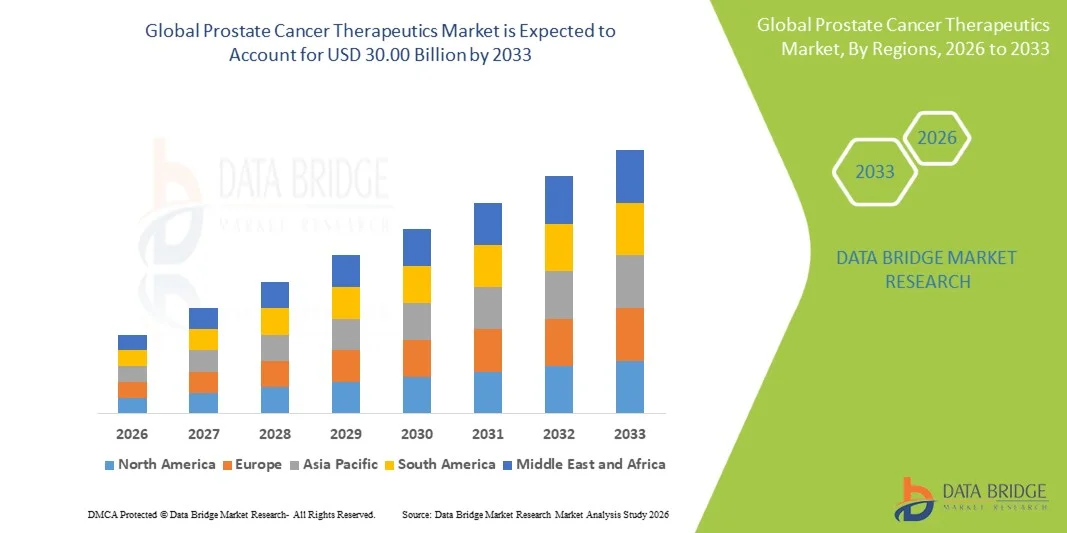
- The global prostate cancer therapeutics market size was valued at USD 15.97 billion in 2025 and is expected to reach USD 30.00 billion by 2033, at a CAGR of 8.2% during the forecast period
- The market growth is largely fueled by the increasing prevalence of prostate cancer, growing aging male population, and continuous advancements in targeted therapies, hormonal treatments, and immunotherapies, leading to improved treatment outcomes and survival rates
- Furthermore, rising awareness regarding early diagnosis, expanding access to advanced oncology care, and strong pipeline development by pharmaceutical companies are establishing prostate cancer therapeutics as a critical segment in cancer treatment. These converging factors are accelerating the adoption of innovative therapies, thereby significantly boosting the industry's growth
Prostate Cancer Therapeutics Market Analysis
- Prostate cancer therapeutics, encompassing hormonal therapy, chemotherapy, immunotherapy, and targeted treatments, are increasingly vital components of modern oncology care in both hospital and specialty clinic settings due to their ability to improve survival rates, manage disease progression, and enhance patient quality of life
- The escalating demand for prostate cancer therapeutics is primarily fueled by the rising global incidence of prostate cancer, growing geriatric male population, and increasing advancements in precision medicine and biomarker-driven treatment approaches
- North America dominated the prostate cancer therapeutics market with the largest revenue share of 40.01% in 2025, characterized by advanced healthcare infrastructure, high awareness levels, and strong presence of leading pharmaceutical companies, with the U.S. experiencing substantial growth in treatment adoption, particularly in advanced-stage therapies, driven by continuous innovation in androgen receptor inhibitors and immunotherapies
- Asia-Pacific is expected to be the fastest growing region in the prostate cancer therapeutics market during the forecast period due to improving healthcare access, rising cancer awareness, and increasing investments in oncology treatment infrastructure
- Hormonal therapy segment dominated the prostate cancer therapeutics market with a market share of 43.2% in 2025, driven by its established role as a first-line treatment and its effectiveness in controlling disease progression in early and advanced stages
Report Scope and Prostate Cancer Therapeutics Market Segmentation
|
Attributes |
Prostate Cancer Therapeutics Key Market Insights |
|
Segments Covered |
|
|
Countries Covered |
North America
Europe
Asia-Pacific
Middle East and Africa
South America
|
|
Key Market Players |
|
|
Market Opportunities |
|
|
Value Added Data Infosets |
In addition to the insights on market scenarios such as market value, growth rate, segmentation, geographical coverage, and major players, the market reports curated by the Data Bridge Market Research also include in-depth expert analysis, patient epidemiology, pipeline analysis, pricing analysis, and regulatory framework |
Prostate Cancer Therapeutics Market Trends
“Advancements in Precision Medicine and Targeted Therapy Adoption”
- A significant and accelerating trend in the global prostate cancer therapeutics market is the increasing adoption of precision medicine and targeted therapies, driven by improved understanding of genetic mutations and molecular profiling of tumors
- For instance, PARP inhibitors such as olaparib are being increasingly used in patients with BRCA-mutated prostate cancer, enabling more personalized and effective treatment approaches
- The integration of biomarker testing in clinical practice allows clinicians to identify patients who are most likely to benefit from specific therapies, improving treatment outcomes and reducing unnecessary exposure to ineffective treatments
- The growing use of next-generation sequencing (NGS) and companion diagnostics is facilitating more accurate disease characterization and enabling oncologists to tailor therapies based on individual patient profiles
- This trend towards personalized and data-driven treatment strategies is reshaping clinical decision-making and improving survival rates across advanced stages of prostate cancer
- The demand for targeted and precision-based therapeutics is rising rapidly across both developed and emerging markets, as healthcare systems increasingly prioritize value-based and outcome-driven oncology care
- The increasing adoption of combination therapies, integrating hormonal treatments with chemotherapy or immunotherapy, is emerging as a key approach to delay resistance and enhance overall treatment efficacy
Prostate Cancer Therapeutics Market Dynamics
Driver
“Rising Prevalence of Prostate Cancer and Expanding Geriatric Population”
- The increasing prevalence of prostate cancer globally, coupled with the growing aging male population, is a significant driver for the heightened demand for prostate cancer therapeutics
- For instance, in recent years, healthcare systems across major economies have reported a steady rise in prostate cancer diagnoses, particularly among men aged 60 and above
- As life expectancy increases, a larger proportion of the population becomes susceptible to age-related diseases such as prostate cancer, thereby expanding the patient pool requiring therapeutic intervention
- Furthermore, growing awareness regarding early screening, PSA testing, and improved diagnostic capabilities is contributing to higher detection rates and earlier treatment initiation
- The availability of advanced treatment options such as hormonal therapies, chemotherapy, immunotherapy, and targeted therapies is further supporting market growth by offering multiple lines of treatment across disease stages
- The combination of demographic shifts, improved diagnosis, and expanding treatment options is significantly propelling the adoption of prostate cancer therapeutics worldwide
- Increasing investments in oncology research and clinical trials by pharmaceutical companies are accelerating the development of innovative drugs and expanding the therapeutic pipeline
Restraint/Challenge
“High Treatment Costs and Adverse Side Effects Associated with Therapies”
- Concerns surrounding the high cost of advanced prostate cancer treatments and the potential side effects associated with long-term therapy pose a significant challenge to broader market penetration
- For instance, novel therapies such as immunotherapies and targeted drugs often involve substantial treatment expenses, making them less accessible in low- and middle-income regions
- Patients undergoing prostate cancer treatment may experience side effects such as fatigue, hormonal imbalance, bone density loss, and cardiovascular risks, which can impact treatment adherence and quality of life
- Managing these adverse effects often requires additional medical care and monitoring, further increasing the overall cost burden on patients and healthcare systems
- While newer therapies offer improved efficacy, their premium pricing compared to conventional treatments can limit widespread adoption, particularly among price-sensitive populations
- Addressing these challenges through cost-effective treatment options, insurance coverage expansion, and supportive care management will be critical for sustaining long-term market growth
- Variability in regulatory approvals and lengthy drug approval timelines can delay patient access to innovative therapies, further constraining market expansion
Prostate Cancer Therapeutics Market Scope
The market is segmented on the basis of drug class, end-users, and distribution channel.
- By Drug Class
On the basis of drug class, the prostate cancer therapeutics market is segmented into hormonal therapy, chemotherapy, immunotherapy, and targeted therapy. The hormonal therapy segment dominated the market with the largest market revenue share of 43.2% in 2025, driven by its role as the first-line treatment option for both early-stage and advanced prostate cancer. Androgen deprivation therapy (ADT) remains widely prescribed due to its effectiveness in slowing tumor progression by reducing testosterone levels, which are key drivers of prostate cancer growth. The segment benefits from strong clinical acceptance, extensive availability, and inclusion in standard treatment guidelines across healthcare systems. Hormonal therapies are also frequently used in combination with other treatment modalities, further reinforcing their dominant position. In addition, the availability of both surgical and medical castration options provides flexibility in treatment planning, supporting widespread adoption across hospitals and clinics.
The targeted therapy segment is anticipated to witness the fastest growth rate from 2026 to 2033, fueled by advancements in molecular diagnostics and increasing adoption of precision medicine approaches. Targeted therapies, including PARP inhibitors and androgen receptor pathway inhibitors, are gaining traction due to their ability to specifically act on cancer cells with fewer systemic side effects. The growing use of biomarker testing enables identification of patients who are most likely to benefit from these therapies, improving treatment outcomes. Pharmaceutical companies are heavily investing in research and development of novel targeted agents, expanding the pipeline of advanced treatment options. In addition, targeted therapies are increasingly being used in metastatic and castration-resistant prostate cancer, where conventional therapies show limited effectiveness.
- By End-Users
On the basis of end-users, the prostate cancer therapeutics market is segmented into hospitals, clinics, and others. The hospital segment dominated the market with the largest market revenue share in 2025, driven by the availability of advanced infrastructure, specialized oncology departments, and multidisciplinary care teams. Hospitals are the primary centers for diagnosis, treatment initiation, and administration of complex therapies such as chemotherapy, immunotherapy, and combination regimens. The presence of skilled healthcare professionals and access to advanced diagnostic and therapeutic technologies further strengthen hospitals’ dominance. Hospitals also handle a large volume of inpatient and outpatient cancer cases, making them the preferred choice for comprehensive prostate cancer management. In addition, reimbursement policies and government healthcare support often favor hospital-based treatments, contributing to higher patient inflow.
The clinics segment is anticipated to witness the fastest growth rate from 2026 to 2033, driven by the increasing shift toward outpatient care and the rising number of specialty oncology and urology clinics. Clinics offer more accessible, cost-effective, and patient-friendly treatment environments compared to hospitals, making them attractive for follow-up care and maintenance therapies. The growing availability of advanced diagnostic services and oral drug-based treatments is enabling clinics to manage a larger share of prostate cancer patients. Furthermore, the rise in decentralized healthcare delivery and preference for shorter hospital stays are supporting the expansion of clinic-based services. Clinics also benefit from improved patient convenience, reduced waiting times, and personalized care, which are key factors driving their growing adoption.
- By Distribution Channel
On the basis of distribution channel, the prostate cancer therapeutics market is segmented into hospital pharmacies, retail pharmacies, online sales, and others. The hospital pharmacies segment dominated the market with the largest market revenue share in 2025, driven by the high volume of inpatient and outpatient prescriptions generated within hospital settings. Hospital pharmacies ensure immediate availability of critical oncology drugs, including intravenous and high-cost therapies, which are typically administered under medical supervision. The integration of hospital pharmacies with treatment centers enables efficient drug dispensing and adherence to prescribed treatment protocols. In addition, hospital pharmacies play a key role in managing specialized cancer drugs that require careful handling, storage, and administration. Their close coordination with oncologists and healthcare teams ensures accurate medication management, contributing to their dominant position.
The online sales segment is anticipated to witness the fastest growth rate from 2026 to 2033, fueled by the increasing adoption of digital healthcare platforms and e-pharmacy services. Online channels offer convenience, home delivery, and easy access to medications, particularly for patients undergoing long-term treatment regimens. The growing penetration of smartphones and internet connectivity, along with expanding telemedicine services, is supporting the shift toward online pharmaceutical purchases. Patients prefer online platforms for routine medication refills, reducing the need for frequent hospital or pharmacy visits. In addition, discounts, subscription models, and improved logistics infrastructure are encouraging greater adoption of online distribution channels in both developed and emerging markets.
Prostate Cancer Therapeutics Market Regional Analysis
- North America dominated the prostate cancer therapeutics market with the largest revenue share of 40.01% in 2025, characterized by advanced healthcare infrastructure, high awareness levels, and strong presence of leading pharmaceutical companies
- Patients and healthcare providers in the region benefit from early screening programs, well-established reimbursement frameworks, and widespread availability of advanced therapies such as hormonal treatments, immunotherapies, and targeted drugs
- This widespread adoption is further supported by high healthcare expenditure, strong presence of leading pharmaceutical companies, and increasing awareness regarding early diagnosis and personalized treatment approaches, establishing North America as a key hub for prostate cancer therapeutics across both residential and commercial healthcare settings
U.S. Prostate Cancer Therapeutics Market Insight
The U.S. prostate cancer therapeutics market captured the largest revenue share of 81% in 2025 within North America, fueled by the high prevalence of prostate cancer and the rapid adoption of advanced oncology treatments. Patients and healthcare providers are increasingly prioritizing innovative therapies such as hormonal treatments, targeted therapies, and immunotherapies to improve survival outcomes. The growing preference for personalized medicine, combined with strong clinical research activity and early access to novel drugs through clinical trials and regulatory approvals, further propels the market. Moreover, the integration of advanced diagnostic tools, biomarker testing, and well-established reimbursement frameworks is significantly contributing to the market's expansion.
Europe Prostate Cancer Therapeutics Market Insight
The Europe prostate cancer therapeutics market is projected to expand at a substantial CAGR throughout the forecast period, primarily driven by rising cancer incidence and the presence of robust public healthcare systems. Increasing awareness regarding early diagnosis and widespread screening programs are fostering the adoption of prostate cancer treatments across the region. European countries are also witnessing growing utilization of advanced therapies, supported by favorable regulatory frameworks and access to innovative drugs. In addition, the emphasis on improving patient outcomes and expanding access to oncology care is encouraging the uptake of both standard and novel treatment options across hospitals and specialty clinics.
U.K. Prostate Cancer Therapeutics Market Insight
The U.K. prostate cancer therapeutics market is anticipated to grow at a noteworthy CAGR during the forecast period, driven by increasing prostate cancer cases and strong healthcare infrastructure supported by the National Health Service (NHS). The country’s focus on early detection programs and routine screening is contributing to higher diagnosis rates and timely treatment initiation. In addition, growing adoption of advanced therapeutic options, including targeted therapies and immunotherapies, is supporting market growth. The presence of structured reimbursement policies and access to innovative drugs through regulatory bodies further enhances treatment accessibility for patients across the region.
Germany Prostate Cancer Therapeutics Market Insight
The Germany prostate cancer therapeutics market is expected to expand at a considerable CAGR during the forecast period, fueled by a well-developed healthcare system and strong emphasis on technological advancements in oncology care. Germany’s aging population and increasing incidence of prostate cancer are key factors driving demand for effective treatment options. The country’s focus on precision medicine, biomarker-driven therapies, and clinical research initiatives supports the adoption of advanced therapeutics. Moreover, high healthcare spending, coupled with strong hospital infrastructure and specialist availability, promotes the use of both conventional and innovative prostate cancer treatments across healthcare facilities.
Asia-Pacific Prostate Cancer Therapeutics Market Insight
The Asia-Pacific prostate cancer therapeutics market is poised to grow at the fastest CAGR during the forecast period of 2026 to 2033, driven by rising cancer prevalence, improving healthcare infrastructure, and increasing awareness of early diagnosis. Countries such as China, Japan, and India are witnessing growing adoption of advanced oncology treatments supported by expanding access to healthcare services. Government initiatives aimed at improving cancer care and increasing investments in healthcare infrastructure are further accelerating market growth. In addition, the region’s large patient population, rising disposable incomes, and increasing penetration of pharmaceutical companies are contributing to the expansion of prostate cancer therapeutics across both urban and semi-urban areas.
Japan Prostate Cancer Therapeutics Market Insight
The Japan prostate cancer therapeutics market is gaining momentum due to the country’s rapidly aging population and high incidence of prostate cancer among elderly males. The healthcare system in Japan emphasizes early diagnosis and advanced treatment approaches, leading to increased adoption of hormonal therapies, targeted therapies, and immunotherapies. The integration of cutting-edge medical technologies and strong focus on research and development are further supporting market growth. In addition, Japan’s well-established reimbursement system and access to innovative drugs through regulatory approvals are enabling patients to receive timely and effective treatment across hospitals and specialized oncology centers.
India Prostate Cancer Therapeutics Market Insight
The India prostate cancer therapeutics market accounted for a significant market revenue share in Asia Pacific in 2025, attributed to the country’s growing aging population, increasing awareness of prostate cancer, and improving access to healthcare services. India is witnessing a gradual rise in prostate cancer diagnoses due to better screening practices and expanding diagnostic infrastructure. The availability of cost-effective treatment options, along with the presence of domestic and international pharmaceutical companies, is supporting market growth. Furthermore, government initiatives to strengthen cancer care facilities, coupled with increasing healthcare investments and expansion of oncology centers, are key factors propelling the adoption of prostate cancer therapeutics across the country.
Prostate Cancer Therapeutics Market Share
The Prostate Cancer Therapeutics industry is primarily led by well-established companies, including:
- Johnson & Johnson Services, Inc. (U.S.)
- Pfizer Inc. (U.S.)
- AstraZeneca (U.K.)
- Astellas Pharma Inc. (Japan)
- Bayer AG (Germany)
- Merck & Co., Inc. (U.S.)
- Sanofi (France)
- Eli Lilly and Company (U.S.)
- Ipsen Pharma (France)
- Amgen Inc. (U.S.)
- Takeda Pharmaceutical Company Limited (Japan)
- Novartis AG (Switzerland)
- AbbVie Inc. (U.S.)
- Endo Pharmaceuticals Inc. (U.S.)
- Ferring Pharmaceuticals (Switzerland)
- Myovant Sciences (U.S.)
- BeiGene, Ltd. (China)
- Clovis Oncology, Inc. (U.S.)
What are the Recent Developments in Global Prostate Cancer Therapeutics Market?
- In November 2025, Johnson & Johnson announced a USD 3.05 billion acquisition of Halda Therapeutics to strengthen its oncology portfolio, including prostate cancer drug candidates such as HLD-0915, demonstrating strategic consolidation and investment in next-generation therapies. This deal reflects industry focus on expanding pipelines for hard-to-treat cancers
- In October 2025, Novartis reported that its targeted radiotherapy Pluvicto reduced the risk of disease progression or death by 28% in prostate cancer patients, highlighting the clinical benefit of radioligand therapies in improving patient outcomes. This data underscores the growing impact of precision oncology approaches in advanced prostate cancer
- In March 2025, the U.S. FDA approved an expanded indication for Novartis’ Pluvicto® (lutetium-177 vipivotide tetraxetan) allowing its use earlier in the treatment sequence for PSMA-positive metastatic castration-resistant prostate cancer, enabling patients to receive the therapy before chemotherapy. This regulatory expansion significantly broadens the eligible patient population and reinforces the role of targeted radioligand therapy in advanced prostate cancer care
- In December 2022, the European Commission granted approval for Novartis’ Pluvicto as the first targeted radioligand therapy for progressive PSMA-positive metastatic castration-resistant prostate cancer across the EU, expanding access to this innovative treatment in Europe. This regulatory milestone advanced radioligand therapy adoption globally
- In March 2022, the U.S. FDA approved Novartis’ Pluvicto as the first targeted radioligand therapy for PSMA-positive metastatic castration-resistant prostate cancer, marking a milestone in precision treatment for advanced disease. This approval introduced a new class of therapeutic option beyond hormonal and chemotherapy regimens

- Interactive Data Analysis Dashboard
- Company Analysis Dashboard for high growth potential opportunities
- Research Analyst Access for customization & queries
- Competitor Analysis with Interactive dashboard
- Latest News, Updates & Trend analysis
- Harness the Power of Benchmark Analysis for Comprehensive Competitor Tracking
Data collection and base year analysis are done using data collection modules with large sample sizes. The stage includes obtaining market information or related data through various sources and strategies. It includes examining and planning all the data acquired from the past in advance. It likewise envelops the examination of information inconsistencies seen across different information sources. The market data is analysed and estimated using market statistical and coherent models. Also, market share analysis and key trend analysis are the major success factors in the market report. To know more, please request an analyst call or drop down your inquiry.
The key research methodology used by DBMR research team is data triangulation which involves data mining, analysis of the impact of data variables on the market and primary (industry expert) validation. Data models include Vendor Positioning Grid, Market Time Line Analysis, Market Overview and Guide, Company Positioning Grid, Patent Analysis, Pricing Analysis, Company Market Share Analysis, Standards of Measurement, Global versus Regional and Vendor Share Analysis. To know more about the research methodology, drop in an inquiry to speak to our industry experts.
Data Bridge Market Research is a leader in advanced formative research. We take pride in servicing our existing and new customers with data and analysis that match and suits their goal. The report can be customized to include price trend analysis of target brands understanding the market for additional countries (ask for the list of countries), clinical trial results data, literature review, refurbished market and product base analysis. Market analysis of target competitors can be analyzed from technology-based analysis to market portfolio strategies. We can add as many competitors that you require data about in the format and data style you are looking for. Our team of analysts can also provide you data in crude raw excel files pivot tables (Fact book) or can assist you in creating presentations from the data sets available in the report.












