Global Pouchitis Treatment Market
Market Size in USD Billion
CAGR :
% 
 USD
1.20 Billion
USD
2.86 Billion
2025
2033
USD
1.20 Billion
USD
2.86 Billion
2025
2033
 Forecast Period Forecast Period |
2026 –2033 |
 Market Size (Base Year) Market Size (Base Year) |
USD 1.20 Billion |
 Market Size (Forecast Year) Market Size (Forecast Year) |
USD 2.86 Billion |
 CAGR CAGR |
% |
| Major Markets Players |
|
Pouchitis Treatment Market Size
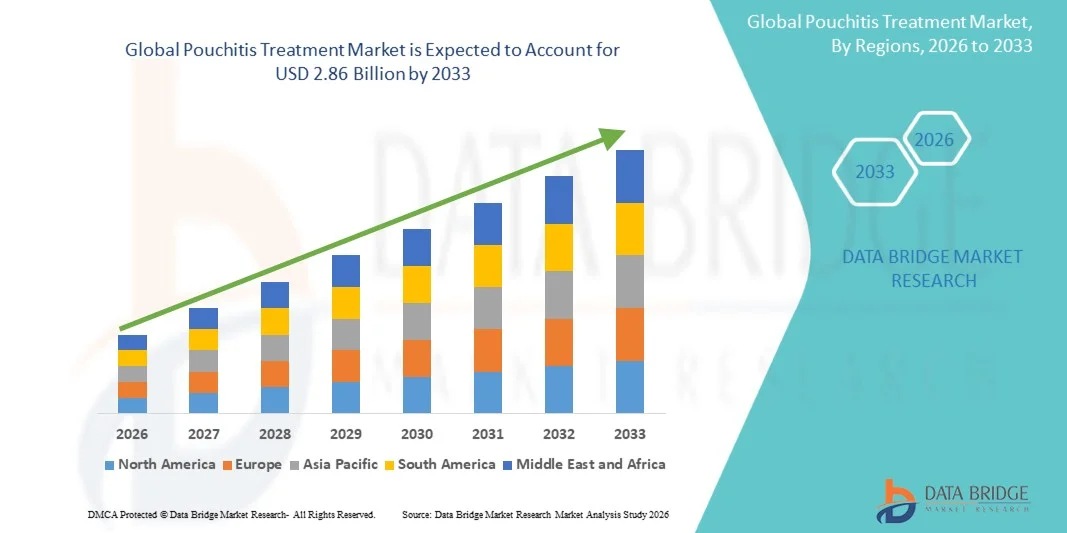
- The global pouchitis treatment market size was valued at USD 1.20 billion in 2025 and is expected to reach USD 2.86 billion by 2033, at a CAGR of 11.50% during the forecast period
- The market growth is largely fueled by the increasing prevalence of inflammatory bowel diseases and post-surgical complications, along with advancements in gastrointestinal treatment options, leading to greater adoption of pouchitis treatment solutions in clinical practice
- Furthermore, rising awareness regarding digestive health, improving diagnostic capabilities, and growing demand for effective anti-inflammatory and antibiotic therapies are establishing pouchitis treatment as an essential component of modern gastrointestinal care. These converging factors are accelerating the uptake of Pouchitis Treatment solutions, thereby significantly boosting the industry's growth
Pouchitis Treatment Market Analysis
- Pouchitis treatment, involving antibiotics, probiotics, and anti-inflammatory therapies, is increasingly vital in modern gastrointestinal care due to the rising incidence of inflammatory bowel disease and post-surgical complications in patients undergoing ileal pouch-anal anastomosis (IPAA)
- The escalating demand for pouchitis treatment is primarily fueled by increasing prevalence of ulcerative colitis, growing adoption of advanced biologic therapies, and improved diagnostic capabilities enabling early and accurate disease management
- North America dominated the pouchitis treatment market with the largest revenue share of approximately 38.6% in 2025, characterized by advanced healthcare infrastructure, high adoption of biologic therapies, and strong presence of leading pharmaceutical companies, with the U.S. witnessing substantial growth driven by increasing cases of inflammatory bowel diseases and improved treatment accessibility
- Asia-Pacific is expected to be the fastest growing region in the pouchitis treatment market during the forecast period, with a projected CAGR of around 9.3%, due to rising healthcare expenditure, increasing awareness of gastrointestinal disorders, and expanding access to advanced treatment options
- The oral segment held the largest market revenue share of 61.3% in 2025, driven by the convenience and effectiveness of orally administered antibiotics and probiotics
Report Scope and Pouchitis Treatment Market Segmentation
|
Attributes |
Pouchitis Treatment Key Market Insights |
|
Segments Covered |
|
|
Countries Covered |
North America
Europe
Asia-Pacific
Middle East and Africa
South America
|
|
Key Market Players |
|
|
Market Opportunities |
|
|
Value Added Data Infosets |
In addition to the insights on market scenarios such as market value, growth rate, segmentation, geographical coverage, and major players, the market reports curated by the Data Bridge Market Research also include in-depth expert analysis, patient epidemiology, pipeline analysis, pricing analysis, and regulatory framework. |
Pouchitis Treatment Market Trends
“Advancements in Gut Microbiome–Targeted Therapies and Precision Gastroenterology”
- A significant and accelerating trend in the global Pouchitis Treatment market is the growing focus on gut microbiome–targeted therapies and precision-based gastroenterology approaches to improve treatment outcomes
- For instance, leading healthcare organizations such as Mayo Clinic and Cleveland Clinic are actively involved in advancing clinical protocols for managing chronic and antibiotic-refractory pouchitis
- The increasing use of targeted antibiotic therapies, such as ciprofloxacin and metronidazole, remains a cornerstone of treatment, while biologic therapies are gaining importance in chronic and recurrent cases
- In addition, emerging research into the role of the intestinal microbiome is supporting the development of probiotics, fecal microbiota–based interventions, and novel anti-inflammatory therapies
- Improvements in endoscopic imaging and diagnostic techniques are enabling earlier and more accurate detection of inflammation in ileal pouches, allowing timely intervention
- This trend toward more personalized, microbiome-informed, and evidence-based treatment strategies is reshaping the Pouchitis Treatment market and improving long-term patient outcomes
Pouchitis Treatment Market Dynamics
Driver
“Rising Prevalence of Inflammatory Bowel Disease and Post-Surgical Complications”
- The increasing global prevalence of inflammatory bowel diseases (IBD), particularly ulcerative colitis, is a major driver fueling the growth of the pouchitis treatment market
- For instance, data from World Health Organization indicates a rising burden of chronic gastrointestinal disorders worldwide, contributing to increased surgical interventions such as ileal pouch-anal anastomosis (IPAA)
- A growing number of patients undergoing colectomy with pouch reconstruction are at risk of developing acute or chronic pouchitis, significantly increasing treatment demand
- In addition, improved surgical success rates and longer post-operative survival have increased the population requiring long-term pouch care and management
- Rising awareness among healthcare professionals regarding early diagnosis and standardized treatment protocols is further supporting market growth
- Furthermore, increasing availability of effective antibiotic and biologic therapies is improving disease management outcomes and driving adoption
Restraint/Challenge
“Disease Recurrence, Antibiotic Resistance, and Limited Treatment Standardization”
- One of the major challenges in the Pouchitis Treatment market is the high rate of disease recurrence, particularly in chronic pouchitis cases, requiring repeated or long-term therapy
- The growing concern of antibiotic resistance among commonly used therapies such as ciprofloxacin and metronidazole can reduce treatment effectiveness over time
- For instance, In addition, there is limited standardization in treatment guidelines for chronic and antibiotic-refractory pouchitis, leading to variability in clinical practice
- Delayed diagnosis or misdiagnosis of pouchitis can further complicate disease management and worsen patient outcomes
- The high cost of advanced biologic therapies and limited access in low-resource settings also restrict broader treatment adoption
- Addressing these challenges through improved clinical guidelines, development of novel microbiome-based therapies, and enhanced diagnostic accuracy will be essential for sustaining growth in the Pouchitis Treatment market
Pouchitis Treatment Market Scope
The market is segmented on the basis of treatment, route of administration, end-users, and distribution channel.
• By Treatment
On the basis of treatment, the Pouchitis Treatment market is segmented into antibiotics, probiotics, and others. The antibiotics segment dominated the largest market revenue share of 54.6% in 2025, driven by its status as the first-line treatment for acute and chronic pouchitis. Antibiotics such as metronidazole and ciprofloxacin are widely prescribed due to their effectiveness in reducing bacterial overgrowth and inflammation. The high recurrence rate of pouchitis significantly contributes to sustained antibiotic demand. Clinicians prefer antibiotics for rapid symptom relief and infection control. The segment benefits from strong clinical guidelines supporting their use. Increasing prevalence of inflammatory bowel disease (IBD) further boosts demand. Pharmaceutical availability and affordability also support adoption. Continuous use in hospital settings strengthens market dominance. Ongoing research into optimized antibiotic regimens enhances treatment outcomes. These factors collectively ensure the dominance of the antibiotics segment.
The probiotics segment is expected to witness the fastest CAGR of 9.8% from 2026 to 2033, driven by growing interest in microbiome restoration therapies. Probiotics help restore gut flora balance, reducing inflammation and recurrence of pouchitis. Increasing awareness of gut health significantly supports segment growth. Patients are increasingly seeking natural and long-term management options. The segment benefits from rising adoption in post-surgical care for ulcerative colitis patients. Advancements in probiotic formulations improve efficacy and survival of beneficial bacteria. Expanding clinical research validates their therapeutic benefits. The growing trend toward preventive healthcare further boosts demand. Increasing availability of probiotic supplements enhances accessibility. Rising preference for non-antibiotic therapies supports adoption. These factors position probiotics as the fastest-growing treatment segment.
• By Route of Administration
On the basis of route of administration, the Pouchitis Treatment market is segmented into oral, parenteral, and others. The oral segment held the largest market revenue share of 61.3% in 2025, driven by the convenience and effectiveness of orally administered antibiotics and probiotics. Oral therapies are widely preferred for both acute and maintenance treatment of pouchitis. They offer ease of administration and high patient compliance. The segment benefits from strong prescription rates in outpatient settings. Increasing availability of oral formulations supports market growth. Physicians prefer oral route for mild to moderate cases. Rising awareness about early treatment improves adoption. Cost-effectiveness compared to injectable therapies further drives demand. Expanding pharmaceutical pipelines enhance oral drug options. Continuous innovation in drug delivery improves bioavailability. These factors ensure the dominance of the oral segment.
The parenteral segment is projected to witness the fastest CAGR of 8.6% from 2026 to 2033, driven by its use in severe or refractory cases requiring rapid therapeutic action. Parenteral administration ensures higher drug bioavailability and faster response. Increasing hospitalization of severe pouchitis cases supports demand. The segment benefits from advanced infusion therapies in clinical settings. Rising prevalence of complicated IBD cases further drives growth. Technological advancements in injectable formulations improve safety and efficacy. Growing healthcare infrastructure supports adoption in emerging regions. Physicians increasingly recommend parenteral therapy for resistant infections. The segment also benefits from improved hospital care standards. Continuous research into injectable antibiotics enhances treatment options. These factors position parenteral administration as the fastest-growing segment.
• By End-Users
On the basis of end-users, the Pouchitis Treatment market is segmented into hospitals, specialty clinics, and others. The hospitals segment accounted for the largest market revenue share of 48.9% in 2025, driven by the high volume of complex and severe pouchitis cases treated in inpatient settings. Hospitals provide advanced diagnostic and therapeutic infrastructure for effective disease management. The presence of gastroenterology specialists supports accurate treatment decisions. Increasing hospital admissions for IBD-related complications further boosts demand. Hospitals benefit from access to a wide range of antibiotics and supportive therapies. Strong reimbursement policies enhance patient affordability. Integration of advanced monitoring systems improves outcomes. Growing healthcare investments strengthen hospital capabilities. Rising prevalence of gastrointestinal disorders contributes to segment growth. Continuous expansion of hospital networks supports accessibility. These factors ensure the dominance of the hospitals segment.
The specialty clinics segment is expected to witness the fastest CAGR of 9.2% from 2026 to 2033, driven by increasing preference for specialized gastrointestinal care. Specialty clinics offer focused treatment for IBD and pouchitis patients. They provide personalized and long-term disease management solutions. Growing awareness of early diagnosis supports clinic visits. The segment benefits from shorter waiting times and improved patient engagement. Increasing number of gastroenterology-focused clinics boosts availability. Advancements in outpatient care models support adoption. Patients prefer clinics for regular follow-ups and maintenance therapy. Rising healthcare accessibility in urban regions drives growth. Integration of modern diagnostic tools enhances treatment efficiency. These factors position specialty clinics as the fastest-growing end-user segment.
• By Distribution Channel
On the basis of distribution channel, the Pouchitis Treatment market is segmented into hospital pharmacy, retail pharmacy, and others. The hospital pharmacy segment dominated the largest market revenue share of 52.7% in 2025, driven by direct dispensing of prescription medications within hospital settings. Hospital pharmacies ensure immediate availability of antibiotics and supportive drugs. The segment benefits from high inpatient treatment volumes. Strong integration with hospital care pathways supports demand. Increasing hospitalization rates for severe pouchitis further boost usage. Hospital pharmacies ensure proper storage and regulated dispensing. The segment is supported by physician-directed treatment protocols. Growing healthcare infrastructure strengthens distribution networks. Rising prevalence of gastrointestinal disorders enhances demand. These factors ensure the dominance of the hospital pharmacy segment.
The retail pharmacy segment is projected to witness the fastest CAGR of 8.9% from 2026 to 2033, driven by increasing outpatient treatment and prescription fulfillment needs. Retail pharmacies provide easy access to maintenance medications for pouchitis patients. The segment benefits from expanding pharmacy chains globally. Growing preference for convenient medication access supports growth. Rising awareness of long-term disease management boosts demand. The segment is supported by increasing prescriptions for oral therapies. Technological integration such as e-prescriptions enhances efficiency. Expanding urban healthcare infrastructure further drives adoption. Patients prefer retail pharmacies for quick refills and accessibility. Continuous growth in chronic disease management supports expansion. These factors position retail pharmacies as the fastest-growing distribution channel.
Pouchitis Treatment Market Regional Analysis
- North America dominated the pouchitis treatment market with the largest revenue share of approximately 38.6% in 2025, characterized by advanced healthcare infrastructure, high adoption of biologic therapies, and a strong presence of leading pharmaceutical companies
- The region benefits from widespread availability of advanced treatment options, strong clinical expertise in gastroenterology, and increasing use of biologics for managing chronic and refractory pouchitis
- This dominance is further supported by rising prevalence of inflammatory bowel diseases, well-established healthcare reimbursement systems, and continuous advancements in gastrointestinal treatment protocols, establishing pouchitis treatment as a key segment within digestive disease management
U.S. Pouchitis Treatment Market Insight
The U.S. pouchitis treatment market captured the largest revenue share in 2025 within North America, driven by increasing cases of inflammatory bowel diseases and improved treatment accessibility. The country’s advanced healthcare infrastructure and strong presence of leading pharmaceutical and biotech companies are fueling market growth. In addition, rising adoption of biologic therapies and improved diagnostic capabilities are significantly contributing to the expansion of the market in the U.S.
Europe Pouchitis Treatment Market Insight
The Europe pouchitis treatment market is projected to expand at a substantial CAGR throughout the forecast period, primarily driven by strong healthcare systems and increasing adoption of advanced gastrointestinal therapies. The region is witnessing growing use of biologics and improved clinical management of inflammatory bowel disease-related complications. In addition, rising awareness and early diagnosis of pouchitis are supporting steady market growth across Europe.
U.K. Pouchitis Treatment Market Insight
The U.K. pouchitis treatment market is anticipated to grow at a noteworthy CAGR during the forecast period, driven by increasing prevalence of inflammatory bowel diseases and strong healthcare support systems. The country benefits from early diagnosis practices and expanding access to advanced treatment options. Furthermore, ongoing clinical research and public healthcare initiatives are contributing to market expansion in the U.K.
Germany Pouchitis Treatment Market Insight
The Germany pouchitis treatment market is expected to expand at a considerable CAGR during the forecast period, fueled by a strong healthcare infrastructure and high adoption of innovative biologic therapies. Germany’s emphasis on evidence-based treatment and advanced gastroenterology care is supporting market growth. In addition, increasing focus on chronic disease management is contributing to the demand for pouchitis treatments.
Asia-Pacific Pouchitis Treatment Market Insight
The Asia-Pacific pouchitis treatment market is expected to be the fastest-growing region during the forecast period, with a projected CAGR of around 9.3%, driven by rising healthcare expenditure, increasing awareness of gastrointestinal disorders, and expanding access to advanced treatment options. The region is witnessing strong growth due to increasing cases of inflammatory bowel diseases and improving healthcare infrastructure. Furthermore, expanding medical investments and healthcare modernization initiatives in countries such as China, India, and Japan are accelerating adoption of advanced pouchitis treatment therapies
Japan Pouchitis Treatment Market Insight
The Japan pouchitis treatment market is gaining momentum due to the country’s aging population and strong focus on advanced medical care. The increasing prevalence of gastrointestinal disorders and rising demand for effective treatment options are driving market growth. In addition, advancements in biologic therapies and improved healthcare accessibility are supporting expansion in Japan.
China Pouchitis Treatment Market Insight
The China pouchitis treatment market accounted for the largest market revenue share in Asia-Pacific in 2025, attributed to a large patient population, rising healthcare investments, and increasing awareness of gastrointestinal diseases. The country is witnessing growing adoption of advanced biologic therapies and improved access to specialized care. In addition, expanding healthcare infrastructure and government support for chronic disease management are key factors propelling market growth in China.
Pouchitis Treatment Market Share
The Pouchitis Treatment industry is primarily led by well-established companies, including:
- AbbVie Inc. (U.S.)
- Pfizer Inc. (U.S.)
- F. Hoffmann-La Roche Ltd. (Switzerland)
- Merck & Co., Inc. (U.S.)
- Johnson & Johnson (U.S.)
- Takeda Pharmaceutical Company Limited (Japan)
- Janssen Pharmaceuticals (U.S.)
- Bristol-Myers Squibb Company (U.S.)
- AbbVie Allergan (U.S.)
- Eli Lilly and Company (U.S.)
- Teva Pharmaceutical Industries Ltd. (Israel)
- Sun Pharmaceutical Industries Ltd. (India)
- Dr. Falk Pharma GmbH (Germany)
- Tillotts Pharma AG (Switzerland)
- Bausch Health Companies Inc. (Canada)
- Cipla Ltd. (India)
- Lupin Pharmaceuticals Inc. (India)
- Salix Pharmaceuticals (U.S.)
- Ferring Pharmaceuticals (Switzerland)
- Sandoz (Switzerland)
Latest Developments in Global Pouchitis Treatment Market
- In November 2022, the U.S. Food and Drug Administration (FDA) granted Orphan Drug designation to AMT-101 for the treatment of pouchitis, a condition that can occur after ileal pouch-anal anastomosis surgery in ulcerative colitis patients. This designation supports development incentives and highlights unmet medical needs in pouchitis therapy
- In April 2023, researchers reported that vedolizumab became the first treatment in Europe licensed specifically for pouchitis that does not respond to antibiotic therapy, marking a significant milestone in treatment options for chronic antibiotic-refractory pouchitis. This development was described as a “game changer” for patients with persistent disease
- In June 2023, a pivotal clinical study published in The New England Journal of Medicine demonstrated that vedolizumab was more effective than placebo in inducing remission in patients with chronic pouchitis following ileal pouch-anal anastomosis. This provided strong clinical evidence supporting use of vedolizumab in refractory cases
- In December 2023, the American Gastroenterological Association (AGA) released comprehensive clinical guidance on the management of pouchitis, recommending advanced immunosuppressive therapies such as vedolizumab, ustekinumab, and others for recurrent or refractory pouchitis. This guideline helped standardize care and expand therapeutic strategies
- In January 2025, real-world clinical data showed that vedolizumab was effective and well tolerated in patients with refractory chronic pouchitis, with sustained clinical responses reported in 60–70% of treated patients. This reinforced the role of anti-integrin therapy in long-term pouchitis management
- In March 2025, a pilot clinical study reported that the Janus kinase (JAK) inhibitor tofacitinib achieved clinical remission in approximately 31% of patients with chronic pouchitis after 8 weeks of treatment, indicating potential for novel small-molecule therapies in this indication
SKU-
Get online access to the report on the World's First Market Intelligence Cloud

- Interactive Data Analysis Dashboard
- Company Analysis Dashboard for high growth potential opportunities
- Research Analyst Access for customization & queries
- Competitor Analysis with Interactive dashboard
- Latest News, Updates & Trend analysis
- Harness the Power of Benchmark Analysis for Comprehensive Competitor Tracking
Research Methodology
Data collection and base year analysis are done using data collection modules with large sample sizes. The stage includes obtaining market information or related data through various sources and strategies. It includes examining and planning all the data acquired from the past in advance. It likewise envelops the examination of information inconsistencies seen across different information sources. The market data is analysed and estimated using market statistical and coherent models. Also, market share analysis and key trend analysis are the major success factors in the market report. To know more, please request an analyst call or drop down your inquiry.
The key research methodology used by DBMR research team is data triangulation which involves data mining, analysis of the impact of data variables on the market and primary (industry expert) validation. Data models include Vendor Positioning Grid, Market Time Line Analysis, Market Overview and Guide, Company Positioning Grid, Patent Analysis, Pricing Analysis, Company Market Share Analysis, Standards of Measurement, Global versus Regional and Vendor Share Analysis. To know more about the research methodology, drop in an inquiry to speak to our industry experts.
Customization Available
Data Bridge Market Research is a leader in advanced formative research. We take pride in servicing our existing and new customers with data and analysis that match and suits their goal. The report can be customized to include price trend analysis of target brands understanding the market for additional countries (ask for the list of countries), clinical trial results data, literature review, refurbished market and product base analysis. Market analysis of target competitors can be analyzed from technology-based analysis to market portfolio strategies. We can add as many competitors that you require data about in the format and data style you are looking for. Our team of analysts can also provide you data in crude raw excel files pivot tables (Fact book) or can assist you in creating presentations from the data sets available in the report.