


Piriformis Syndrome Treatment Market Size
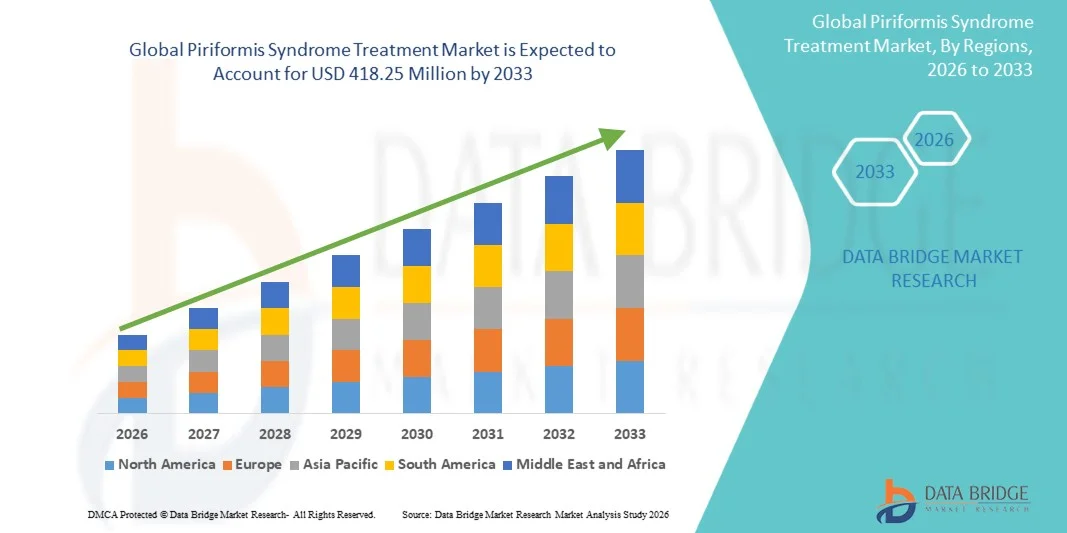
- The global piriformis syndrome treatment market size was valued at USD 262.42 million in 2025and is expected to reach USD 418.25 million by 2033, at a CAGR of 6.00% during the forecast period
- The market growth is primarily driven by the rising prevalence of musculoskeletal and neuromuscular pain disorders, along with increasing incidence of sciatic nerve compression cases linked to sedentary lifestyles and occupational strain
- Furthermore, growing adoption of non-invasive and minimally invasive treatment options such as physiotherapy, ultrasound-guided injections, and pain management therapies is improving patient outcomes, while increasing awareness of early diagnosis and rehabilitation is accelerating the demand for effective piriformis syndrome treatment solutions, thereby supporting steady market expansion
Piriformis Syndrome Treatment Market Analysis
- Piriformis syndrome treatment, involving pharmacological management, rehabilitation-based care, manual therapies, and procedural interventions, is an important segment of neuromuscular and pain management healthcare aimed at relieving sciatic nerve compression caused by piriformis muscle dysfunction and improving patient mobility and quality of life
- The rising demand for piriformis syndrome treatment is primarily driven by increasing incidence of chronic musculoskeletal pain, sedentary lifestyles, sports-related injuries, and growing awareness of early diagnosis and multidisciplinary pain management approaches including non-invasive and minimally invasive therapies
- North America dominated the piriformis syndrome treatment market with the largest revenue share of 41.6% in 2025, supported by advanced healthcare infrastructure, high adoption of rehabilitation and pain management services, strong clinical expertise, and widespread availability of specialized orthopedic and neurology care, particularly in the U.S.
- Asia-Pacific is expected to be the fastest growing region in the piriformis syndrome treatment market during the forecast period due to improving healthcare accessibility, rising patient awareness, expanding physiotherapy and rehabilitation centers, and increasing burden of lifestyle-related musculoskeletal disorders
- Physical Therapy segment dominated the piriformis syndrome treatment market with a market share of 46.3% in 2025, driven by its status as the first-line treatment approach, strong clinical preference for non-invasive management, proven effectiveness in reducing muscle tightness and sciatic nerve pressure, and its integration with exercise-based rehabilitation programs
Report Scope and Piriformis Syndrome Treatment Market Segmentation
|
Attributes |
Piriformis Syndrome Treatment Key Market Insights |
|
Segments Covered |
|
|
Countries Covered |
North America · U.S. · Canada · Mexico Europe · Germany · France · U.K. · Netherlands · Switzerland · Belgium · Russia · Italy · Spain · Turkey · Rest of Europe Asia-Pacific · China · Japan · India · South Korea · Singapore · Malaysia · Australia · Thailand · Indonesia · Philippines · Rest of Asia-Pacific Middle East and Africa · Saudi Arabia · U.A.E. · South Africa · Egypt · Israel · Rest of Middle East and Africa South America · Brazil · Argentina · Rest of South America |
|
Key Market Players |
|
|
Market Opportunities |
· Expanding adoption of image-guided minimally invasive procedures · Rising integration of digital physiotherapy platforms and tele-rehabilitation services |
|
Value Added Data Infosets |
In addition to the insights on market scenarios such as market value, growth rate, segmentation, geographical coverage, and major players, the market reports curated by the Data Bridge Market Research also include in-depth expert analysis, patient epidemiology, pipeline analysis, pricing analysis, and regulatory framework |
Piriformis Syndrome Treatment Market Trends
“Shift Toward Conservative and Technology-Assisted Pain Management”
- A significant and growing trend in the global piriformis syndrome treatment market is the increasing reliance on conservative, non-surgical treatment approaches such as physical therapy, osteopathic manipulation, and image-guided interventions, driven by improved clinical outcomes and lower complication risks
- For instance, physical therapy programs combining stretching, myofascial release, and posture correction are widely recommended as first-line care, reducing the need for invasive surgical procedures in most patients
- Integration of advanced imaging techniques such as ultrasound and MRI guidance is improving diagnostic accuracy and enabling precise delivery of injections such as local anesthetics and corticosteroids, enhancing treatment effectiveness
- Furthermore, the growing use of multidisciplinary pain management platforms that combine physiotherapy, pharmacological treatment, and manual therapies is creating a more holistic and patient-specific treatment approach
- The increasing adoption of osteopathic manipulative treatment (OMT) and prolotherapy is further expanding non-surgical care options, especially for patients with chronic or recurrent symptoms
- Tele-rehabilitation and digital physiotherapy platforms are also emerging as key trends, enabling remote monitoring of exercise adherence and improving long-term recovery outcomes
Piriformis Syndrome Treatment Market Dynamics
Driver
“Rising Prevalence of Chronic Musculoskeletal and Nerve Compression Disorders”
- The increasing prevalence of musculoskeletal disorders and sciatic nerve-related pain conditions is a major driver for the global piriformis syndrome treatment market, particularly due to sedentary lifestyles and occupational strain
- For instance, prolonged sitting habits and lack of physical activity among working populations are significantly increasing piriformis muscle tightness and nerve compression cases globally
- Growing awareness among patients and healthcare providers regarding early diagnosis and timely intervention is leading to higher adoption of physical therapy and medication-based treatment options
- Furthermore, rising participation in sports and fitness activities is contributing to a higher incidence of muscle injuries, further increasing demand for targeted piriformis syndrome treatment solutions
- Expansion of outpatient rehabilitation infrastructure and availability of specialized physiotherapists is improving treatment accessibility across urban and semi-urban regions
- Increasing integration of insurance coverage for conservative pain management therapies is further supporting broader patient adoption and sustained market growth
Restraint/Challenge
“Diagnostic Complexity and Limited Disease Awareness”
- A key challenge restraining the growth of the global piriformis syndrome treatment market is the difficulty in accurate diagnosis, as symptoms often overlap with lumbar disc herniation and other causes of sciatic pain
- For instance, many patients are misdiagnosed in early stages due to lack of standardized diagnostic criteria, leading to delayed or inappropriate treatment initiation
- Limited awareness among primary care providers regarding piriformis syndrome further contributes to underdiagnosis and reduced patient referral to specialized treatment centers
- Furthermore, variability in clinical presentation and absence of definitive laboratory tests make it challenging to establish uniform treatment protocols across healthcare systems
- High dependence on exclusion-based diagnosis using imaging and clinical evaluation increases consultation time and delays treatment initiation
- Limited availability of trained specialists in musculoskeletal and neuromuscular pain management further restricts accurate diagnosis and timely intervention in many regions
Piriformis Syndrome Treatment Market Scope
The market is segmented on the basis of treatment type, end-users, and distribution channel.
- By Treatment
On the basis of treatment, the piriformis syndrome treatment market is segmented into medication, physical therapy, osteopathic manipulative treatment (OMT), prolotherapy, surgery, and others. The Physical Therapy segment dominated the market with the largest revenue share of 46.3% in 2025, driven by its position as the first-line treatment for piriformis syndrome and strong clinical preference for non-invasive pain management. Patients widely opt for stretching, strengthening, and manual therapy-based rehabilitation programs due to their effectiveness in reducing sciatic nerve compression and improving mobility. Hospitals and rehabilitation centers increasingly integrate structured physiotherapy protocols, making it the most accessible and cost-effective treatment option. In addition, growing awareness of exercise-based recovery and long-term symptom management supports sustained demand. Its strong safety profile compared to invasive procedures further reinforces its dominance across both developed and emerging healthcare systems.
The Osteopathic Manipulative Treatment (OMT) segment is expected to witness the fastest growth rate of 19.8% from 2026 to 2033, fueled by increasing adoption of holistic and hands-on manual therapy approaches for musculoskeletal pain relief. OMT is gaining traction due to its ability to improve pelvic alignment, reduce muscle tension, and enhance nerve decompression without surgical intervention. Rising patient preference for drug-free and non-invasive treatment alternatives is significantly boosting its adoption. Furthermore, growing integration of OMT in specialized pain clinics and rehabilitation centers is expanding accessibility. Increasing clinical evidence supporting its effectiveness in chronic piriformis-related pain is further accelerating its acceptance among healthcare providers.
- By End-Users
On the basis of end-users, the market is segmented into hospitals, homecare, specialty clinics, and others. The Hospitals segment dominated the market with the largest revenue share of 52.1% in 2025, driven by the availability of advanced diagnostic infrastructure, multidisciplinary care teams, and access to a wide range of treatment modalities including medication, injections, and physiotherapy. Hospitals are the primary point of care for moderate to severe cases requiring accurate diagnosis and supervised treatment. The presence of pain management departments and orthopedic specialists further strengthens hospital dominance. In addition, hospitals offer image-guided procedures such as corticosteroid injections, improving treatment precision and outcomes. Strong insurance coverage and referral-based patient inflow also contribute significantly to hospital dominance in this market.
The Specialty Clinics segment is expected to witness the fastest growth rate of 20.4% from 2026 to 2033, driven by rising demand for focused musculoskeletal and pain management services. These clinics offer personalized and faster treatment options such as physiotherapy, OMT, and minimally invasive injections, attracting patients seeking outpatient care. Increasing awareness of chronic nerve compression disorders is boosting patient visits to specialized centers. Furthermore, shorter waiting times and lower treatment costs compared to hospitals are enhancing their popularity. Expansion of private rehabilitation and sports injury clinics is also supporting strong growth in this segment.
- By Distribution Channel
On the basis of distribution channel, the market is segmented into hospital pharmacy, retail pharmacy, online pharmacies, and others. The Hospital Pharmacy segment dominated the market with the largest revenue share of 49.7% in 2025, driven by the high volume of prescription-based treatments administered in hospital settings. Most medications for piriformis syndrome, including pain relievers, muscle relaxants, and anti-inflammatory drugs, are dispensed directly after clinical consultation. Hospital pharmacies ensure controlled drug distribution and adherence to physician-supervised treatment protocols. The integration of pharmacy services within hospitals also improves patient compliance and treatment continuity. In addition, the availability of immediate medication after diagnosis makes hospital pharmacies the most reliable distribution channel.
The Online Pharmacies segment is expected to witness the fastest growth rate of 22.3% from 2026 to 2033, driven by increasing digital healthcare adoption and rising demand for convenient medication access. Patients are increasingly preferring online platforms for ordering prescribed pain management drugs and supplements used in long-term therapy. Expansion of telemedicine services is further boosting e-prescription-based online purchases. In addition, discounts, home delivery services, and wider product availability are making online pharmacies highly attractive. Growing internet penetration and smartphone usage are also accelerating this segment’s rapid expansion globally.
Piriformis Syndrome Treatment Market Regional Analysis
- North America dominated the piriformis syndrome treatment market with the largest revenue share of 41.6% in 2025, supported by advanced healthcare infrastructure, high adoption of rehabilitation and pain management services
- Patients in the region highly value early diagnosis, multidisciplinary treatment options, and access to advanced therapies such as image-guided injections, osteopathic manipulative treatment, and structured rehabilitation programs for effective pain relief and mobility restoration
- This widespread adoption is further supported by high healthcare expenditure, strong insurance coverage for rehabilitation services, and the presence of specialized pain management clinics and orthopedic centers, establishing North America as the leading region for piriformis syndrome treatment
U.S. Piriformis Syndrome Treatment Market Insight
The United States holds the dominant position within North America, driven by a highly advanced healthcare ecosystem and strong awareness of musculoskeletal and nerve-related pain disorders. The market is fueled by widespread adoption of physical therapy, osteopathic manipulative treatment, and minimally invasive procedures such as image-guided corticosteroid injections for effective symptom management. Patients increasingly prefer early intervention and multidisciplinary pain management approaches supported by specialized clinics and rehabilitation centers. In addition, strong insurance penetration and favorable reimbursement policies for rehabilitation services further enhance treatment accessibility. The rapid integration of advanced diagnostic imaging and personalized rehabilitation programs is also contributing to improved clinical outcomes and sustained market growth.
Europe Piriformis Syndrome Treatment Market Insight
The Europe piriformis syndrome treatment market is projected to expand at a substantial CAGR throughout the forecast period, primarily driven by increasing awareness of musculoskeletal disorders, rising demand for structured rehabilitation care, and strong healthcare system support for conservative treatment approaches. Patients in the region are increasingly prioritizing non-invasive therapies such as physical therapy, osteopathic manipulation, and medication-based pain management, supported by well-established clinical guidelines and rehabilitation infrastructure. The region is also witnessing strong adoption across hospitals, specialty clinics, and outpatient rehabilitation centers, further supported by universal healthcare systems and growing emphasis on early intervention and long-term functional recovery.
U.K. Piriformis Syndrome Treatment Market Insight
The U.K. piriformis syndrome treatment market is anticipated to grow at a noteworthy CAGR during the forecast period, driven by increasing cases of lifestyle-related musculoskeletal pain and rising awareness of nerve compression disorders among working populations. Patients are increasingly opting for physiotherapy-based rehabilitation and manual therapy approaches, supported by strong clinical recommendations for non-surgical first-line treatment strategies. The presence of well-developed NHS services and expanding private physiotherapy clinics is further contributing to improved access to diagnosis and treatment across both urban and semi-urban regions, supporting steady market expansion.
Germany Piriformis Syndrome Treatment Market Insight
The Germany piriformis syndrome treatment market is expected to expand at a considerable CAGR during the forecast period, fueled by rising demand for evidence-based rehabilitation therapies and increasing focus on non-invasive musculoskeletal care. The country’s strong emphasis on physical therapy, osteopathic manipulative treatment (OMT), and structured pain management programs is driving widespread adoption across hospitals and specialty clinics. In addition, Germany’s advanced healthcare infrastructure and high patient awareness regarding early intervention are supporting the growth of conservative treatment pathways, making it a key market in Europe.
Asia-Pacific Piriformis Syndrome Treatment Market Insight
The Asia-Pacific piriformis syndrome treatment market is poised to grow at the fastest CAGR of 23.6% during the forecast period of 2026 to 2033, driven by increasing urbanization, sedentary lifestyles, and rising incidence of musculoskeletal disorders across emerging economies. The region is witnessing growing demand for affordable and accessible physical therapy and medication-based treatments, supported by expanding healthcare infrastructure and rehabilitation center networks. Furthermore, government initiatives promoting healthcare modernization and increasing awareness of early diagnosis are significantly boosting market penetration across both urban and rural populations, accelerating overall market growth.
Japan Piriformis Syndrome Treatment Market Insight
The Japan piriformis syndrome treatment market is gaining momentum due to its aging population, high healthcare standards, and strong emphasis on rehabilitation-based care for chronic musculoskeletal conditions. Patients in Japan increasingly prefer structured physical therapy and osteopathic manipulative treatment, supported by advanced clinical practices and integration of rehabilitation services in hospitals. The adoption of digital health monitoring and physiotherapy-supporting technologies is further enhancing treatment adherence and improving long-term patient outcomes, strengthening market expansion in the country.
India Piriformis Syndrome Treatment Market Insight
The India piriformis syndrome treatment market accounted for the largest revenue share in Asia Pacific in 2025, attributed to rapid urbanization, rising awareness of musculoskeletal disorders, and increasing access to affordable healthcare services. Physical therapy and medication-based treatments are widely preferred due to cost-effectiveness and growing availability of physiotherapy clinics in urban and semi-urban areas. In addition, expansion of private healthcare providers and increasing focus on rehabilitation services are key factors driving strong market growth across the country, supporting rapid market development.
Piriformis Syndrome Treatment Market Share
The Piriformis Syndrome Treatment industry is primarily led by well-established companies, including:
- Banner Health (U.S.)
- Mayo Clinic (U.S.)
- Cleveland Clinic (U.S.)
- Hospital for Special Surgery (U.S.)
- Deuk Spine Institute (U.S.)
- Johns Hopkins Medicine (U.S.)
- Mount Sinai Health System (U.S.)
- HCA Healthcare (U.S.)
- Global Pelvic Institute (Belgium)
- Physiotattva (India)
- Solaceum Quick Relief Pain Management Clinic (India)
- NHS (U.K.)
- Imperial College Healthcare NHS Trust (U.K.)
- Charité – Universitätsmedizin Berlin (Germany)
- Helios Kliniken GmbH (Germany)
- Apollo Hospitals Enterprise Limited (India)
- Fortis Healthcare Limited (India)
- Manipal Hospitals (India)
- Synapse Pain and Spine Clinic (India)
- QI Spine Clinic (India)
What are the Recent Developments in Global Piriformis Syndrome Treatment Market?
- In November 2025, a clinical outcomes study reported successful use of endoscopic piriformis muscle release combined with sciatic nerve decompression in patients with chronic, treatment-resistant piriformis syndrome. The findings showed significant improvement in pain reduction and functional mobility, with minimal postoperative complications, supporting minimally invasive surgery as an effective option for refractory cases
- In October 2025, a systematic review published in a peer-reviewed medical journal analyzed evolving management strategies for piriformis syndrome, highlighting a strong shift toward conservative treatments such as physical therapy, local injections, and stepwise clinical management before considering surgery. The study emphasized that early intervention and accurate diagnosis significantly improve patient outcomes, reinforcing non-invasive therapies as the primary treatment approach in global clinical practice
- In September 2025, a clinical case report documented the increasing use of botulinum toxin injections as an interventional treatment for piriformis syndrome, demonstrating notable pain relief in patients with chronic sciatic nerve compression. The study highlighted muscle relaxation and reduced nerve irritation as key therapeutic mechanisms, strengthening the role of injectable therapies in pain management clinics
- In December 2022, a randomized controlled clinical study evaluated ultrasound-guided injection therapies for piriformis syndrome and found that botulinum toxin provided superior long-term pain relief compared to lidocaine and ozone injections. The study also confirmed that ultrasound guidance significantly improves injection accuracy and clinical outcomes, supporting its growing use in interventional pain management
- In July 2022, a systematic review published on PubMed Central assessed the safety and effectiveness of botulinum toxin injections in piriformis syndrome treatment and concluded that it provides consistent short- to medium-term pain relief in most patients. The study supported its adoption as a minimally invasive therapeutic option, while also highlighting the need for standardized dosing and further clinical trials

- Interactive Data Analysis Dashboard
- Company Analysis Dashboard for high growth potential opportunities
- Research Analyst Access for customization & queries
- Competitor Analysis with Interactive dashboard
- Latest News, Updates & Trend analysis
- Harness the Power of Benchmark Analysis for Comprehensive Competitor Tracking
Data collection and base year analysis are done using data collection modules with large sample sizes. The stage includes obtaining market information or related data through various sources and strategies. It includes examining and planning all the data acquired from the past in advance. It likewise envelops the examination of information inconsistencies seen across different information sources. The market data is analysed and estimated using market statistical and coherent models. Also, market share analysis and key trend analysis are the major success factors in the market report. To know more, please request an analyst call or drop down your inquiry.
The key research methodology used by DBMR research team is data triangulation which involves data mining, analysis of the impact of data variables on the market and primary (industry expert) validation. Data models include Vendor Positioning Grid, Market Time Line Analysis, Market Overview and Guide, Company Positioning Grid, Patent Analysis, Pricing Analysis, Company Market Share Analysis, Standards of Measurement, Global versus Regional and Vendor Share Analysis. To know more about the research methodology, drop in an inquiry to speak to our industry experts.
Data Bridge Market Research is a leader in advanced formative research. We take pride in servicing our existing and new customers with data and analysis that match and suits their goal. The report can be customized to include price trend analysis of target brands understanding the market for additional countries (ask for the list of countries), clinical trial results data, literature review, refurbished market and product base analysis. Market analysis of target competitors can be analyzed from technology-based analysis to market portfolio strategies. We can add as many competitors that you require data about in the format and data style you are looking for. Our team of analysts can also provide you data in crude raw excel files pivot tables (Fact book) or can assist you in creating presentations from the data sets available in the report.












