


Oscillatory Positive Expiratory Pressure (OPEP) Market Overview
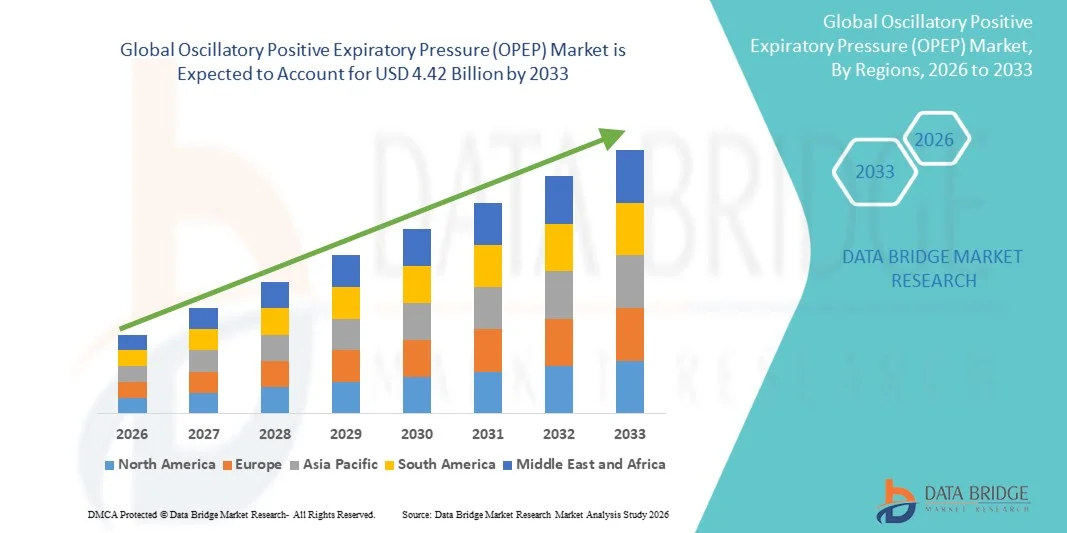
The Oscillatory Positive Expiratory Pressure (OPEP) Market was valued at USD 2.82 billion in 2025 and is projected to reach USD 4.42 billion by 2033, growing at a CAGR of 5.80% from 2026 to 2033. The Oscillatory Positive Expiratory Pressure (OPEP) market is experiencing consistent growth driven by the rising prevalence of chronic respiratory diseases such as chronic obstructive pulmonary disease (COPD), asthma, and cystic fibrosis, along with increasing demand for non-invasive respiratory therapy solutions across hospitals, clinics, and home healthcare settings. Growing awareness regarding pulmonary rehabilitation and airway clearance techniques is further supporting adoption of OPEP devices globally.
The increasing burden of respiratory disorders worldwide, particularly among aging populations and patients exposed to air pollution and smoking-related conditions, is compelling healthcare providers to adopt effective airway clearance devices such as OPEP systems. In addition, the shift toward home-based respiratory care, supported by healthcare cost containment initiatives and improved patient compliance technologies, is accelerating the adoption of handheld and easy-to-use OPEP devices. Expanding use in post-operative respiratory care and long-term disease management is further strengthening market growth across both developed and emerging healthcare systems.
Key Market Trends & Insights
- North America dominated the Oscillatory Positive Expiratory Pressure (OPEP) Market with the largest revenue share of 38.46% in 2025, supported by advanced respiratory care infrastructure, high prevalence of chronic respiratory diseases, strong adoption of home healthcare solutions, and favorable reimbursement frameworks for respiratory therapy devices. The region also benefits from widespread awareness of airway clearance therapies, strong presence of leading medical device manufacturers, and increasing use of OPEP devices in hospital, rehabilitation, and home care settings for chronic disease management and post-operative care.
- The Mouthpiece OPEP Devices segment dominated the market with a 46.28% revenue share in 2025, owing to its widespread clinical adoption in COPD, bronchiectasis, and post-operative airway clearance therapy.
- Asia-Pacific is expected to be the fastest-growing region at a CAGR of 7.8% from 2026 to 2033, fueled by rising air pollution levels, increasing prevalence of respiratory diseases, expanding healthcare infrastructure, and growing awareness of non-invasive respiratory therapy solutions across China, India, and Southeast Asia. Rapid growth in home healthcare adoption and improving access to affordable respiratory care devices are further accelerating regional market expansion.
- COPD indication segment dominated the market with a 46.32% revenue share in 2025, driven by the high global burden of chronic obstructive pulmonary disease, increasing smoking-related respiratory disorders, and growing demand for long-term airway clearance therapy. Rising hospitalization rates and the need for effective mucus clearance solutions in COPD patients continue to strengthen segment dominance.
- Hospital Pharmacies segment held the largest share of 39.74% in 2025, supported by strong procurement of respiratory therapy devices in clinical settings, high patient inflow in hospitals, and the increasing use of OPEP devices in post-operative pulmonary care and chronic respiratory disease management. Hospitals remain the primary point of diagnosis and treatment, driving consistent demand for advanced respiratory devices.
- The Online Pharmacies / Online Sales segment is expected to witness the fastest growth at a CAGR of 8.1% from 2026 to 2033, driven by increasing digital healthcare adoption, rising consumer preference for home-based treatment solutions, and growing availability of respiratory therapy devices through e-commerce platforms. Expanding telehealth integration and improved last-mile healthcare delivery are further supporting segment growth.
Market Size & Forecast
- Global Market Value (2025): USD 2.82 Billion
- Expected Market Value (2033): USD 4.42 Billion
- Forecast CAGR (2026–2033): 5.80%
- Leading Region in 2025: North America
- Fastest Growing Region: Asia-Pacific
Report Scope and Oscillatory Positive Expiratory Pressure (OPEP) Market Segmentation
|
Attributes |
Oscillatory Positive Expiratory Pressure (OPEP) Key Market Insights |
|
Segments Covered |
|
|
Countries Covered |
North America · U.S. · Canada · Mexico Europe · Germany · France · U.K. · Netherlands · Switzerland · Belgium · Russia · Italy · Spain · Turkey · Rest of Europe Asia-Pacific · China · Japan · India · South Korea · Singapore · Malaysia · Australia · Thailand · Indonesia · Philippines · Rest of Asia-Pacific Middle East and Africa · Saudi Arabia · U.A.E. · South Africa · Egypt · Israel · Rest of Middle East and Africa South America · Brazil · Argentina · Rest of South America |
|
Key Market Players |
• Trudell Medical International (Canada) |
|
Market Opportunities |
· Expansion of Home-Based Respiratory Care Solutions · Rising Adoption in Chronic Disease Management Programs · Technological Advancements in Portable and Smart Respiratory Devices |
|
Value Added Data Infosets |
In addition to the insights on market scenarios such as market value, growth rate, segmentation, geographical coverage, and major players, the market reports curated by the Data Bridge Market Research also include in-depth expert analysis, geographically represented company-wise production and capacity, network layouts of distributors and partners, detailed and updated price trend analysis and deficit analysis of supply chain and demand. |
Oscillatory Positive Expiratory Pressure (OPEP) Market Trends
Trend: Expansion of Home-Based Respiratory Care and Chronic Disease Management
The Oscillatory Positive Expiratory Pressure (OPEP) Market is witnessing strong growth driven by the rapid expansion of home healthcare services and increasing adoption of airway clearance therapies for chronic respiratory diseases. According to the World Health Organization (WHO), chronic obstructive pulmonary disease (COPD) affects more than 390 million people globally and is responsible for over 3.2 million deaths annually, making it one of the leading causes of long-term respiratory disability. The growing preference for non-invasive, self-administered respiratory therapy solutions is significantly increasing demand for OPEP devices. Healthcare systems are increasingly shifting toward home-based pulmonary rehabilitation programs to reduce hospital readmissions and healthcare costs, while improving patient compliance and quality of life. The rising prevalence of pollution-related respiratory conditions and smoking-related lung damage is further accelerating adoption across both developed and emerging markets.
Oscillatory Positive Expiratory Pressure (OPEP) Market Dynamics
Key Market Driver: Rising Prevalence of Chronic Respiratory Diseases and Increasing Demand for Airway Clearance Therapy
The increasing global burden of chronic respiratory diseases is a major driver of the OPEP market. Diseases such as COPD, asthma, bronchiectasis, and cystic fibrosis require long-term airway clearance therapy to improve lung function and reduce mucus buildup. According to WHO estimates, respiratory diseases account for nearly 7% of global deaths annually, with COPD alone projected to become the third leading cause of death worldwide. Clinical studies indicate that airway clearance techniques, including OPEP therapy, can improve sputum clearance efficiency by up to 30–40% in patients with chronic lung conditions, leading to better oxygenation and reduced exacerbations. Hospitals, rehabilitation centers, and homecare providers are increasingly integrating OPEP devices into standard respiratory care protocols. Growing awareness among physicians and patients regarding early intervention and pulmonary rehabilitation is further accelerating market adoption.
Key Restraint/Challenge: Limited Awareness, Patient Compliance Issues, and Device Usage Variability
A key challenge in the global OPEP market is limited awareness and inconsistent patient adherence to therapy protocols, particularly in low- and middle-income countries. Many patients with chronic respiratory diseases remain undiagnosed or do not receive structured pulmonary rehabilitation programs, limiting device penetration. In addition, correct usage of OPEP devices requires patient training and regular adherence, which can be difficult to maintain over long treatment cycles. Clinical evidence suggests that non-adherence rates in chronic respiratory therapies can exceed 40% in some patient populations, reducing treatment effectiveness. Furthermore, variability in device design and lack of standardized clinical protocols across regions can lead to inconsistent therapeutic outcomes. These factors collectively restrict widespread adoption despite proven clinical benefits.
Key Market Opportunity: Expansion of Homecare Respiratory Therapy and Smart OPEP Device Innovation
The integration of digital health technologies and expansion of home-based respiratory care present significant opportunities for the OPEP market. Increasing use of portable and user-friendly OPEP devices is enabling patients to manage chronic respiratory conditions outside hospital settings, reducing healthcare burden and improving long-term outcomes. The global home healthcare market is projected to grow significantly, driven by aging populations and rising chronic disease prevalence. Manufacturers are increasingly focusing on next-generation OPEP devices with enhanced airflow resistance control, ergonomic designs, and potential integration with mobile health applications for therapy tracking and patient monitoring. In addition, rising healthcare investments in countries such as India, China, and Brazil are expanding access to respiratory care devices. The growing emphasis on preventive care and early intervention in respiratory diseases is expected to further accelerate adoption of advanced OPEP solutions globally.
Oscillatory Positive Expiratory Pressure (OPEP) Market Scope
The Oscillatory Positive Expiratory Pressure (OPEP) market is segmented on the basis of product type, indication and end-user.
- By Product Type
On the basis of product type, the global Oscillating Positive Expiratory Pressure (OPEP) market is segmented into facemask OPEP devices, mouthpiece OPEP devices, and bottle OPEP devices. The Mouthpiece OPEP Devices segment dominated the market with a 46.28% revenue share in 2025, owing to its widespread clinical adoption in COPD, bronchiectasis, and post-operative airway clearance therapy. These devices are widely preferred across hospitals, rehabilitation centers, and homecare settings due to ease of use, portability, and strong patient compliance in long-term respiratory care. Increasing prevalence of chronic respiratory diseases such as COPD and asthma is significantly driving adoption. Clinical guidelines from respiratory associations strongly recommend airway clearance therapy, further strengthening demand. Hospitals are increasingly integrating OPEP devices into pulmonary rehabilitation programs to improve lung function outcomes. Technological advancements in valve resistance systems and oscillation mechanisms are improving treatment efficiency. Rising geriatric population globally is increasing susceptibility to respiratory disorders, supporting market expansion. Growing awareness among physiotherapists and pulmonologists is enhancing prescription rates. Expansion of home healthcare services is further accelerating usage. Favorable reimbursement policies in developed economies are supporting accessibility.
The Facemask OPEP Devices segment is projected to register the fastest growth with a CAGR of 7.4% (2026–2033), driven by increasing use in pediatric respiratory care and ICU settings. Rising hospitalization rates for acute respiratory infections are boosting demand. These devices provide better seal and airflow control for patients requiring assisted breathing support. Increasing preference for non-invasive respiratory therapy is driving adoption. Growth in emergency care and critical care units is supporting usage. Technological improvements in mask ergonomics and comfort design are enhancing patient compliance. Rising pediatric asthma cases globally are significantly contributing to demand. Expanding healthcare infrastructure in emerging economies is boosting penetration. Increasing awareness about early respiratory intervention is strengthening growth. Homecare adoption for chronic respiratory patients is also rising rapidly.
- By Indication
On the basis of indication, the market is segmented into COPD, asthma, atelectasis, bronchitis, bronchiectasis, cystic fibrosis, and others. The COPD segment dominated the market with a 39.65% share in 2025, due to the extremely high global burden of chronic obstructive pulmonary disease affecting nearly 390 million people worldwide (WHO estimates). COPD remains a leading cause of morbidity and mortality, significantly driving demand for airway clearance therapies such as OPEP devices. Smoking prevalence, particularly in low- and middle-income countries, is a major risk factor accelerating disease incidence. Aging populations in developed regions are further increasing disease prevalence. Hospitals are increasingly incorporating OPEP therapy into standard pulmonary rehabilitation protocols. Strong clinical evidence supporting improved mucus clearance and reduced exacerbations is enhancing adoption. Government health programs focusing on respiratory disease management are supporting market growth. Increasing hospitalization rates for chronic respiratory conditions are boosting device utilization. Expanding access to respiratory care in outpatient settings is strengthening demand. Rising healthcare expenditure globally is improving treatment accessibility.
The Cystic Fibrosis segment is expected to register the fastest CAGR of 7.9% (2026–2033), driven by increasing genetic screening and early diagnosis rates. Lifelong airway clearance requirements in cystic fibrosis patients are significantly supporting device adoption. Advanced pediatric respiratory care programs are expanding globally. Rising availability of specialized treatment centers is boosting usage. Technological improvements in portable OPEP devices are increasing home-based therapy adoption. Strong clinical focus on mucus management in CF patients is driving demand. Increasing awareness among caregivers and healthcare professionals is improving early intervention. Government support for rare disease treatment is further accelerating growth. Expanding biologics and supportive therapy ecosystems are strengthening treatment outcomes. Rising healthcare investment in pediatric respiratory diseases is further supporting market expansion.
- By Distribution Channel
On the basis of distribution channel, the market is segmented into hospital pharmacies, retail pharmacies, and online pharmacies/online sales. The Hospital Pharmacies segment dominated the market with a 52.14% revenue share in 2025, due to high patient inflow in hospital settings and strong integration of OPEP devices into respiratory therapy protocols. Hospitals serve as the primary point of diagnosis and prescription for chronic respiratory diseases such as COPD and bronchiectasis. Availability of trained respiratory therapists ensures correct device usage and improved clinical outcomes. Increasing hospitalization rates for respiratory infections and chronic lung diseases is supporting demand. Bulk procurement practices by hospitals and healthcare systems strengthen market dominance. Strong presence of pulmonology departments enhances device utilization. Government healthcare reimbursement policies in developed regions are supporting accessibility. Integration of OPEP therapy into post-operative care is increasing usage. Expanding ICU and rehabilitation infrastructure is driving adoption. Rising awareness among clinicians about airway clearance benefits is further boosting hospital demand.
The Online Pharmacies segment is projected to register the fastest CAGR of 8.2% (2026–2033), driven by rapid digitalization of healthcare and increasing preference for home-based treatment solutions. Growth of telemedicine platforms is enabling electronic prescriptions for respiratory devices. Rising patient preference for convenience and doorstep delivery is accelerating adoption. Increasing internet penetration and smartphone usage are supporting e-commerce growth. Expanding homecare treatment models for chronic respiratory diseases is boosting demand. Lower pricing and discount availability on online platforms are attracting patients. Growing awareness of self-management of chronic conditions is supporting uptake. Regulatory improvements in online medical device sales are increasing trust. Expansion of digital health ecosystems in emerging markets is further accelerating growth. Rising adoption of subscription-based medical supply models is also contributing to expansion.
Oscillatory Positive Expiratory Pressure (OPEP) Market Regional Analysis
North America dominated the Oscillatory Positive Expiratory Pressure (OPEP) Market and accounted for the largest revenue share of 38.46% in 2025, supported by advanced respiratory care infrastructure, high prevalence of chronic respiratory diseases, strong adoption of home healthcare solutions, and favorable reimbursement frameworks for respiratory therapy devices. The region benefits from a well-established healthcare system with widespread availability of pulmonary rehabilitation programs and specialized respiratory care units. Increasing incidence of COPD, asthma, and bronchiectasis is significantly driving demand for airway clearance devices. Strong presence of leading medical device manufacturers is further strengthening product availability and innovation. Growing awareness among patients and clinicians regarding non-invasive respiratory therapies is boosting adoption rates. Expansion of homecare treatment models for chronic respiratory disease management is further supporting market penetration. Hospitals are increasingly integrating OPEP devices into post-operative and long-term respiratory care protocols. Government healthcare reimbursement policies are improving accessibility across patient populations. Rising geriatric population is further increasing susceptibility to chronic lung conditions. Continuous technological improvements in device portability and efficiency are enhancing patient compliance.
U.S. Oscillatory Positive Expiratory Pressure (OPEP) Market Insight
The U.S. Oscillatory Positive Expiratory Pressure (OPEP) market is witnessing strong growth due to rising burden of chronic respiratory diseases, increasing hospital admissions for COPD and asthma, and strong adoption of advanced respiratory care devices. The country has a highly developed healthcare infrastructure with widespread availability of pulmonary rehabilitation programs. Growing preference for home-based respiratory therapy is significantly accelerating demand for portable OPEP devices. Strong insurance coverage and reimbursement policies for respiratory treatment are supporting patient access. Increasing awareness among healthcare providers regarding airway clearance therapy is driving clinical adoption. Hospitals and rehabilitation centers are increasingly integrating OPEP devices into standard respiratory care protocols. Rising elderly population in the U.S. is further increasing disease prevalence. Technological advancements in device design are improving patient comfort and adherence. Expanding telehealth and homecare monitoring systems are supporting remote respiratory care management. Continuous R&D activities by medical device companies are enhancing product efficiency and usability.
Europe Oscillatory Positive Expiratory Pressure (OPEP) Market Insight
The Europe Oscillatory Positive Expiratory Pressure (OPEP) market remains a major contributor to global revenue, driven by strong healthcare systems, high awareness of respiratory diseases, and supportive regulatory frameworks for respiratory therapy devices. The region has a high prevalence of chronic respiratory conditions such as COPD and bronchiectasis, particularly among aging populations. Strong emphasis on early diagnosis and disease management is boosting demand for OPEP devices. Public healthcare systems in countries such as Germany, France, and the U.K. are supporting widespread adoption. Increasing use of pulmonary rehabilitation programs in hospitals is strengthening market penetration. Rising air pollution levels in urban areas are contributing to respiratory disease incidence. Expanding home healthcare services across Europe is further supporting device adoption. Technological innovation in portable and user-friendly devices is improving patient compliance. Strong presence of medical device manufacturers is enhancing product availability. Government initiatives focused on respiratory health awareness are further driving growth.
U.K. Oscillatory Positive Expiratory Pressure (OPEP) Market Insight
The U.K. Oscillatory Positive Expiratory Pressure (OPEP) market is experiencing steady growth, supported by rising prevalence of COPD and asthma, strong National Health Service (NHS) support for respiratory care, and increasing adoption of home-based treatment solutions. Hospitals across the U.K. are increasingly integrating OPEP devices into pulmonary rehabilitation and post-operative care programs. Growing awareness among clinicians regarding airway clearance therapy is driving adoption. Expanding elderly population is increasing demand for chronic respiratory disease management. Rising preference for non-invasive and cost-effective treatment solutions is supporting market growth. Increasing use of home healthcare services is accelerating adoption of portable devices. Government healthcare funding is improving patient access to respiratory therapies. Technological advancements in device ergonomics and efficiency are enhancing usability. Strong clinical guidelines supporting airway clearance therapy are reinforcing demand. Growing integration of respiratory care into digital health platforms is further supporting market expansion.
Germany Oscillatory Positive Expiratory Pressure (OPEP) Market Insight
The Germany Oscillatory Positive Expiratory Pressure (OPEP) market is expanding steadily due to strong healthcare infrastructure, high burden of chronic respiratory diseases, and advanced clinical adoption of respiratory therapy devices. Hospitals and rehabilitation centers in Germany are widely using OPEP devices for COPD and bronchiectasis management. Strong emphasis on preventive healthcare and early disease intervention is driving demand. Increasing aging population is significantly contributing to respiratory disease prevalence. Well-established reimbursement systems are supporting patient access to treatment. Rising adoption of homecare respiratory solutions is boosting device usage. Strong medical device manufacturing ecosystem is ensuring product innovation. Integration of OPEP devices into post-surgical recovery protocols is increasing demand. High awareness among healthcare professionals is supporting clinical adoption. Continuous advancements in respiratory therapy technologies are further strengthening market growth.
Asia-Pacific Oscillatory Positive Expiratory Pressure (OPEP) Market Insight
The Asia-Pacific Oscillatory Positive Expiratory Pressure (OPEP) market is expected to witness the fastest growth with a CAGR of 7.8% from 2026 to 2033, fueled by rising air pollution levels, increasing prevalence of respiratory diseases, expanding healthcare infrastructure, and growing awareness of non-invasive respiratory therapies across China, India, and Southeast Asia. Rapid urbanization and deteriorating air quality are significantly increasing respiratory disease burden. Expanding middle-class population is improving access to healthcare services. Governments across the region are investing in respiratory care infrastructure and public health initiatives. Increasing adoption of home healthcare solutions is driving demand for portable OPEP devices. Rising hospital admissions for asthma and COPD are further boosting device usage. Growing availability of affordable medical devices is supporting market penetration. Expansion of private healthcare providers is improving accessibility. Awareness campaigns on respiratory health are increasing patient adoption rates. Technological advancements and local manufacturing are reducing device costs and accelerating adoption.
Japan Oscillatory Positive Expiratory Pressure (OPEP) Market Insight
The Japan Oscillatory Positive Expiratory Pressure (OPEP) market is witnessing consistent growth due to rapidly aging population, increasing prevalence of chronic respiratory diseases, and strong healthcare system integration. Hospitals and rehabilitation centers are widely adopting OPEP devices for COPD and post-operative respiratory care. High geriatric population is significantly contributing to demand for airway clearance therapy. Strong focus on advanced homecare solutions is supporting market expansion. Increasing awareness of non-invasive respiratory treatments is driving adoption. Technological innovation in compact and user-friendly devices is enhancing usability. Government healthcare programs are supporting chronic disease management. Rising hospital-based pulmonary rehabilitation programs are strengthening usage. Increasing healthcare expenditure is improving access to respiratory therapies. Strong clinical guidelines supporting airway clearance therapy are further reinforcing adoption.
China Oscillatory Positive Expiratory Pressure (OPEP) Market Insight
The China Oscillatory Positive Expiratory Pressure (OPEP) market is growing rapidly due to rising air pollution, increasing prevalence of respiratory diseases, expanding healthcare infrastructure, and growing awareness of respiratory therapy solutions. High incidence of COPD and asthma is driving strong demand for airway clearance devices. Government initiatives focused on air quality improvement and public health are supporting market growth. Expanding hospital infrastructure is increasing device adoption in clinical settings. Rising adoption of home healthcare is significantly boosting demand for portable devices. Increasing healthcare affordability and insurance coverage are improving accessibility. Strong growth in elderly population is further increasing disease burden. Local manufacturing of medical devices is reducing costs and improving availability. Rising awareness of preventive respiratory care is supporting early adoption. Continuous technological advancements in respiratory devices are further accelerating market expansion.
Oscillatory Positive Expiratory Pressure (OPEP) Market Share
The Oscillatory Positive Expiratory Pressure (OPEP) industry is primarily led by well-established companies, including:
- Trudell Medical International (Canada)
- PARI GmbH (Germany)
- Philips Respironics (Netherlands)
- Drive DeVilbiss Healthcare (U.S.)
- Teleflex Incorporated (U.S.)
- ICU Medical (U.S.)
- Omron Healthcare (Japan)
- Fisher & Paykel Healthcare (New Zealand)
- SunMed (U.S.)
- Medline Industries (U.S.)
- ResMed (Australia)
- GE HealthCare (U.S.)
- Becton Dickinson (U.S.)
- Vyaire Medical (U.S.)
- Hamilton Medical (Switzerland)
Latest Developments in Oscillatory Positive Expiratory Pressure (OPEP) Market
- In December 2021, the European Respiratory Society (ERS) highlighted growing clinical adoption of oscillating positive expiratory pressure (OPEP) therapy in airway clearance management for COPD and bronchiectasis patients. Clinical evidence compiled in respiratory rehabilitation research showed that OPEP devices improve mucus clearance, reduce exacerbation frequency, and enhance lung function outcomes, reinforcing their integration into standard pulmonary physiotherapy protocols across Europe
- In December 2021, a narrative review published on respiratory airway clearance techniques emphasized the increasing use of OPEP therapy as an alternative to traditional chest physiotherapy. The study confirmed that oscillating PEP devices provide both positive expiratory pressure and high-frequency oscillations, improving secretion mobilization in chronic respiratory disease patients, particularly COPD and cystic fibrosis populations
- In April 2024, a global OPEP device market analysis reported accelerating commercialization of oscillating positive expiratory pressure devices, projecting strong market expansion driven by rising COPD, asthma, and bronchiectasis prevalence. The report highlighted increasing product diversification, including facemask, mouthpiece, and bottle-based OPEP devices, as manufacturers expanded offerings to meet varied patient needs across hospital and homecare settings
- In October 2025, comparative clinical and technology assessments of airway clearance devices highlighted increasing innovation in OPEP systems, including integration with digitally controlled pressure delivery systems and combination aerosol therapy platforms. This marked a shift from purely mechanical devices toward hybrid, electronically assisted respiratory therapy systems aimed at improving consistency and patient adherence

- Interactive Data Analysis Dashboard
- Company Analysis Dashboard for high growth potential opportunities
- Research Analyst Access for customization & queries
- Competitor Analysis with Interactive dashboard
- Latest News, Updates & Trend analysis
- Harness the Power of Benchmark Analysis for Comprehensive Competitor Tracking
Data collection and base year analysis are done using data collection modules with large sample sizes. The stage includes obtaining market information or related data through various sources and strategies. It includes examining and planning all the data acquired from the past in advance. It likewise envelops the examination of information inconsistencies seen across different information sources. The market data is analysed and estimated using market statistical and coherent models. Also, market share analysis and key trend analysis are the major success factors in the market report. To know more, please request an analyst call or drop down your inquiry.
The key research methodology used by DBMR research team is data triangulation which involves data mining, analysis of the impact of data variables on the market and primary (industry expert) validation. Data models include Vendor Positioning Grid, Market Time Line Analysis, Market Overview and Guide, Company Positioning Grid, Patent Analysis, Pricing Analysis, Company Market Share Analysis, Standards of Measurement, Global versus Regional and Vendor Share Analysis. To know more about the research methodology, drop in an inquiry to speak to our industry experts.
Data Bridge Market Research is a leader in advanced formative research. We take pride in servicing our existing and new customers with data and analysis that match and suits their goal. The report can be customized to include price trend analysis of target brands understanding the market for additional countries (ask for the list of countries), clinical trial results data, literature review, refurbished market and product base analysis. Market analysis of target competitors can be analyzed from technology-based analysis to market portfolio strategies. We can add as many competitors that you require data about in the format and data style you are looking for. Our team of analysts can also provide you data in crude raw excel files pivot tables (Fact book) or can assist you in creating presentations from the data sets available in the report.













