Global Neonatal Intensive Care Respiratory Devices Market
Market Size in USD Billion
CAGR :
% 
 USD
2.17 Billion
USD
3.81 Billion
2025
2033
USD
2.17 Billion
USD
3.81 Billion
2025
2033
 Forecast Period Forecast Period |
2026 –2033 |
 Market Size (Base Year) Market Size (Base Year) |
USD 2.17 Billion |
 Market Size (Forecast Year) Market Size (Forecast Year) |
USD 3.81 Billion |
 CAGR CAGR |
% |
| Major Markets Players |
|
Neonatal Intensive Care Respiratory Devices Market Size
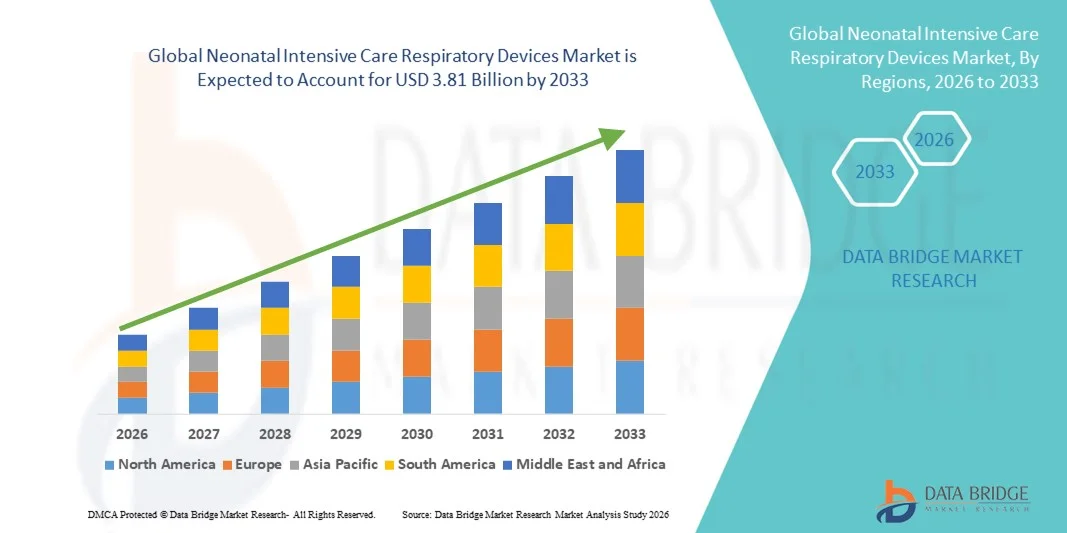
- The global neonatal intensive care respiratory devices market size was valued at USD 2.17 billion in 2025 and is expected to reach USD 3.81 billion by 2033, at a CAGR of 7.32% during the forecast period
- The market growth is largely fueled by the rising prevalence of preterm births and respiratory disorders among neonates, along with continuous technological advancements in neonatal respiratory care devices, leading to improved clinical outcomes in neonatal intensive care units (NICUs)
- Furthermore, increasing investments in neonatal healthcare infrastructure, growing awareness about early respiratory intervention, and rising demand for safe, efficient, and non-invasive respiratory support solutions are accelerating the adoption of neonatal intensive care respiratory devices, thereby significantly boosting the market’s growth
Neonatal Intensive Care Respiratory Devices Market Analysis
- Neonatal intensive care respiratory devices, including ventilators, CPAP systems, and oxygen therapy equipment, are critical components of neonatal intensive care units (NICUs) in both hospitals and specialty clinics due to their role in managing respiratory distress and improving survival rates among preterm and critically ill newborns
- The growing demand for neonatal respiratory devices is primarily driven by the increasing incidence of preterm births, rising prevalence of neonatal respiratory disorders, advancements in non-invasive ventilation technologies, and greater focus on improving neonatal care outcomes globally
- North America dominated the neonatal intensive care respiratory devices market with a revenue share of approximately 36.4% in 2025, supported by advanced neonatal healthcare infrastructure, high healthcare spending, and early adoption of technologically advanced respiratory support systems, with the U.S. leading due to strong NICU penetration and continuous product innovations
- Asia-Pacific is expected to be the fastest-growing region, registering a robust growth rate during the forecast period, driven by rising birth rates, improving neonatal healthcare access, expanding hospital infrastructure, and increasing government initiatives to reduce neonatal mortality in countries such as China and India
- The Devices segment dominated the largest market revenue share of 61.3% in 2025, driven by the critical need for advanced respiratory support systems in neonatal intensive care units
Report Scope and Neonatal Intensive Care Respiratory Devices Market Segmentation
|
Attributes |
Neonatal Intensive Care Respiratory Devices Key Market Insights |
|
Segments Covered |
|
|
Countries Covered |
North America
Europe
Asia-Pacific
Middle East and Africa
South America
|
|
Key Market Players |
|
|
Market Opportunities |
|
|
Value Added Data Infosets |
In addition to the insights on market scenarios such as market value, growth rate, segmentation, geographical coverage, and major players, the market reports curated by the Data Bridge Market Research also include in-depth expert analysis, patient epidemiology, pipeline analysis, pricing analysis, and regulatory framework. |
Neonatal Intensive Care Respiratory Devices Market Trends
Technological Advancements and Integration in Neonatal Respiratory Care
- A significant and accelerating trend in the global neonatal intensive care respiratory devices market is the continuous advancement of respiratory support technologies designed specifically for premature and critically ill neonates. Innovations in ventilators, CPAP devices, and oxygen delivery systems are improving clinical outcomes by offering more precise, gentle, and adaptive respiratory support
- For instance, Dräger’s Babylog VN600 and GE Healthcare’s Carescape R860 ventilators are designed to deliver lung-protective ventilation with precise tidal volume control, supporting fragile neonatal lungs and reducing the risk of ventilator-induced lung injury
- The integration of advanced monitoring and control features enables clinicians to adjust respiratory parameters in real time based on the infant’s condition. Devices now offer synchronized ventilation modes, leak compensation, and automated oxygen control to enhance safety and treatment efficiency
- These technological improvements facilitate better management of conditions such as respiratory distress syndrome (RDS), bronchopulmonary dysplasia (BPD), and apnea of prematurity, supporting improved survival rates and long-term health outcomes
- As neonatal care standards continue to evolve, manufacturers are focusing on compact, user-friendly, and interoperable respiratory devices suitable for both high-acuity NICU settings and transport applications
- The growing emphasis on technology-driven neonatal care is reinforcing demand for advanced respiratory devices across hospitals and specialized neonatal care centers worldwide
Neonatal Intensive Care Respiratory Devices Market Dynamics
Driver
Rising Focus on Non-Invasive Respiratory Support
- Another key trend in the Neonatal Intensive Care Respiratory Devices market is the increasing preference for non-invasive respiratory support, aimed at minimizing trauma to neonatal airways and reducing dependency on invasive mechanical ventilation
- For instance, nasal CPAP and high-flow nasal cannula (HFNC) systems from companies such as Fisher & Paykel Healthcare are widely used to support preterm infants with breathing difficulties while lowering the risk of infections and lung injury
- Non-invasive ventilation techniques help reduce the need for intubation, shorten NICU stays, and improve overall neonatal comfort
- The adoption of these devices is particularly strong in developed healthcare systems where evidence-based neonatal care protocols emphasize early non-invasive intervention
- Continuous improvements in interface design, such as soft nasal prongs and masks, further enhance tolerance and effectiveness in neonates
- This shift toward non-invasive respiratory care is reshaping treatment protocols and driving innovation in neonatal respiratory device development
Restraint/Challenge
Growing Adoption of Integrated Monitoring and Data-Driven Care
- The Neonatal Intensive Care Respiratory Devices market is also witnessing increased adoption of devices integrated with monitoring systems that provide continuous data on respiratory parameters, oxygen saturation, and lung mechanics
- For instance, modern ventilators and CPAP systems are increasingly integrated with neonatal monitoring platforms that allow clinicians to track respiratory trends and respond quickly to changes in patient condition
- These integrated systems support clinical decision-making by offering real-time insights, alarms, and historical data analysis, enhancing patient safety in NICU environments
- The ability to centralize respiratory data alongside other vital parameters improves workflow efficiency for healthcare professionals and supports standardized care delivery
- Data-driven respiratory management is particularly valuable in managing extremely low birth weight infants who require constant monitoring and precise intervention
- This trend underscores the growing role of advanced monitoring technologies in improving neonatal respiratory outcomes
Neonatal Intensive Care Respiratory Devices Market Scope
The market is segmented on the basis of product and end user.
- By Product
On the basis of product, the Global Neonatal Intensive Care Respiratory Devices market is segmented into Devices and Accessories and Consumables. The Devices segment dominated the largest market revenue share of 61.3% in 2025, driven by the critical need for advanced respiratory support systems in neonatal intensive care units. Devices such as ventilators, CPAP systems, and oxygen therapy equipment are essential for managing respiratory distress syndrome and other neonatal pulmonary conditions. The rising incidence of preterm births globally significantly increases demand for these life-saving systems. Technological advancements, including non-invasive ventilation and automated oxygen control, further strengthen adoption. Hospitals prioritize high-performance respiratory devices to improve survival rates and clinical outcomes. Strong capital investments in NICU infrastructure support sustained demand. Regulatory approvals and continuous product upgrades by leading manufacturers also reinforce the segment’s dominance.
The Accessories and Consumables segment is expected to witness the fastest CAGR of 22.1% from 2026 to 2033, driven by the recurring and high-volume usage of items such as nasal cannulas, masks, breathing circuits, filters, and humidifiers. These components require frequent replacement due to strict hygiene and infection-control protocols in NICUs. The increasing focus on reducing hospital-acquired infections accelerates demand for disposable respiratory consumables. Growth in NICU admissions directly translates into higher consumption rates. Cost-effective product innovations and hospital procurement contracts further support rapid expansion. The segment benefits from stable, repeat revenue streams across healthcare facilities.
- By End User
On the basis of end user, the Global Neonatal Intensive Care Respiratory Devices market is segmented into NICU Hospitals, Specialty Clinics, and Nursing Homes. The NICU Hospitals segment accounted for the largest market revenue share of 68.7% in 2025, driven by the concentration of high-risk neonatal cases requiring advanced respiratory care. NICU hospitals are equipped with sophisticated ventilation systems and trained neonatology staff, making them primary users of respiratory devices. Increasing hospital births, particularly preterm and low-birth-weight infants, fuel sustained demand. Government investments in maternal and neonatal healthcare infrastructure further strengthen this segment. Tertiary care hospitals continuously upgrade equipment to meet international clinical standards. Availability of reimbursement for NICU procedures also supports higher adoption rates. These factors collectively reinforce the dominance of NICU hospitals.
The Specialty Clinics segment is projected to grow at the fastest CAGR of 20.4% from 2026 to 2033, driven by the expansion of specialized neonatal and pediatric care centers. These clinics are increasingly managing post-NICU respiratory support and follow-up care for neonates. Rising demand for decentralized healthcare services supports growth outside large hospitals. Technological miniaturization enables clinics to adopt advanced yet compact respiratory systems. Increasing private investment in specialty neonatal centers, particularly in emerging economies, further accelerates adoption. Growing parental preference for specialized care environments also contributes to rapid segment expansion.
Neonatal Intensive Care Respiratory Devices Market Regional Analysis
- North America dominated the neonatal intensive care respiratory devices market with a revenue share of approximately 36.4% in 2025, supported by advanced neonatal healthcare infrastructure, high healthcare expenditure, and early adoption of technologically advanced respiratory support system
- The region benefits from well-established NICU facilities, high availability of skilled neonatal care professionals, and strong reimbursement frameworks that support the use of advanced respiratory devices for premature and critically ill neonates
- This dominance is further reinforced by continuous product innovation, strong presence of leading medical device manufacturers, and increasing focus on improving neonatal survival outcomes across both public and private healthcare institutions
U.S. Neonatal Intensive Care Respiratory Devices Market Insight
The U.S. neonatal intensive care respiratory devices market captured the largest revenue share within North America in 2025, driven by widespread NICU penetration, high incidence of preterm births, and substantial investments in neonatal healthcare. Hospitals in the U.S. increasingly prioritize advanced ventilators, CPAP systems, and oxygen therapy devices to manage respiratory distress in neonates. The country’s strong regulatory framework, rapid adoption of innovative respiratory technologies, and ongoing product launches by key manufacturers continue to propel market growth. In addition, strong clinical research activity and early adoption of evidence-based neonatal care protocols further support market expansion.
Europe Neonatal Intensive Care Respiratory Devices Market Insight
The Europe neonatal intensive care respiratory devices market is projected to expand at a substantial CAGR during the forecast period, driven by increasing emphasis on neonatal health, stringent clinical guidelines, and rising investments in hospital infrastructure. European countries are focusing on reducing neonatal mortality rates through early diagnosis and improved respiratory support for premature infants. Growth is particularly strong in Western Europe, where advanced healthcare systems and standardized NICU practices support the adoption of sophisticated respiratory devices across public and private hospitals.
U.K. Neonatal Intensive Care Respiratory Devices Market Insight
The U.K. neonatal intensive care respiratory devices market is anticipated to grow at a noteworthy CAGR over the forecast period, supported by the National Health Service’s (NHS) focus on enhancing neonatal outcomes. Increasing awareness of respiratory complications in premature infants and investments in modernizing NICU facilities are driving demand for advanced respiratory devices. The growing use of non-invasive ventilation techniques and continuous monitoring solutions is further contributing to market growth across neonatal care units.
Germany Neonatal Intensive Care Respiratory Devices Market Insight
The Germany neonatal intensive care respiratory devices market is expected to expand at a considerable CAGR, fueled by strong healthcare infrastructure, high standards of neonatal care, and a focus on technological innovation. Germany’s emphasis on precision medicine and patient safety supports the adoption of advanced neonatal ventilators and respiratory monitoring systems. In addition, the country’s robust medical device manufacturing ecosystem and focus on clinical quality improvement are strengthening market growth.
Asia-Pacific Neonatal Intensive Care Respiratory Devices Market Insight
The Asia-Pacific neonatal intensive care respiratory devices market is expected to be the fastest-growing region during the forecast period, driven by rising birth rates, improving neonatal healthcare access, and expanding hospital infrastructure. Governments across the region are implementing initiatives aimed at reducing neonatal mortality and improving maternal and infant health outcomes. Increasing awareness of neonatal respiratory disorders and growing investments in NICU development are accelerating the adoption of respiratory support devices across emerging economies.
Japan Neonatal Intensive Care Respiratory Devices Market Insight
The Japan neonatal intensive care respiratory devices market is witnessing steady growth due to advanced healthcare systems, strong focus on neonatal safety, and high adoption of technologically sophisticated medical devices. Japanese hospitals emphasize precision respiratory care for neonates, supported by advanced ventilators and monitoring systems. In addition, the country’s aging population and declining birth rates have led to increased healthcare focus on improving survival and long-term outcomes for premature and high-risk infants.
China Neonatal Intensive Care Respiratory Devices Market Insight
The China neonatal intensive care respiratory devices market accounted for the largest revenue share in the Asia-Pacific region in 2025, driven by expanding hospital networks, rising healthcare spending, and increasing government initiatives to improve neonatal care. Rapid urbanization, growing awareness of preterm birth complications, and investments in NICU expansion are boosting demand for neonatal respiratory devices. The presence of domestic manufacturers and increasing availability of cost-effective respiratory solutions further support market growth in China.
Neonatal Intensive Care Respiratory Devices Market Share
The Neonatal Intensive Care Respiratory Devices industry is primarily led by well-established companies, including:
- GE HealthCare (U.S.)
- Philips Healthcare (Netherlands)
- Medtronic plc (Ireland)
- Drägerwerk AG & Co. KGaA (Germany)
- Getinge AB (Sweden)
- Fisher & Paykel Healthcare (New Zealand)
- ResMed Inc. (U.S.)
- Vyaire Medical (U.S.)
- Masimo Corporation (U.S.)
- Nihon Kohden Corporation (Japan)
- Hamilton Medical AG (Switzerland)
- Atom Medical Corporation (Japan)
- Becton, Dickinson and Company (U.S.)
- Allied Healthcare Products, Inc. (U.S.)
- Sechrist Industries, Inc. (U.S.)
- Medin Medical Innovations GmbH (Germany)
- Inspiration Healthcare Group plc (U.K.)
- Smiths Medical (U.K.)
- Mindray Medical International Limited (China)
- Neotech Products LLC (U.S.)
Latest Developments in Global Neonatal Intensive Care Respiratory Devices Market
- In July 2023, Drägerwerk AG & Co. KGaA announced it had received U.S. FDA approval for its new mechanical ventilators — Evita V600, V800, and Babylog VN800, designed to support respiratory care for adults, newborns, and premature infants, expanding clinical flexibility and technology in neonatal intensive care
- In September 2023, Hamilton Medical opened a new manufacturing facility in India to produce compact neonatal ventilators locally, reducing delivery times by approximately 40% and improving accessibility of advanced neonatal respiratory support systems across South Asia
- In March 2024, Medtronic launched a new AI-guided neonatal ventilator with adaptive pressure support, designed to adjust breath-to-breath for improved oxygenation outcomes in preterm infants and reduce the need for manual adjustments, reflecting advances in smart respiratory technology
- In April 2024, Philips Healthcare debuted a wearable neonatal respiratory monitor compatible with cloud-based telehealth platforms, enabling continuous data streaming and remote monitoring for neonatal patients and enhancing post-discharge care coordination
- In April 2025, AngelEye Health introduced AIVision, an AI-enabled NICU bedside camera enhancement capable of detecting early signs of respiratory distress and neuromotor abnormalities using computer vision, offering real-time, data-driven insights to support neonatal respiratory care decisions
- In June 2025, Getinge launched a neonatal option for its Servo-c ventilator, enabling tailored respiratory support for premature newborns while maintaining versatility for broader patient categories — a significant update in ventilator technology for neonatal units
SKU-
Get online access to the report on the World's First Market Intelligence Cloud
- Interactive Data Analysis Dashboard
- Company Analysis Dashboard for high growth potential opportunities
- Research Analyst Access for customization & queries
- Competitor Analysis with Interactive dashboard
- Latest News, Updates & Trend analysis
- Harness the Power of Benchmark Analysis for Comprehensive Competitor Tracking
Research Methodology
Data collection and base year analysis are done using data collection modules with large sample sizes. The stage includes obtaining market information or related data through various sources and strategies. It includes examining and planning all the data acquired from the past in advance. It likewise envelops the examination of information inconsistencies seen across different information sources. The market data is analysed and estimated using market statistical and coherent models. Also, market share analysis and key trend analysis are the major success factors in the market report. To know more, please request an analyst call or drop down your inquiry.
The key research methodology used by DBMR research team is data triangulation which involves data mining, analysis of the impact of data variables on the market and primary (industry expert) validation. Data models include Vendor Positioning Grid, Market Time Line Analysis, Market Overview and Guide, Company Positioning Grid, Patent Analysis, Pricing Analysis, Company Market Share Analysis, Standards of Measurement, Global versus Regional and Vendor Share Analysis. To know more about the research methodology, drop in an inquiry to speak to our industry experts.
Customization Available
Data Bridge Market Research is a leader in advanced formative research. We take pride in servicing our existing and new customers with data and analysis that match and suits their goal. The report can be customized to include price trend analysis of target brands understanding the market for additional countries (ask for the list of countries), clinical trial results data, literature review, refurbished market and product base analysis. Market analysis of target competitors can be analyzed from technology-based analysis to market portfolio strategies. We can add as many competitors that you require data about in the format and data style you are looking for. Our team of analysts can also provide you data in crude raw excel files pivot tables (Fact book) or can assist you in creating presentations from the data sets available in the report.