

Monoethylene Glycol Market Size
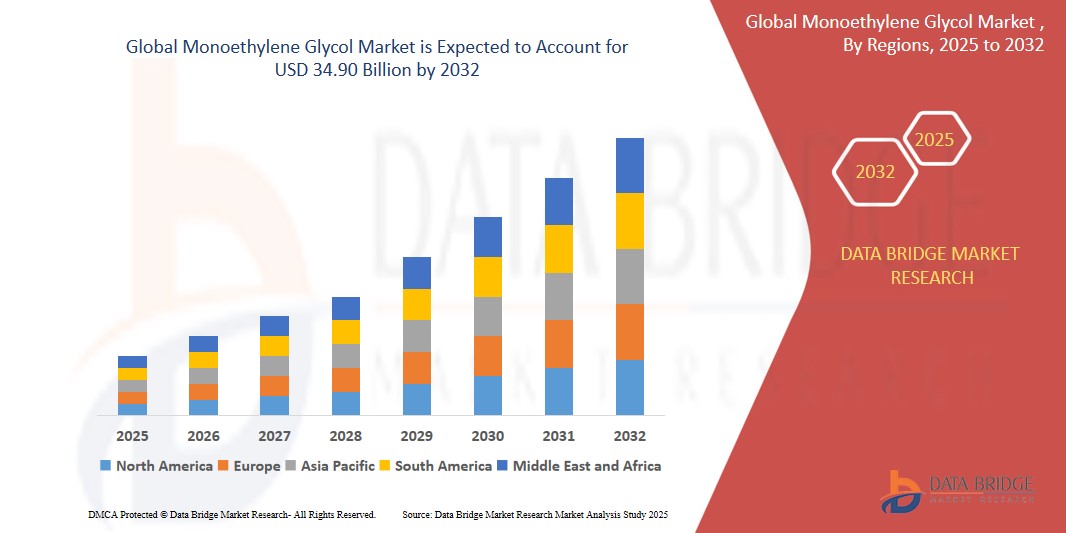
- The global Monoethylene Glycol Market Size was valued at USD 26.22 billion in 2024 and expand to USD 34.90 billion by 2032, reflecting a compound annual growth rate (CAGR) of 3.7% during the forecast period.
- The Monoethylene Glycol (MEG) Market is experiencing significant growth, driven by factors such as the increasing demand for high-quality, cost-effective antifreeze and coolant products, the growth of the automotive and manufacturing industries, and expanding applications in the production of polyester fibers and resins
Monoethylene Glycol Market Analysis
- The demand for Monoethylene Glycol (MEG) is significantly influenced by its diverse applications across multiple industries, including automotive, textiles, and manufacturing. The growing demand for antifreeze, coolants, and synthetic fibers, particularly in the textile and packaging sectors, is propelling the MEG market forward. Moreover, the rise of sustainability initiatives and the increasing use of bio-based and recycled materials are pushing the market toward greener alternatives in MEG production
- North America is expected to dominate the Monoethylene Glycol Market, driven by the robust demand for automotive antifreeze and coolants, as well as significant investments in the development of advanced polyester-based materials. The strong presence of major MEG manufacturers in the region, alongside innovations in energy-efficient and eco-friendly technologies, is further supporting its leadership in the global market
- Asia-Pacific is projected to be the fastest growing region in the Monoethylene Glycol Market, fuelled by rapid industrialization, urbanization, and expanding consumer demand for textiles, automotive products, and packaged goods. Countries like China and India are witnessing significant demand for MEG, primarily in the production of synthetic fibers and resins. The growing automotive sector, coupled with a rise in electric vehicles, is also contributing to the increasing adoption of MEG-based products in the region
- The automotive and textiles segments are anticipated to hold the largest market shares, driven by the growing need for efficient antifreeze solutions and the increasing demand for polyester-based fibers and resins. Innovations in sustainable textile production and advancements in MEG-based coolants for electric and conventional vehicles are further boosting the market's expansion across these sectors. Additionally, the increasing shift towards bio-based and eco-friendly MEG alternatives is expected to play a significant role in the market's future growth trajectory
Report Scope and Monoethylene Glycol Market Segmentation
|
Attributes |
Monoethylene Glycol Key Market Insights |
|
Segments Covered |
|
|
Countries Covered |
North America
Europe
Asia-Pacific
Middle East and Africa
South America
|
|
Key Market Players |
|
|
Market Opportunities |
|
|
Value Added Data Infosets |
In addition to the insights on market scenarios such as market value, growth rate, segmentation, geographical coverage, and major players, the market reports curated by the Data Bridge Market Research also include import export analysis, production capacity overview, production consumption analysis, price trend analysis, climate change scenario, supply chain analysis, value chain analysis, raw material/consumables overview, vendor selection criteria, PESTLE Analysis, Porter Analysis, and regulatory framework. |
Monoethylene Glycol Market Trends
“Increasing Adoption of Bio-based Monoethylene Glycol”
- A significant trend in the Monoethylene Glycol market is the growing shift toward bio-based MEG production. With rising concerns about sustainability and the environmental impact of petroleum-based chemicals, bio-based MEG offers a greener alternative
- As industries and consumers demand more eco-friendly products, bio-based MEG, derived from renewable sources like corn or sugarcane, is becoming increasingly popular in applications like PET production and automotive antifreeze
- For example, major chemical companies are investing in renewable technologies to scale up the production of bio-based MEG, responding to both regulatory pressures and consumer preference for sustainable solutions
Monoethylene Glycol Market Dynamics
Driver
“Rising Demand for Sustainable and Eco-Friendly Monoethylene Glycol”
- The growing global awareness of environmental sustainability and the need for eco-friendly products is driving the demand for bio-based Monoethylene Glycol (MEG) as an alternative to traditional petroleum-derived MEG.
- As industries across the globe, such as textile, automotive, and packaging, face increasing pressure to reduce their carbon footprint, the shift toward renewable and bio-based raw materials, including MEG, is gaining momentum
- Consumers, especially in sectors like fashion and packaging, are increasingly seeking products that align with their environmental values, prompting manufacturers to incorporate bio-based MEG into their production processes to meet market expectations for sustainability
For instance:
- In 2024, major players like Dow and LyondellBasell have ramped up investments in the development of bio-based MEG derived from renewable feedstocks such as sugarcane and corn. These efforts are a response to the rising demand for sustainable raw materials and products
- The growing trend of sustainability in the production and use of chemicals is fostering the adoption of bio-based MEG in packaging and other industries, helping companies to not only meet regulatory standards but also address consumer demand for more environmentally friendly products
- This trend is not only contributing to MEG's market growth but also aligns with global initiatives to reduce the reliance on fossil-based materials, enhance recycling efforts, and lower greenhouse gas emissions
Opportunity
“Growing Demand for Sustainable and Bio-Based Monoethylene Glycol”
- The increasing consumer preference for sustainable, renewable, and eco-friendly products presents significant opportunities for growth in the Monoethylene Glycol (MEG) market, particularly for bio-based MEG derived from renewable sources
- As environmental concerns and climate change awareness continue to rise, industries are shifting toward more sustainable alternatives to petroleum-based products. Bio-based MEG, produced from renewable feedstocks like corn, sugarcane, and other plant-based materials, is gaining traction as a more eco-friendly option
- The demand for bio-based Monoethylene Glycol is not only driven by the rising need for more sustainable raw materials but also by regulatory pressures on industries to reduce their carbon footprint and meet sustainability targets.
For instance:
- In 2023, global chemical companies such as BASF and Dow announced significant investments in the production of bio-based Monoethylene Glycol, aiming to meet the increasing market demand for more sustainable chemical products
- The expansion of bio-based MEG is also aligned with growing consumer and corporate interest in the use of green and sustainable products across various industries, including textiles, packaging, automotive, and consumer goods
Restraint/Challenge
“"Fluctuations in Raw Material Prices and Supply Chain Disruptions”
- The Monoethylene Glycol (MEG) market faces constraints due to fluctuations in the prices of raw materials, particularly petroleum and natural gas, which are essential for the production of conventional MEG. These price fluctuations can significantly impact production costs and market stability
- The supply chain for raw materials, including the sourcing of petrochemical feedstocks, can be vulnerable to disruptions caused by geopolitical factors, natural disasters, or economic downturns. Such disruptions can lead to increased operational costs and delays in production, further compounding challenges for manufacturers.
- Additionally, companies are under increasing pressure to diversify their supply chains, seek alternative sources, and invest in risk mitigation strategies, all of which require significant capital and resources
For instance:
- In 2022, a global chemical manufacturer reported a surge in the cost of raw materials used in MEG production due to supply chain interruptions caused by geopolitical instability, which led to a temporary halt in production at some of their plants
- Smaller manufacturers, particularly those without the financial strength to withstand sudden price increases or disruptions, are particularly affected by these market constraints. This can limit their ability to compete, particularly in cost-sensitive markets where price competitiveness is a critical factor
- The volatility in raw material costs can also make it difficult for companies to forecast pricing and manage long-term contracts, contributing to instability in the overall Monoethylene Glycol market
Monoethylene Glycol Market Scope
The market is segmented on the basis grade, application, technology
|
Segmentation |
Sub-Segmentation |
|
By Grade |
|
|
By Application |
|
|
By Technology |
|
In 2025, the polyester is projected to dominate the market with a largest share in grade segment
In 2025, Polyester is projected to dominate the market with the largest share in the grade segment, driven by its versatile applications in various industries such as textiles, packaging, and automotive. Polyester’s ability to offer durability, low cost, and resistance to wear and tear makes it a preferred choice for a wide range of applications, from consumer goods to industrial products
The naphtha-based is expected to account for the largest share during the forecast period in technology market
In 2025, Naphtha-based technology is expected to account for the largest share during the forecast period in the technology market. Naphtha-based technologies are widely used in the production of various chemicals, plastics, and energy products, thanks to their cost-effectiveness and versatility. The increasing demand for petrochemical products, such as plastics and synthetic fibers, is expected to drive growth in this segment
Monoethylene Glycol Market Regional Analysis
“Asia Pacific Holds the Largest Share in the Monoethylene Glycol Market”
-
Asia-Pacific dominates the Monoethylene Glycol Market due to its rapidly expanding industrial base, increasing demand for advanced packaging and processing technologies, and the growing need for high-quality meat ingredients
- Major countries in the region, such as China, India, and Japan, are seeing significant growth in their food processing sectors, where Monoethylene Glycol plays an important role in various applications, including meat preservation and packaging
- The rising middle class, urbanization, and increasing disposable income in these countries are driving demand for convenience foods, including processed and packaged meat products, which require advanced meat ingredients for preservation and flavor enhancement
- Additionally, the growing consumer preference for protein-rich meat products and more sustainable food options is encouraging the adoption of cleaner, more natural ingredients in meat processing. This shift is contributing to the increasing demand for Monoethylene Glycol as an important component of the supply chain in producing and preserving meat products
- The region is also investing heavily in advanced technologies and innovations to improve food safety standards and meet consumer demand for healthier, higher-quality products, further supporting the market for Monoethylene Glycol. Additionally, governments in Asia-Pacific are tightening regulations around food safety and quality, which is driving the need for more efficient preservation and packaging solutions in the meat industry.
“Asia-Pacific is Projected to Register the Highest CAGR in the Monoethylene Glycol Market”
-
The Asia-Pacific region is expected to witness the highest growth rate in the Monoethylene Glycol Market, driven by rapid urbanization, changing dietary preferences, and rising consumer demand for high-quality processed meat products. The region's increasing focus on innovation in food processing technologies is also fueling this growth
- Countries like China, India, and Japan are emerging as key markets for Monoethylene Glycol due to factors such as growing disposable incomes, expanding middle-class populations, and a shift toward more diverse, convenient, and premium food options. This shift is further boosting demand for innovative meat ingredients and processing solutions
- China, being the world's largest meat producer and consumer, is experiencing a significant rise in demand for premium, processed meat products as consumers seek higher-quality and more varied offerings. Additionally, heightened awareness of food safety and health concerns is driving the need for cleaner, more sustainable meat ingredients, positioning China as a crucial market for Monoethylene Glycol
- • India, with its rapidly urbanizing population and increasing consumption of meat, particularly in metropolitan areas, is witnessing strong growth in demand for processed and convenience meat products. This is encouraging advancements in modern meat production technologies and spurring the need for specialized meat ingredients, including those involving Monoethylene Glycol
- • Japan, renowned for its focus on food quality and technological innovations, is driving the adoption of specialized meat ingredients. The country's preference for premium and ready-to-eat meat products is fostering the development of advanced solutions tailored to these needs, further bolstering the growth of the Monoethylene Glycol market
- The market growth in Asia-Pacific is also supported by increasing investments in the food processing and meat industries, the rising demand for functional meat ingredients (e.g., those used in plant-based and hybrid meat products), and the development of clean-label, health-conscious product offerings
Monoethylene Glycol Market Share
The market competitive landscape provides details by competitor. Details included are company overview, company financials, revenue generated, market potential, investment in research and development, new market initiatives, global presence, production sites and facilities, production capacities, company strengths and weaknesses, product launch, product width and breadth, application dominance. The above data points provided are only related to the companies' focus related to market.
The Major Market Leaders Operating in the Market Are:
- Cargill, Inc. (U.S.)
- Tyson Foods, Inc. (U.S.)
- JBS S.A. (Brazil)
- BRF S.A. (Brazil)
- Ingredion Incorporated (U.S.)
- Darling Ingredients Inc. (U.S.)
- OSI Group, LLC (U.S.)
- Hormel Foods Corporation (U.S.)
- Kerry Group (Ireland)
- ADM (U.S.)
- Meat & Livestock Australia (Australia)
- Trouw Nutrition (Netherlands)
- Vion Food Group (Netherlands)
- Marfrig Global Foods S.A. (Brazil)
- The J.M. Smucker Company (U.S.)
- Faerch Group (Denmark)
- Perdue Farms Inc. (U.S.)
Latest Developments in Global Monoethylene Glycol Market
- In March 2025, BASF, a global leader in chemicals, announced the launch of a new Monoethylene Glycol (MEG) production process aimed at reducing carbon emissions by utilizing sustainable feedstocks. This innovative process significantly lowers the carbon footprint of MEG production, aligning with the industry's growing push toward sustainability. BASF’s initiative is expected to provide a more eco-friendly option to the market, catering to the rising demand for sustainable chemical solutions across industries, including food and beverage, textiles, and automotive
- In February 2025, Shell Chemicals revealed its expansion of the Monoethylene Glycol production capacity in Asia. This expansion is part of Shell’s strategy to meet the growing demand for MEG in the region, driven by increased industrialization, urbanization, and the rising demand for products like polyethylene terephthalate (PET) used in food packaging. The enhanced production facility aims to provide a more reliable supply of MEG, supporting the rapid growth of industries in Asia-Pacific
- In January 2025, Sinopec, a leading Chinese state-owned petroleum and petrochemical enterprise, announced the completion of a new MEG plant in China’s Guangdong province. This plant is designed to provide high-purity MEG for various applications, including in the production of textiles, packaging materials, and automotive parts. The facility is expected to boost Sinopec’s share in the global MEG market, particularly catering to the rapidly growing demand in the Asia-Pacific region
- In December 2024, Dow Chemical Company introduced a new MEG production process that uses renewable bio-based feedstocks. This innovative production method is designed to produce MEG more sustainably, reducing dependency on petroleum-based resources and lowering overall environmental impact. Dow’s move aligns with the broader trend toward bio-based chemicals and is part of the company's strategy to strengthen its sustainability credentials in the global chemicals market
- In November 2024, LyondellBasell Industries unveiled its new MEG recycling technology, which aims to reduce waste and enhance the circular economy in the chemicals sector. This new technology enables the recycling of MEG from post-consumer PET bottles and other plastic waste. By utilizing this innovative process, LyondellBasell aims to reduce plastic waste and contribute to the sustainability goals of the global petrochemical industry while meeting the growing demand for recycled MEG in packaging applications

- Interactive Data Analysis Dashboard
- Company Analysis Dashboard for high growth potential opportunities
- Research Analyst Access for customization & queries
- Competitor Analysis with Interactive dashboard
- Latest News, Updates & Trend analysis
- Harness the Power of Benchmark Analysis for Comprehensive Competitor Tracking
Global Monoethylene Glycol Market, Supply Chain Analysis and Ecosystem Framework
To support market growth and help clients navigate the impact of geopolitical shifts, DBMR has integrated in-depth supply chain analysis into its Global Monoethylene Glycol Market research reports. This addition empowers clients to respond effectively to global changes affecting their industries. The supply chain analysis section includes detailed insights such as Global Monoethylene Glycol Market consumption and production by country, price trend analysis, the impact of tariffs and geopolitical developments, and import and export trends by country and HSN code. It also highlights major suppliers with data on production capacity and company profiles, as well as key importers and exporters. In addition to research, DBMR offers specialized supply chain consulting services backed by over a decade of experience, providing solutions like supplier discovery, supplier risk assessment, price trend analysis, impact evaluation of inflation and trade route changes, and comprehensive market trend analysis.
Data collection and base year analysis are done using data collection modules with large sample sizes. The stage includes obtaining market information or related data through various sources and strategies. It includes examining and planning all the data acquired from the past in advance. It likewise envelops the examination of information inconsistencies seen across different information sources. The market data is analysed and estimated using market statistical and coherent models. Also, market share analysis and key trend analysis are the major success factors in the market report. To know more, please request an analyst call or drop down your inquiry.
The key research methodology used by DBMR research team is data triangulation which involves data mining, analysis of the impact of data variables on the market and primary (industry expert) validation. Data models include Vendor Positioning Grid, Market Time Line Analysis, Market Overview and Guide, Company Positioning Grid, Patent Analysis, Pricing Analysis, Company Market Share Analysis, Standards of Measurement, Global versus Regional and Vendor Share Analysis. To know more about the research methodology, drop in an inquiry to speak to our industry experts.
Data Bridge Market Research is a leader in advanced formative research. We take pride in servicing our existing and new customers with data and analysis that match and suits their goal. The report can be customized to include price trend analysis of target brands understanding the market for additional countries (ask for the list of countries), clinical trial results data, literature review, refurbished market and product base analysis. Market analysis of target competitors can be analyzed from technology-based analysis to market portfolio strategies. We can add as many competitors that you require data about in the format and data style you are looking for. Our team of analysts can also provide you data in crude raw excel files pivot tables (Fact book) or can assist you in creating presentations from the data sets available in the report.













