Global Milk Alternatives Market
Market Size in USD Billion
CAGR :
% 
 USD
36.91 Billion
USD
90.56 Billion
2025
2033
USD
36.91 Billion
USD
90.56 Billion
2025
2033
 Forecast Period Forecast Period |
2026 –2033 |
 Market Size (Base Year) Market Size (Base Year) |
USD 36.91 Billion |
 Market Size (Forecast Year) Market Size (Forecast Year) |
USD 90.56 Billion |
 CAGR CAGR |
% |
| Major Markets Players |
|
What is the Global Milk Alternatives Market Size and Growth Rate?
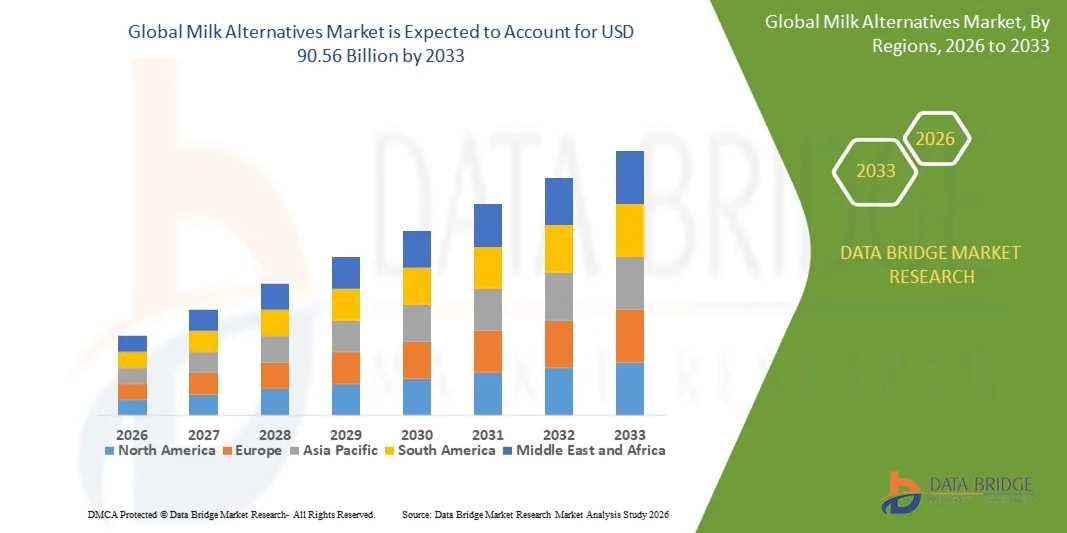
- The global milk alternatives market size was valued at USD 36.91 billion in 2025 and is expected to reach USD 90.56 billion by 2033, at a CAGR of11.87% during the forecast period
- Rising demand for milk alternatives owing to the growing awareness about these products are the major factors fostering the growth of the milk alternatives market
- Changing lifestyle, westernization, rising demand for value added products, growth in the demand for healthy and gluten-free products in developing regions and ever-rising global population are other important factors acting as milk alternatives market growth determinants
What are the Major Takeaways of Milk Alternatives Market?
- Improving distribution channel, growing focus of the manufacturers on product innovations, rising availability of food products that enhance immune health, surging vegan population and changing tastes and preferences of consumers will further induce growth in the milk alternatives market value
- However, low consumer awareness will pose a major challenge to the growth of the milk alternatives market. Sub-optimal market penetration of the product will further restrict the scope of growth for the milk alternatives market. Fluctuations in the prices of raw materials will also hamper the milk alternatives market growth rate
- Asia-Pacific dominated the Milk Alternatives market with a 41.8% revenue share in 2025, driven by rapid expansion of plant-based food production, increasing consumer awareness of health and sustainability, and strong government support for alternative protein initiatives across China, Japan, India, South Korea, and Southeast Asia
- North America is projected to register the fastest CAGR of 8.24% from 2026 to 2033, supported by strong retail penetration, rising plant-based adoption, and growing interest in vegan and functional foods across the U.S. and Canada
- The Milk segment dominated the market with a 41.2% share in 2025, driven by strong consumer demand for lactose-free, plant-based, and fortified beverages as direct alternatives to dairy milk
Report Scope and Milk Alternatives Market Segmentation
|
Attributes |
Milk Alternatives Key Market Insights |
|
Segments Covered |
|
|
Countries Covered |
North America
Europe
Asia-Pacific
Middle East and Africa
South America
|
|
Key Market Players |
|
|
Market Opportunities |
|
|
Value Added Data Infosets |
In addition to the insights on market scenarios such as market value, growth rate, segmentation, geographical coverage, and major players, the market reports curated by the Data Bridge Market Research also include in-depth expert analysis, pricing analysis, brand share analysis, consumer survey, demography analysis, supply chain analysis, value chain analysis, raw material/consumables overview, vendor selection criteria, PESTLE Analysis, Porter Analysis, and regulatory framework. |
What is the Key Trend in the Milk Alternatives Market?
Increasing Shift Toward Plant-Based, Functional, and Sustainable Milk Alternatives
- The milk alternatives market is witnessing strong adoption of plant-based, fortified, and nutritionally enriched beverages, designed to meet growing consumer demand for lactose-free, vegan, and sustainable dairy alternatives
- Manufacturers are introducing innovative formulations, fortified nutrients, and functional ingredients such as protein, vitamins, minerals, and probiotics to enhance health benefits and meet personalized nutrition trends
- Growing demand for convenient, ready-to-drink, and shelf-stable products is driving adoption across retail, foodservice, and e-commerce channels worldwide
- For instance, companies such as Oatly, Alpro, Danone, Blue Diamond, and Kite Hill have launched enhanced milk alternatives with fortified nutrients, organic certifications, and sustainable packaging solutions
- Increasing consumer awareness of health, sustainability, and ethical food production is accelerating the shift toward clean-label, plant-based, and functional milk alternatives
- As dietary preferences evolve and sustainability concerns grow, Milk Alternatives will remain vital for catering to health-conscious and environmentally aware consumers
What are the Key Drivers of Milk Alternatives Market?
- Rising demand for lactose-free, vegan, and nutrient-enriched beverages to support health, wellness, and specialized diets
- For instance, in 2025, leading players such as Danone, Oatly, Alpro, Kite Hill, and Blue Diamond expanded their product portfolios with fortified milk alternatives, high-protein variants, and innovative flavors
- Growing awareness of lactose intolerance, dairy allergies, and plant-based diets is boosting consumption across North America, Europe, and Asia-Pacific
- Advancements in product formulation, processing technology, and shelf-life extension have strengthened taste, texture, and nutritional value of milk alternatives
- Rising consumer focus on sustainability, eco-friendly packaging, and ethical sourcing is driving adoption of plant-based beverages over traditional dairy
- Supported by steady investments in R&D, plant-based innovation, and global distribution networks, the milk alternatives market is expected to witness strong long-term growth
Which Factor is Challenging the Growth of the Milk Alternatives Market?
- High costs associated with premium, fortified, and specialty plant-based milk alternatives restrict adoption among price-sensitive consumers
- For instance, during 2024–2025, fluctuations in raw material prices (almonds, oats, soy), supply chain disruptions, and rising production costs increased retail prices for several global brands
- Complexity in balancing taste, texture, nutritional content, and shelf-life increases formulation challenges for manufacturers
- Limited consumer awareness in emerging markets regarding plant-based options, health benefits, and functional variants slows adoption
- Competition from conventional dairy products, flavored milk, and other plant-based beverages creates pricing pressure and product differentiation challenges
- To address these issues, companies are focusing on cost-efficient formulations, consumer education, innovative flavors, and sustainable packaging to expand global adoption of milk alternatives
How is the Milk Alternatives Market Segmented?
The market is segmented on the basis of product type, distribution channel, nutrient, formulation, and source.
- By Product Type
On the basis of product type, the milk alternatives market is segmented into Cheese, Creamers, Yogurt, Ice Creams, Milk, and Others. The Milk segment dominated the market with a 41.2% share in 2025, driven by strong consumer demand for lactose-free, plant-based, and fortified beverages as direct alternatives to dairy milk. These products are widely preferred for daily consumption, cooking, and beverages, and are adopted by health-conscious, vegan, and lactose-intolerant consumers. Their versatility, nutritional enrichment, and availability in ready-to-drink and shelf-stable formats further support market dominance.
The Yogurt segment is projected to grow at the fastest CAGR from 2026 to 2033, fueled by rising popularity of plant-based fermented products, probiotics, and functional foods. Increasing interest in gut health, high-protein alternatives, and snackable dairy-free yogurt options across North America, Europe, and Asia-Pacific accelerates segment growth.
- By Distribution Channel
On the basis of distribution channel, the milk alternatives market is segmented into Supermarkets and Hypermarkets, Convenience Stores, Online Stores, and Others. The Supermarkets and Hypermarkets segment dominated the market with a 48.5% share in 2025, supported by high product availability, promotional campaigns, and consumer preference for one-stop shopping. Retail chains provide a wide range of plant-based products, from milk to cheese and yogurts, allowing consumers to compare brands and make informed purchases.
The Online Stores segment is expected to grow at the fastest CAGR from 2026 to 2033, driven by increasing e-commerce adoption, home delivery convenience, and the surge in subscription-based plant-based beverage services. Rising digital penetration and consumer comfort with online grocery shopping further accelerate growth in this channel.
- By Nutrient
On the basis of nutrient, the milk alternatives market is segmented into Protein, Starch, Vitamin, and Others. The Protein segment dominated the market with a 43.7% share in 2025, owing to growing consumer demand for high-protein, plant-based alternatives to support muscle growth, fitness, and overall wellness. Protein-enriched beverages, yogurts, and snacks are widely adopted among millennials, athletes, and health-conscious individuals, driving strong market penetration.
The Vitamin segment is projected to grow at the fastest CAGR from 2026 to 2033, propelled by increasing demand for fortified milk alternatives enriched with calcium, vitamin D, B12, and other micronutrients. Rising awareness of immunity and bone health, along with product innovation, supports rapid adoption of vitamin-fortified offerings.
- By Formulation
On the basis of formulation, the milk alternatives market is segmented into Plain and Flavoured variants. The Plain segment dominated the market with a 52.1% share in 2025, as it offers versatility for cooking, beverages, and baking, and appeals to consumers seeking clean-label, neutral-tasting plant-based products. Plain formulations are widely used in household and commercial applications due to their compatibility with recipes and dietary customization.
The Flavoured segment is expected to grow at the fastest CAGR from 2026 to 2033, driven by growing consumer preference for taste innovation, indulgent beverages, and ready-to-drink options. Increasing use of chocolate, vanilla, coffee, and fruit flavors in milk alternatives enhances appeal to younger demographics and expands consumption occasions.
- By Source
On the basis of source, the milk alternatives market is segmented into Almond, Soy, Oats, Hemp, Coconut, Rice, Flax, and Others. The Almond segment dominated the market with a 39.8% share in 2025, fueled by strong consumer adoption of almond milk as a versatile, low-calorie, and nutritionally enriched dairy alternative. Almond-based products are widely preferred for beverages, cooking, and functional foods, contributing to market dominance.
The Oats segment is projected to grow at the fastest CAGR from 2026 to 2033, driven by rising demand for sustainable, high-fiber, and creamy-textured milk alternatives. Oat-based beverages are increasingly popular in North America, Europe, and Asia-Pacific due to clean-label appeal, environmental sustainability, and improved taste and texture innovation.
Which Region Holds the Largest Share of the Milk Alternatives Market?
- Asia-Pacific dominated the Milk Alternatives market with a 41.8% revenue share in 2025, driven by rapid expansion of plant-based food production, increasing consumer awareness of health and sustainability, and strong government support for alternative protein initiatives across China, Japan, India, South Korea, and Southeast Asia. Rising demand for oat, soy, almond, and rice-based milk alternatives, along with functional dairy-free products, continues to fuel adoption across retail, foodservice, and e-commerce channels
- Leading companies in Asia-Pacific are introducing innovative formulations, fortified plant-based beverages, and sustainable packaging solutions, strengthening the region’s market leadership. Investments in plant-based R&D, clean-label products, and functional foods support long-term market growth
- High population density, increasing urbanization, and growing health-conscious consumer base further reinforce Asia-Pacific’s position as the largest regional market
China Milk Alternatives Market Insight
China is the largest contributor in Asia-Pacific due to massive plant-based product consumption, government support for sustainable food initiatives, and growing preference for functional dairy alternatives. Rising popularity of oat, soy, and almond beverages, along with increasing urban middle-class adoption, drives market demand. Product innovation in fortified, clean-label, and ready-to-drink milk alternatives further strengthens market penetration.
Japan Milk Alternatives Market Insight
Japan shows steady growth, supported by a health-conscious population, high demand for plant-based protein, and innovation in functional milk alternatives. Strong retail networks, premium pricing strategies, and increasing use of fortified beverages in diets drive sustained adoption. Continuous modernization of food service offerings and rising popularity of dairy-free lifestyles reinforce market expansion.
India Milk Alternatives Market Insight
India is emerging as a key growth hub, fueled by increasing urbanization, rising awareness of lactose intolerance, and a growing vegan population. Expansion of retail chains, online grocery platforms, and startups offering plant-based beverages drives market adoption. Government initiatives promoting alternative proteins and sustainability further accelerate demand for milk alternatives in urban and semi-urban regions.
South Korea Milk Alternatives Market Insight
South Korea contributes significantly due to rising demand for functional, fortified, and organic plant-based milk alternatives. Rapid growth in health and wellness trends, coupled with high consumption of almond, soy, and oat-based beverages, supports adoption. Technological innovation, strong manufacturing capabilities, and growing e-commerce penetration reinforce long-term market growth.
North America Milk Alternatives Market Insight
North America is projected to register the fastest CAGR of 8.24% from 2026 to 2033, supported by strong retail penetration, rising plant-based adoption, and growing interest in vegan and functional foods across the U.S. and Canada. Supermarkets, hypermarkets, and online platforms increasingly stock milk alternatives, including oat, almond, soy, and protein-fortified beverages, driving rapid consumption growth. Rising demand for sustainable and organic products further accelerates market expansion.
U.S. Milk Alternatives Market Insight
In the U.S., high consumer awareness of plant-based diets, health and wellness trends, and innovative product launches by leading players such as Oatly, Danone, and Alpro strengthen adoption.
Canada Milk Alternatives Market Insight
Canada contributes significantly to growth due to increasing retail availability, government-backed health initiatives, and rising consumption of fortified milk alternatives in urban centers. High disposable income and environmentally conscious purchasing habits reinforce North America’s status as the fastest-growing regional market.
Which are the Top Companies in Milk Alternatives Market?
The milk alternatives industry is primarily led by well-established companies, including:
- Danone S.A. (France)
- Vitasoy International Holdings Ltd. (Hong Kong)
- FREEDOM FOODS GROUP LIMITED (Australia)
- KIKKOMAN SALES USA, INC. (U.S.)
- PACIFIC FOODS OF OREGON, LLC. (U.S.)
- Oatly (Sweden)
- Alpina SA (Colombia)
- Hain Celestial (U.S.)
- Blue Diamond Growers (U.S.)
- PureHarvest (Australia)
- Good Karma Foods (U.S.)
- McCormick & Company, Incorporated (U.S.)
- Alpro (Belgium)
- Kite Hill (U.S.)
- Earth’s Own Food Company Inc. (Canada)
- SunOpta (Canada)
- Sanitarium (Australia)
- Triballat Noyal (France)
- Valsoia S.p.A (Italy)
- PANOS (Greece)
What are the Recent Developments in Global Milk Alternatives Market?
- In February 2025, PKN (U.S.) announced the launch of PKN Zero, a new pecan milk variety made with upcycled pecans, creating a new revenue source for pecan growers
- In March 2025, Plenish (U.K.) expanded its range with Plenish Enriched Oat M*lk, a fortified oat drink delivering essential vitamins and minerals while maintaining clean-label transparency
- In May 2025, Eclipse Foods (U.S.) launched a plant-based whole milk product that is designed to be “indistinguishable” from traditional dairy, with stable texture, sweetness, and color
- In May 2025, Rodd's (U.K.) was launched by British YouTubers William Lenney and James Marriott, offering Gen Z-focused dairy-free iced coffee with oat milk in flavors such as Cold Brew Iced Latte, Matcha Latte with Vanilla, and Waffle Oat Latte, available at Sainsbury’s
- In August 2024, 1.5 Degree (India) debuted at the 7th India International Hospitality Expo with plant-based dairy products including oat and soy milks, flavored milkshakes, and gelato in unique Indian-inspired flavors such as Paan and Belgian Chocolate
SKU-
Get online access to the report on the World's First Market Intelligence Cloud
- Interactive Data Analysis Dashboard
- Company Analysis Dashboard for high growth potential opportunities
- Research Analyst Access for customization & queries
- Competitor Analysis with Interactive dashboard
- Latest News, Updates & Trend analysis
- Harness the Power of Benchmark Analysis for Comprehensive Competitor Tracking
Global Milk Alternatives Market, Supply Chain Analysis and Ecosystem Framework
To support market growth and help clients navigate the impact of geopolitical shifts, DBMR has integrated in-depth supply chain analysis into its Global Milk Alternatives Market research reports. This addition empowers clients to respond effectively to global changes affecting their industries. The supply chain analysis section includes detailed insights such as Global Milk Alternatives Market consumption and production by country, price trend analysis, the impact of tariffs and geopolitical developments, and import and export trends by country and HSN code. It also highlights major suppliers with data on production capacity and company profiles, as well as key importers and exporters. In addition to research, DBMR offers specialized supply chain consulting services backed by over a decade of experience, providing solutions like supplier discovery, supplier risk assessment, price trend analysis, impact evaluation of inflation and trade route changes, and comprehensive market trend analysis.
Research Methodology
Data collection and base year analysis are done using data collection modules with large sample sizes. The stage includes obtaining market information or related data through various sources and strategies. It includes examining and planning all the data acquired from the past in advance. It likewise envelops the examination of information inconsistencies seen across different information sources. The market data is analysed and estimated using market statistical and coherent models. Also, market share analysis and key trend analysis are the major success factors in the market report. To know more, please request an analyst call or drop down your inquiry.
The key research methodology used by DBMR research team is data triangulation which involves data mining, analysis of the impact of data variables on the market and primary (industry expert) validation. Data models include Vendor Positioning Grid, Market Time Line Analysis, Market Overview and Guide, Company Positioning Grid, Patent Analysis, Pricing Analysis, Company Market Share Analysis, Standards of Measurement, Global versus Regional and Vendor Share Analysis. To know more about the research methodology, drop in an inquiry to speak to our industry experts.
Customization Available
Data Bridge Market Research is a leader in advanced formative research. We take pride in servicing our existing and new customers with data and analysis that match and suits their goal. The report can be customized to include price trend analysis of target brands understanding the market for additional countries (ask for the list of countries), clinical trial results data, literature review, refurbished market and product base analysis. Market analysis of target competitors can be analyzed from technology-based analysis to market portfolio strategies. We can add as many competitors that you require data about in the format and data style you are looking for. Our team of analysts can also provide you data in crude raw excel files pivot tables (Fact book) or can assist you in creating presentations from the data sets available in the report.