Global Maternity Care Market
Market Size in USD Billion
CAGR :
% 
 USD
9.17 Billion
USD
10.63 Billion
2025
2033
USD
9.17 Billion
USD
10.63 Billion
2025
2033
 Forecast Period Forecast Period |
2026 –2033 |
 Market Size (Base Year) Market Size (Base Year) |
USD 9.17 Billion |
 Market Size (Forecast Year) Market Size (Forecast Year) |
USD 10.63 Billion |
 CAGR CAGR |
% |
| Major Markets Players |
|
Maternity Care Market Size
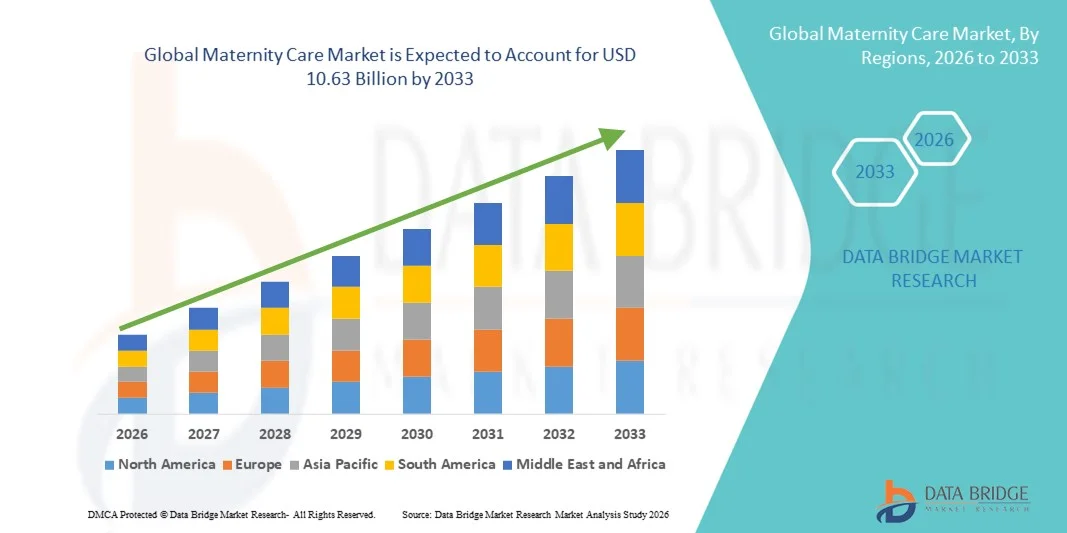
- The global maternity care market size was valued at USD 9.17 billion in 2025 and is expected to reach USD 10.63 billion by 2033, at a CAGR of 1.87% during the forecast period
- The market growth is largely fueled by rising awareness of maternal health, increasing healthcare expenditure, technological advancements in maternity services, and growth in telemedicine and virtual care adoption, enhancing access to prenatal, postnatal, and delivery care globally
- Furthermore, growing demand for quality maternity services driven by rising maternal age, prevalence of pregnancy-related complications, and increased focus on maternal and newborn well‑being is strengthening maternity care as a critical healthcare segment, thus accelerating market uptake and driving industry expansion
Maternity Care Market Analysis
- Maternity care products, including maternity apparels and personal care items, are becoming essential for supporting maternal comfort, health, and wellness during pregnancy and postnatal periods, driven by rising awareness about maternal care and lifestyle-focused healthcare solutions
- The market growth is primarily fueled by increasing consumer demand for specialized maternity products, growing focus on skin and body care during pregnancy, and preference for safe, high-quality, and convenient maternity apparels and personal care solutions
- North America dominated the maternity care market with the largest revenue share of 38.9% in 2025, supported by high disposable incomes, early adoption of premium maternity apparel and personal care products, and strong retail penetration, particularly in the U.S.
- Asia-Pacific is expected to be the fastest-growing region in the maternity care market during the forecast period due to rising population, increasing urbanization, growing awareness about maternal health, and expanding availability of maternity apparels and personal care products
- Day Wear segment dominated the market with a market share of 35.9% driven by its comfort, versatility, and widespread adoption among expecting mothers for daily use
Report Scope and Maternity Care Market Segmentation
|
Attributes |
Maternity Care Key Market Insights |
|
Segments Covered |
|
|
Countries Covered |
North America
Europe
Asia-Pacific
Middle East and Africa
South America
|
|
Key Market Players |
|
|
Market Opportunities |
|
|
Value Added Data Infosets |
In addition to the insights on market scenarios such as market value, growth rate, segmentation, geographical coverage, and major players, the market reports curated by the Data Bridge Market Research also include in-depth expert analysis, patient epidemiology, pipeline analysis, pricing analysis, and regulatory framework |
Maternity Care Market Trends
Growing Focus on Personalized and Comfort-Driven Maternity Products
- A key trend in the global maternity care market is the rising adoption of personalized and comfort-focused maternity apparels and personal care products, designed to enhance maternal wellness and convenience during pregnancy and postnatal periods
- For instance, brands such as Mothercare and HATCH offer day wear and innerwear tailored to body changes during pregnancy, ensuring comfort, flexibility, and style for expecting mothers
- Advanced formulations in personal care products, such as stretch mark minimizers and toning lotions, are incorporating natural and dermatologically tested ingredients to improve safety and effectiveness, supporting growing consumer preference for gentle yet functional maternity care solutions
- Personalized maternity care apps and online platforms now provide recommendations for apparel sizing, body care routines, and product selection based on individual maternal needs, creating an integrated and tailored shopping experience
- This trend towards more personalized, health-conscious, and comfort-oriented maternity products is reshaping consumer expectations, prompting companies such as Medela and Lansinoh to develop innovative maternity care lines that combine effectiveness, safety, and ease of use
- The demand for maternity products that enhance comfort, support wellness, and offer customization is growing rapidly across both retail and e-commerce channels, as consumers increasingly prioritize health, convenience, and quality during pregnancy
- Furthermore, collaborations with lifestyle influencers and parenting experts are shaping purchasing decisions, as mothers increasingly rely on trusted recommendations for maternity apparels and personal care products
Maternity Care Market Dynamics
Driver
Rising Awareness of Maternal Health and Wellness Needs
- The increasing awareness about maternal health, prenatal and postnatal wellness, and lifestyle-focused care is a significant driver of the global maternity care market
- For instance, in March 2025, Nestlé Maternal Nutrition launched awareness campaigns highlighting the importance of prenatal vitamins, aiming to encourage proper nutrition and boost adoption of maternal supplements
- As consumers recognize the importance of maternal well-being, products such as maternity day wear, innerwear, and stretch mark creams provide comfort, protection, and targeted care, meeting evolving maternal needs
- Furthermore, growing penetration of e-commerce platforms and maternity-focused retail outlets is making specialized maternity apparels and personal care products more accessible to expecting and new mothers globally
- The convenience of at-home delivery, personalized product recommendations, and access to diverse product ranges are key factors propelling adoption, encouraging mothers to invest in comfort-oriented and wellness-focused maternity care products
- The trend toward health-conscious and convenience-driven maternity solutions, supported by increased consumer awareness, is making maternity care a core segment in maternal and child health markets worldwide
- There is increasing interest in innovative maternity wear with multifunctional designs, such as nursing-friendly day wear and adjustable innerwear, driving market differentiation and adoption
- Furthermore, government initiatives promoting maternal health programs and subsidies for prenatal care products in various countries are supporting market expansion and product accessibility
Restraint/Challenge
High Costs and Product Safety Concerns
- The relatively high price of premium maternity apparels and personal care products can hinder adoption, particularly in price-sensitive regions or among first-time mothers
- For instance, high-end stretch mark minimizers, toning lotions, and specialized day wear from brands such as Bravado Designs and Seraphine are often priced at a premium, limiting accessibility for some consumers
- Concerns about product safety, including allergic reactions or skin irritation from creams and lotions, pose a challenge to market growth, as expecting mothers prioritize safe, gentle, and dermatologically tested formulations
- Addressing these concerns through rigorous testing, certifications, and clear product labeling is crucial to build consumer trust and confidence in maternity care products
- While some affordable options are emerging in mass-market channels, perceived premium pricing and safety anxieties continue to restrain widespread adoption, especially in developing countries
- Overcoming these challenges through consumer education, development of safer formulations, and introduction of cost-effective maternity apparel and personal care solutions will be vital for sustained market expansion
- Regional variations in consumer preferences and body care needs may limit the uniform adoption of certain products globally, creating a challenge for companies to standardize offerings
- Furthermore, lack of awareness about product benefits or mistrust in new formulations can slow adoption, highlighting the need for targeted marketing and educational campaigns
Maternity Care Market Scope
The market is segmented on the basis of maternity apparels, personal care, and maternity vitamins & supplements.
- By Maternity Apparels
On the basis of apparel, the market is segmented into day wear, night wear, and innerwear. Day Wear segment dominated the market with the largest revenue share of 35.9% in 2025, driven by its comfort, versatility, and widespread adoption among expecting mothers for everyday use. Day wear provides maternity-friendly designs that accommodate changing body shapes, ensuring both style and mobility during pregnancy. The demand for day wear is further fueled by the rising number of working women and urban mothers who seek professional yet comfortable maternity clothing. Online and offline retail channels have increased accessibility, offering various fabrics, patterns, and adjustable sizing. Premium brands are also innovating with multifunctional designs, such as nursing-friendly day wear, which boosts convenience post-delivery. Consumers often prioritize day wear for its practicality, durability, and adaptability across different daily activities.
Innerwear is anticipated to witness the fastest growth rate from 2026 to 2033, driven by increasing awareness of maternity comfort, postpartum support, and health benefits. Specialized innerwear includes maternity bras, shapewear, and supportive garments designed to provide proper fit, reduce strain, and improve posture. Rising e-commerce penetration and the popularity of premium and breathable fabrics are accelerating adoption. Growing preference for personalized sizing and adjustable features contributes to innerwear’s rapid market growth. Innerwear is increasingly recognized for its role in maternal wellness, particularly during long working hours or physically demanding routines. Rising demand in both developed and developing regions for maternity-specific innerwear is boosting production and retail offerings.
- By Personal Care Products
On the basis of personal care, the market is segmented into stretch mark minimizers, body restructuring gels, toning/firming lotions, itching prevention creams, nipple and breast creams, and others. Stretch Mark Minimizers dominated the market in 2025, driven by heightened awareness of skin health and the desire to prevent or reduce visible stretch marks during and after pregnancy. These products are formulated with natural and dermatologically tested ingredients, ensuring safety for expecting mothers. Continuous innovation, including organic and chemical-free formulations, attracts health-conscious consumers. The rise of social media and influencer marketing has increased visibility and trust in these products. Accessibility through e-commerce channels has further contributed to market growth. Expecting and new mothers prioritize these products for their efficacy, safety, and contribution to postnatal self-confidence.
Body Restructuring Gels are expected to witness the fastest CAGR from 2026 to 2033, fueled by growing adoption for postnatal body toning, skin elasticity improvement, and aesthetic enhancement. Rising disposable incomes and lifestyle-conscious consumers are increasing demand for gels that support recovery after childbirth. Product innovation, including multi-functional gels that also provide hydration and soothing effects, contributes to faster adoption. Digital marketing campaigns and personalized product recommendations further drive awareness. Urban populations and working mothers increasingly prefer convenient, easy-to-apply solutions. Expansion of product lines in pharmacies and online platforms enhances accessibility, boosting market penetration globally.
- By Maternity Vitamins & Supplements
On the basis of vitamins and supplements, the market is segmented into prenatal and postnatal. Prenatal Vitamins dominated the market in 2025, driven by widespread awareness of the importance of maternal nutrition for fetal development and healthy pregnancy outcomes. Prenatal vitamins contain essential nutrients such as folic acid, iron, and DHA, which are critical for reducing birth defects and supporting maternal health. Medical practitioners actively recommend prenatal supplementation, boosting adoption. Accessibility through pharmacies, online stores, and healthcare programs has expanded reach. Health-conscious mothers prioritize prenatal vitamins to ensure comprehensive nutrition, complementing dietary intake. Marketing campaigns emphasizing maternal and fetal health benefits further drive demand.
Postnatal Supplements are expected to witness the fastest growth rate from 2026 to 2033, fueled by increasing awareness of maternal recovery, lactation support, and immune system enhancement after childbirth. Supplements targeting postpartum energy, mood stabilization, and breast milk quality are gaining popularity. Rising working mother population and lifestyle-driven supplement adoption are key growth drivers. Product innovations focusing on organic, safe, and high-bioavailability nutrients accelerate adoption. Online platforms offering subscription and home delivery models contribute to faster market penetration. Postnatal supplement consumption is increasingly recognized as essential for maternal wellness and long-term health.
Maternity Care Market Regional Analysis
- North America dominated the maternity care market with the largest revenue share of 38.9% in 2025, supported by high disposable incomes, early adoption of premium maternity apparel and personal care products, and strong retail penetration, particularly in the U.S.
- Consumers in the region highly value the comfort, safety, and convenience offered by maternity apparels, personal care products, and vitamins & supplements, ensuring holistic support during pregnancy and postnatal care
- This widespread adoption is further supported by high disposable incomes, technologically inclined populations using maternity apps and online retail platforms, and growing preference for specialized, branded, and quality-verified maternity products, establishing North America as a key market for both maternity apparel and personal care solutions
U.S. Maternity Care Market Insight
The U.S. maternity care market captured the largest revenue share of 82% in North America in 2025, fueled by growing awareness of maternal health, adoption of premium maternity products, and widespread use of digital platforms for maternal wellness. Consumers are increasingly prioritizing comfort, safety, and specialized apparel and personal care solutions during pregnancy and postnatal care. The growing preference for DIY maternity wellness routines, mobile app-guided nutrition, and personalized product recommendations further propels the market. Moreover, the integration of maternity vitamins, stretch mark creams, and functional day wear into daily routines is significantly contributing to the market's expansion.
Europe Maternity Care Market Insight
The Europe maternity care market is projected to expand at a substantial CAGR throughout the forecast period, primarily driven by rising maternal health awareness, stringent prenatal and postnatal care guidelines, and increasing demand for quality maternity products. Urbanization and lifestyle changes are fostering the adoption of maternity apparels and personal care products. European consumers are also drawn to premium, safe, and eco-friendly formulations. The region is witnessing significant growth across retail, e-commerce, and hospital-based product distribution, with maternity products being incorporated into both new mothers’ routines and postnatal care programs.
U.K. Maternity Care Market Insight
The U.K. maternity care market is anticipated to grow at a noteworthy CAGR during the forecast period, driven by the rising adoption of maternity-specific clothing, personal care products, and wellness routines. Concerns regarding maternal comfort, body care, and nutrition are encouraging expecting and new mothers to choose specialized products. The U.K.’s embrace of maternity-focused digital platforms, robust e-commerce penetration, and strong retail infrastructure is expected to continue to stimulate market growth.
Germany Maternity Care Market Insight
The Germany maternity care market is expected to expand at a considerable CAGR during the forecast period, fueled by increasing awareness of maternal health, preference for premium and organic maternity products, and technological advancements in maternal wellness solutions. Germany’s well-developed healthcare and retail infrastructure, combined with strong emphasis on safety and sustainability, promotes the adoption of maternity apparels, personal care items, and supplements. The integration of maternity care routines with mobile applications and wellness programs is becoming increasingly prevalent, aligning with local consumer expectations.
Asia-Pacific Maternity Care Market Insight
The Asia-Pacific maternity care market is poised to grow at the fastest CAGR of 23% during 2026–2033, driven by rising population, increasing urbanization, growing disposable incomes, and heightened awareness of maternal health in countries such as China, India, and Japan. The region’s growing inclination towards safe and functional maternity products, supported by government initiatives promoting maternal and child health, is driving adoption. Furthermore, as APAC emerges as a manufacturing hub for maternity apparels and personal care products, affordability and accessibility are expanding to a wider consumer base.
Japan Maternity Care Market Insight
The Japan maternity care market is gaining momentum due to the country’s high awareness of maternal health, technological adoption, and focus on wellness. Japanese consumers place strong emphasis on comfort, safety, and premium quality, driving the adoption of maternity apparels, personal care items, and vitamins. Integration of digital tools and mobile apps to track maternal nutrition and wellness routines is fueling growth. Moreover, Japan’s aging population is likely to increase demand for convenient, supportive, and easy-to-use maternity care solutions in both residential and clinical settings.
India Maternity Care Market Insight
The India maternity care market accounted for the largest market revenue share in Asia-Pacific in 2025, attributed to the expanding middle class, rapid urbanization, and high rates of awareness regarding maternal health. India is becoming one of the largest markets for maternity apparels, personal care, and vitamins, with rising demand across residential, hospital, and retail segments. The push towards maternal wellness programs, availability of affordable maternity products, and growing domestic manufacturing capabilities are key factors propelling the market in India.
Maternity Care Market Share
The Maternity Care industry is primarily led by well-established companies, including:
- Lansinoh Laboratories, Inc. (U.S.)
- The Honest Company, Inc. (U.S.)
- Earth Mama Organics LLC (U.S.)
- Mustela USA (U.S.)
- Noodle & Boo LLC (U.S.)
- Belli Skin Care (U.S.)
- Weleda AG (Switzerland)
- Mama Mio US Inc. (U.S.)
- JoJo Maman Bébé Ltd (U.K.)
- Cake Maternity (Australia)
- Seraphine Maternity (U.K.)
- ASOS (U.K.)
- PinkBlush Maternity (U.S.)
- Bravado Designs (Canada)
- Anita Dr. Helbig (Germany)
- Belabumbum (U.S.)
- O.C.T. Mami (China)
- The Moms Co. (India)
- Mama’s Select (U.S.)
What are the Recent Developments in Global Maternity Care Market?
- In December 2025, Nestlé expanded its Materna maternal nutrition portfolio to include tailored nutrition solutions covering pre‑conception, pregnancy, and post‑birth recovery, emphasizing long‑term health outcomes for both mothers and babies backed by clinical research
- In September 2025, the New York Post published a review and user experience of Bio‑Oil for stretch mark prevention during pregnancy, reflecting consumer interest in and real‑world use of maternity skincare products, which drive market awareness and demand
- In June 2025, Clarins Group launched “Clarins Mom Care,” a certified organic maternity skincare range targeting stretch‑mark prevention and body‑firming applications for expecting mothers, reflecting the growing demand for safe, pregnancy‑specific personal care solutions
- In November 2024, Nestlé’s Materna brand introduced Materna Pre and Materna Nausea, two new nutritional formulations designed to support fertility and ease pregnancy‑related nausea, reflecting increased focus on maternal nutrition needs and clinical evidence backing these innovations
- In May 2024, Lansinoh Laboratories introduced Postpartum Padsicles, a hygienic and convenient alternative to DIY soothing methods, aimed at easing post‑birth recovery and highlighting innovation in postpartum care products
SKU-
Get online access to the report on the World's First Market Intelligence Cloud
- Interactive Data Analysis Dashboard
- Company Analysis Dashboard for high growth potential opportunities
- Research Analyst Access for customization & queries
- Competitor Analysis with Interactive dashboard
- Latest News, Updates & Trend analysis
- Harness the Power of Benchmark Analysis for Comprehensive Competitor Tracking
Research Methodology
Data collection and base year analysis are done using data collection modules with large sample sizes. The stage includes obtaining market information or related data through various sources and strategies. It includes examining and planning all the data acquired from the past in advance. It likewise envelops the examination of information inconsistencies seen across different information sources. The market data is analysed and estimated using market statistical and coherent models. Also, market share analysis and key trend analysis are the major success factors in the market report. To know more, please request an analyst call or drop down your inquiry.
The key research methodology used by DBMR research team is data triangulation which involves data mining, analysis of the impact of data variables on the market and primary (industry expert) validation. Data models include Vendor Positioning Grid, Market Time Line Analysis, Market Overview and Guide, Company Positioning Grid, Patent Analysis, Pricing Analysis, Company Market Share Analysis, Standards of Measurement, Global versus Regional and Vendor Share Analysis. To know more about the research methodology, drop in an inquiry to speak to our industry experts.
Customization Available
Data Bridge Market Research is a leader in advanced formative research. We take pride in servicing our existing and new customers with data and analysis that match and suits their goal. The report can be customized to include price trend analysis of target brands understanding the market for additional countries (ask for the list of countries), clinical trial results data, literature review, refurbished market and product base analysis. Market analysis of target competitors can be analyzed from technology-based analysis to market portfolio strategies. We can add as many competitors that you require data about in the format and data style you are looking for. Our team of analysts can also provide you data in crude raw excel files pivot tables (Fact book) or can assist you in creating presentations from the data sets available in the report.