Global Jute Bag Market
Market Size in USD Billion
CAGR :
% 
 USD
14.26 Billion
USD
30.58 Billion
2025
2033
USD
14.26 Billion
USD
30.58 Billion
2025
2033
 Forecast Period Forecast Period |
2026 –2033 |
 Market Size (Base Year) Market Size (Base Year) |
USD 14.26 Billion |
 Market Size (Forecast Year) Market Size (Forecast Year) |
USD 30.58 Billion |
 CAGR CAGR |
% |
| Major Markets Players |
|
Jute Bag Market Size
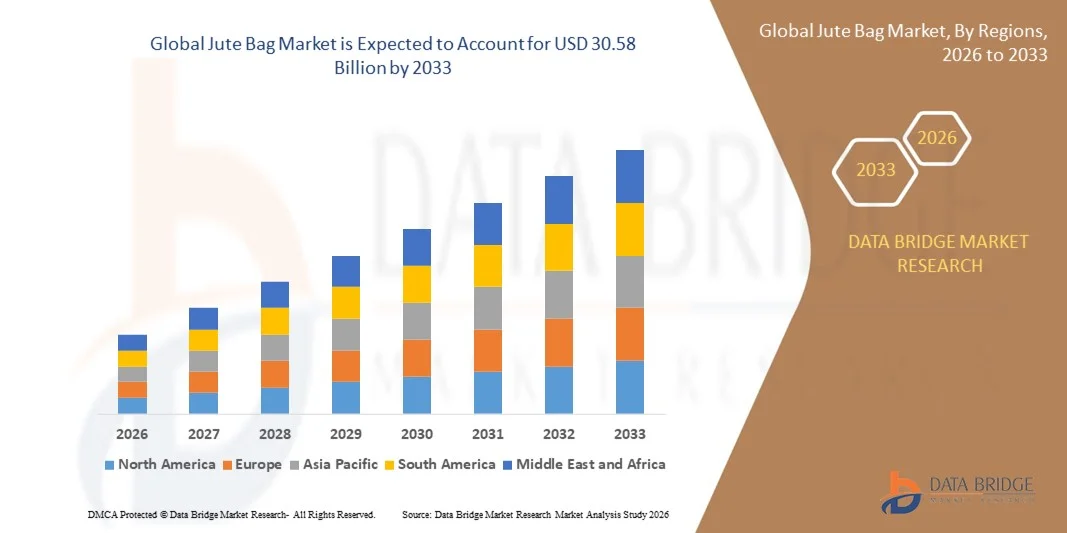
- The global jute bag market size was valued at USD 14.26 billion in 2025 and is expected to reach USD 30.58 billion by 2033, at a CAGR of 10.00% during the forecast period
- The market growth is largely fueled by increasing awareness of environmental sustainability and the rising shift from single-use plastic bags to eco-friendly alternatives, driving higher adoption of jute bags across retail and institutional sectors
- Furthermore, growing government initiatives promoting biodegradable and reusable packaging, along with rising consumer preference for durable and stylish shopping bags, are establishing jute bags as a preferred sustainable packaging solution. These converging factors are accelerating market adoption, thereby significantly boosting the industry’s growth
Jute Bag Market Analysis
- Jute bags are eco-friendly, durable, and biodegradable alternatives to conventional plastic and non-woven bags, widely used in retail, grocery, institutional, and promotional applications. Their versatility, reusable nature, and cost-effectiveness make them a practical choice for both consumers and businesses
- The escalating demand for jute bags is primarily fueled by stricter regulations on plastic usage, rising environmental consciousness among consumers, and the growing trend of sustainable branding and corporate gifting, further driving the market across domestic and international regions
- North America dominated the jute bag market with a share of over 45% in 2025, due to increasing consumer preference for sustainable alternatives to plastic bags and heightened awareness of environmental conservation
- Asia-Pacific is expected to be the fastest growing region in the jute bag market during the forecast period due to rising urbanization, growing retail sectors, and increasing awareness of sustainable practices in countries such as India, China, and Japan
- Jute shopping bags segment dominated the market with a market share of 63% in 2025, due to rising consumer preference for eco-friendly alternatives to plastic bags and the growing awareness of sustainable lifestyles. Retailers and supermarkets are increasingly offering jute shopping bags as reusable options for customers, enhancing their adoption. Jute shopping bags also appeal to environmentally conscious consumers due to their durability, biodegradability, and fashionable designs, which align with modern consumer trends
Report Scope and Jute Bag Market Segmentation
|
Attributes |
Jute Bag Key Market Insights |
|
Segments Covered |
|
|
Countries Covered |
North America
Europe
Asia-Pacific
Middle East and Africa
South America
|
|
Key Market Players |
|
|
Market Opportunities |
|
|
Value Added Data Infosets |
In addition to the insights on market scenarios such as market value, growth rate, segmentation, geographical coverage, and major players, the market reports curated by the Data Bridge Market Research also include import export analysis, production capacity overview, production consumption analysis, price trend analysis, climate change scenario, supply chain analysis, value chain analysis, raw material/consumables overview, vendor selection criteria, PESTLE Analysis, Porter Analysis, and regulatory framework. |
Jute Bag Market Trends
Rising Adoption of Eco-Friendly and Biodegradable Packaging
- A significant trend in the jute bag market is the growing preference for eco-friendly and biodegradable packaging as businesses and consumers aim to reduce plastic usage and environmental impact. This trend is driving a shift toward sustainable alternatives in retail, grocery, and e-commerce sectors, emphasizing renewable material adoption
- For instance, IKEA has implemented jute-based shopping bags in multiple regions as part of its sustainability initiatives, promoting reusable packaging solutions and reducing single-use plastics. Such initiatives are enhancing brand reputation while supporting circular economy principles
- Retailers are increasingly offering jute bags as part of corporate social responsibility programs to meet consumer demand for green products, which is creating wider acceptance of natural fiber-based packaging. This is encouraging small and medium enterprises to adopt jute as a primary packaging material
- The adoption of jute bags is also rising in fashion and promotional merchandise sectors where eco-conscious designs are influencing product choices. This trend reflects a broader consumer inclination toward sustainable lifestyle products and ethical sourcing
- The global emphasis on reducing carbon footprints is motivating governments and NGOs to endorse jute bag usage through awareness campaigns and public programs. These efforts are positioning jute packaging as a mainstream alternative in urban and semi-urban markets
- The increasing involvement of e-commerce platforms in promoting sustainable delivery solutions is supporting the use of durable and reusable jute bags for logistics and last-mile delivery. This trend is reinforcing the long-term demand for biodegradable packaging materials
Jute Bag Market Dynamics
Driver
Growing Government Initiatives Promoting Sustainable Packaging
- Government policies and programs advocating sustainable packaging are propelling the adoption of jute bags across multiple industries. These initiatives focus on reducing plastic consumption and incentivizing the use of renewable materials to protect the environment
- For instance, the Indian Ministry of Textiles promotes jute bag manufacturing through subsidies and awareness campaigns, benefiting local producers and supporting eco-friendly packaging adoption. Such measures are encouraging manufacturers and retailers to replace conventional packaging with jute alternatives
- Increasing regulations on plastic bans in countries such as Bangladesh, India, and Kenya are creating favorable market conditions for jute bag adoption. These regulations are driving businesses to explore cost-effective, biodegradable options to comply with environmental mandates
- Collaboration between governments and industry bodies is facilitating the standardization and quality assurance of jute products, ensuring reliable performance and consumer acceptance. This structured support is expanding market reach and enhancing trust in jute-based solutions
- Public procurement policies favoring sustainable products are further boosting demand for jute bags in institutional applications, including government offices, educational institutions, and public events. This driver is strengthening the role of jute as a sustainable packaging solution
Restraint/Challenge
Price Volatility and Supply Constraints of Raw Jute
- The jute bag market faces challenges due to fluctuations in raw jute prices and limited supply, which affect production costs and market stability. Variability in agricultural yield and seasonal dependencies contribute to unpredictable supply chains
- For instance, organizations such as the National Jute Board in India monitor jute production and exports, but global demand fluctuations still lead to periodic shortages and price spikes. These constraints make cost planning difficult for manufacturers and retailers
- Transportation and storage of raw jute are further complicated by its susceptibility to moisture and quality degradation, adding logistical challenges. These issues impact production timelines and increase operational expenses for jute bag manufacturers
- Dependence on a few major producing countries, including India and Bangladesh, exposes the market to geopolitical and climatic risks, which can disrupt steady supply availability. This dependency limits the ability of businesses to scale production consistently
- The market continues to contend with balancing affordability and sustainable production, where rising raw material costs may influence end-consumer pricing. Addressing these challenges is critical for ensuring long-term growth and adoption of jute-based packaging solutions
Jute Bag Market Scope
The market is segmented on the basis of product, price, and end-use.
- By Product
On the basis of product, the jute bag market is segmented into jute sack bags and jute shopping bags. The jute shopping bags segment dominated the largest market revenue share of 63% in 2025, driven by rising consumer preference for eco-friendly alternatives to plastic bags and the growing awareness of sustainable lifestyles. Retailers and supermarkets are increasingly offering jute shopping bags as reusable options for customers, enhancing their adoption. Jute shopping bags also appeal to environmentally conscious consumers due to their durability, biodegradability, and fashionable designs, which align with modern consumer trends. The versatility of jute shopping bags across various shopping and promotional activities further strengthens their market position.
The jute sack bags segment is anticipated to witness the fastest growth rate from 2026 to 2033, fueled by increasing demand in agriculture, food packaging, and industrial sectors. Jute sack bags offer strong resistance, moisture protection, and cost-effective storage solutions, making them ideal for bulk transport of grains, seeds, and other commodities. Their biodegradable nature and compatibility with sustainable supply chain practices also contribute to their growing popularity. For instance, companies such as UPL Limited are expanding their use of jute sack bags for agricultural and industrial applications.
- By Price
On the basis of price, the jute bag market is segmented into premium and mass categories. The mass segment dominated the largest market revenue share in 2025, driven by the affordability and widespread availability of jute bags for daily consumer use. Mass jute bags cater to retailers, supermarkets, and individual shoppers looking for eco-friendly alternatives at competitive prices. The segment benefits from high production volumes and standardized manufacturing processes, which further reduce costs and support large-scale adoption. In addition, mass jute bags are increasingly used in promotional campaigns and bulk packaging, enhancing their market dominance.
The premium segment is expected to witness the fastest CAGR from 2026 to 2033, fueled by rising consumer demand for stylish, high-quality, and branded jute bags. Premium jute bags are often customized with designs, logos, and enhanced durability, appealing to niche retail, corporate gifting, and fashion-conscious consumers. For instance, companies such as Fabindia offer premium jute bags as eco-luxury products, driving growth in this segment. The premium segment also benefits from trends in sustainable fashion and conscious consumerism, further accelerating its adoption.
- By End-Use
On the basis of end-use, the jute bag market is segmented into retail and institutional sectors. The retail segment dominated the largest market revenue share in 2025, driven by the widespread use of jute shopping bags in supermarkets, grocery stores, and e-commerce deliveries. Retailers prefer jute bags due to their durability, reusability, and appeal to environmentally conscious shoppers. The growing awareness among consumers regarding plastic reduction and sustainability initiatives has further strengthened the adoption of jute bags in the retail sector. In addition, retail-focused promotional campaigns and branding opportunities enhance the segment’s market dominance.
The institutional segment is anticipated to witness the fastest growth rate from 2026 to 2033, fueled by increasing adoption in educational institutions, corporate offices, hotels, and government initiatives promoting eco-friendly practices. Institutions prefer jute bags for bulk distribution, corporate gifting, and sustainable merchandise due to their biodegradability and cost-effectiveness. For instance, several universities and hotels in India have introduced jute bags for students and guests to replace plastic alternatives, driving growth in this segment. The institutional focus on sustainability and regulatory encouragement further supports the rising demand for jute bags.
Jute Bag Market Regional Analysis
- North America dominated the jute bag market with the largest revenue share of over 45% in 2025, driven by increasing consumer preference for sustainable alternatives to plastic bags and heightened awareness of environmental conservation
- Consumers in the region highly value the durability, reusability, and eco-friendly appeal offered by jute bags for shopping, retail promotions, and daily use
- This widespread adoption is further supported by high disposable incomes, growing retail and e-commerce sectors, and government initiatives promoting sustainable packaging, establishing jute bags as a preferred choice for both retail and institutional applications
U.S. Jute Bag Market Insight
The U.S. jute bag market captured the largest revenue share in 2025 within North America, fueled by strong adoption across supermarkets, retail chains, and online platforms. Consumers are increasingly opting for reusable jute shopping bags to reduce single-use plastic consumption. The rising trend of corporate gifting with branded jute bags and eco-conscious promotional campaigns is further boosting market demand. Moreover, growing awareness of sustainable fashion and environmentally responsible practices contributes significantly to the expansion of the jute bag industry.
Europe Jute Bag Market Insight
The Europe jute bag market is projected to expand at a notable CAGR throughout the forecast period, primarily driven by strict regulations against plastic usage and rising demand for sustainable packaging solutions. Increasing urbanization and growth in the retail sector are fostering adoption of jute bags. European consumers are also attracted to the aesthetic designs, strength, and eco-friendly properties of jute bags. The market is witnessing growth across supermarkets, departmental stores, and institutional applications, with jute bags becoming a standard eco-conscious alternative.
U.K. Jute Bag Market Insight
The U.K. jute bag market is anticipated to grow at a substantial CAGR during the forecast period, driven by heightened consumer awareness about environmental sustainability and government campaigns promoting reusable bags. Concerns over plastic waste in retail and e-commerce sectors are encouraging widespread use of jute shopping bags. The U.K.’s strong retail infrastructure and increasing corporate adoption of branded eco-friendly merchandise are expected to further drive market growth.
Germany Jute Bag Market Insight
The Germany jute bag market is expected to expand at a considerable CAGR during the forecast period, fueled by stringent environmental regulations and growing demand for sustainable packaging solutions in both retail and institutional sectors. Germany’s emphasis on eco-conscious consumer behavior and robust infrastructure supports adoption of jute bags. Integration of jute bags in supermarkets, organic stores, and promotional campaigns is becoming increasingly prevalent, with a preference for durable, reusable, and high-quality products aligning with local consumer expectations.
Asia-Pacific Jute Bag Market Insight
The Asia-Pacific jute bag market is poised to grow at the fastest CAGR during the forecast period of 2026 to 2033, driven by rising urbanization, growing retail sectors, and increasing awareness of sustainable practices in countries such as India, China, and Japan. The region’s focus on reducing plastic usage and promoting eco-friendly alternatives is accelerating adoption of jute bags. Furthermore, APAC is a major producer of jute fiber, which enhances the affordability and availability of jute bags for both domestic consumption and export markets.
Japan Jute Bag Market Insight
The Japan jute bag market is gaining traction due to the country’s eco-conscious consumer base, urban population, and growing preference for sustainable alternatives. Japanese consumers highly value jute bags for shopping, corporate gifting, and daily use, appreciating their durability and reusable nature. In addition, the integration of jute bags into retail promotions and institutional campaigns is driving growth. Japan’s focus on environmental responsibility and government initiatives to curb plastic waste further bolster market adoption.
China Jute Bag Market Insight
The China jute bag market accounted for the largest revenue share in Asia-Pacific in 2025, attributed to the country’s expanding middle class, rapid urbanization, and government regulations promoting reusable bags. Consumers are increasingly adopting jute bags for retail shopping, institutional use, and corporate promotions. The availability of locally produced, affordable jute bags and the rise of e-commerce platforms offering eco-friendly packaging solutions are key factors propelling the market in China.
Jute Bag Market Share
The jute bag industry is primarily led by well-established companies, including:
- Aarbur (India)
- Ashoka Exports (India)
- Hitaishi-KK Manufacturing Company Pvt. Ltd (India)
- Howrah Mills Co Ltd (India)
- Guangzhou Yaxin Leather Co., Ltd. (China)
- Deeya International (India)
- Victoria Leather Company (India)
- Moonshine Leather Company (India)
- Ara India (India)
- Shree Satyanarayanji Impex (S. S. Impex) (India)
- CS Exports (India)
- B&B Merchandising (India)
- Makewell Bags (India)
- Royal Fabric Bags (India)
- Shree Jee International (India)
- Gloster Limited (India)
Latest Developments in Global Jute Bag Market
- In September 2025, Globe Jute entered into a strategic partnership with a leading e-commerce platform to expand its distribution channels. This collaboration is expected to significantly increase the company’s market reach and accessibility, enabling Globe Jute to tap into the rapidly growing online consumer base. By leveraging digital sales platforms, the company is likely to boost brand visibility, enhance sales performance, and align with the broader digital transformation trends shaping the jute bag market, strengthening its competitive positioning in India
- In August 2025, Bengal Jute Corporation announced the launch of a new line of eco-friendly jute bags targeting the premium segment. This strategic initiative is likely to elevate the company’s brand image and attract environmentally conscious consumers who prioritize sustainable and high-quality products. The introduction of this premium product line reflects a broader industry trend toward sustainability and product premiumization, which could reshape consumer expectations and encourage other market players to innovate in the eco-friendly packaging space
- In September 2022, LC Packaging expanded its jute bag offerings with the acquisition of Karl Weiterer GmbH, strengthening its market presence across Europe. This expansion enabled LC Packaging to promote sustainable packaging solutions more effectively, offering a wider variety of jute products to meet growing consumer demand for eco-friendly alternatives. The acquisition also enhanced the company’s ability to penetrate new markets, improve its competitive edge, and establish itself as a key player in Europe’s sustainable packaging industry
- In September 2021, Gloster Ltd signed a Memorandum of Understanding with the Telangana government to establish a jute products manufacturing unit in Warangal at an investment of INR 3.3 billion, with an annual production target of 50 million jute bags. This development is expected to significantly increase domestic manufacturing capacity, support the growing demand for eco-friendly packaging solutions, and create employment opportunities. The project strengthens the company’s position in India’s jute bag market and aligns with government initiatives promoting sustainable manufacturing practices
- In August 2021, a Bangladeshi scientist successfully produced a bioplastic jute poly bag using jute polymer, offering an eco-friendly alternative to traditional polythene. This innovation is considered a major advancement in sustainable packaging technology, likely to accelerate the adoption of biodegradable materials in the jute bag market. By providing a viable replacement for plastic bags, this development supports environmental sustainability, encourages innovation across the industry, and could influence market trends toward greener, more sustainable packaging solutions
SKU-
Get online access to the report on the World's First Market Intelligence Cloud
- Interactive Data Analysis Dashboard
- Company Analysis Dashboard for high growth potential opportunities
- Research Analyst Access for customization & queries
- Competitor Analysis with Interactive dashboard
- Latest News, Updates & Trend analysis
- Harness the Power of Benchmark Analysis for Comprehensive Competitor Tracking
Global Jute Bag Market, Supply Chain Analysis and Ecosystem Framework
To support market growth and help clients navigate the impact of geopolitical shifts, DBMR has integrated in-depth supply chain analysis into its Global Jute Bag Market research reports. This addition empowers clients to respond effectively to global changes affecting their industries. The supply chain analysis section includes detailed insights such as Global Jute Bag Market consumption and production by country, price trend analysis, the impact of tariffs and geopolitical developments, and import and export trends by country and HSN code. It also highlights major suppliers with data on production capacity and company profiles, as well as key importers and exporters. In addition to research, DBMR offers specialized supply chain consulting services backed by over a decade of experience, providing solutions like supplier discovery, supplier risk assessment, price trend analysis, impact evaluation of inflation and trade route changes, and comprehensive market trend analysis.
Research Methodology
Data collection and base year analysis are done using data collection modules with large sample sizes. The stage includes obtaining market information or related data through various sources and strategies. It includes examining and planning all the data acquired from the past in advance. It likewise envelops the examination of information inconsistencies seen across different information sources. The market data is analysed and estimated using market statistical and coherent models. Also, market share analysis and key trend analysis are the major success factors in the market report. To know more, please request an analyst call or drop down your inquiry.
The key research methodology used by DBMR research team is data triangulation which involves data mining, analysis of the impact of data variables on the market and primary (industry expert) validation. Data models include Vendor Positioning Grid, Market Time Line Analysis, Market Overview and Guide, Company Positioning Grid, Patent Analysis, Pricing Analysis, Company Market Share Analysis, Standards of Measurement, Global versus Regional and Vendor Share Analysis. To know more about the research methodology, drop in an inquiry to speak to our industry experts.
Customization Available
Data Bridge Market Research is a leader in advanced formative research. We take pride in servicing our existing and new customers with data and analysis that match and suits their goal. The report can be customized to include price trend analysis of target brands understanding the market for additional countries (ask for the list of countries), clinical trial results data, literature review, refurbished market and product base analysis. Market analysis of target competitors can be analyzed from technology-based analysis to market portfolio strategies. We can add as many competitors that you require data about in the format and data style you are looking for. Our team of analysts can also provide you data in crude raw excel files pivot tables (Fact book) or can assist you in creating presentations from the data sets available in the report.