


Aquaculture Market Overview
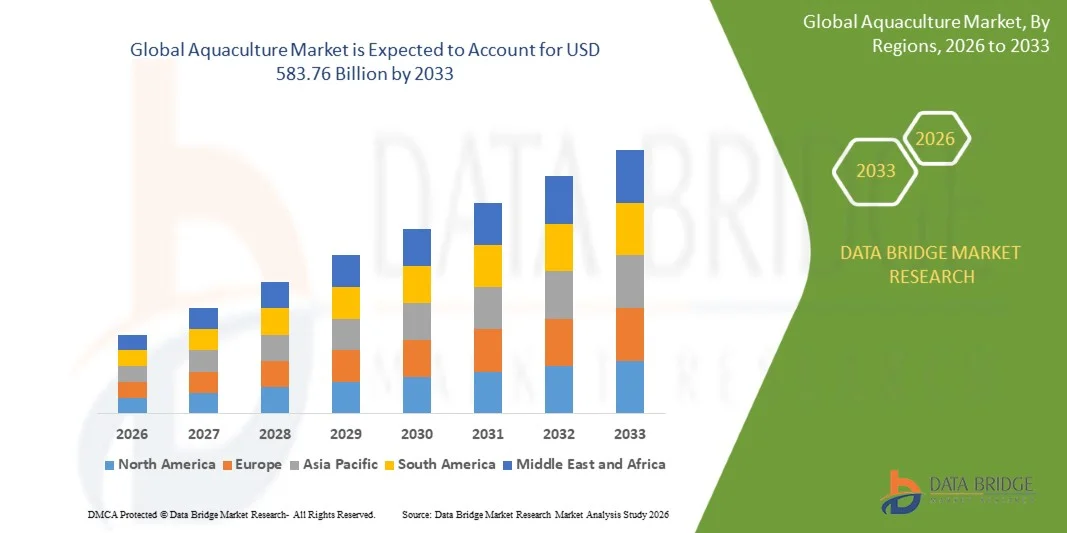
As per Data Bridge Market Research Analysis the aquaculture market was valued at USD 320.10 billion in 2025 and is projected to reach USD 583.76 billion by 2033, growing at a CAGR of 7.80% from 2026 to 2033. The market is witnessing consistent growth, primarily driven by the increasing demand for aquatic food products, rapid expansion of commercial aquaculture activities, and growing focus on sustainable seafood production. Rising concerns over declining wild fish stocks, coupled with increasing investments in advanced aquaculture infrastructure and farming technologies, are encouraging producers to improve production efficiency, ensure optimal aquatic health, and enhance overall farm productivity.
Furthermore, the integration of modern technologies such as automated feeding systems, water quality monitoring solutions, recirculating aquaculture systems (RAS), and digital farm management platforms is transforming aquaculture operations by improving resource utilization and reducing operational risks. Favorable government policies supporting sustainable aquaculture development, increasing investments in research and innovation, and the growing adoption of environmentally responsible farming practices are further strengthening market growth. In addition, rising consumer preference for high-quality seafood products and continuous advancements in disease management, breeding technologies, and aquaculture nutrition are expected to create significant growth opportunities for the aquaculture market throughout the forecast period.
Market Size & Forecast
- Market Value (2025): USD 320.10 Billion
- Expected Market Value (2033): USD 583.76 Billion
- Forecast CAGR (2026–2033): 7.80%
- Leading Region in 2025: Asia-Pacific
- Fastest Growing Region: North America
Key Market Trends & Insights
- Asia-Pacific dominated the aquaculture market with the largest revenue share of 62.9% in 2025, supported by its well-established aquaculture industry, favourable climatic conditions, abundant freshwater and coastal resources, and strong government support for sustainable aquaculture development.
- North America aquaculture market is expected to witness the fastest growth rate from 2026 to 2033, primarily driven by increasing demand for sustainably produced seafood, expanding investments in land-based recirculating aquaculture systems (RAS), and supportive government initiatives promoting domestic aquaculture production.
- The equipment segment held the largest market revenue share in 2025, driven by increasing investments in commercial aquaculture operations, rising adoption of automated feeding systems, water quality monitoring technologies, aeration equipment, and recirculating aquaculture systems (RAS).
- The pharmaceuticals segment is expected to witness the fastest growth during the forecast period from 2026 to 2033, driven by the increasing incidence of infectious diseases in aquaculture, growing focus on aquatic animal health management, and rising adoption of vaccines, therapeutics, and biosecurity solutions.
- The marine segment held the largest market revenue share of approximately 68.1% in 2025, driven by large-scale commercial farming of high-value marine species, including salmon, shrimp, and shellfish, supported by favorable coastal farming conditions and increasing global demand for premium seafood products.
- The freshwater segment is expected to witness the fastest growth during the forecast period from 2026 to 2033, driven by expanding inland aquaculture activities, increasing production of freshwater species such as carp and tilapia, and rising investments in pond-based and recirculating aquaculture systems (RAS).
Report Scope and Aquaculture Market Segmentation
|
Attributes |
Aquaculture Key Market Segments |
|
Segments Covered |
|
|
Countries Covered |
North America
Europe
Asia-Pacific
Middle East and Africa
South America
|
|
Key Market Players |
|
|
Market Opportunities |
|
|
Value Added Data Infosets |
In addition to the insights on market scenarios such as market value, growth rate, segmentation, geographical coverage, and major players, the market reports curated by the Data Bridge Market Research also include import export analysis, production capacity overview, production consumption analysis, price trend analysis, climate change scenario, supply chain analysis, value chain analysis, raw material/consumables overview, vendor selection criteria, PESTLE Analysis, Porter Analysis, and regulatory framework. |
Aquaculture Market Trends
Trend: Increase Adoption of Land-Based Recirculating Aquaculture Systems (RAS)
The aquaculture market is witnessing increasing adoption of advanced farming technologies that improve production efficiency, sustainability, and fish health while reducing environmental impact. Producers are investing in recirculating aquaculture systems (RAS), automation, and engineered containment technologies to overcome the limitations of conventional open-water farming. These technologies enable year-round production, improve water quality management, enhance biosecurity, and optimize resource utilization, supporting the commercialization of high-value aquatic species across diverse geographical regions.
For instance, in January 2026, SmartGreen Aquaculture launched India's largest inland trout farming facility using its proprietary Agile RAS technology in Telangana. The USD 6 million facility enables year-round cold-water trout production despite the region's tropical climate through a continuous harvesting model. The company also announced plans to expand into salmon farming and international seafood exports, demonstrating how land-based RAS technology is expanding aquaculture production beyond traditional geographic limitations.
Increasing adoption of land-based recirculating aquaculture systems is expected to improve production efficiency, strengthen sustainability, and expand commercial aquaculture production worldwide.
Aquaculture Market Dynamics
Key Market Driver: Increase High-Value Aquaculture Production to Meet Rising Global Seafood Demand
The aquaculture market is primarily driven by increasing global seafood demand and the growing limitations of wild-capture fisheries in meeting long-term protein requirements. Rising population growth, changing dietary preferences toward aquatic protein, and increasing awareness of seafood's nutritional benefits are encouraging governments and producers to expand commercial aquaculture production. Continuous investments in sustainable farming technologies, improved breeding programs, advanced aquafeed, and disease management solutions are further enhancing production efficiency and supporting long-term industry growth.
For instance, June 2024, the Food and Agriculture Organization (FAO) reported in its State of World Fisheries and Aquaculture (SOFIA) 2024 that aquaculture surpassed capture fisheries for the first time in history in 2022, producing 94.4 million tonnes and accounting for 51% of global aquatic animal production. FAO also projects global seafood production to increase by 10% by 2032, highlighting aquaculture's critical role in meeting future food demand.
Growing global seafood demand and expanding aquaculture production are expected to remain key drivers supporting long-term market growth.
Key Restraint/Challenge: Increase Production Constraints Due to Stringent Environmental Regulations
The aquaculture market faces challenges from increasingly stringent environmental regulations and the substantial capital investments required for advanced aquaculture technologies. Governments are implementing stricter environmental standards to minimize ecological impacts, control disease outbreaks, and ensure sustainable resource utilization. At the same time, modern production systems such as recirculating aquaculture systems require significant infrastructure investments and technical expertise, creating barriers to expansion.
For instance, June 2026, the Norwegian Ministry of Trade, Industry, and Fisheries updated its Traffic Light System for 2026–2027, permitting production growth in only three of thirteen salmon farming areas while maintaining biomass reductions in Production Area 3 due to environmental concerns. The decision prompted opposition from the salmon farming industry, highlighting how environmental regulations can directly limit production capacity despite strong global seafood demand.
Stringent environmental regulations and high compliance requirements are expected to remain significant challenges affecting aquaculture production expansion.
Key Market Opportunity: Expand Offshore Aquaculture Through Government Support
The aquaculture market is creating significant opportunities through the expansion of offshore aquaculture supported by government initiatives. Rising seafood demand, pressure on wild fish stocks, and the need to improve food security are encouraging policymakers to identify suitable offshore farming locations and simplify future commercial development. These initiatives are expected to diversify production capacity, strengthen supply chain resilience, and support sustainable seafood production.
For instance, September 2025, NOAA Fisheries identified 13 Aquaculture Opportunity Areas (AOAs) covering more than 21,000 acres in U.S. federal waters across the Gulf of America and Southern California under the Restoring American Seafood Competitiveness initiative. The program aims to reduce investment risks and accelerate sustainable offshore aquaculture development through scientifically evaluated farming locations.
Government support for offshore aquaculture development is expected to create new investment opportunities and support sustainable expansion of global aquaculture production.
Aquaculture Market Scope
The aquaculture market is segmented based on type, culture, species and production type.
- By Type
On the basis of type, the market is segmented into equipment and pharmaceuticals. The equipment segment held the largest market revenue share in 2025, driven by increasing investments in commercial aquaculture operations, rising adoption of automated feeding systems, water quality monitoring technologies, aeration equipment, and recirculating aquaculture systems (RAS). Growing emphasis on improving production efficiency, minimizing operational losses, and enhancing aquatic animal health continues to strengthen the segment's market leadership.
The pharmaceuticals segment is expected to witness the fastest growth during the forecast period from 2026 to 2033, driven by the increasing incidence of infectious diseases in aquaculture, growing focus on aquatic animal health management, and rising adoption of vaccines, therapeutics, and biosecurity solutions. Expanding commercial fish and shrimp farming, continuous advancements in aquatic veterinary products, and increasing regulatory emphasis on disease prevention and sustainable aquaculture production are expected to further accelerate segment growth.
- By Culture
On the basis of culture, the market is segmented into marine and freshwater. The marine segment held the largest market revenue share of approximately 68.1% in 2025, driven by large-scale commercial farming of high-value marine species, including salmon, shrimp, and shellfish, supported by favorable coastal farming conditions and increasing global demand for premium seafood products. Continuous investments in offshore aquaculture, advanced cage farming technologies, and sustainable marine production practices continue to support the segment's market leadership.
The freshwater segment is expected to witness the fastest growth during the forecast period from 2026 to 2033, driven by expanding inland aquaculture activities, increasing production of freshwater species such as carp and tilapia, and rising investments in pond-based and recirculating aquaculture systems (RAS). Government initiatives promoting freshwater aquaculture development, coupled with technological advancements in water quality management and disease control, are expected to further accelerate segment growth.
- By Species
On the basis of species, the market is segmented into aquatic animals and aquatic plants. The aquatic animals segment held the largest market revenue share in 2025, driven by high commercial production of finfish, crustaceans, and mollusks, along with increasing global demand for protein-rich seafood products. Expanding salmon, shrimp, carp, and tilapia farming, supported by technological advancements in breeding, nutrition, disease management, and sustainable aquaculture practices, continues to strengthen the segment's market leadership.
The aquatic plants segment is expected to witness the fastest growth during the forecast period from 2026 to 2033, driven by increasing cultivation of seaweed and algae for applications in food & beverages, pharmaceuticals, cosmetics, animal feed, biofuels, and nutraceuticals. Growing demand for sustainable marine biomass, government initiatives promoting seaweed farming, and rising adoption of environmentally friendly aquaculture practices are expected to further accelerate segment growth.
- By Production Type
On the basis of production type, the market is segmented into large-scale and medium scale. The large-scale segment held the largest market revenue share in 2025, driven by increasing investments in commercial aquaculture operations, high production capacities, and widespread adoption of advanced farming technologies, including automated feeding systems, water quality monitoring solutions, and recirculating aquaculture systems (RAS). Strong export demand, vertically integrated production models, and growing investments by leading aquaculture companies continue to support the segment's market leadership.
The medium scale segment is expected to witness the fastest growth during the forecast period from 2026 to 2033, driven by rising government initiatives promoting sustainable aquaculture, improving access to modern farming technologies, and increasing investments by regional producers to expand production capacity. Growing domestic seafood consumption, favorable financing programs, and the gradual adoption of precision aquaculture practices are expected to further accelerate segment growth, particularly across emerging economies in Asia-Pacific and Latin America.
Aquaculture Market Analysis
Asia-Pacific Aquaculture Market Insight
Asia-Pacific dominated the aquaculture market with the largest revenue share of 62.9% in 2025, supported by its well-established aquaculture industry, favorable climatic conditions, abundant freshwater and coastal resources, and strong government support for sustainable aquaculture development. China, India, Vietnam, Indonesia, and Bangladesh continue to lead regional production through expanding commercial fish and shrimp farming, increasing investments in modern aquaculture technologies, and rising domestic seafood consumption.The region is also witnessing increasing adoption of recirculating aquaculture systems (RAS), automated feeding technologies, digital water quality monitoring, and sustainable farming practices to improve production efficiency and aquatic animal health. Continuous investments in advanced breeding technologies, disease management solutions, and commercial aquaculture infrastructure are expected to further strengthen regional market growth and support long-term seafood production.
China Aquaculture Market Insight
China accounted for the largest share of the Asia-Pacific aquaculture market in 2025, driven by extensive freshwater and marine aquaculture production, well-established farming infrastructure, and supportive government policies promoting sustainable fisheries development. Increasing adoption of recirculating aquaculture systems (RAS), digital water quality monitoring, advanced breeding technologies, and automated farming solutions continues to improve production efficiency and strengthen the country's market position.
Japan Aquaculture Market Insight
Japan is expected to witness the fastest growth rate from 2026 to 2033, driven by increasing demand for premium seafood products, growing adoption of sustainable aquaculture practices, and continuous investments in advanced farming technologies. Rising implementation of recirculating aquaculture systems (RAS), automated feeding technologies, and fish health management solutions is expected to support market expansion.
North America Aquaculture Market Insight
North America aquaculture market is expected to witness the fastest growth rate from 2026 to 2033, primarily driven by increasing demand for sustainably produced seafood, expanding investments in land-based recirculating aquaculture systems (RAS), and supportive government initiatives promoting domestic aquaculture production. Technological advancements in automated feeding systems, precision water quality monitoring, and fish health management are improving operational efficiency and supporting sustainable market growth.
U.S. Aquaculture Market Insight
The U.S. is expected to witness the fastest growth rate from 2026 to 2033, driven by increasing investments in commercial aquaculture operations, expanding adoption of land-based recirculating aquaculture systems (RAS), and growing demand for domestically produced sustainable seafood. Government support, technological innovation, and rising investments in modern aquaculture infrastructure continue to strengthen market growth.
Europe Aquaculture Market Insight
Europe is expected to witness the fastest growth rate from 2026 to 2033, supported by increasing demand for sustainably produced seafood, stringent environmental regulations promoting responsible aquaculture practices, and continuous investments in advanced farming technologies. Growing adoption of recirculating aquaculture systems (RAS), offshore aquaculture, automated feeding technologies, and digital water quality monitoring solutions continues to improve production efficiency and fish welfare across the region.
Germany Aquaculture Market Insight
Germany is expected to witness the fastest growth rate from 2026 to 2033, supported by increasing investments in sustainable aquaculture technologies, recirculating aquaculture systems (RAS), and advanced water treatment solutions. Growing demand for locally produced seafood and continued emphasis on environmentally responsible aquaculture practices are expected to strengthen market growth.
U.K. Aquaculture Market Insight
The U.K. aquaculture market is expected to witness the fastest growth rate from 2026 to 2033, driven by increasing demand for sustainably farmed seafood, continued investments in salmon farming, and growing adoption of advanced aquaculture technologies. Rising focus on fish welfare, disease management, and environmentally sustainable production practices is expected to support steady market expansion.
Aquaculture Market Share
The aquaculture market Analysis is primarily led by well-established companies, including:
- Mowi ASA (Norway)
- Cooke Inc. (Canada)
- Cermaq Group AS (Norway)
- Thai Union Group PCL (Thailand)
- Blue Ridge Aquaculture, Inc. (U.S.)
- P/F Bakkafrost (Faroe Islands)
- Lerøy Seafood Group ASA (Norway)
- SalMar ASA (Norway)
- Grieg Seafood ASA (Norway)
- Huon Aquaculture Group Pty Ltd. (Australia)
- Benchmark Holdings plc (U.K.)
- BioMar Group A/S (Denmark)
- Cargill, Incorporated (U.S.)
- Aller Aqua A/S (Denmark)
- AKVA group ASA (Norway)
Latest Developments in Soil Aerators Market
- In June 2025, Australis Aquaculture expanded its global processing capabilities by establishing a new state-of-the-art seafood processing facility in Vietnam. The investment is aimed at increasing production capacity while improving operational efficiency, product quality, and sustainability across its barramundi farming and export operations.
- In May 2025, Corbion N.V. partnered with the Sustainable Shrimp Partnership (SSP) as an associate member to support responsible shrimp farming. Through the collaboration, the company is promoting sustainable aquaculture practices by advancing innovative feed and preservation solutions that contribute to environmentally responsible seafood production.
- In March 2025, Aquaconnect announced an investment of USD 4.5 million to strengthen its aquaculture biological research and production capabilities. The investment is focused on developing advanced aquaculture health solutions and improving disease management, productivity, and sustainability across fish and shrimp farming operations.
- In February 2025, the Government of Uttar Pradesh secured an investment of USD 466.77 million from the U.A.E.-based Aqua Bridge Group to accelerate the development of the state's fisheries and aquaculture sector. The investment supports the expansion of modern aquaculture infrastructure, hatcheries, processing facilities, and value chain development, making it one of the largest foreign investments in India's aquaculture industry.
- In October 2022, Indian Immunologicals Limited expanded into the aquaculture health sector with the launch of vaccines and other aquatic animal health products for farmed shrimp and fish. The initiative strengthened the company's life sciences portfolio while supporting disease prevention and improving productivity in commercial aquaculture.

- Interactive Data Analysis Dashboard
- Company Analysis Dashboard for high growth potential opportunities
- Research Analyst Access for customization & queries
- Competitor Analysis with Interactive dashboard
- Latest News, Updates & Trend analysis
- Harness the Power of Benchmark Analysis for Comprehensive Competitor Tracking
Data collection and base year analysis are done using data collection modules with large sample sizes. The stage includes obtaining market information or related data through various sources and strategies. It includes examining and planning all the data acquired from the past in advance. It likewise envelops the examination of information inconsistencies seen across different information sources. The market data is analysed and estimated using market statistical and coherent models. Also, market share analysis and key trend analysis are the major success factors in the market report. To know more, please request an analyst call or drop down your inquiry.
The key research methodology used by DBMR research team is data triangulation which involves data mining, analysis of the impact of data variables on the market and primary (industry expert) validation. Data models include Vendor Positioning Grid, Market Time Line Analysis, Market Overview and Guide, Company Positioning Grid, Patent Analysis, Pricing Analysis, Company Market Share Analysis, Standards of Measurement, Global versus Regional and Vendor Share Analysis. To know more about the research methodology, drop in an inquiry to speak to our industry experts.
Data Bridge Market Research is a leader in advanced formative research. We take pride in servicing our existing and new customers with data and analysis that match and suits their goal. The report can be customized to include price trend analysis of target brands understanding the market for additional countries (ask for the list of countries), clinical trial results data, literature review, refurbished market and product base analysis. Market analysis of target competitors can be analyzed from technology-based analysis to market portfolio strategies. We can add as many competitors that you require data about in the format and data style you are looking for. Our team of analysts can also provide you data in crude raw excel files pivot tables (Fact book) or can assist you in creating presentations from the data sets available in the report.













