

Anti-Tuberculosis Therapeutics Market Size
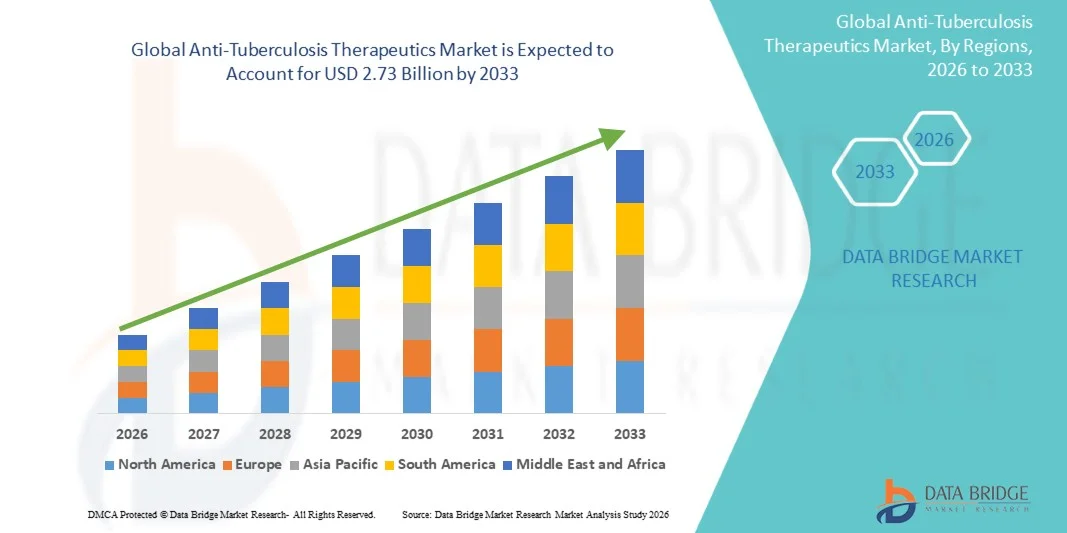
- The global anti-tuberculosis therapeutics market size was valued at USD 1.63 billion in 2025 and is expected to reach USD 2.73 billion by 2033, at a CAGR of 6.70% during the forecast period
- The market growth is largely fueled by the increasing global burden of tuberculosis, particularly in developing regions, along with growing government initiatives and international funding programs aimed at TB control and eradication
- Furthermore, rising demand for effective and shorter treatment regimens, advancements in drug development including novel combination therapies, and increasing focus on drug-resistant TB management are establishing anti-tuberculosis therapeutics as essential components of global healthcare. These converging factors are accelerating the uptake of anti-tuberculosis therapeutic solutions, thereby significantly boosting the industry's growth
Anti-Tuberculosis Therapeutics Market Analysis
- Anti-tuberculosis therapeutics, including first-line and second-line drug regimens as well as novel combination therapies, are increasingly vital components of global healthcare due to their critical role in controlling and treating both drug-sensitive and drug-resistant tuberculosis
- The escalating demand for anti-tuberculosis therapeutics is primarily fueled by the high global burden of TB, rising incidence of multidrug-resistant (MDR-TB) and extensively drug-resistant TB (XDR-TB), and strong support from government and international health organizations
- North America dominated the anti-tuberculosis therapeutics market with the largest revenue share of 34.6% in 2025, characterized by advanced healthcare infrastructure, strong R&D capabilities, and presence of key pharmaceutical companies, with the U.S. experiencing steady growth driven by ongoing research initiatives and improved access to treatment
- Asia-Pacific is expected to be the fastest growing region in the anti-tuberculosis therapeutics market during the forecast period due to high disease prevalence, increasing healthcare expenditure, expanding access to diagnosis and treatment, and strong government-led TB control programs across countries such as India and China
- The Oral segment held the largest market revenue share of 68.4% in 2025, driven by ease of administration and high patient compliance
Report Scope and Anti-Tuberculosis Therapeutics Market Segmentation
|
Attributes |
Anti-Tuberculosis Therapeutics Key Market Insights |
|
Segments Covered |
|
|
Countries Covered |
North America · U.S. · Canada · Mexico Europe · Germany · France · U.K. · Netherlands · Switzerland · Belgium · Russia · Italy · Spain · Turkey · Rest of Europe Asia-Pacific · China · Japan · India · South Korea · Singapore · Malaysia · Australia · Thailand · Indonesia · Philippines · Rest of Asia-Pacific Middle East and Africa · Saudi Arabia · U.A.E. · South Africa · Egypt · Israel · Rest of Middle East and Africa South America · Brazil · Argentina · Rest of South America |
|
Key Market Players |
· Johnson & Johnson (U.S.) · Novartis AG (Switzerland) · F. Hoffmann-La Roche Ltd. (Switzerland) · Sanofi S.A. (France) · Pfizer Inc. (U.S.) · GSK plc (GlaxoSmithKline) (U.K.) · Boehringer Ingelheim International GmbH (Germany) · Otsuka Pharmaceutical Co., Ltd. (Japan) · Teva Pharmaceutical Industries Ltd. (Israel) · Sun Pharmaceutical Industries Ltd. (India) · Cipla Limited (India) · Dr. Reddy’s Laboratories Ltd. (India) · Lupin Limited (India) · Aurobindo Pharma Limited (India) · Zydus Lifesciences Ltd. (India) · Hikma Pharmaceuticals plc (U.K.) · Mylan N.V. (U.S.) · Lilly (Eli Lilly and Company) (U.S.) · Sanofi Pasteur (France) · Macleods Pharmaceuticals Ltd. (India) |
|
Market Opportunities |
· Growing focus on drug-resistant tuberculosis (MDR-TB and XDR-TB) treatment innovations · Expansion of global TB eradication programs and funding initiatives |
|
Value Added Data Infosets |
In addition to the insights on market scenarios such as market value, growth rate, segmentation, geographical coverage, and major players, the market reports curated by the Data Bridge Market Research also include in-depth expert analysis, patient epidemiology, pipeline analysis, pricing analysis, and regulatory framework. |
Anti-Tuberculosis Therapeutics Market Trends
“Advancements in Novel Drug Regimens and Shorter Treatment Duration”
- A significant and accelerating trend in the global Tuberculosis therapeutics market is the development of novel drug regimens aimed at reducing treatment duration and improving patient adherence. Traditional tuberculosis treatments are lengthy, often lasting six months or more, which can lead to poor compliance and drug resistance
- For instance, newer combination regimens incorporating drugs such as bedaquiline and pretomanid are being increasingly adopted for the treatment of drug-resistant tuberculosis, offering shorter and more effective treatment courses
- The focus on all-oral regimens is eliminating the need for injectable drugs, thereby improving patient comfort and reducing healthcare burdens
- In addition, ongoing research into host-directed therapies is opening new avenues for enhancing immune response and improving treatment outcomes
- The increasing collaboration between global health organizations and pharmaceutical companies is accelerating clinical trials and drug approvals
- This trend is transforming tuberculosis care by prioritizing efficiency, patient adherence, and improved cure rates, especially in high-burden regions
Anti-Tuberculosis Therapeutics Market Dynamics
Driver
“Rising Global Burden of Tuberculosis and Government Initiatives”
- The increasing prevalence of tuberculosis, particularly in developing regions, is a major driver for the anti-tuberculosis therapeutics market. High population density, limited healthcare access, and co-infections such as HIV contribute to the continued spread of the disease
- For instance, government-led programs such as national tuberculosis elimination initiatives in countries like India are significantly increasing screening, diagnosis, and treatment rates, thereby boosting demand for effective therapeutics
- Global efforts led by organizations such as the World Health Organization are promoting awareness, early diagnosis, and access to treatment, further supporting market growth
- The rise in multidrug-resistant tuberculosis (MDR-TB) cases is also driving the need for advanced and more effective drug therapies
- Increased funding from international agencies and public-private partnerships is accelerating research and development activities in this field
- Expanding healthcare infrastructure and improved access to diagnostic tools are further contributing to the growth of the therapeutics market
Restraint/Challenge
“Drug Resistance, Long Treatment Duration, and Limited Access to Advanced Therapies”
- One of the major challenges in the anti-tuberculosis therapeutics market is the growing incidence of drug-resistant strains, including multidrug-resistant (MDR) and extensively drug-resistant (XDR) tuberculosis, which complicate treatment protocols
- For instance, patients with MDR-TB often require longer and more complex treatment regimens with second-line drugs, which can be more expensive and associated with severe side effects
- The prolonged duration of conventional tuberculosis treatment can lead to poor patient adherence, increasing the risk of relapse and further resistance development
- Limited access to advanced and newer therapeutics in low-income regions remains a critical barrier, despite high disease burden in these areas
- In addition, side effects associated with anti-tuberculosis drugs, such as liver toxicity, can impact treatment continuation and patient outcomes
- Regulatory and logistical challenges in distributing medications to remote and underserved areas further hinder effective disease management
- Addressing these challenges through improved drug development, better access programs, and enhanced patient support systems will be crucial for sustained market growth
Anti-Tuberculosis Therapeutics Market Scope
The market is segmented on the basis of disease type, treatment type, diagnosis, route of administration, dosage form, end-users, and distribution channel.
- By Disease Type
On the basis of disease type, the Anti-Tuberculosis Therapeutics market is segmented into Active TB, Latent TB, and Others. The Active TB segment dominated the largest market revenue share of 62.8% in 2025, driven by its high global prevalence and urgent requirement for immediate therapeutic intervention. Active TB is highly infectious and requires rapid diagnosis and intensive multi-drug therapy to prevent transmission. Government-led TB eradication programs significantly support treatment uptake. WHO initiatives and global funding programs further strengthen this segment. Rising awareness about early diagnosis improves patient detection rates. Expanding healthcare infrastructure in high-burden regions enhances treatment access. Increasing diagnostic coverage boosts demand for therapeutics. Continuous monitoring systems improve treatment adherence. Standardized treatment protocols ensure effective disease control. Growing economic burden of untreated TB further drives adoption. Strong public health campaigns support widespread treatment initiation.
The Latent TB segment is expected to witness the fastest CAGR of 21.9% from 2026 to 2033, driven by rising preventive healthcare initiatives globally. Increasing screening programs in high-risk populations are boosting detection rates. Awareness of latent infection progressing into active TB is increasing. Advancements in diagnostic tools improve early identification. Government TB elimination strategies promote preventive therapy adoption. Expanding healthcare access in developing regions supports growth. Rising focus on disease prevention rather than treatment accelerates uptake. Increasing use of prophylactic drug regimens strengthens demand. Public health initiatives encourage large-scale latent TB testing. Improved diagnostic accuracy supports early intervention. Growing investments in TB control programs further enhance market expansion.
- By Treatment Type
On the basis of treatment type, the Anti-Tuberculosis Therapeutics market is segmented into First-Line Drugs, Second-Line Drugs, and Others. The First-Line Drugs segment held the largest market revenue share of 54.2% in 2025, driven by their role as standard therapy for drug-sensitive TB cases. These drugs are highly effective and cost-efficient. They are widely recommended under global treatment guidelines. Government TB control programs strongly support their usage. Increasing TB diagnosis rates boost demand significantly. Fixed-dose combinations improve patient adherence. Public healthcare systems ensure widespread availability. Global funding initiatives support large-scale distribution. Strong procurement systems maintain steady supply. High treatment success rates reinforce adoption. Expanding awareness of early treatment improves outcomes.
The Second-Line Drugs segment is expected to witness the fastest CAGR of 23.6% from 2026 to 2033, driven by rising cases of multidrug-resistant TB (MDR-TB). Increasing antimicrobial resistance is a key growth driver. These drugs are essential for patients unresponsive to first-line therapy. Advancements in novel drug development improve effectiveness. Growing R&D investments support innovation. Government and WHO-backed MDR-TB programs increase adoption. Expanding access in emerging markets supports growth. Hospital-based treatment demand is rising. Improved diagnostic capabilities enhance detection of resistant TB. Increasing clinical trials accelerate drug approvals. Rising global burden of resistant TB strengthens demand.
- By Diagnosis
On the basis of diagnosis, the Anti-Tuberculosis Therapeutics market is segmented into Sputum Tests, Blood Tests, Imaging Tests, and Others. The Sputum Tests segment dominated the largest market revenue share of 46.7% in 2025, driven by its role as the standard diagnostic method for active TB detection. It is widely used due to high accuracy and cost-effectiveness. National TB programs heavily rely on sputum-based diagnosis. Molecular diagnostic advancements improve detection speed. Increasing laboratory infrastructure supports accessibility. Rising awareness of early diagnosis boosts usage. Strong public health implementation enhances adoption. Rapid testing technologies improve efficiency. Government screening programs support large-scale testing. High diagnostic reliability reinforces dominance. Expanding rural healthcare access further supports demand.
The Blood Tests segment is expected to witness the fastest CAGR of 22.3% from 2026 to 2033, driven by increasing use of interferon-gamma release assays (IGRAs). These tests provide higher specificity for latent TB detection. Growing screening programs in high-risk populations support adoption. Technological advancements improve test efficiency. Rising preference for non-sputum diagnostics accelerates demand. Expanding use in developed healthcare systems boosts growth. Early detection initiatives strengthen adoption. Increasing preventive healthcare awareness supports uptake. Improved laboratory automation enhances accuracy. Rising investments in diagnostic innovation drive expansion. Expanding global TB screening programs further fuel growth.
- By Route of Administration
On the basis of route of administration, the Anti-Tuberculosis Therapeutics market is segmented into Oral, Parenteral, and Others. The Oral segment held the largest market revenue share of 68.4% in 2025, driven by ease of administration and high patient compliance. Oral drugs are the backbone of TB treatment globally. Fixed-dose combinations simplify therapy regimens. Government programs primarily distribute oral formulations. Outpatient treatment models support widespread usage. Cost-effectiveness increases adoption in developing regions. High availability ensures accessibility. Improved drug formulations enhance efficacy. Strong treatment adherence supports outcomes. Public healthcare reliance on oral therapy strengthens dominance. Expanding TB control programs further increase demand.
The Parenteral segment is expected to witness the fastest CAGR of 20.7% from 2026 to 2033, driven by rising MDR-TB cases requiring injectable therapy. Injectable drugs provide higher bioavailability. Hospital-based administration supports controlled treatment. Increasing drug-resistant TB prevalence boosts demand. Advancements in injectable formulations improve outcomes. Critical care usage supports adoption. Growing hospital infrastructure enhances availability. Rising severe TB cases accelerate usage. New long-acting injectables support innovation. Improved treatment protocols increase effectiveness. Expanding clinical applications further drive growth.
- By Dosage Form
On the basis of dosage form, the Anti-Tuberculosis Therapeutics market is segmented into Tablets, Capsules, Injections, and Others. The Tablets segment dominated the largest market revenue share of 58.9% in 2025, driven by ease of administration and strong use in first-line therapy. Tablets are widely preferred for long-term treatment. Fixed-dose combinations reduce pill burden. Government distribution programs rely heavily on tablets. High affordability supports widespread use. Strong supply chains ensure availability. Improved formulations enhance stability. Better patient adherence strengthens outcomes. Oral therapy dominance supports tablet demand. Large-scale public health programs reinforce usage. Expanding TB burden increases consumption.
The Injections segment is expected to witness the fastest CAGR of 21.8% from 2026 to 2033, driven by rising MDR-TB cases. Injectable drugs are used in severe infections. Hospital-based treatment supports adoption. Increasing resistance to oral drugs boosts demand. Advancements in injectable formulations enhance efficacy. Long-acting injectables support innovation. Rising critical TB cases increase usage. Improved clinical guidelines support adoption. Expanding hospital infrastructure boosts access. Growing research in injectables strengthens pipeline development. Increasing global TB severity drives rapid growth.
- By End-Users
On the basis of end-users, the Anti-Tuberculosis Therapeutics market is segmented into Hospitals, Specialty Clinics, Homecare, and Others. The Hospitals segment accounted for the largest market revenue share of 49.3% in 2025, driven by advanced diagnostic and treatment infrastructure. Hospitals manage most severe TB cases. Government programs are largely hospital-based. Skilled healthcare professionals ensure proper treatment. High patient inflow supports dominance. Strong referral networks increase admissions. Availability of intensive care improves outcomes. Diagnostic integration strengthens hospital usage. Large-scale treatment programs are centered in hospitals. Expanding healthcare facilities support growth.
The Homecare segment is expected to witness the fastest CAGR of 22.1% from 2026 to 2033, driven by long TB treatment duration. Home-based care improves compliance. Telemedicine supports remote monitoring. Cost-effective treatment increases adoption. Shift toward outpatient care boosts demand. Digital healthcare platforms enable supervision. Rising patient preference for home treatment supports growth. Reduced hospital burden accelerates adoption. Improved drug adherence programs enhance outcomes. Expanding healthcare digitization further drives expansion.
- By Distribution Channel
On the basis of distribution channel, the Anti-Tuberculosis Therapeutics market is segmented into Hospital Pharmacy, Retail Pharmacy, Online Pharmacy, and Others. The Hospital Pharmacy segment held the largest market revenue share of 45.6% in 2025, driven by integration with government TB programs. Controlled drug distribution ensures compliance. Hospitals handle bulk procurement. Strong institutional frameworks support dominance. High patient inflow increases dispensing volume. Centralized supply systems improve efficiency. Public health programs rely on hospital pharmacies. Structured treatment protocols strengthen usage.
The Online Pharmacy segment is expected to witness the fastest CAGR of 24.8% from 2026 to 2033, driven by digital healthcare expansion. Rising e-pharmacy adoption supports growth. Home delivery increases accessibility. Increasing smartphone penetration accelerates usage. Telemedicine integration boosts demand. Privacy and convenience drive adoption. Expanding internet access supports penetration. Digital prescriptions enhance efficiency. Partnerships between pharma and tech platforms strengthen supply chains. Growing preference for online healthcare services fuels rapid expansion.
Anti-Tuberculosis Therapeutics Market Regional Analysis
- North America dominated the anti-tuberculosis therapeutics market with the largest revenue share of 34.6% in 2025, characterized by advanced healthcare infrastructure, strong R&D capabilities, and the presence of leading pharmaceutical companies
- The region benefits from well-established diagnostic systems, robust public health programs, and increasing awareness regarding tuberculosis management. In addition, continuous research initiatives focused on drug-resistant TB and improved treatment regimens are supporting market growth, with the U.S. experiencing steady expansion driven by enhanced access to treatment and ongoing innovation in therapeutics
- Healthcare providers and patients in the region highly value the availability of effective and standardized anti-tuberculosis treatment protocols, along with access to combination drug therapies. The widespread adoption of advanced diagnostic tools and government-supported TB elimination programs further strengthens treatment uptake. This is complemented by high healthcare spending, a strong clinical research ecosystem, and increasing focus on early detection and preventive care
U.S. Anti-Tuberculosis Therapeutics Market Insight
The U.S. anti-tuberculosis therapeutics market captured the largest revenue share in 2025 within North America, driven by strong public health infrastructure, advanced research initiatives, and increasing focus on controlling latent and active TB infections. The country is witnessing steady demand for improved drug regimens, particularly for multidrug-resistant tuberculosis (MDR-TB). In addition, the presence of key pharmaceutical companies, favorable reimbursement systems, and increasing funding for infectious disease research are significantly contributing to market growth.
Europe Anti-Tuberculosis Therapeutics Market Insight
The Europe anti-tuberculosis therapeutics market is projected to expand at a substantial CAGR throughout the forecast period, primarily driven by strong government initiatives aimed at TB control and elimination, along with increasing awareness about early diagnosis and treatment. The region’s well-developed healthcare systems and growing focus on managing drug-resistant TB cases are encouraging the adoption of advanced therapeutics. Furthermore, collaborative efforts between public health organizations and research institutions are supporting innovation and access to effective treatment options.
U.K. Anti-Tuberculosis Therapeutics Market Insight
The U.K. anti-tuberculosis therapeutics market is anticipated to grow at a noteworthy CAGR during the forecast period, driven by rising awareness of tuberculosis, increasing screening programs, and strong public healthcare support. The country’s focus on early diagnosis and effective disease management is boosting demand for anti-TB drugs. In addition, government-led initiatives and surveillance programs aimed at controlling TB incidence are expected to drive market growth.
Germany Anti-Tuberculosis Therapeutics Market Insight
The Germany anti-tuberculosis therapeutics market is expected to expand at a considerable CAGR during the forecast period, supported by advanced healthcare infrastructure, strong research capabilities, and increasing focus on infectious disease control. The country’s emphasis on early detection, coupled with access to high-quality treatment options, is driving the adoption of anti-TB therapeutics. Moreover, increasing awareness and government-backed healthcare programs are contributing to market expansion.
Asia-Pacific Anti-Tuberculosis Therapeutics Market Insight
The Asia-Pacific anti-tuberculosis therapeutics market is expected to be the fastest growing region during the forecast period, driven by high disease prevalence, increasing healthcare expenditure, expanding access to diagnosis and treatment, and strong government-led TB control programs across countries such as India and China. Rapid improvements in healthcare infrastructure, along with rising awareness about tuberculosis prevention and treatment, are significantly supporting market growth.
Japan Anti-Tuberculosis Therapeutics Market Insight
The Japan anti-tuberculosis therapeutics market is gaining momentum due to the country’s strong healthcare system, increasing focus on infectious disease management, and rising awareness of TB prevention. The adoption of advanced diagnostic tools and effective treatment regimens is driving market growth. In addition, government initiatives aimed at disease surveillance and control are further supporting the expansion of the market.
China Anti-Tuberculosis Therapeutics Market Insight
The China anti-tuberculosis therapeutics market accounted for the largest market revenue share in Asia Pacific in 2025, attributed to high TB burden, large population base, and significant government efforts toward TB control and elimination. The country is witnessing increasing demand for anti-TB drugs due to improved diagnosis rates and expanding healthcare access. Government-led initiatives, along with the presence of domestic pharmaceutical manufacturers, are key factors propelling market growth in China.
Anti-Tuberculosis Therapeutics Market Share
The Anti-Tuberculosis Therapeutics industry is primarily led by well-established companies, including:
- Johnson & Johnson (U.S.)
- Novartis AG (Switzerland)
- Hoffmann-La Roche Ltd. (Switzerland)
- Sanofi S.A. (France)
- Pfizer Inc. (U.S.)
- GSK plc (GlaxoSmithKline) (U.K.)
- Boehringer Ingelheim International GmbH (Germany)
- Otsuka Pharmaceutical Co., Ltd. (Japan)
- Teva Pharmaceutical Industries Ltd. (Israel)
- Sun Pharmaceutical Industries Ltd. (India)
- Cipla Limited (India)
- Reddy’s Laboratories Ltd. (India)
- Lupin Limited (India)
- Aurobindo Pharma Limited (India)
- Zydus Lifesciences Ltd. (India)
- Hikma Pharmaceuticals plc (U.K.)
- Mylan N.V. (U.S.)
- Lilly (Eli Lilly and Company) (U.S.)
- Sanofi Pasteur (France)
- Macleods Pharmaceuticals Ltd. (India)
Latest Developments in Global Anti-Tuberculosis Therapeutics Market
- In June 2022, the World Health Organization (WHO) updated its global tuberculosis treatment guidelines, recommending shorter, fully oral regimens containing bedaquiline, pretomanid, and linezolid (BPaL/BPaLM) for drug-resistant tuberculosis, marking a major shift away from older, longer, injectable-based therapies toward simplified and more effective treatment protocols
- In August 2022, clinical trial evidence from the ZeNix study demonstrated that a 6-month all-oral regimen combining bedaquiline, pretomanid, and linezolid achieved favorable treatment outcomes in a majority of patients with highly drug-resistant tuberculosis, strengthening global adoption of novel nitroimidazole-based therapies
- In December 2022, results from the TB-PRACTECAL clinical trial showed that a shortened oral regimen containing bedaquiline, pretomanid, linezolid, and moxifloxacin (BPaLM) achieved approximately 89% cure rates in multidrug-resistant tuberculosis patients, reinforcing the clinical effectiveness of newer combination therapies
- In June 2023, the WHO published updated implementation guidance supporting the use of bedaquiline and delamanid in children and adolescents with drug-resistant tuberculosis, enabling the expansion of all-oral treatment regimens across all age groups and improving pediatric access to advanced anti-TB therapies
- In June 2024, WHO issued rapid communication updates expanding recommendations for shorter oral regimens for drug-resistant tuberculosis, including broader use of bedaquiline-based combination therapies, reflecting ongoing global transition toward simplified treatment protocols
- In August 2024, global TB treatment guidelines further strengthened adoption of all-oral, short-course regimens containing bedaquiline, with multiple new regimen options recommended for rifampicin-resistant and multidrug-resistant tuberculosis patients, significantly improving treatment accessibility and outcomes
- In November 2025, clinical updates highlighted expanding global adoption of pretomanid-based regimens (BPaL/BPaLM), which are increasingly incorporated into national TB programs worldwide due to their high efficacy and shortened treatment duration compared to conventional regimens

- Interactive Data Analysis Dashboard
- Company Analysis Dashboard for high growth potential opportunities
- Research Analyst Access for customization & queries
- Competitor Analysis with Interactive dashboard
- Latest News, Updates & Trend analysis
- Harness the Power of Benchmark Analysis for Comprehensive Competitor Tracking
Data collection and base year analysis are done using data collection modules with large sample sizes. The stage includes obtaining market information or related data through various sources and strategies. It includes examining and planning all the data acquired from the past in advance. It likewise envelops the examination of information inconsistencies seen across different information sources. The market data is analysed and estimated using market statistical and coherent models. Also, market share analysis and key trend analysis are the major success factors in the market report. To know more, please request an analyst call or drop down your inquiry.
The key research methodology used by DBMR research team is data triangulation which involves data mining, analysis of the impact of data variables on the market and primary (industry expert) validation. Data models include Vendor Positioning Grid, Market Time Line Analysis, Market Overview and Guide, Company Positioning Grid, Patent Analysis, Pricing Analysis, Company Market Share Analysis, Standards of Measurement, Global versus Regional and Vendor Share Analysis. To know more about the research methodology, drop in an inquiry to speak to our industry experts.
Data Bridge Market Research is a leader in advanced formative research. We take pride in servicing our existing and new customers with data and analysis that match and suits their goal. The report can be customized to include price trend analysis of target brands understanding the market for additional countries (ask for the list of countries), clinical trial results data, literature review, refurbished market and product base analysis. Market analysis of target competitors can be analyzed from technology-based analysis to market portfolio strategies. We can add as many competitors that you require data about in the format and data style you are looking for. Our team of analysts can also provide you data in crude raw excel files pivot tables (Fact book) or can assist you in creating presentations from the data sets available in the report.












