Global Anti Acne Serum Market
Market Size in USD Billion
CAGR :
% 
 USD
1.37 Billion
USD
2.58 Billion
2025
2033
USD
1.37 Billion
USD
2.58 Billion
2025
2033
 Forecast Period Forecast Period |
2026 –2033 |
 Market Size (Base Year) Market Size (Base Year) |
USD 1.37 Billion |
 Market Size (Forecast Year) Market Size (Forecast Year) |
USD 2.58 Billion |
 CAGR CAGR |
% |
| Major Markets Players |
|
Anti-Acne Serum Market Size
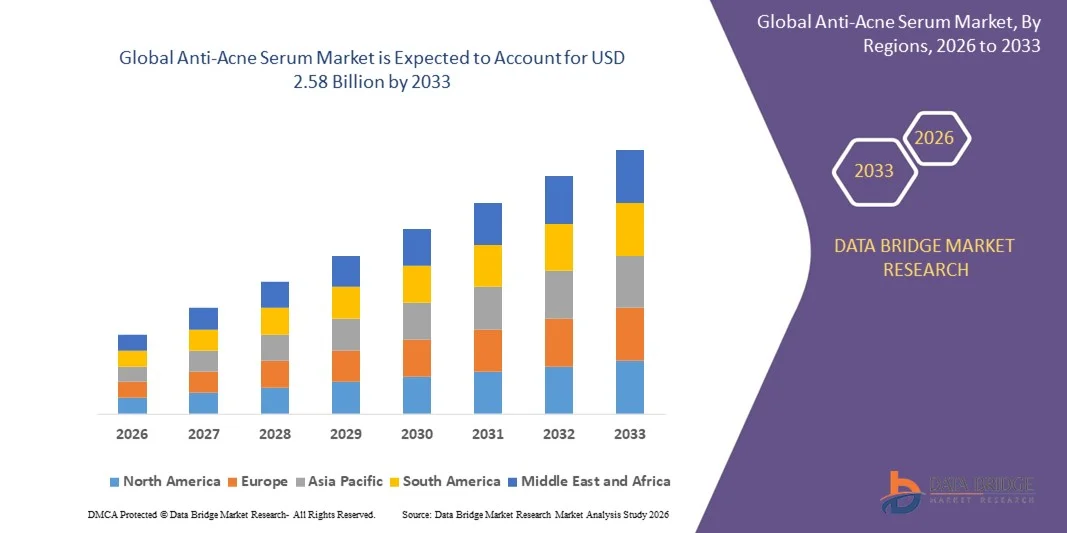
- The global anti-acne serum market size was valued at USD 1.37 billion in 2025 and is expected to reach USD 2.58 billion by 2033, at a CAGR of 8.2% during the forecast period
- The market growth is largely fueled by the rising awareness of skincare and increasing prevalence of acne among teenagers and adults, leading to growing adoption of targeted anti-acne serums in daily skincare routines
- Furthermore, the demand for multifunctional serums that treat acne and also improve skin tone, hydration, and texture is establishing anti-acne serums as a preferred solution among consumers. These converging factors are accelerating the adoption of anti-acne serums, thereby significantly boosting the market's growth
Anti-Acne Serum Market Analysis
- Anti-acne serums, offering concentrated formulations with acne-fighting ingredients such as salicylic acid, niacinamide, and retinol, are increasingly important in personal skincare regimens due to their effectiveness in controlling breakouts and preventing post-acne marks
- The escalating demand for anti-acne serums is primarily fueled by growing consumer focus on clear skin, increasing availability of dermatologically tested products, and the rising popularity of online and offline skincare retail channels that provide easy access to specialized acne solutions
- North America dominated anti-acne serum market with a share of around 50% in 2025, due to rising awareness of skincare routines, increased prevalence of acne among teenagers and adults, and strong demand for clinically tested solutions
- Asia-Pacific is expected to be the fastest growing region in the anti-acne serum market during the forecast period due to rising acne prevalence, increasing disposable incomes, and growing skincare awareness in countries such as China, Japan, and India
- Natural segment dominated the market with a market share of 47.6% in 2025, due to rising consumer preference for plant-derived actives and herbal formulations that reduce acne without harsh chemicals. Serums formulated with natural ingredients such as tea tree oil, aloe vera, and green tea extract are highly valued for their antimicrobial and anti-inflammatory benefits, which help in controlling breakouts while nourishing the skin. The increasing trust in clean beauty and sustainability further reinforces the dominance of natural ingredient-based serums
Report Scope and Anti-Acne Serum Market Segmentation
|
Attributes |
Anti-Acne Serum Key Market Insights |
|
Segments Covered |
|
|
Countries Covered |
North America
Europe
Asia-Pacific
Middle East and Africa
South America
|
|
Key Market Players |
|
|
Market Opportunities |
|
|
Value Added Data Infosets |
In addition to the insights on market scenarios such as market value, growth rate, segmentation, geographical coverage, and major players, the market reports curated by the Data Bridge Market Research also include in-depth expert analysis, pricing analysis, brand share analysis, consumer survey, demography analysis, supply chain analysis, value chain analysis, raw material/consumables overview, vendor selection criteria, PESTLE Analysis, Porter Analysis, and regulatory framework. |
Anti-Acne Serum Market Trends
Rising Demand for Multifunctional and Targeted Skincare Solutions
- A significant trend in the anti-acne serum market is the increasing demand for multifunctional serums that target acne and also improve skin hydration, reduce post-acne marks, and enhance overall skin texture. Consumers are seeking products that provide visible results while being suitable for sensitive skin, reflecting a shift toward integrated skincare solutions rather than single-purpose treatments
- For instance, brands such as CeraVe and Murad LLC. offer serums that combine acne-fighting actives such as salicylic acid and niacinamide with hydrating ingredients such as hyaluronic acid. These products cater to consumer demand for daily-use serums that address multiple skin concerns simultaneously, elevating brand recognition and loyalty
- The market is also witnessing growth in formulations incorporating antioxidants and brightening agents, enabling serums to manage both active breakouts and post-acne pigmentation. This is positioning anti-acne serums as essential components in modern skincare routines, increasingly recommended by dermatologists and influencers alike
- In addition, the rise of personalized skincare regimens is driving consumers to select serums tailored to their skin type, acne severity, and lifestyle, further boosting demand for multifunctional anti-acne products
- The increasing popularity of clean beauty and vegan formulations is shaping product development, with brands integrating natural extracts alongside clinically tested acne actives to appeal to environmentally conscious and health-aware consumers
- Overall, the market trend toward multifunctional, targeted, and dermatologically supported anti-acne serums is enhancing adoption rates, expanding product portfolios, and encouraging innovation across leading skincare companies
Anti-Acne Serum Market Dynamics
Driver
Growing Consumer Awareness of Acne and Skincare Regimens
- The rising consumer awareness about acne, its causes, and effective treatment options is driving the adoption of anti-acne serums across global markets. Consumers are increasingly informed about the benefits of active ingredients such as salicylic acid, niacinamide, retinol, and tea tree oil, and are integrating serums into daily skincare routines for preventive and corrective care
- For instance, PCA Skin and iS Clinical actively promote acne-targeted serums with educational campaigns highlighting ingredient efficacy, product application techniques, and long-term skin health benefits. These initiatives strengthen consumer confidence and encourage repeated usage
- The growing availability of dermatologically tested and clinically backed formulations is reinforcing consumer trust in anti-acne serums, encouraging both first-time buyers and repeat customers
- E-commerce platforms and online skincare consultations have also accelerated product adoption, enabling consumers to access expert recommendations and personalized product selections, which drives higher market penetration
- Overall, rising awareness regarding acne and skincare regimens is a core driver, positioning anti-acne serums as a must-have solution for effective skin management and daily preventive care
Restraint/Challenge
High Competition from Affordable and Generic Acne Care Products
- The anti-acne serum market faces significant challenges due to intense competition from low-cost and generic acne treatment alternatives, including over-the-counter gels, creams, and DIY home remedies. These affordable options often target price-sensitive consumers and can limit the market share of premium and clinically formulated serums
- For instance, brands such as The Ordinary and WOW Skin Science offer budget-friendly acne-fighting serums that are widely accessible in online and offline channels, increasing price competition for established premium players such as Murad LLC. and PCA Skin
- The presence of numerous local and regional brands offering similar active ingredients at lower prices intensifies competitive pressure, challenging manufacturers to differentiate their products through clinical efficacy, multifunctional benefits, or brand reputation
- This competitive environment forces premium brands to invest in product innovation, marketing campaigns, and educational initiatives to communicate superior benefits and justify higher pricing
- The market continues to encounter hurdles in balancing quality, efficacy, and affordability while maintaining brand differentiation, making competitive positioning a persistent challenge for anti-acne serum manufacturers
Anti-Acne Serum Market Scope
The market is segmented on the basis of type, skin, ingredients, price range, gender, and distribution channel.
- By Type
On the basis of type, the anti-acne serum market is segmented into soap-based cleansing, amino acid cleansing, and others. The amino acid cleansing segment dominated the market with the largest revenue share in 2025, driven by its gentle yet effective formulation that minimizes skin irritation while targeting acne-causing bacteria. Consumers increasingly prefer amino acid cleansers for their compatibility with sensitive and acne-prone skin, providing a balanced cleansing experience without stripping essential moisture. The popularity of amino acid-based products is further enhanced by their ability to integrate with serums and other skincare routines, boosting overall treatment efficacy and consumer trust.
The soap-based cleansing segment is anticipated to witness the fastest growth rate from 2026 to 2033, fueled by rising consumer awareness of natural cleansing options and convenience in daily skincare routines. For instance, companies such as Neutrogena have introduced innovative soap-based anti-acne solutions that combine deep cleansing with acne-fighting actives, attracting both young adults and professionals. Soap-based types also benefit from their affordability and easy availability in offline and online retail channels, which drives adoption across emerging markets.
- By Skin
On the basis of skin type, the anti-acne serum market is segmented into oily skin, normal skin, sensitive skin, dry skin, and combination skin. The oily skin segment dominated the market in 2025, driven by the high prevalence of acne among individuals with excess sebum production and the demand for formulations that control oil while preventing breakouts. Consumers with oily skin prefer serums that provide targeted acne treatment without causing additional dryness or irritation, making them a consistent choice in personal skincare regimens. The market also sees strong adoption due to the availability of multi-benefit formulations that combine oil control with hydration and anti-inflammatory properties.
The sensitive skin segment is expected to register the fastest CAGR from 2026 to 2033, driven by increasing demand for hypoallergenic and dermatologically tested anti-acne serums. For instance, La Roche-Posay has launched sensitive skin-targeted anti-acne serums that reduce redness and irritation while effectively controlling acne, gaining popularity among users seeking gentle yet effective treatments. Consumers with sensitive skin increasingly seek products with minimal chemical irritants and soothing botanicals, boosting growth for this segment.
- By Ingredients
On the basis of ingredients, the anti-acne serum market is segmented into vegan, organic, natural, and synthetic. The natural ingredients segment dominated the market with the largest share of 47.6% in 2025, driven by rising consumer preference for plant-derived actives and herbal formulations that reduce acne without harsh chemicals. Serums formulated with natural ingredients such as tea tree oil, aloe vera, and green tea extract are highly valued for their antimicrobial and anti-inflammatory benefits, which help in controlling breakouts while nourishing the skin. The increasing trust in clean beauty and sustainability further reinforces the dominance of natural ingredient-based serums.
The vegan segment is anticipated to witness the fastest growth rate from 2026 to 2033, fueled by rising awareness of cruelty-free skincare and ethical consumption. For instance, The Body Shop has promoted vegan anti-acne serums that appeal to environmentally conscious consumers seeking effective acne solutions without animal-derived ingredients. The popularity of vegan formulations is also supported by the growing influence of social media and wellness-focused lifestyle trends, accelerating adoption globally.
- By Price Range
On the basis of price range, the anti-acne serum market is segmented into low, medium, and high. The medium price range segment dominated the market in 2025, driven by its balanced combination of affordability and product efficacy, catering to middle-income consumers seeking effective acne treatment without premium costs. Consumers perceive medium-range serums as offering good value, often incorporating active ingredients such as salicylic acid, niacinamide, or retinol that provide visible results. The widespread availability of medium-priced options across both offline and online channels further reinforces its market share.
The high-price segment is expected to witness the fastest CAGR from 2026 to 2033, fueled by rising demand for luxury and dermatologist-recommended anti-acne solutions. For instance, brands such as Murad offer high-end serums with advanced formulations targeting stubborn acne and post-acne scars, attracting premium consumers. The growth is supported by increased disposable income and the perception of high-priced products delivering superior efficacy and skin benefits.
- By Gender
On the basis of gender, the anti-acne serum market is segmented into male and female. The female segment dominated the market in 2025, driven by higher skincare engagement among women and a broader range of anti-acne product offerings tailored to their needs. Female consumers increasingly prefer serums that combine acne treatment with additional benefits such as hydration, brightening, and anti-aging, contributing to stronger adoption. The market is further strengthened by targeted marketing campaigns and influencer endorsements that resonate with female audiences.
The male segment is anticipated to witness the fastest growth rate from 2026 to 2033, fueled by the rising awareness of male-specific skincare and acne concerns. For instance, brands such as Bulldog Skincare offer anti-acne serums designed for men’s oilier and thicker skin, driving product adoption. The growth is supported by increasing social acceptance of male grooming and skincare, expanding the consumer base.
- By Distribution Channel
On the basis of distribution channel, the anti-acne serum market is segmented into offline and online. The offline segment dominated the market in 2025, driven by the presence of established retail pharmacies, beauty stores, and dermatology clinics that allow consumers to physically examine products before purchase. Consumers often prefer offline channels for personalized guidance, consultations, and immediate product availability, which enhances trust in anti-acne solutions. The dominance is further supported by brand loyalty and widespread retail penetration in urban and semi-urban areas.
The online segment is expected to witness the fastest CAGR from 2026 to 2033, fueled by increasing e-commerce penetration, digital marketing, and consumer convenience. For instance, Amazon and Nykaa provide a wide variety of anti-acne serums with user reviews and doorstep delivery, making online shopping highly appealing. The growth is also driven by younger consumers’ preference for online platforms and subscription-based skincare models that simplify repurchasing.
Anti-Acne Serum Market Regional Analysis
- North America dominated the anti-acne serum market with the largest revenue share of around 50% in 2025, driven by rising awareness of skincare routines, increased prevalence of acne among teenagers and adults, and strong demand for clinically tested solutions
- Consumers in the region highly value effective formulations that target acne while improving overall skin health, with preference for serums offering additional benefits such as hydration and oil control
- This widespread adoption is further supported by high disposable incomes, advanced retail infrastructure, and growing online and offline accessibility of premium and mid-range anti-acne products, establishing anti-acne serums as a preferred solution among consumers
U.S. Anti-Acne Serum Market Insight
The U.S. anti-acne serum market captured the largest revenue share in 2025 within North America, fueled by increasing skincare awareness and the preference for targeted acne treatments. Consumers are prioritizing products with clinically proven actives such as salicylic acid, niacinamide, and retinol. The rising trend of personalized skincare regimens and the availability of dermatologist-recommended serums further drives the market. In addition, strong e-commerce penetration, subscription-based models, and product reviews enhance consumer confidence and expand market reach.
Europe Anti-Acne Serum Market Insight
The Europe anti-acne serum market is projected to expand at a substantial CAGR during the forecast period, driven by the growing focus on skincare, awareness of dermatologically tested products, and increasing disposable income. Consumers are seeking effective anti-acne solutions that are gentle and compatible with sensitive skin. The demand for natural and organic ingredient-based serums is also fostering growth. The market is witnessing strong adoption across major countries such as Germany, France, and the U.K., with retail pharmacies and e-commerce channels playing a key role.
U.K. Anti-Acne Serum Market Insight
The U.K. anti-acne serum market is anticipated to grow at a noteworthy CAGR during the forecast period, driven by increasing awareness of acne management and preventive skincare. Rising concerns regarding adult acne and teenage skin issues are motivating consumers to adopt effective serums. The U.K.’s mature retail and e-commerce ecosystem, along with strong marketing campaigns, continues to stimulate market growth.
Germany Anti-Acne Serum Market Insight
The Germany anti-acne serum market is expected to expand at a considerable CAGR during the forecast period, fueled by high consumer awareness of skin health, preference for scientifically backed formulations, and a demand for premium skincare products. Germany’s strong pharmaceutical and cosmetic industries, combined with robust retail channels, promote adoption of anti-acne serums. Consumers are increasingly opting for products with natural, vegan, or organic ingredients, aligning with local demand for sustainability and efficacy.
Asia-Pacific Anti-Acne Serum Market Insight
The Asia-Pacific anti-acne serum market is poised to grow at the fastest CAGR during the forecast period of 2026 to 2033, driven by rising acne prevalence, increasing disposable incomes, and growing skincare awareness in countries such as China, Japan, and India. Rapid urbanization, government initiatives promoting health and wellness, and the popularity of beauty and skincare trends are driving adoption of anti-acne serums. The region is also witnessing strong e-commerce penetration and affordability of products, making effective solutions accessible to a broader consumer base.
Japan Anti-Acne Serum Market Insight
The Japan anti-acne serum market is gaining momentum due to rising awareness of skincare routines, the country’s high standards for product efficacy, and the increasing demand for preventive acne treatments. Consumers are opting for serums integrated with multifunctional benefits such as moisturizing, brightening, and anti-aging. Moreover, Japan’s aging population and tech-savvy consumers are increasingly adopting online platforms to purchase dermatologically tested and premium anti-acne solutions.
China Anti-Acne Serum Market Insight
The China anti-acne serum market accounted for the largest revenue share in Asia-Pacific in 2025, driven by rapid urbanization, growing middle-class population, and high skincare awareness. Consumers increasingly prefer serums that address acne while improving skin texture and overall health. The rise of social media influence, beauty bloggers, and domestic skincare brands offering affordable yet effective serums are key factors propelling the market. Furthermore, expansion of online retail channels enhances product accessibility across urban and semi-urban regions.
Anti-Acne Serum Market Share
The anti-acne serum industry is primarily led by well-established companies, including:
- CeraVe (U.S.)
- GM COLLIN (France)
- PCA Skin (U.S.)
- Sunday Riley (U.S.)
- Murad LLC (U.S.)
- iS Clinical (U.S.)
- WOW Skin Science (India)
- L’Oréal (France)
- Estée Lauder Inc. (U.S.)
- Shiseido (Japan)
- Unilever (U.K.)
- Beiersdorf (Germany)
- Glossier (U.S.)
- Dermalogica (U.S.)
- Mario Badescu Skin Care, Inc. (U.S.)
- The Ordinary (Canada)
- Neutrogena (U.S.)
Latest Developments in Global Anti-Acne Serum Market
- In December 2025, K‑beauty brand Saranghae launched the Advanced Brightening Dark Spot Repair Serum, which targets both acne and post-acne marks. This launch strengthened the brand’s foothold in the anti-blemish and acne care segments by combining acne-fighting ingredients with brightening actives that reduce pigmentation. The product appeals to consumers seeking multifunctional solutions that treat breakouts while improving skin tone. By addressing both prevention and post-acne recovery, Saranghae expanded its consumer base across teenagers and adults. The launch also highlights the market trend of integrating skincare science with aesthetic results, boosting brand visibility in premium and online retail channels
- In August 2025, Murad introduced the Biome-Balancing Clear & Prevent Acne Treatment Serum, featuring salicylic acid and innovative biome-balancing technology. This serum supports a healthier skin microbiome while targeting acne, appealing to health-conscious consumers seeking advanced, science-backed solutions. The launch reinforced Murad’s market position in therapeutic and premium acne care segments. By focusing on microbiome health alongside traditional acne control, the product meets growing consumer demand for holistic skin wellness. The development reflects the industry trend of combining clinical efficacy with skin health benefits, enhancing consumer trust and brand loyalty
- In May 2024, HYPHEN launched the HYPHEN Acne Defense Serum containing 16% acne-fighting chemicals in a lightweight formulation. This high-potency serum strengthened HYPHEN’s presence in the active-treatment segment of the market. The product attracted consumers seeking fast-acting solutions for moderate to severe acne without heaviness or greasiness. By offering a concentrated formulation, HYPHEN positioned itself as a specialist acne brand catering to young adults and skincare enthusiasts. The launch also underscores the rising consumer preference for products that combine clinical strength with user-friendly textures
- In March 2024, Dove introduced an acne-clear serum-based body wash containing 1% salicylic acid, expanding its product line into daily acne prevention for body skin. This development enhanced Dove’s portfolio by integrating anti-acne benefits into routine hygiene products, appealing to consumers looking for convenient and preventive solutions. By targeting body acne in addition to facial acne, the brand captured a broader market segment. The launch also highlighted the trend of merging treatment and cleansing functions in single formulations, improving adherence to acne-care routines
- In January 2024, VLCC launched a serum-based facewash range with eight variants powered by salicylic acid, vitamin C, and hyaluronic acid, offering multifunctional solutions that control acne while providing hydration and brightening benefits. This range strengthened VLCC’s competitive position by addressing diverse consumer needs across different skin types and concerns. The inclusion of antioxidants and moisturizers alongside acne-fighting actives highlighted a holistic approach to skincare. The launch attracted consumers seeking daily-use products that deliver visible results without compromising skin health. By combining treatment and nourishment, VLCC reinforced its brand presence in both offline and online retail channels
SKU-
Get online access to the report on the World's First Market Intelligence Cloud
- Interactive Data Analysis Dashboard
- Company Analysis Dashboard for high growth potential opportunities
- Research Analyst Access for customization & queries
- Competitor Analysis with Interactive dashboard
- Latest News, Updates & Trend analysis
- Harness the Power of Benchmark Analysis for Comprehensive Competitor Tracking
Research Methodology
Data collection and base year analysis are done using data collection modules with large sample sizes. The stage includes obtaining market information or related data through various sources and strategies. It includes examining and planning all the data acquired from the past in advance. It likewise envelops the examination of information inconsistencies seen across different information sources. The market data is analysed and estimated using market statistical and coherent models. Also, market share analysis and key trend analysis are the major success factors in the market report. To know more, please request an analyst call or drop down your inquiry.
The key research methodology used by DBMR research team is data triangulation which involves data mining, analysis of the impact of data variables on the market and primary (industry expert) validation. Data models include Vendor Positioning Grid, Market Time Line Analysis, Market Overview and Guide, Company Positioning Grid, Patent Analysis, Pricing Analysis, Company Market Share Analysis, Standards of Measurement, Global versus Regional and Vendor Share Analysis. To know more about the research methodology, drop in an inquiry to speak to our industry experts.
Customization Available
Data Bridge Market Research is a leader in advanced formative research. We take pride in servicing our existing and new customers with data and analysis that match and suits their goal. The report can be customized to include price trend analysis of target brands understanding the market for additional countries (ask for the list of countries), clinical trial results data, literature review, refurbished market and product base analysis. Market analysis of target competitors can be analyzed from technology-based analysis to market portfolio strategies. We can add as many competitors that you require data about in the format and data style you are looking for. Our team of analysts can also provide you data in crude raw excel files pivot tables (Fact book) or can assist you in creating presentations from the data sets available in the report.