Europe Veterinary Infusion Pumps Market
Market Size in USD Billion
CAGR :
% 
 USD
88.05 Billion
USD
180.66 Billion
2025
2033
USD
88.05 Billion
USD
180.66 Billion
2025
2033
 Forecast Period Forecast Period |
2026 –2033 |
 Market Size (Base Year) Market Size (Base Year) |
USD 88.05 Billion |
 Market Size (Forecast Year) Market Size (Forecast Year) |
USD 180.66 Billion |
 CAGR CAGR |
% |
| Major Markets Players |
|
Europe Veterinary Infusion Pumps Market Size
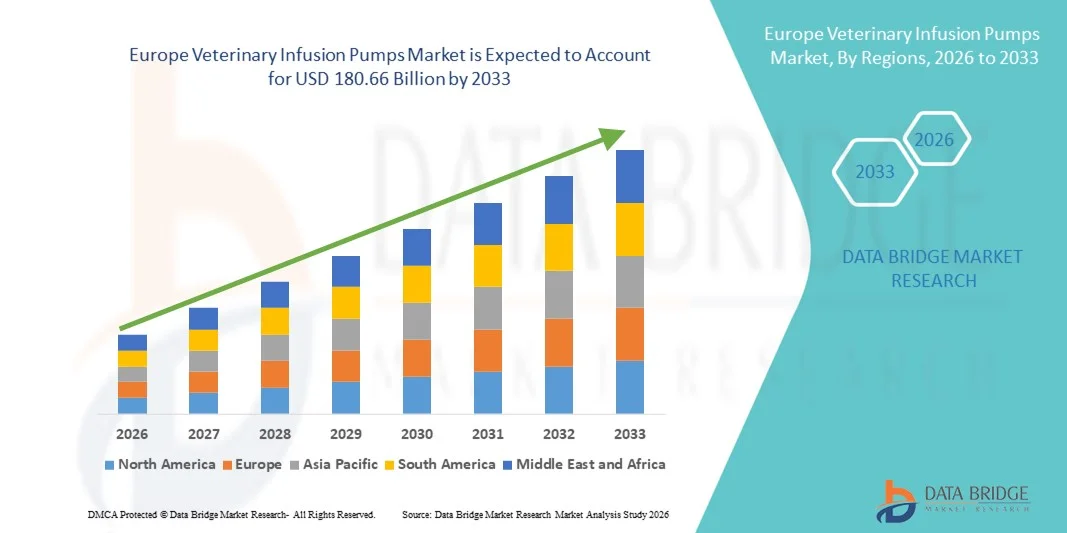
- The Europe veterinary infusion pumps market size was valued at USD 88.05 billion in 2025 and is expected to reach USD 180.66 billion by 2033, at a CAGR of 9.40% during the forecast period
- The market growth is largely fueled by the increasing adoption of advanced veterinary medical equipment and continuous technological progress in infusion pump systems, leading to greater automation and precision in drug and fluid delivery across veterinary hospitals, clinics, and research facilities. Rising awareness of animal health and the growing demand for high-quality veterinary care are accelerating digitalization in both companion and livestock healthcare settings
- Furthermore, rising demand for accurate, safe, and user-friendly infusion solutions for animals is establishing veterinary infusion pumps as essential tools in modern veterinary treatment and critical care. These converging factors — including growth in pet ownership, increasing expenditure on animal healthcare, and expanding veterinary infrastructure — are significantly accelerating the uptake of Veterinary Infusion Pumps solutions, thereby boosting overall market growth
Europe Veterinary Infusion Pumps Market Analysis
- Veterinary infusion pumps, which enable precise and controlled delivery of fluids, nutrients, and medications to animals, are becoming essential components of modern veterinary care across clinics, hospitals, and research facilities. Their ability to enhance treatment accuracy, reduce medication errors, and support critical care procedures is driving increased adoption in both companion animal and livestock healthcare settings
- The escalating demand for veterinary infusion pumps is primarily fueled by the rising pet ownership rates, growing awareness of animal health, and increasing preference for advanced, user-friendly, and automated veterinary medical devices. Technological advancements such as programmable pumps, portable designs, and improved safety features are further strengthening market growth
- The U.K. dominated the veterinary infusion pumps market with the largest revenue share of approximately 32.4% in 2025, supported by a well-established veterinary healthcare system, high expenditure on companion animal care, strong presence of advanced veterinary clinics, and widespread adoption of modern medical devices across animal hospitals and specialty centers
- Germany is expected to be the fastest-growing region in the veterinary infusion pumps market during the forecast period, driven by expanding veterinary infrastructure, increasing investments in animal healthcare, rising livestock health management initiatives, and growing adoption of technologically advanced infusion systems across clinics and research institutions
- The Stationary segment held the largest market share of 60.3% in 2025, driven by extensive use in fixed veterinary facilities such as hospitals, research labs, and large clinics
Report Scope and Veterinary Infusion Pumps Market Segmentation
|
Attributes |
Veterinary Infusion Pumps Key Market Insights |
|
Segments Covered |
|
|
Countries Covered |
Europe
|
|
Key Market Players |
Farmmedix (India) |
|
Market Opportunities |
|
|
Value Added Data Infosets |
In addition to the insights on market scenarios such as market value, growth rate, segmentation, geographical coverage, and major players, the market reports curated by the Data Bridge Market Research also include in-depth expert analysis, patient epidemiology, pipeline analysis, pricing analysis, and regulatory framework. |
Europe Veterinary Infusion Pumps Market Trends
Advancements in Precision Dosing and Smart Monitoring Technologies
- A significant and accelerating trend in the global veterinary infusion pumps market is the growing focus on precision dosing and enhanced monitoring capabilities to ensure accurate and safe drug delivery in animals of different sizes and species. Modern veterinary infusion pumps are increasingly designed to deliver highly controlled fluid volumes, minimizing medication errors and improving treatment outcomes in both companion animals and livestock
- For instance, leading veterinary medical device manufacturers are introducing infusion pumps with programmable flow rates and dosage calculation features tailored specifically for veterinary use, enabling veterinarians to administer fluids, anesthesia, and medications with greater accuracy during critical care and surgical procedures
- Another notable trend is the integration of digital interfaces and monitoring displays that allow veterinary professionals to closely track infusion parameters such as flow rate, volume infused, and alarm alerts in real time. These features enhance clinical efficiency and reduce the risk of over- or under-infusion during prolonged treatments
- The increasing adoption of portable and compact veterinary infusion pumps represents a third major trend, driven by rising demand from mobile veterinary services, animal clinics, and field-based livestock care. Lightweight and battery-operated infusion pumps are gaining popularity as they provide flexibility and ease of use across diverse veterinary settings
- The growing emphasis on animal welfare and advanced veterinary care standards is encouraging clinics and hospitals to upgrade from manual infusion methods to automated veterinary infusion pump systems, supporting consistent and controlled therapy delivery
- As veterinary practices continue to modernize globally, the demand for technologically advanced, reliable, and easy-to-use veterinary infusion pumps is expected to increase steadily across companion animal, livestock, and research applications
Europe Veterinary Infusion Pumps Market Dynamics
Driver
Rising Demand for Advanced Veterinary Care and Increasing Pet Adoption
- The increasing demand for advanced veterinary healthcare services, supported by rising pet ownership and growing awareness of animal health, is a key driver fueling the global Veterinary Infusion Pumps market
- Pet owners are increasingly seeking high-quality medical care for companion animals, including surgical procedures, critical care, and chronic disease management, all of which require precise fluid and drug administration
- For instance, the expansion of veterinary hospitals, specialty clinics, and emergency care centers across developed and emerging markets is driving the adoption of infusion pumps to improve treatment accuracy and patient safety
- The growing prevalence of chronic conditions and age-related illnesses in companion animals further boosts the need for controlled infusion therapy, positioning veterinary infusion pumps as essential equipment in modern veterinary practices
- In addition, the increasing focus on improving livestock health and productivity is supporting the use of infusion pumps in large animal care, particularly for hydration therapy and medication delivery during disease outbreaks or recovery periods
Restraint/Challenge
High Equipment Costs and Limited Adoption in Price-Sensitive Regions
- The relatively high cost of advanced veterinary infusion pump systems compared to traditional manual infusion methods remains a significant challenge for market growth, particularly in small veterinary clinics and price-sensitive regions
- For instance, several rural veterinary clinics in Southeast Asia and Africa have reported delays in adopting automated infusion pumps due to budget constraints and limited access to financing, relying instead on gravity-based systems for fluid administration
- In addition, the need for regular maintenance, calibration, and staff training associated with infusion pump usage can increase operational costs, further discouraging adoption among smaller or rural veterinary facilities
- While manufacturers are gradually introducing more affordable and user-friendly models, the perception of veterinary infusion pumps as high-cost equipment continues to restrain market penetration in certain regions
- Addressing these challenges through cost-effective product offerings, increased awareness of long-term clinical benefits, and training initiatives for veterinary professionals will be critical for sustained growth in the global veterinary infusion pumps market
Europe Veterinary Infusion Pumps Market Scope
The Veterinary Infusion Pumps market is segmented on the basis of type, infusion type, model type, mobility, infusion mode, channel type, animal type, end user, and distribution channel.
- By Type
On the basis of type, the Veterinary Infusion Pumps market is segmented into Infusion Devices, Administration Sets, and Pump Accessories. The Infusion Devices segment dominated the market with the largest revenue share of 52.4% in 2025, driven by the increasing adoption of advanced infusion technologies across veterinary hospitals and clinics. Infusion devices provide precise and controlled drug or fluid delivery, which is critical for both surgical and emergency care. Their programmable features, dose accuracy, and compatibility with multiple medications make them essential in routine and complex treatments. Veterinary hospitals prioritize these devices due to the need for reliable infusion during anesthesia, intensive care, and chronic condition management. The rise in companion animal healthcare spending, along with growing awareness about veterinary treatment standards, has further strengthened demand. Technological advancements such as smart alarms, digital monitoring, and automated dose adjustments enhance safety and efficiency, encouraging hospitals to invest in modern infusion devices. Their long lifecycle and integration with existing veterinary workflows ensure consistent utilization. In addition, the devices’ ability to support multiple infusion modes and rates increases clinical flexibility. The adoption is also supported by veterinary associations recommending precise infusion techniques to improve treatment outcomes. Overall, infusion devices remain the backbone of the veterinary infusion pumps market.
The Administration Sets segment is anticipated to witness the fastest CAGR of 9.8% from 2026 to 2033, driven by their essential role as consumable components that ensure hygiene and prevent cross-contamination during therapy. These sets are frequently replaced, creating recurring demand in clinics, hospitals, and homecare settings. The growth is accelerated by increasing veterinary procedures and surgeries, expanding livestock healthcare initiatives, and rising pet ownership in emerging economies. Administration sets are critical in ensuring compliance with infection control protocols, which are increasingly emphasized in veterinary standards. The demand is also bolstered by technological improvements, such as kink-resistant tubing, anti-bolus safety features, and compatibility with smart infusion devices. Veterinary clinics and mobile care units prefer standardized administration sets for efficiency and ease of use. Additionally, adoption is supported by cost-effectiveness and regulatory compliance requirements. With the trend toward minimally invasive treatments and continuous infusion therapies, administration sets are expected to see sustained growth. Emerging markets with growing veterinary infrastructure also contribute to accelerated demand. Manufacturers are increasingly innovating in disposable, high-quality administration sets to meet global veterinary standards.
- By Infusion Type
On the basis of infusion type, the market is segmented into Continuous Infusion and Intermittent Infusion. The Continuous Infusion segment accounted for the largest market revenue share of 58.1% in 2025, due to its widespread use in critical care, anesthesia, and long-duration treatments in veterinary settings. Continuous infusion ensures stable and controlled drug delivery, maintaining therapeutic levels and minimizing the risk of dosing errors. Veterinary hospitals rely on this method for intensive monitoring, post-operative care, and management of severe illnesses in both companion and farm animals. The adoption is driven by advancements in programmable infusion pumps, integration with smart monitoring systems, and precise flow control technologies. Increased awareness of animal welfare and chronic disease management has further strengthened the segment. The high prevalence of companion animal treatments requiring long-term infusions supports steady demand. Regulatory guidelines encouraging accurate dosing and infection prevention also favor continuous infusion. Hospitals and clinics invest in continuous infusion systems to improve workflow efficiency and patient safety. The segment’s dominance is reinforced by its versatility in delivering fluids, nutrition, and medication across multiple animal species. Continuous infusion pumps also integrate with alarm systems to prevent medication errors. Availability of advanced monitoring features ensures accurate therapy outcomes. Overall, continuous infusion remains critical for veterinary care.
The Intermittent Infusion segment is projected to grow at the fastest CAGR of 10.4% from 2026 to 2033, owing to its flexibility for short-term or periodic medication administration. Intermittent infusion is widely used in outpatient procedures, routine veterinary care, and field treatments in livestock management. It allows veterinarians to efficiently manage dosing schedules for multiple animals without over-reliance on continuous infusion devices. Increasing adoption in companion animal homecare and mobile veterinary units accelerates demand. Technological enhancements such as automated timers, programmable intermittent dosing, and lightweight pumps improve convenience and safety. Clinics in emerging markets favor intermittent infusion systems due to lower upfront costs and ease of deployment. Growing demand for cost-effective veterinary care and minimal resource utilization contributes to market growth. Awareness campaigns promoting precise medication delivery for animals further support expansion. Integration with multi-channel pumps enables simultaneous administration of different drugs. Veterinarians also prefer intermittent infusion for procedures where precise timing and repeated dosing are critical. As veterinary homecare expands, this segment is expected to grow rapidly. The combination of efficiency, flexibility, and patient safety underpins its high CAGR.
- By Model Type
On the basis of model type, the market is segmented into With Power Cord and Battery Operated. The With Power Cord segment dominated the market with a revenue share of 55.7% in 2025, primarily due to its high reliability and suitability for stationary setups in veterinary hospitals and clinics. Corded pumps provide continuous power supply for long-duration treatments, ensuring precise infusion without interruptions. Hospitals favor corded models for surgical procedures, critical care, and multi-hour therapy sessions. Advanced corded infusion devices integrate with monitoring systems to improve safety and treatment efficiency. Long operational life and reduced maintenance costs contribute to sustained adoption. Veterinary professionals rely on corded pumps to manage complex dosing requirements, including multi-drug regimens. Compatibility with various infusion modes and accessories further supports dominance. Regulatory standards for veterinary care reinforce usage of corded pumps. Corded models are also widely preferred in educational and research veterinary labs. Integration with software platforms enables dose tracking and error reduction. Cost-effectiveness for high-volume usage ensures continued preference. Corded pumps remain a core segment of the infusion devices market.
The Battery-Operated segment is expected to witness the fastest CAGR of 11.6% from 2026 to 2033, driven by growing demand for portable and flexible treatment solutions. Battery-operated pumps are ideal for emergency response, mobile veterinary clinics, ambulatory treatments, and homecare environments. Increasing focus on companion animal homecare and field livestock management is fueling adoption. Improvements in battery life, lightweight design, and programmable features enhance usability and efficiency. Portable pumps support intermittent and continuous therapy with high accuracy. Veterinary clinics in emerging economies prefer battery-operated models due to lower infrastructure requirements. Rising investments in mobile veterinary services and telemedicine further support growth. Safety features such as automatic alarms and digital dose tracking reduce human errors. Technological innovations improve portability while maintaining high precision. Growing preference for animal welfare and convenience drives market expansion. As mobile veterinary care becomes more prevalent, battery-operated pumps are expected to gain significant market share.
- By Mobility
On the basis of mobility, the market is segmented into Stationary and Portable. The Stationary segment held the largest market share of 60.3% in 2025, driven by extensive use in fixed veterinary facilities such as hospitals, research labs, and large clinics. Stationary pumps are preferred for their high reliability, accuracy, and ability to handle multiple infusion modes simultaneously. These pumps are often integrated into critical care units and surgical suites, providing precise dosing for prolonged treatments. Veterinary hospitals rely on stationary systems to manage chronic diseases, anesthesia, and complex fluid therapies. Their durability, advanced control features, and compatibility with automated monitoring systems make them essential in high-volume facilities. Regulatory compliance and safety standards further support adoption. Stationary pumps also allow continuous operation without interruption, improving patient care. Long service life and reduced maintenance requirements enhance cost-effectiveness. They support multiple channel infusion, making them suitable for multi-drug therapy. Integration with alarm and monitoring systems ensures patient safety and accurate drug delivery. Overall, stationary pumps remain the backbone of the veterinary infusion market.
The Portable segment is anticipated to grow at the fastest CAGR of 12.2% from 2026 to 2033, driven by rising demand for mobile and homecare veterinary services. Portable pumps enable veterinarians to deliver treatment in remote locations, on farms, and in emergency situations. Lightweight designs, long battery life, and programmable infusion modes enhance usability and clinical flexibility. Increasing pet ownership and aging companion animals requiring home treatment are major growth drivers. Adoption in field livestock care programs is also accelerating. Technological improvements, such as integrated alarms and digital monitoring, increase safety and precision. Portable pumps reduce infrastructure dependency and allow clinics to expand service reach. Rising interest in outpatient and mobile veterinary procedures fuels market expansion. They support both continuous and intermittent infusion modes efficiently. Cost-effective and easy-to-transport models further encourage adoption. Emerging markets with growing veterinary infrastructure are increasingly adopting portable systems. As convenience and accessibility become priority factors, portable pumps are expected to witness rapid growth.
- By Infusion Mode
On the basis of infusion mode, the market is segmented into Rate Mode, Time Mode, Dose Mode, and Others. The Rate Mode segment dominated the market with a revenue share of 47.9% in 2025, due to its simplicity, reliability, and widespread clinical usage in veterinary care. Rate-based infusion allows precise control over fluid delivery speed, making it suitable for routine veterinary treatments, anesthesia, and postoperative care. Veterinary professionals prefer rate mode pumps for their ease of operation, reduced training requirements, and compatibility with multiple drug formulations. These pumps are extensively used in hospitals and clinics where high throughput and accuracy are essential. Integration with smart monitoring systems and alarms ensures safe and consistent therapy. The segment benefits from widespread adoption across companion and food-producing animal care. Veterinary care protocols emphasizing accurate infusion support continued use. Rate mode pumps are compatible with both stationary and portable models, increasing versatility. Long-term reliability and cost-effectiveness enhance market dominance. Technological advances have improved precision, supporting the segment’s growth. The rate mode continues to be critical for ensuring predictable infusion outcomes in all veterinary settings.
The Dose Mode segment is projected to register the fastest CAGR of 10.9% from 2026 to 2033, driven by growing emphasis on precision medicine in veterinary care. Dose-based infusion enables administration of exact drug quantities based on animal size, condition, and therapeutic requirements, reducing human error and improving treatment outcomes. Increased complexity of treatments and regulatory mandates on accurate dosing drive adoption. Veterinary hospitals, clinics, and mobile services are increasingly relying on dose mode for high-risk medications. Technological advancements, including digital dose tracking and programmable alarms, enhance safety and efficiency. Dose mode pumps allow for both intermittent and continuous therapies, increasing clinical flexibility. Rising demand for companion animal homecare further supports growth. Multi-drug regimens in critical care settings benefit from dose-based administration. The segment also gains from training programs emphasizing precise therapeutic delivery. Global adoption of veterinary standards for safety and quality boosts market potential. Veterinary professionals value dose mode pumps for their consistency and adaptability. The segment’s high accuracy and technological integration underpin strong projected CAGR.
- By Channel Type
On the basis of channel type, the market is segmented into Single Channel and Multi-Channel. The Single Channel segment accounted for the largest revenue share of 54.6% in 2025, owing to its simplicity, affordability, and suitability for routine infusion requirements in veterinary clinics and hospitals. Single-channel pumps are widely used for standard procedures such as fluid therapy, medication administration, and anesthesia. Their low maintenance and easy operation make them ideal for small- to medium-sized veterinary practices. Veterinary professionals rely on these pumps for reliability, consistency, and precise fluid delivery. The segment benefits from high adoption in companion animal care and smaller livestock procedures. Compatibility with multiple infusion modes enhances versatility. Hospitals and laboratories prefer single-channel pumps for cost-effective, long-term deployment. Widespread use in teaching and research settings reinforces dominance. Integration with basic monitoring systems ensures safety. Single-channel pumps are also easier to transport for field usage. Overall, single-channel devices provide predictable performance and efficiency, contributing to market leadership.
The Multi-Channel segment is expected to grow at the fastest CAGR of 11.3% from 2026 to 2033, driven by increasing demand for simultaneous administration of multiple drugs in complex treatments. Multi-channel pumps improve workflow efficiency in hospitals, critical care units, and high-volume veterinary clinics. They reduce equipment requirements by allowing multiple infusions through one device. Rising use in companion animal surgeries and intensive care procedures supports growth. Technological improvements, including programmable dosing, alarms, and digital monitoring, enhance safety and treatment precision. Veterinary hospitals adopting advanced care protocols prefer multi-channel systems. Expansion of multi-drug therapies and combination treatments drives market penetration. Adoption in emerging markets is supported by flexible, high-performance designs. Multi-channel pumps also save space and reduce setup complexity. Growing awareness of veterinary safety standards further boosts adoption. The segment’s capacity for complex treatment delivery underpins its strong projected CAGR.
- By Animal Type
On the basis of animal type, the market is segmented into Food Production Animals and Companion Animals. The Companion Animals segment dominated the market with a share of 59.8% in 2025, driven by increasing pet ownership, rising awareness of animal healthcare, and higher spending on veterinary treatments. Companion animals frequently require infusion therapy for chronic conditions, surgeries, and critical care. Growing focus on advanced veterinary procedures and welfare standards supports adoption. Hospitals and clinics invest in pumps for precise therapy management. Technological features such as smart alarms, digital monitoring, and programmable infusion enhance safety and treatment outcomes. The segment benefits from steady demand due to rising chronic diseases in pets. Veterinary professionals increasingly rely on infusion pumps for outpatient homecare as well. Integration with modern veterinary practices ensures high utilization. Regulatory frameworks emphasize safe and precise infusion. The companion animal segment continues to attract innovative solutions from manufacturers. Convenience, accuracy, and care standards reinforce dominance. Overall, companion animals drive market growth and device adoption globally.
The Food Production Animals segment is anticipated to grow at the fastest CAGR of 9.6% from 2026 to 2033, fueled by government initiatives for livestock healthcare, disease prevention, and improved productivity. Growing large-scale farming operations and emphasis on animal welfare accelerate demand. Infusion pumps are increasingly used in veterinary farms for administering antibiotics, vaccines, and nutritional supplements. Portable and battery-operated devices support field treatments and mobile veterinary units. Cost-efficiency and multi-drug capabilities enhance adoption. Rising awareness of biosecurity protocols and food safety regulations encourages infusion therapy adoption. Technological improvements allow precise dosing, reducing drug wastage. Veterinary services in emerging economies are increasingly equipped with advanced pumps. Expansion of livestock healthcare programs, mobile veterinary services, and government subsidies further support market growth. Efficient dosing and treatment delivery are critical for farm animal health. The segment is expected to capture increasing share over the forecast period. Multi-purpose devices accelerate adoption in this sector.
- By End User
On the basis of end user, the market is segmented into Veterinary Hospitals, Veterinary Clinics, Homecare Settings, Laboratories, and Others. The Veterinary Hospitals segment held the largest market revenue share of 46.2% in 2025, driven by high patient volumes, advanced treatment infrastructure, and adoption of technologically sophisticated infusion pumps. Hospitals require reliable systems for surgeries, intensive care, emergency response, and multi-drug administration. Integration with monitoring and alarm systems ensures precise therapy and patient safety. Hospitals often adopt both stationary and multi-channel pumps for higher throughput and efficiency. Investments in modern veterinary infrastructure and government support further boost demand. High-volume companion animal and livestock treatments contribute to sustained usage. Hospitals also benefit from trained staff capable of handling complex procedures. Standardized protocols and regulatory compliance support adoption. Availability of multiple infusion modes ensures flexibility in therapy. Hospitals dominate due to their ability to handle high complexity and long-duration treatments. Advanced features such as dose-based and programmable pumps strengthen market leadership. Overall, veterinary hospitals remain the primary end-user segment.
The Homecare Settings segment is expected to register the fastest CAGR of 12.5% from 2026 to 2033, driven by rising preference for at-home animal care, portable infusion systems, and growing awareness among pet owners. Portable and battery-operated pumps enable treatment in home environments, improving convenience and reducing stress for animals. Increasing elderly pet populations, chronic conditions, and outpatient procedures are major growth drivers. Adoption is accelerated by veterinary telemedicine programs and mobile vet services. Homecare users increasingly require infusion pumps with programmable alarms and digital dose tracking. Lightweight, easy-to-use devices ensure safe and accurate therapy. Technological improvements support multiple infusion modes and drug compatibility. Emerging economies are witnessing growing adoption of veterinary homecare solutions. The segment benefits from cost-effective delivery and reduced hospital visits. Increased awareness of animal welfare and convenience drives adoption. Manufacturers are launching innovative solutions for homecare applications. Overall, homecare settings are becoming a key driver of market growth.
- By Distribution Channel
On the basis of distribution channel, the market is segmented into Direct Tender, Retail Pharmacy, Online Pharmacy, and Others. The Direct Tender segment dominated the market with a revenue share of 50.1% in 2025, owing to bulk procurement by veterinary hospitals, government programs, and research laboratories. Direct tenders provide cost advantages, long-term supply contracts, and consistent product availability. Hospitals and labs rely on direct channels for high-volume purchases of pumps, administration sets, and accessories. Regulatory compliance, standardized purchasing, and long-term service contracts further reinforce dominance. The segment ensures timely maintenance, training, and spare part availability. High-volume adoption in companion animal and livestock treatment programs supports market leadership. Direct tenders allow integration of advanced devices into hospital infrastructure. Hospitals benefit from warranty coverage and technical support. Efficient supply chain management strengthens adoption. Direct procurement remains the preferred choice for institutional users. Cost-effectiveness and reliability underpin market dominance. Overall, direct tender channels lead the veterinary infusion pumps market.
The Online Pharmacy segment is projected to grow at the fastest CAGR of 13.1% from 2026 to 2033, driven by increasing digitalization, e-commerce platforms, and convenience of home delivery for clinics and pet owners. Online channels enable access to portable, battery-operated, and specialized infusion devices. Rising awareness of veterinary homecare, remote consultations, and growing internet penetration support expansion. Easy comparison of devices, competitive pricing, and quick availability accelerate adoption. Online channels facilitate smaller orders for clinics and homecare, which are impractical through direct tender. Increasing adoption in emerging economies contributes to growth. Technology-enabled online ordering systems ensure timely delivery and support. Manufacturers are actively promoting products via digital platforms. Expansion of veterinary telehealth programs increases reliance on online channels. Convenience, accessibility, and flexibility make online pharmacy the fastest-growing distribution segment. E-commerce growth is expected to reshape veterinary device sales. The segment captures increasing share over the forecast period.
Europe Veterinary Infusion Pumps Market Regional Analysis
- The Europe veterinary infusion pumps market is projected to expand at a substantial CAGR throughout the forecast period, driven by increasing investments in veterinary healthcare infrastructure, growing adoption of advanced infusion systems, and rising awareness of animal welfare
- The region is witnessing significant growth across companion animal clinics, livestock management facilities, and research institutions, where precise fluid and medication delivery is essential
- In addition, European countries are focusing on modernizing veterinary hospitals and specialty care centers with technologically advanced equipment, further supporting market expansion
U.K. Veterinary Infusion Pumps Market Insight
The U.K. veterinary infusion pumps market dominated Europe with the largest revenue share of approximately 32.4% in 2025, supported by a well-established veterinary healthcare system, high expenditure on companion animal care, strong presence of advanced veterinary clinics, and widespread adoption of modern medical devices across animal hospitals and specialty centers. Growing demand for precise dosing and reliable infusion systems in critical care, surgical procedures, and chronic therapy management continues to drive adoption. In addition, the country’s focus on improving animal welfare standards and modernizing veterinary infrastructure is expected to sustain market growth during the forecast period.
Germany Veterinary Infusion Pumps Market Insight
The Germany veterinary infusion pumps market is expected to be the fastest-growing region in Europe during the forecast period, driven by expanding veterinary infrastructure, increasing investments in animal healthcare, rising livestock health management initiatives, and growing adoption of technologically advanced infusion systems across clinics and research institutions. The country’s emphasis on innovation, quality healthcare, and adoption of precision medical devices is supporting the deployment of advanced veterinary infusion pumps for companion animals, livestock, and research applications. Strong government and private funding for veterinary research and animal health programs further contribute to accelerated market growth.
Europe Veterinary Infusion Pumps Market Share
The Veterinary Infusion Pumps industry is primarily led by well-established companies, including:
- B. Braun S.E. (Germany)
- Baxter International Inc. (U.S.)
- Zoetis Inc. (U.S.)
- Vygon S.A. (France)
- IDEXX Laboratories, Inc. (U.S.)
- Heska Corporation (U.S.)
- Kent Scientific Corporation (U.S.)
- VetEquip, Inc. (U.S.)
- InfuSystem Holdings Inc. (U.S.)
- Mindray Veterinary (China)
- Zoetis Animal Health (U.S.)
- Zhejiang Mindray Bio-Medical Electronics (China)
- Patterson Veterinary Supply, Inc. (U.S.)
- Meridian Veterinary Supply (U.K.)
- SurgiVet (U.S.)
- Vetronics (Germany)
- Bionet Co., Ltd. (South Korea)
- VetTech Solutions (U.K.)
- Farmmedix (India)
Latest Developments in Europe Veterinary Infusion Pumps Market
- In April 2025, ICU Medical Inc. announced that it received 510(k) clearances from the U.S. Food and Drug Administration (FDA) for its Plum Solo precision IV pump and enhanced versions of the Plum Duo pump and LifeShield infusion safety software, marking the official launch of the ICU Medical IV Performance Platform. This regulatory approval enables the company to introduce a new category of precision infusion devices, expand its infusion therapy portfolio, and support more accurate and safer fluid delivery in veterinary and clinical settings
- In July 2025, Heska Corporation introduced the Vet/IV™ 2.2, a compact, battery-operated veterinary infusion pump designed to offer portability and ease of use for mobile veterinary care and precision drug delivery, catering to increasing demand from field practitioners and small animal clinics
- In March 2025, Q Core Medical Ltd. unveiled the Starling Infusion System, a next‑generation infusion pump integrating wireless connectivity and programmable dosing capabilities. This launch enhances precision in veterinary anesthesia and critical care, improving workflow efficiency and supporting the adoption of advanced infusion technologies in animal hospitals
- In February 2024, Mindray Animal Medical announced the launch of the BeneFusion SP3 Vet, a new syringe pump designed specifically for veterinary use, featuring a fast‑start delivery function to ensure immediate therapy — a key improvement for time‑sensitive treatments in veterinary practices
- In June 2023, B. Braun Melsungen AG launched DoseTrac, a next‑generation infusion monitoring and analytics software solution for real‑time data tracking and analysis of infusion pump operation. This development aimed to enhance clinical decision‑making, improve patient safety, and support broader adoption of advanced infusion technologies in veterinary clinics
- In January 2021, Eitan Medical received FDA clearance for upgraded software (Rev15) for its Sapphire infusion pump system, which included workflow simplifications and enhanced safety features, marking a significant step in improving infusion system performance that can be applied in both human and veterinary settings
SKU-
Get online access to the report on the World's First Market Intelligence Cloud
- Interactive Data Analysis Dashboard
- Company Analysis Dashboard for high growth potential opportunities
- Research Analyst Access for customization & queries
- Competitor Analysis with Interactive dashboard
- Latest News, Updates & Trend analysis
- Harness the Power of Benchmark Analysis for Comprehensive Competitor Tracking
Research Methodology
Data collection and base year analysis are done using data collection modules with large sample sizes. The stage includes obtaining market information or related data through various sources and strategies. It includes examining and planning all the data acquired from the past in advance. It likewise envelops the examination of information inconsistencies seen across different information sources. The market data is analysed and estimated using market statistical and coherent models. Also, market share analysis and key trend analysis are the major success factors in the market report. To know more, please request an analyst call or drop down your inquiry.
The key research methodology used by DBMR research team is data triangulation which involves data mining, analysis of the impact of data variables on the market and primary (industry expert) validation. Data models include Vendor Positioning Grid, Market Time Line Analysis, Market Overview and Guide, Company Positioning Grid, Patent Analysis, Pricing Analysis, Company Market Share Analysis, Standards of Measurement, Global versus Regional and Vendor Share Analysis. To know more about the research methodology, drop in an inquiry to speak to our industry experts.
Customization Available
Data Bridge Market Research is a leader in advanced formative research. We take pride in servicing our existing and new customers with data and analysis that match and suits their goal. The report can be customized to include price trend analysis of target brands understanding the market for additional countries (ask for the list of countries), clinical trial results data, literature review, refurbished market and product base analysis. Market analysis of target competitors can be analyzed from technology-based analysis to market portfolio strategies. We can add as many competitors that you require data about in the format and data style you are looking for. Our team of analysts can also provide you data in crude raw excel files pivot tables (Fact book) or can assist you in creating presentations from the data sets available in the report.