


Europe Negative Pressure Wound Therapy Devices Market Size
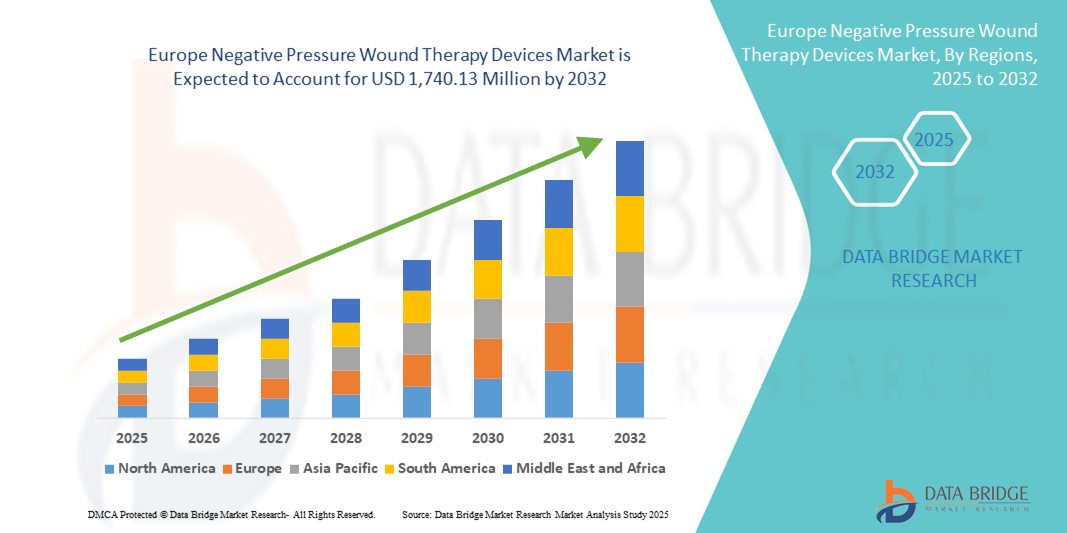
- The Europe negative pressure wound therapy devices market size was valued at USD 823.69 million in 2024 and is expected to reach USD 1,740.13 million by 2032, at a CAGR of 9.8% during the forecast period
- The market expansion is driven by increasing prevalence of chronic wounds, rising geriatric population, and advancements in wound care technologies across Europe
- In addition, growing awareness among healthcare professionals and patients about the benefits of NPWT devices, along with supportive healthcare policies and reimbursement frameworks, are further encouraging adoption in both hospital and homecare settings. These factors collectively are propelling the demand for effective wound management solutions and fueling market growth
Europe Negative Pressure Wound Therapy Devices Market Analysis
- Negative Pressure Wound Therapy (NPWT) devices, providing controlled suction to wounds to promote healing and reduce infection, are increasingly critical in managing acute and chronic wounds in hospitals, clinics, and homecare settings across Europe
- The growing prevalence of chronic wounds, such as diabetic ulcers and pressure ulcers, along with rising awareness among healthcare providers and patients about advanced wound care technologies, is driving strong market demand
- U.K. dominated the negative pressure wound therapy devices market with the largest revenue share of 38.5% in 2024, supported by advanced healthcare infrastructure, favorable reimbursement policies, and widespread adoption of innovative wound care solutions
- Germany is expected to be the fastest-growing country in the negative pressure wound therapy devices market during the forecast period due to increased healthcare spending, government initiatives, and growing patient demand for effective wound management
- The portable segment dominated the negative pressure wound therapy devices market with a share of 45.5% in 2024, favored for its convenience, especially in outpatient and homecare settings, enabling greater patient mobility without compromising therapy efficacy
Report Scope and Europe Negative Pressure Wound Therapy Devices Market Segmentation
|
Attributes |
Europe Negative Pressure Wound Therapy Devices Key Market Insights |
|
Segments Covered |
|
|
Countries Covered |
Europe
|
|
Key Market Players |
|
|
Market Opportunities |
|
|
Value Added Data Infosets |
In addition to the insights on market scenarios such as market value, growth rate, segmentation, geographical coverage, and major players, the market reports curated by the Data Bridge Market Research also include in-depth expert analysis, pricing analysis, brand share analysis, consumer survey, demography analysis, supply chain analysis, value chain analysis, raw material/consumables overview, vendor selection criteria, PESTLE Analysis, Porter Analysis, and regulatory framework. |
Europe Negative Pressure Wound Therapy Devices Market Trends
Advancements in Portable and Single-Use NPWT Devices
- A significant and accelerating trend in the Europe negative pressure wound therapy devices market is the growing adoption of portable and single-use negative pressure wound therapy systems. These devices provide enhanced patient mobility, ease of use, and reduced infection risks, supporting the shift toward outpatient and home-based wound care
- For example, Smith & Nephew’s PICO Single Use system and Mölnlycke’s Avance Solo portable device have gained popularity for their compact design and user-friendly operation
- Innovations such as integrated pressure monitoring sensors and improved battery life are making these devices more effective and accessible for a wider patient base
- Increasing collaborations between device manufacturers and digital health companies are enabling integration of NPWT devices with remote monitoring platforms, enhancing patient adherence and clinical outcomes
- Growing emphasis on sustainability is driving development of eco-friendly disposable NPWT components, aligning with European regulatory focus on reducing medical waste. This trend is driven by increasing demand for NPWT solutions that enable patient independence and reduce hospital stays
- Companies such as Acelity (3M) and ConvaTec are expanding their portfolios with portable and disposable NPWT options to capture this growing market segment
- The rising preference for compact, single-use, and easy-to-operate negative pressure wound therapy devices is expected to accelerate adoption across clinical and homecare settings in Europe
Europe Negative Pressure Wound Therapy Devices Market Dynamics
Driver
Rising Prevalence of Chronic Wounds and Increasing Healthcare Awareness
- The increasing incidence of chronic diseases such as diabetes and vascular conditions in Europe is driving demand for effective wound care solutions such as NPWT devices. Chronic wounds require advanced therapies to speed healing and prevent complication
- Growing awareness among healthcare professionals and patients about NPWT’s benefits faster healing, lower infection rates, and improved outcomes is fueling market growth
- For instance, NHS England’s 2024 initiative to support advanced wound care programs including NPWT has encouraged wider adoption in hospitals and community care
- Increasing investments in healthcare infrastructure across Eastern European countries are improving access to NPWT technologies in previously underserved areas
- Educational programs and training workshops conducted by device manufacturers are helping clinicians better understand and implement NPWT, leading to higher adoption rates
- The expansion of telemedicine services facilitating remote wound assessment and NPWT monitoring is boosting the demand for portable devices in both urban and rural settings
Restraint/Challenge
High Device Costs and Reimbursement Limitations
- The relatively high cost of NPWT devices and consumables compared to traditional dressings is a key barrier, especially for smaller clinics and outpatient centers
- Variability in reimbursement policies across European countries limits patient access to NPWT treatments
- Budget constraints and lack of standardized reimbursement frameworks can delay device procurement and restrict use to severe cases
- For instance, in some Eastern European countries, limited healthcare budgets and insufficient reimbursement schemes have slowed NPWT adoption despite clinical benefits
- Complex regulatory requirements and prolonged approval processes for new NPWT devices can delay market entry and limit availability
- Patient and provider concerns about device usability, especially among elderly populations unfamiliar with technology, can reduce acceptance and adherence to NPWT therapy
- Addressing these challenges with cost reductions, harmonized reimbursements, streamlined regulatory pathways, and increased training programs will be vital for market growth in Europe
Europe Negative Pressure Wound Therapy Devices Market Scope
The market is segmented on the basis of product, type, wound, end user, distribution channel, and application.
- By Product
On the basis of product, the negative pressure wound therapy devices market is segmented into stand-alone, portable, and disposable devices. The portable segment dominated the market with the largest revenue share of 45.5% in 2024, driven by its convenience, patient mobility, and suitability for outpatient and home healthcare settings. Portable NPWT devices allow continuous therapy beyond hospital environments, making them highly preferred by both clinicians and patients seeking flexible wound management solutions.
The disposable segment is the fastest growing, expected to witness robust CAGR during the forecast period due to increasing demand for hygienic, single-use devices that reduce infection risk and simplify device handling. The ease of use and no need for device maintenance are major factors propelling this growth, especially in homecare settings.
- By Type
On the basis of type, the negative pressure wound therapy devices market is segmented into reusable devices and single-use devices. The single-use devices segment dominated with a market share of around 52% in 2024, largely because of its advantages in minimizing cross-contamination, ease of use, and suitability for outpatient or home use. Single-use devices often require less training and are more patient-friendly, driving widespread adoption.
The reusable devices segment is expected to grow steadily during forecast period, supported by hospitals and specialized wound care centers focusing on cost efficiency and long-term use in complex wound cases. These devices are favored for their durability and ability to support intensive wound therapy protocols.
- By Wound Type
On the basis of wound type, the negative pressure wound therapy devices market is segmented into surgical wounds, diabetic ulcers, burns, pressure ulcers, venous ulcers, and others. The diabetic ulcers segment dominated with 35% market share in 2024, reflecting the high prevalence of diabetes-related chronic wounds that require advanced healing interventions. Diabetic ulcers are challenging to treat due to poor circulation and infection risks, increasing reliance on NPWT.
The pressure ulcers segment is the fastest growing during forecast period, fueled by aging populations and increased hospitalizations leading to higher incidences of pressure injuries. Pressure ulcers often require prolonged therapy, making NPWT devices a preferred treatment option. Surgical wounds and burns remain important segments due to growing surgical volumes and trauma care needs.
- By End User
On the basis of end user, the negative pressure wound therapy devices market is segmented into hospitals, wound care centers, ambulatory centers, home healthcare, clinics, and community centers. The hospitals segment dominated with nearly 50% revenue share in 2024, attributed to advanced infrastructure, greater access to NPWT technology, and high patient volumes requiring both acute and chronic wound management. Hospitals invest heavily in sophisticated NPWT devices for diverse wound types.
The home healthcare segment is the fastest growing during forecast period, driven by increasing preference for outpatient care models, patient convenience, and healthcare cost optimization. Advances in portable NPWT devices and reimbursement support are further fueling adoption in homecare. Wound care centers and ambulatory centers are also expanding their use as specialized care options increase.
- By Distribution Channel
On the basis of distribution channel, the negative pressure wound therapy devices market is segmented into direct tenders and retail. The direct tenders segment dominated with a share of about 60% in 2024, as bulk procurement by hospitals and large healthcare institutions remains the primary route for NPWT device acquisition. Institutional buyers prefer direct tenders for cost efficiency and long-term supply contracts. The retail segment is the fastest growing, bolstered by rising sales of portable and disposable NPWT devices through pharmacies, online medical suppliers, and specialty stores. This growth is linked to increasing homecare adoption and patient self-management of chronic wounds.
- By Application
On the basis of application, the negative pressure wound therapy devices market is segmented into chronic wounds and acute wounds. The chronic wounds segment dominated with around 55% market share in 2024, driven by the rising burden of diabetes, vascular diseases, and pressure ulcers that necessitate prolonged wound care interventions. NPWT devices have proven effectiveness in accelerating healing and preventing infections in chronic wounds
The acute wounds segment is expected to grow steadily during forecast period, supported by increasing surgical procedures and trauma cases that benefit from NPWT to reduce healing time and complication rates. Acute wound care protocols increasingly incorporate NPWT as a standard therapy to improve patient outcomes.
Europe Negative Pressure Wound Therapy Devices Market Regional Analysis
- The U.K. dominated the negative pressure wound therapy devices market with the largest revenue share of 38.5% in 2024, supported by advanced healthcare infrastructure, favorable reimbursement policies, and widespread adoption of innovative wound care solutions
- Healthcare providers and patients in the UK increasingly prioritize effective wound management solutions due to the high prevalence of chronic wounds such as diabetic and pressure ulcers, supported by government initiatives promoting advanced wound care
- This dominant position is further reinforced by substantial investments in research and development, strong presence of key medical device manufacturers, and growing outpatient and home healthcare services integrating NPWT devices as standard care
The U.K. Negative Pressure Wound Therapy Devices Market
The U.K. negative pressure wound therapy devices market dominated the Europe market with the largest revenue share of 38.5% in 2024, driven by its well-established and advanced healthcare infrastructure, favorable reimbursement policies, and a national focus on chronic wound management programs. The increasing prevalence of diabetes, pressure ulcers, and other chronic wounds has significantly raised demand for effective NPWT therapies across hospitals, specialized wound care centers, and home healthcare services. The NHS's proactive initiatives in wound care and funding support for innovative treatment technologies have further accelerated NPWT adoption. In addition, increasing patient awareness and physician training programs contribute to widespread utilization of NPWT devices.
Germany Negative Pressure Wound Therapy Devices Market
The Germany is anticipated to experience a considerable CAGR over the forecast period, supported by growing healthcare expenditure, governmental support for advanced wound care technologies, and increasing patient awareness. The country’s emphasis on sustainability and medical innovation fosters adoption of portable, reusable, and single-use NPWT devices in various clinical and homecare environments. Germany’s robust medical device manufacturing ecosystem enables continuous product development and availability of state-of-the-art NPWT systems. The aging population and rising incidence of chronic diseases, such as diabetes and vascular disorders, are also key factors driving market growth.
France Negative Pressure Wound Therapy Devices Market
The France negative pressure wound therapy devices market is witnessing steady growth, driven by expanding outpatient care services and improved accessibility to advanced wound care therapies. Government healthcare programs aimed at reducing hospital stays and promoting home healthcare have increased demand for portable and single-use NPWT systems. French hospitals and clinics are progressively adopting NPWT to manage post-surgical wounds and chronic ulcers, supported by increasing clinician awareness and reimbursement coverage. The country’s focus on cost-effective healthcare delivery further encourages the use of NPWT to improve healing outcomes and reduce treatment duration.
Italy Negative Pressure Wound Therapy Devices Market
The Italy negative pressure wound therapy devices market is experiencing notable market growth fueled by increasing healthcare investments and rising awareness about advanced wound management solutions. Enhanced focus on reducing chronic wound complications and hospital readmissions is driving higher adoption of NPWT devices in both public and private healthcare sectors. Italian healthcare providers are increasingly integrating NPWT into standard care protocols for surgical, diabetic, and pressure ulcers. Regional government initiatives promoting telemedicine and homecare wound management further support the growing use of portable and single-use NPWT devices.
Europe Negative Pressure Wound Therapy Devices Market Share
The Europe negative pressure wound therapy devices industry is primarily led by well-established companies, including:
- Smith + Nephew (U.K.)
- Mölnlycke AB (Sweden)
- 3M (U.S.)
- B. Braun SE (Germany)
- ConvaTec Group PLC (U.K.)
- Medela AG (Switzerland)
- Coloplast A/S (Denmark)
- Stryker (U.S.)
- Advanced Medical Solutions Group PLC (U.K.)
- Spiracur Inc. (U.S.)
- Blue Sky Medical Group LLC (U.S.)
- Cardinal Health, Inc. (U.S.)
- Integra LifeSciences Holdings Corporation (U.S.)
- Medtronic (Ireland)
- Ethicon Inc. (U.S.)
- Derma Sciences, Inc. (U.S.)
- Andover Healthcare (U.S.)
- DJO Global, Inc. (U.S.)
What are the Recent Developments Europe Negative Pressure Wound Therapy Devices Market?
- In March 2025, Smith & Nephew launched the PICO 7 single-use NPWT system in Europe. This device features advanced vacuum and leak management, designed to support improved application on anatomically challenging areas where achieving and maintaining a seal is difficult. It also includes an industry-first dressing-full indicator, enhancing usability and patient outcomes
- In July 2024, AOTI Inc. received FDA 510(k) clearance (K241515) for its NEXA Negative Pressure Wound Therapy (NPWT) System, extending its indications to include use in home care settings. This approval allows the device to be marketed across acute, extended, and home care environments in the U.S., aligning with its existing international approvals. The NEXA system is a multi-week disposable NPWT solution designed to deliver traditional negative pressure therapy at a lower cost, enhancing accessibility for patients with chronic or acute wounds
- In November 2023, Mölnlycke introduced the Avance Solo Continuous Negative Pressure Wound Therapy (ciNPT) system in Europe. Designed for post-surgical incision care, Avance Solo offers a portable, easy-to-use solution that delivers consistent negative pressure to promote wound healing. The system's multi-layer dressing incorporates Safetac Technology, proven to minimize trauma to the wound site and surrounding skin upon dressing removal
- In n July 2022, 3M announced its plan to separate its healthcare business into an independent public company. This strategic move is expected to enhance 3M's focus on advanced wound care solutions, including NPWT devices, by providing more agility and dedicated resources to meet the growing demand in Europe
- In June 2021, B. Braun launched the ACTIV.A.C. portable NPWT system in Europe. This system is designed for mobile patients, featuring a 14-hour rechargeable battery life and the ability to monitor patients' out-of-hospital NPWT compliance through the iOn Progress Remote Therapy Monitoring System

- Interactive Data Analysis Dashboard
- Company Analysis Dashboard for high growth potential opportunities
- Research Analyst Access for customization & queries
- Competitor Analysis with Interactive dashboard
- Latest News, Updates & Trend analysis
- Harness the Power of Benchmark Analysis for Comprehensive Competitor Tracking
Data collection and base year analysis are done using data collection modules with large sample sizes. The stage includes obtaining market information or related data through various sources and strategies. It includes examining and planning all the data acquired from the past in advance. It likewise envelops the examination of information inconsistencies seen across different information sources. The market data is analysed and estimated using market statistical and coherent models. Also, market share analysis and key trend analysis are the major success factors in the market report. To know more, please request an analyst call or drop down your inquiry.
The key research methodology used by DBMR research team is data triangulation which involves data mining, analysis of the impact of data variables on the market and primary (industry expert) validation. Data models include Vendor Positioning Grid, Market Time Line Analysis, Market Overview and Guide, Company Positioning Grid, Patent Analysis, Pricing Analysis, Company Market Share Analysis, Standards of Measurement, Global versus Regional and Vendor Share Analysis. To know more about the research methodology, drop in an inquiry to speak to our industry experts.
Data Bridge Market Research is a leader in advanced formative research. We take pride in servicing our existing and new customers with data and analysis that match and suits their goal. The report can be customized to include price trend analysis of target brands understanding the market for additional countries (ask for the list of countries), clinical trial results data, literature review, refurbished market and product base analysis. Market analysis of target competitors can be analyzed from technology-based analysis to market portfolio strategies. We can add as many competitors that you require data about in the format and data style you are looking for. Our team of analysts can also provide you data in crude raw excel files pivot tables (Fact book) or can assist you in creating presentations from the data sets available in the report.













