Asia Pacific Wound Debridement Devices Market
Market Size in USD Million
CAGR :
% 
 USD
101.59 Million
USD
155.91 Million
2024
2032
USD
101.59 Million
USD
155.91 Million
2024
2032
 Forecast Period Forecast Period |
2025 –2032 |
 Market Size (Base Year) Market Size (Base Year) |
USD 101.59 Million |
 Market Size (Forecast Year) Market Size (Forecast Year) |
USD 155.91 Million |
 CAGR CAGR |
% |
| Major Markets Players |
|
Asia-Pacific Wound Debridement Devices Market Size
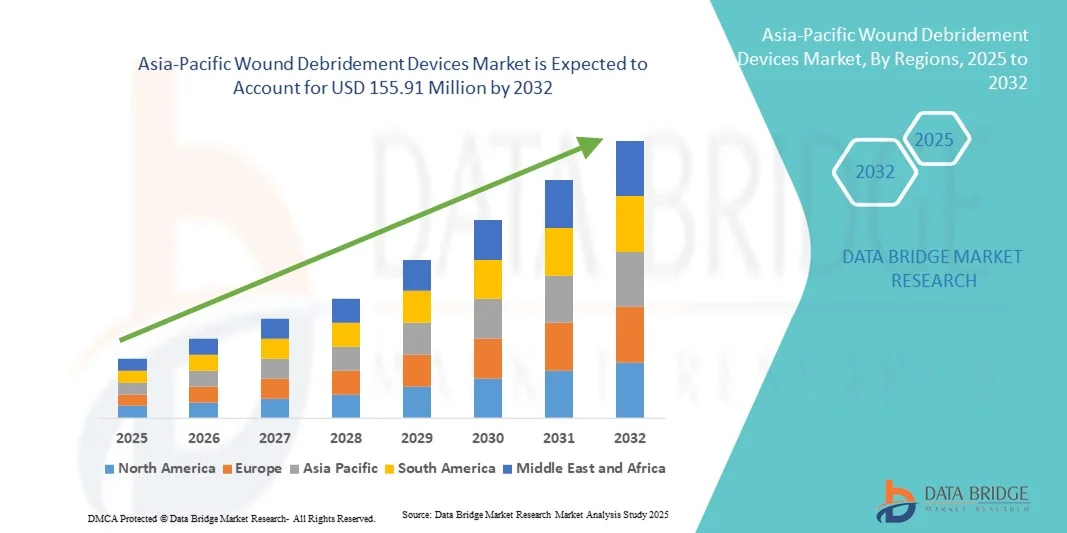
- The Asia-Pacific wound debridement devices market size was valued at USD 101.59 Million in 2024 and is expected to reach USD 155.91 Million by 2032, at a CAGR of 5.50% during the forecast period
- The market growth is largely fueled by the increasing prevalence of chronic wounds, diabetic ulcers, and pressure sores, which are driving the demand for advanced wound care solutions
- Furthermore, advancements in wound debridement technologies, including ultrasonic, hydrosurgical, and mechanical devices, coupled with rising adoption in hospitals, specialty clinics, and homecare settings, are accelerating the uptake of wound debridement device solutions, thereby significantly boosting the industry's growth
Asia-Pacific Wound Debridement Devices Market Analysis
- Wound debridement devices, including mechanical, enzymatic, autolytic, and surgical tools, are increasingly vital components of modern wound care management in hospitals, clinics, and homecare settings due to their efficiency in removing necrotic tissue, preventing infections, and promoting faster healing
- The escalating demand for wound debridement devices is primarily fueled by the rising prevalence of chronic wounds, diabetes, and pressure ulcers, growing adoption of advanced wound care technologies, and increasing awareness among healthcare providers regarding patient outcomes and infection control
- China dominated the Asia-Pacific wound debridement devices market with the largest revenue share of 41.8% in 2024, driven by a rapidly expanding healthcare infrastructure, high patient inflow, and government initiatives to improve wound care management across hospitals and specialized clinics
- India is expected to be the fastest growing market in the wound debridement devices sector during the forecast period, with a projected CAGR of 9.5% from 2025 to 2032, driven by increasing prevalence of chronic wounds, diabetes, and pressure ulcers
- The hydrosurgical segment dominated the Asia-Pacific wound debridement devices market with the largest market revenue share of 41.6% in 2024, driven by its precision in removing necrotic tissue while preserving healthy tissue, reduced bleeding during procedures, and compatibility with advanced wound care protocols
Report Scope and Wound Debridement Devices Market Segmentation
|
Attributes |
Wound Debridement Devices Key Market Insights |
|
Segments Covered |
|
|
Countries Covered |
Asia-Pacific
|
|
Key Market Players |
|
|
Market Opportunities |
|
|
Value Added Data Infosets |
In addition to the insights on market scenarios such as market value, growth rate, segmentation, geographical coverage, and major players, the market reports curated by the Data Bridge Market Research also include in-depth expert analysis, pricing analysis, brand share analysis, consumer survey, demography analysis, supply chain analysis, value chain analysis, raw material/consumables overview, vendor selection criteria, PESTLE Analysis, Porter Analysis, and regulatory framework. |
Asia-Pacific Wound Debridement Devices Market Trends
Rising Demand for Advanced Wound Care Solutions
- A significant and accelerating trend in the wound debridement devices market is the growing adoption of advanced wound care technologies, including mechanized debridement tools, ultrasonic devices, and hydrosurgical systems. These innovations are significantly improving clinical outcomes, reducing procedure times, and enhancing patient comfort
- For instance, mechanized wound debridement devices allow precise removal of necrotic tissue while minimizing damage to surrounding healthy tissue, enabling faster healing and reducing infection risks. Similarly, ultrasonic wound debridement devices provide efficient tissue removal, while also promoting localized blood flow and stimulating tissue regeneration
- Integration of these devices into hospital wound care protocols and homecare services is enhancing overall treatment efficiency and patient recovery rates. The trend toward minimally invasive, user-friendly, and highly effective debridement solutions is reshaping expectations in wound management practices
- Companies such as Smith & Nephew, Medline, and Mölnlycke are introducing innovative devices with improved ergonomics, portability, and enhanced precision, further accelerating adoption across hospitals, clinics, and homecare settings
- The demand for more advanced, efficient, and versatile wound debridement devices is rapidly increasing across both acute care and chronic wound management segments, as healthcare providers aim to reduce complications, improve patient outcomes, and optimize operational efficiency
Asia-Pacific Wound Debridement Devices Market Dynamics
Driver
Growing Prevalence of Chronic Wounds and Increasing Healthcare Expenditure
- The increasing prevalence of chronic wounds, diabetic ulcers, and pressure injuries globally is a significant driver for the rising demand for wound debridement devices. The aging population, combined with higher incidence of diabetes and vascular diseases, is escalating the need for effective wound care solutions
- For instance: In April 2024, Smith & Nephew launched a next-generation hydrosurgical debridement system designed to provide rapid and precise wound cleaning, demonstrating the growing investment by key companies in innovative technologies. Such initiatives are expected to propel market growth in the forecast period
- Healthcare providers are increasingly adopting mechanized and advanced debridement devices to reduce healing times, minimize hospital stays, and improve patient quality of life
- Furthermore, rising healthcare expenditure in developed and emerging markets, alongside the expansion of hospital networks and wound care centers, is fostering higher adoption of wound debridement devices
- The convenience, clinical efficiency, and safety offered by these devices for treating complex wounds are key factors driving adoption across hospitals, specialty clinics, and homecare services. The ongoing trend toward evidence-based wound management practices further supports market growth
Restraint/Challenge
High Costs and Limited Awareness in Developing Regions
- The relatively high cost of advanced wound debridement devices compared to conventional wound care methods poses a barrier to adoption, particularly in price-sensitive regions. This cost factor can limit widespread implementation in smaller clinics or low-resource healthcare settings
- Limited awareness and training among healthcare professionals regarding the proper use of mechanized and hydrosurgical debridement devices is another challenge, affecting adoption rates in certain markets
- Addressing these challenges through comprehensive training programs, awareness campaigns, and the development of more cost-effective devices is crucial for expanding the market. Leading companies such as Medline and Mölnlycke are emphasizing education initiatives and simplified device designs to improve accessibility and usability
- While prices are gradually decreasing for certain devices, the perceived premium for advanced wound debridement technology can still hinder adoption, especially where traditional manual methods are deeply entrenched
- Overcoming these barriers through reimbursement support, awareness programs, and technological innovation will be vital for sustained growth in the wound debridement devices market, ensuring broader accessibility and improved patient outcomes globally
Asia-Pacific Wound Debridement Devices Market Scope
The market is segmented on the basis of product, method, wound type, and end user.
- By Product
On the basis of product, the Asia-Pacific wound debridement devices market is segmented into hydrosurgical, low-frequency ultrasound, mechanical, larval therapy, and others. The hydrosurgical segment dominated the largest market revenue share of 41.6% in 2024, driven by its precision in removing necrotic tissue while preserving healthy tissue, reduced bleeding during procedures, and compatibility with advanced wound care protocols. Hydrosurgical devices are widely adopted across hospitals and specialized wound care centers due to their versatility in treating surgical wounds, burns, and chronic ulcers. The segment benefits from strong clinician training programs, established healthcare guidelines, and supportive reimbursement frameworks in Asia-Pacific. Increasing awareness about minimally invasive wound management techniques, ongoing technological enhancements including ergonomic designs, improved portability, and higher procedural efficiency have reinforced its leading market position. The hydrosurgical segment also enjoys a high adoption rate due to its integration with electronic medical record systems and multidisciplinary wound care programs, making it the preferred choice for clinicians handling complex wound cases across Asia-Pacific.
The larval therapy segment is expected to witness the fastest CAGR of 8.5% from 2025 to 2032, fueled by growing acceptance of maggot therapy in treating chronic and diabetic wounds resistant to conventional therapies. Larval therapy offers selective debridement, antimicrobial benefits, and acceleration of healing in complex wounds, making it highly suitable for outpatient and homecare settings. Expansion of clinical evidence supporting efficacy, coupled with increased regulatory approvals and physician advocacy, is driving adoption. Rising patient awareness, cost-effectiveness in long-term wound management, and integration into multidisciplinary care pathways further position larval therapy as the fastest-growing product segment in Asia-Pacific. Growth is also supported by educational initiatives for clinicians, expanded insurance coverage for alternative therapies, and new product developments that improve usability and patient comfort, accelerating larval therapy adoption across multiple care settings.
- By Method
On the basis of method, the Asia-Pacific wound debridement devices market is segmented into autolytic, surgical, enzymatic, mechanical, and maggot. The surgical method segment dominated with a market share of 38.9% in 2024, owing to its effectiveness in rapidly removing devitalized tissue in acute and complex wounds. Surgical debridement is preferred in hospitals and wound care centers due to its immediate results, suitability for diverse wound types, and integration with advanced surgical tools. Strong adoption in multidisciplinary wound management programs, adherence to Asia-Pacific clinical guidelines, and high clinician confidence contribute to the dominance of surgical debridement. Continuous advancements in precision instruments, safety measures, minimally invasive surgical options, and training programs have reinforced its leading position. In addition, surgical debridement benefits from rapid procedural outcomes, lower infection rates, and improved patient recovery times, making it the preferred method for acute wounds and post-surgical cases across Asia-Pacific.
The autolytic method segment is expected to witness the fastest CAGR of 7.8% from 2025 to 2032, driven by its non-invasive approach that uses the body’s own enzymes to liquefy necrotic tissue. Autolytic debridement is favored in homecare and outpatient settings due to ease of use, minimal pain, and reduced risk of complications. Growing awareness among patients and caregivers, along with the development of advanced wound dressings that optimize autolytic processes, is boosting adoption. Increasing demand for cost-effective, safe, and patient-friendly wound care, along with integration into telemedicine and homecare monitoring, further accelerates the segment’s growth. Rising interest in preventive care, early intervention for chronic wounds, and clinician-led education programs are enhancing autolytic debridement’s adoption across Asia-Pacific.
- By Wound Type
On the basis of wound type, the Asia-Pacific wound debridement devices market is segmented into surgical wounds, diabetic ulcers, burns, pressure ulcers, venous ulcers, and others. The diabetic ulcer segment dominated the market with a share of 36.7% in 2024, owing to the high prevalence of diabetes across Asia-Pacific and the complex nature of these chronic wounds. Diabetic ulcers require specialized debridement approaches, frequent monitoring, and multidisciplinary management. Hospitals and wound care centers play a key role in treating diabetic ulcers, supported by government health initiatives, clinical guidelines, and insurance coverage. The segment also benefits from advanced technologies such as hydrosurgical and low-frequency ultrasound devices tailored for diabetic wounds. Ongoing clinician training, patient education programs, and proactive wound management strategies reinforce diabetic ulcer dominance. In addition, innovations in wound dressings and real-time monitoring further support efficient care and reduce complication risks, maintaining the segment’s leadership.
The pressure ulcer segment is expected to witness the fastest CAGR of 8.1% from 2025 to 2032, driven by the growing elderly population, prolonged hospital stays, and rising awareness of pressure ulcer prevention and management. Adoption of advanced debridement techniques, integration with pressure-relieving devices, and multidisciplinary care programs contribute to rapid market growth. Increasing healthcare expenditure, rising demand for homecare solutions, and hospital protocols emphasizing early intervention further accelerate the segment’s expansion. The segment also benefits from telemonitoring and digital wound assessment tools that facilitate timely interventions and improve patient outcomes, making it the fastest-growing wound type segment in Asia-Pacific.
- By End User
On the basis of end user, the Asia-Pacific wound debridement devices market is segmented into hospitals, wound care centers, ambulatory centers, home healthcare, clinics, and community healthcare. The hospital segment dominated with a market share of 42.9% in 2024, supported by the availability of advanced debridement technologies, skilled clinicians, and high patient inflow for complex and acute wounds. Hospitals remain primary centers for surgical and hydrosurgical debridement due to robust infrastructure, adherence to clinical guidelines, and integration with multidisciplinary care programs. Expansion of advanced wound care units, training of specialized personnel, and government healthcare initiatives further reinforce hospital dominance. Hospitals also benefit from dedicated wound management teams, access to latest devices, and established supply chains, sustaining high patient satisfaction and repeat utilization rates.
The home healthcare segment is expected to witness the fastest CAGR of 9.0% from 2025 to 2032, fueled by the rising demand for outpatient wound care, increasing chronic wound prevalence, and cost-effectiveness of home-based interventions. Availability of portable debridement devices, patient education, and telemedicine support enable effective homecare management. Growing patient preference for personalized and convenient wound care, coupled with reimbursement policies and remote monitoring technologies, accelerates adoption, making home healthcare the fastest-growing end-user segment in Asia-Pacific. Expansion of homecare service providers and integration with digital platforms further support growth.
Asia-Pacific Wound Debridement Devices Market Regional Analysis
- China dominated the Asia-Pacific wound debridement devices market with the largest revenue share of 41.8% in 2024, driven by a rapidly expanding healthcare infrastructure, high patient inflow, and government initiatives to improve wound care management across hospitals and specialized clinics
- India is expected to be the fastest growing market in the wound debridement devices sector during the forecast period, with a projected CAGR of 9.5% from 2025 to 2032, driven by increasing prevalence of chronic wounds, diabetes, and pressure ulcers
- The affordability of advanced devices, government initiatives for chronic disease management, and healthcare digitalization further enhance market expansion. Rising patient inflow, increasing healthcare expenditure, and expansion of private healthcare networks contribute to rapid growth
China Wound Debridement Devices Market Insight
The China wound debridement devices market dominated the market with the largest revenue share of 41.8% in 2024, driven by a rapidly expanding healthcare infrastructure, high patient inflow, and government initiatives to improve wound care management across hospitals and specialized clinics. The rising prevalence of chronic wounds, diabetic ulcers, burns, and pressure ulcers necessitates widespread use of advanced wound care devices. China’s domestic manufacturers are leading in the production of hydrosurgical, low-frequency ultrasound, and mechanical debridement devices, making high-quality solutions widely accessible. Expansion of hospital networks, specialized wound care centers, and home healthcare services supports robust adoption. Increasing awareness among healthcare providers, integration of devices into clinical protocols, and government-led programs for chronic disease management strengthen market dominance. In addition, investments in research and development, along with the availability of cost-effective devices, further propel market growth. China’s focus on modernizing healthcare infrastructure, increasing hospital capacities, and advancing wound care treatment protocols cements its position as the leading market in Asia-Pacific.
India Wound Debridement Devices Market Insight
The India wound debridement devices market is expected to be the fastest-growing market, with a projected CAGR of 9.5% from 2025 to 2032, driven by the rising prevalence of chronic wounds, diabetic ulcers, burns, and pressure ulcers. Expansion of hospital infrastructure, increasing number of wound care centers, and the development of home healthcare services are key adoption drivers. Government initiatives to improve chronic disease management and support for modern medical devices further accelerate growth. Rising awareness among healthcare providers and patients about advanced wound care technologies such as hydrosurgical and low-frequency ultrasound devices is encouraging market penetration. The increasing availability of cost-effective solutions from domestic manufacturers makes adoption more accessible. Outpatient wound care services and telemedicine solutions are contributing to convenience and efficiency in patient management. Training programs for clinicians, along with collaborations between hospitals and device suppliers, ensure high-quality care. In addition, urbanization, rising disposable incomes, and private healthcare expansion further support the rapid growth of the Indian market, establishing it as the fastest-growing segment in Asia-Pacific.
Asia-Pacific Wound Debridement Devices Market Share
The wound debridement devices industry is primarily led by well-established companies, including:
- Smith+Nephew (U.K.)
- Medtronic (Ireland)
- Zimmer Biomet (U.S.)
- Integra LifeSciences Corporation (U.S.)
- Abbott (U.S.)
- B. Braun SE (Germany)
- Mölnlycke Health Care AB (Sweden)
- Coloplast Group (Denmark)
- Organogenesis Inc. (U.S.)
- Bioventus LLC. (U.S.)
- Hollister Incorporated (U.S.)
- Lohmann & Rauscher GmbH & Co. KG (Germany)
- Essity Aktiebolag (Sweden)
- Advanced Medical Solutions Group plc (U.K.)
- DeRoyal Industries, Inc. (U.S.)
- Italia Medica SRL (Italy)
- Söring GmbH (Germany)
- Olympus Corporation (Japan)
Latest Developments in Asia-Pacific Wound Debridement Devices Market
- In October 2022, Reprise Biomedical announced the U.S. launch of Miro3D, a three-dimensional resorbable wound matrix designed to treat deep and tunneling wounds. This biologic matrix aims to enhance healing by providing structural support and promoting tissue regeneration in complex wound sites
- In February 2023, researchers developed the first flexible, stretchable e-bandage capable of accelerating healing by 30%. The bandage delivers electrotherapy directly to the wound site and biodegrades once healing is complete, representing a breakthrough in advanced wound care
- In September 2024, Solventum launched the V.A.C. Peel and Place Dressing, an integrated dressing and drape that can be applied in less than two minutes and worn by patients for up to seven days. This innovation aims to streamline the application process and improve patient comfort during negative pressure wound therapy
- In May 2025, Summit Products Group officially launched, announcing a strategic alliance with NovaBone Products, a leading developer of regenerative medicine biomaterials. This collaboration focuses on transforming surgical and regenerative wound care by providing providers with new surgical options designed to support precision and regeneration in the operating room
- In September 2025, the Woundcare Offloading Through Automated Debridement (WOTAD) project was initiated in Denmark. The project aims to develop, produce, and test a robot for fully automatic debridement of chronic wounds. The Flash-Clean robot will provide water and laser treatment, offering a gentler alternative to surgical debridement and potentially accelerating the healing process
SKU-
Get online access to the report on the World's First Market Intelligence Cloud
- Interactive Data Analysis Dashboard
- Company Analysis Dashboard for high growth potential opportunities
- Research Analyst Access for customization & queries
- Competitor Analysis with Interactive dashboard
- Latest News, Updates & Trend analysis
- Harness the Power of Benchmark Analysis for Comprehensive Competitor Tracking
Research Methodology
Data collection and base year analysis are done using data collection modules with large sample sizes. The stage includes obtaining market information or related data through various sources and strategies. It includes examining and planning all the data acquired from the past in advance. It likewise envelops the examination of information inconsistencies seen across different information sources. The market data is analysed and estimated using market statistical and coherent models. Also, market share analysis and key trend analysis are the major success factors in the market report. To know more, please request an analyst call or drop down your inquiry.
The key research methodology used by DBMR research team is data triangulation which involves data mining, analysis of the impact of data variables on the market and primary (industry expert) validation. Data models include Vendor Positioning Grid, Market Time Line Analysis, Market Overview and Guide, Company Positioning Grid, Patent Analysis, Pricing Analysis, Company Market Share Analysis, Standards of Measurement, Global versus Regional and Vendor Share Analysis. To know more about the research methodology, drop in an inquiry to speak to our industry experts.
Customization Available
Data Bridge Market Research is a leader in advanced formative research. We take pride in servicing our existing and new customers with data and analysis that match and suits their goal. The report can be customized to include price trend analysis of target brands understanding the market for additional countries (ask for the list of countries), clinical trial results data, literature review, refurbished market and product base analysis. Market analysis of target competitors can be analyzed from technology-based analysis to market portfolio strategies. We can add as many competitors that you require data about in the format and data style you are looking for. Our team of analysts can also provide you data in crude raw excel files pivot tables (Fact book) or can assist you in creating presentations from the data sets available in the report.