Asia Pacific Hydrocephalus Market
Market Size in USD Million
CAGR :
% 
 USD
342.41 Million
USD
588.32 Million
2025
2033
USD
342.41 Million
USD
588.32 Million
2025
2033
 Forecast Period Forecast Period |
2026 –2033 |
 Market Size (Base Year) Market Size (Base Year) |
USD 342.41 Million |
 Market Size (Forecast Year) Market Size (Forecast Year) |
USD 588.32 Million |
 CAGR CAGR |
% |
| Major Markets Players |
|
Asia Pacific Hydrocephalus Market Size
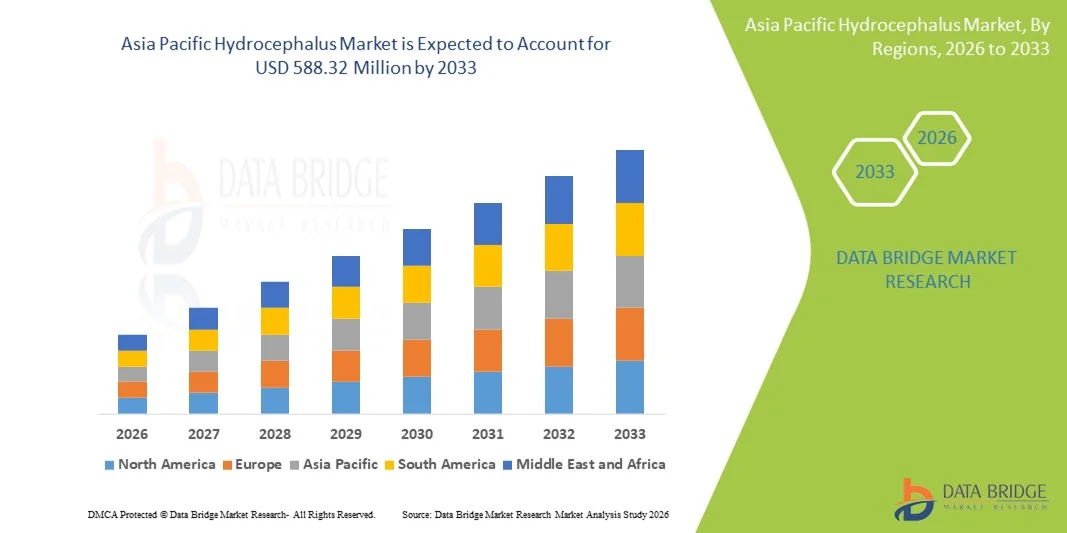
- The Asia Pacific hydrocephalus market size was valued at USD 342.41 million in 2025 and is expected to reach USD 588.32 million by 2033, at a CAGR of 7.0% during the forecast period
- The market growth is largely fueled by increasing healthcare expenditure, rising prevalence of neurological disorders, expanding access to diagnostics and treatment, and rapid infrastructure improvements across major countries such as China, India, and Japan
- Furthermore, growing awareness of hydrocephalus conditions, technological advancements in treatment modalities, and rising adoption of advanced diagnostic and therapeutic solutions in hospitals and diagnostic centers are driving demand. These converging factors are accelerating the uptake of hydrocephalus care solutions, thereby significantly boosting the industry’s growth
Asia Pacific Hydrocephalus Market Analysis
- Hydrocephalus treatment and management solutions, including advanced diagnostics and therapeutic interventions, are increasingly vital components of neurological healthcare in both pediatric and adult populations across Asia-Pacific due to their effectiveness in managing cerebrospinal fluid accumulation and improving patient outcomes
- The escalating demand for hydrocephalus solutions is primarily fueled by the rising prevalence of congenital, acquired, normal-pressure, and ex-vacuo hydrocephalus, increasing awareness of the condition, and expanding access to specialized diagnostics and treatment facilities in hospitals, clinics, and diagnostic centers
- China dominated the Asia-Pacific hydrocephalus market with the largest revenue share of 35.2% in 2025, characterized by improving healthcare infrastructure, government initiatives supporting neurological disorder management, and growing adoption of modern diagnostic and therapeutic techniques, with hospitals and diagnostic centers witnessing substantial growth in interventions
- India is expected to be the fastest-growing country in the Asia-Pacific hydrocephalus market during the forecast period due to increasing healthcare expenditure, rising adoption of advanced diagnostic technologies, and expansion of specialized academic institutions and research organizations contributing to treatment innovation
- Diagnostic segment dominated the Asia-Pacific hydrocephalus market with a market share of 55.7% in 2025, driven by the increasing need for early detection across pediatric and adult patients, technological advancements in imaging modalities, and widespread availability of diagnostic facilities in hospitals and specialized centers
Report Scope and Asia Pacific Hydrocephalus Market Segmentation
|
Attributes |
Asia Pacific Hydrocephalus Key Market Insights |
|
Segments Covered |
|
|
Countries Covered |
Asia-Pacific
|
|
Key Market Players |
|
|
Market Opportunities |
|
|
Value Added Data Infosets |
In addition to the insights on market scenarios such as market value, growth rate, segmentation, geographical coverage, and major players, the market reports curated by the Data Bridge Market Research also include in-depth expert analysis, patient epidemiology, pipeline analysis, pricing analysis, and regulatory framework |
Asia Pacific Hydrocephalus Market Trends
Advancements in Minimally Invasive and Image-Guided Procedures
- A significant and accelerating trend in the Asia-Pacific hydrocephalus market is the adoption of minimally invasive surgical techniques and image-guided procedures, improving patient recovery and reducing post-operative complications
- For instance, endoscopic third ventriculostomy (ETV) combined with intraoperative imaging is increasingly used in India and China, allowing neurosurgeons to perform precise interventions with reduced hospitalization time
- Integration of advanced imaging modalities such as MRI and CT with surgical planning tools enables better diagnosis and personalized treatment approaches, enhancing procedural success rates
- These technologies allow neurosurgeons to monitor cerebrospinal fluid dynamics in real time, improving long-term patient outcomes and reducing the need for revision surgeries
- Increased collaboration between hospitals, research institutions, and technology providers is driving innovation in hydrocephalus monitoring devices and surgical tools
- Emerging AI-assisted diagnostic tools and predictive analytics for hydrocephalus progression are enabling earlier detection and more personalized treatment planning
- This trend towards more precise, less invasive, and technology-assisted treatment is fundamentally reshaping patient expectations for hydrocephalus management
- The demand for minimally invasive and image-guided procedures is growing rapidly across both pediatric and adult populations, as healthcare providers prioritize improved outcomes and reduced post-surgery complications
Asia Pacific Hydrocephalus Market Dynamics
Driver
Rising Prevalence and Awareness of Hydrocephalus
- The increasing incidence of congenital, acquired, and normal-pressure hydrocephalus, coupled with growing awareness about early detection and treatment options, is a major driver for market growth
- For instance, in March 2025, All India Institute of Medical Sciences (AIIMS) launched a nationwide awareness campaign on pediatric hydrocephalus, aiming to improve early diagnosis and treatment accessibility
- As patients and caregivers become more aware of potential complications associated with untreated hydrocephalus, demand for timely diagnostics and advanced treatments is rising
- Furthermore, government initiatives and NGO programs promoting neurological health are encouraging hospitals and clinics to expand hydrocephalus management services
- Improved access to treatment centers, availability of trained neurosurgeons, and the integration of diagnostic and therapeutic services in hospitals and diagnostic centers are key factors propelling market adoption
- Rising healthcare expenditure and investments by private hospitals in India and China are facilitating the expansion of specialized hydrocephalus care units
- The increasing adoption of advanced monitoring devices and AI-assisted surgical planning tools by leading hospitals is enhancing treatment efficiency and attracting more patients
Restraint/Challenge
High Treatment Costs and Limited Access in Rural Areas
- The high cost of advanced hydrocephalus treatments, including surgical procedures and imaging-based diagnostics, poses a significant challenge to widespread market adoption
- For instance, patients in rural India and remote parts of China often face difficulties in accessing specialized neurosurgical centers, limiting timely intervention and treatment uptake
- Addressing these accessibility challenges requires investment in rural healthcare infrastructure, mobile diagnostic units, and telemedicine-enabled neurosurgery consultations to improve patient reach
- The relatively high cost of minimally invasive procedures and shunt systems compared to conventional treatment options can be a barrier for low-income patients in developing countries
- Limited availability of trained neurosurgeons and specialized diagnostic technicians in smaller cities further restricts treatment access
- Inconsistent reimbursement policies and lack of insurance coverage for advanced hydrocephalus interventions increase the financial burden on patients and their families
- Overcoming these challenges through government support, affordable treatment models, and patient awareness programs will be vital for sustained market growth
Asia Pacific Hydrocephalus Market Scope
The market is segmented on the basis of type, diagnostic & treatment, age group, and end users
- By Type
On the basis of type, the Asia-Pacific hydrocephalus market is segmented into congenital hydrocephalus, acquired hydrocephalus, normal-pressure hydrocephalus (NPH), and ex-vacuo hydrocephalus. The Congenital Hydrocephalus segment dominated the market with the largest market share of 38% in 2025, driven by the high prevalence of congenital cases in countries such as China and India. Early diagnosis through prenatal imaging and neonatal screening has increased the demand for timely interventions, including shunt implantation and minimally invasive surgical procedures. Hospitals and specialized pediatric neurosurgery centers often prioritize congenital cases due to the significant impact on infant development and long-term neurological outcomes. In addition, government and NGO-led awareness programs are encouraging early screening, boosting diagnostic adoption in urban and semi-urban regions. Pediatric patients with congenital hydrocephalus also account for a significant portion of hospital admissions, further solidifying this segment’s dominance. The availability of advanced diagnostic tools such as MRI and ultrasound has also improved detection rates, contributing to the segment’s market leadership.
The Acquired Hydrocephalus segment is expected to witness the fastest growth at a CAGR of 12.8% from 2026 to 2033, fueled by rising incidences of traumatic brain injuries, strokes, and infections leading to secondary hydrocephalus in adults. Increasing awareness of post-traumatic complications and expanding access to specialized treatment centers are driving adoption. Advanced treatment methods, including endoscopic third ventriculostomy (ETV) and programmable shunts, are becoming more widely available, improving outcomes for acquired hydrocephalus patients. Hospitals are increasingly investing in diagnostic imaging tools to detect post-injury hydrocephalus, enhancing early intervention rates. The aging population in countries such as Japan and Australia also contributes to higher acquired hydrocephalus prevalence, further accelerating growth. Academic and research institutions are actively studying acquired hydrocephalus, supporting innovations that enhance treatment efficiency.
- By Diagnostic & Treatment
On the basis of diagnostic & treatment, the market is segmented into diagnostic and treatment. The Diagnostic segment dominated the market with a share of 55.7% in 2025, driven by the increasing need for early detection across both pediatric and adult populations. Advanced imaging technologies such as MRI, CT, and ultrasound allow for precise assessment of cerebrospinal fluid accumulation, improving treatment planning. Hospitals and diagnostic centers are increasingly integrating AI-assisted imaging analysis to enhance diagnostic accuracy. Routine screening in high-risk neonatal populations and post-traumatic adult patients is further boosting demand. Diagnostic services are often prioritized in urban hospitals and specialized neurosurgery centers, contributing to revenue growth. The availability of portable and point-of-care imaging devices in developing countries such as India is also expanding reach.
The Treatment segment is anticipated to witness the fastest growth at a CAGR of 13.2% from 2026 to 2033, driven by rising adoption of minimally invasive surgical techniques, shunt systems, and endoscopic interventions. Hospitals are increasingly equipping neurosurgical units with advanced treatment tools, improving procedural success rates. Patient preference for less invasive procedures with shorter recovery times is supporting the adoption of these treatments. Expanding healthcare infrastructure and rising healthcare expenditure in countries such as India and China are further accelerating growth. The development of programmable and adjustable shunt systems is enhancing treatment personalization, boosting market appeal. Tele-neurosurgery consultations and specialized surgical training programs are also contributing to rapid growth in treatment adoption.
- By Age Group
On the basis of age group, the market is segmented into pediatric and adult. The Pediatric segment dominated the market with a share of 60% in 2025, driven by the high prevalence of congenital hydrocephalus and early diagnosis through neonatal screening programs. Hospitals and pediatric neurosurgery centers prioritize timely interventions to prevent long-term neurological complications. Government and NGO awareness campaigns targeting infant health are boosting diagnosis and treatment adoption. Advanced imaging tools such as ultrasound and MRI are widely used for pediatric hydrocephalus detection, improving early intervention rates. The pediatric segment also benefits from specialized research programs aimed at improving surgical techniques and shunt systems. Families increasingly seek treatment at urban hospitals and specialty centers, reinforcing the dominance of this segment.
The Adult segment is expected to witness the fastest growth at a CAGR of 11.9% from 2026 to 2033, driven by rising cases of acquired and normal-pressure hydrocephalus among the aging population. Increasing awareness about post-traumatic hydrocephalus and age-related NPH is prompting timely diagnosis and treatment. Hospitals are adopting advanced endoscopic and minimally invasive procedures for adult patients, improving outcomes. Research on age-specific hydrocephalus treatment protocols is expanding, supporting more personalized interventions. Telemedicine and remote diagnostic solutions are improving access for adults in semi-urban and rural areas. Adult hydrocephalus patients increasingly prefer hospitals offering integrated diagnostic and treatment services, accelerating market adoption.
- By End Users
On the basis of end users, the market is segmented into hospitals, clinics, diagnostic centers, and academic institutions & research organizations. The Hospitals segment dominated the market with a share of 62% in 2025, driven by the concentration of advanced neurosurgical facilities, diagnostic imaging tools, and pediatric and adult patient care services. Large hospitals in China and India act as referral centers for complex hydrocephalus cases, increasing treatment volumes. Availability of trained neurosurgeons and specialized staff contributes to superior patient outcomes, enhancing adoption. Hospitals also invest in advanced shunt systems and minimally invasive equipment, supporting high treatment throughput. Increasing awareness campaigns conducted through hospitals boost early diagnosis and patient inflow. Government-supported hospitals with subsidized treatment programs further reinforce this segment’s dominance.
The Diagnostic Centers segment is expected to witness the fastest growth at a CAGR of 14.1% from 2026 to 2033, driven by rising demand for early and accurate hydrocephalus detection, especially in urban and semi-urban regions. Private diagnostic centers are increasingly offering advanced MRI, CT, and ultrasound services with shorter waiting times, improving patient access. AI-assisted imaging tools are being deployed to enhance diagnostic accuracy. Outpatient diagnostic services for both pediatric and adult patients are expanding, supporting faster market adoption. Partnerships between diagnostic centers and hospitals are enabling streamlined referrals for treatment. Tele-diagnostic services and mobile imaging units in countries such as India are also accelerating growth in this segment.
Asia Pacific Hydrocephalus Market Regional Analysis
- China dominated the Asia-Pacific hydrocephalus market with the largest revenue share of 35.2% in 2025, characterized by improving healthcare infrastructure, government initiatives supporting neurological disorder management, and growing adoption of modern diagnostic and therapeutic techniques, with hospitals and diagnostic centers witnessing substantial growth in interventions
- Patients and healthcare providers in the region highly value early diagnosis, advanced treatment options, and minimally invasive procedures, which improve patient outcomes and reduce hospitalization time
- This widespread adoption is further supported by government initiatives promoting neurological health, growing awareness programs by NGOs, and increased investments in pediatric and adult neurosurgery centers, establishing hydrocephalus management as a priority across hospitals and diagnostic centers in China
The China Asia-Pacific Hydrocephalus Market Insight
The China hydrocephalus market captured the largest revenue share of 35.2% in 2025, fueled by the high prevalence of congenital hydrocephalus and increasing investment in pediatric and adult neurosurgery centers. Patients and caregivers are increasingly prioritizing early diagnosis and minimally invasive treatments to improve long-term neurological outcomes. The growing availability of advanced diagnostic imaging such as MRI and ultrasound, combined with AI-assisted analysis, is significantly enhancing detection and treatment efficiency. Government initiatives and awareness programs promoting neonatal and pediatric neurological health further contribute to market expansion. In addition, China’s well-developed healthcare infrastructure and concentration of specialized hospitals are enabling wider adoption of hydrocephalus interventions.
Japan Asia-Pacific Hydrocephalus Market Insight
The Japan hydrocephalus market is gaining momentum due to the country’s aging population, high healthcare expenditure, and increasing adoption of advanced neurosurgical procedures. Hospitals and diagnostic centers are prioritizing minimally invasive techniques such as endoscopic third ventriculostomy and programmable shunt systems, improving patient recovery times. The integration of hydrocephalus treatment with advanced imaging and telemedicine solutions is enhancing patient access, particularly for elderly and remote patients. Japan’s strong focus on technological innovation in medical devices and the growing number of connected healthcare solutions are also driving growth. Furthermore, awareness campaigns and academic research on adult-onset and normal-pressure hydrocephalus are supporting early diagnosis and treatment uptake.
India Asia-Pacific Hydrocephalus Market Insight
The India hydrocephalus market accounted for the largest market revenue share in Asia-Pacific in 2025, driven by rapid urbanization, a growing middle-class population, and increasing healthcare accessibility. Early diagnosis and intervention for congenital hydrocephalus in infants are a major focus, with hospitals and diagnostic centers expanding pediatric neurosurgery services. The government’s push for digital health initiatives and smart hospitals, combined with affordable diagnostic and treatment options, is accelerating market growth. Tele-neurosurgery and mobile diagnostic units are improving access in rural and semi-urban regions. In addition, the rising awareness of acquired hydrocephalus in adults following trauma or infections is contributing to the expanding treatment base. India’s growing healthcare infrastructure and availability of trained neurosurgeons are key factors propelling the market forward.
Australia Asia-Pacific Hydrocephalus Market Insight
The Australia hydrocephalus market is witnessing steady growth, supported by increasing investment in specialized neurosurgery centers and advanced diagnostic facilities. Hospitals and academic institutions are prioritizing minimally invasive treatment options and early intervention programs for pediatric and adult patients. The adoption of endoscopic and shunt-based therapies, combined with advanced imaging tools, is improving clinical outcomes. Government healthcare policies and research grants are fostering innovation in hydrocephalus treatment, while growing awareness among caregivers is enhancing early diagnosis. The country’s emphasis on integrating telemedicine and AI-assisted diagnostic solutions is further driving market expansion, particularly in remote and underserved regions
Asia Pacific Hydrocephalus Market Share
The Asia Pacific Hydrocephalus industry is primarily led by well-established companies, including:
- Medtronic (Ireland)
- Aesculap, Inc. (U.S.)
- Integra LifeSciences Corporation (U.S.)
- Sophysa SA (France)
- Christoph Miethke GmbH & Co. KG (Germany)
- Spiegelberg GmbH & Co. KG (Germany)
- Möller Medical GmbH (Germany)
- G. SURGIWEAR LTD (India)
- Natus Medical Incorporated (U.S.)
- Bicakcilar (Turkey)
- Hpbio Proteses Inc. (Brazil)
- Desu Medical (China)
- Tokibo Co. Ltd. (Japan)
- HLL Lifecare Limited (India)
- Delta Surgical Limited (India)
- Kaneka Medix Corporation (Japan)
- MIZUHO Co. Ltd. (Japan)
- B. Braun SE (Germany)
- Thermo Fisher Scientific (U.S.)
- Agilent Technologies Inc. (U.S.)
What are the Recent Developments in Asia Pacific Hydrocephalus Market?
- In October 2025, a dedicated World Spina Bifida and Hydrocephalus Day Asia‑Pacific Regional Side Event was held to bring together healthcare professionals, experts, and advocates to discuss strategies to strengthen prevention and care for hydrocephalus across the Asia‑Pacific region
- In September 2025, researchers released HyKid, an open MRI dataset with expert‑annotated multi‑structure and choroid plexus segmentations from pediatric hydrocephalus cases, providing a valuable public resource for algorithm development and clinical research
- In July 2025, Tender Palm Hospital in Lucknow, India, announced the successful implantation of a programmable ventriculoperitoneal (VP) shunt in a four‑month‑old baby with severe congenital hydrocephalus, restoring developmental progress and demonstrating the growing use of advanced shunt technology in pediatric hydrocephalus treatment
- In February 2025, a four‑year‑old child in Kolkata, India, suffering from early‑onset hydrocephalus caused by aqueductal stenosis underwent advanced neurosurgery at a private hospital, where specialists successfully treated the condition and improved his health outcomes, highlighting the increasing availability of high‑quality pediatric neurological care in India
- In October 2023, the annual World Spina Bifida and Hydrocephalus Day Conference took place with participation from Asia‑Pacific representatives focusing on “Accessibility for All,” highlighting advocacy and care accessibility for hydrocephalus patients
SKU-
Get online access to the report on the World's First Market Intelligence Cloud
- Interactive Data Analysis Dashboard
- Company Analysis Dashboard for high growth potential opportunities
- Research Analyst Access for customization & queries
- Competitor Analysis with Interactive dashboard
- Latest News, Updates & Trend analysis
- Harness the Power of Benchmark Analysis for Comprehensive Competitor Tracking
Research Methodology
Data collection and base year analysis are done using data collection modules with large sample sizes. The stage includes obtaining market information or related data through various sources and strategies. It includes examining and planning all the data acquired from the past in advance. It likewise envelops the examination of information inconsistencies seen across different information sources. The market data is analysed and estimated using market statistical and coherent models. Also, market share analysis and key trend analysis are the major success factors in the market report. To know more, please request an analyst call or drop down your inquiry.
The key research methodology used by DBMR research team is data triangulation which involves data mining, analysis of the impact of data variables on the market and primary (industry expert) validation. Data models include Vendor Positioning Grid, Market Time Line Analysis, Market Overview and Guide, Company Positioning Grid, Patent Analysis, Pricing Analysis, Company Market Share Analysis, Standards of Measurement, Global versus Regional and Vendor Share Analysis. To know more about the research methodology, drop in an inquiry to speak to our industry experts.
Customization Available
Data Bridge Market Research is a leader in advanced formative research. We take pride in servicing our existing and new customers with data and analysis that match and suits their goal. The report can be customized to include price trend analysis of target brands understanding the market for additional countries (ask for the list of countries), clinical trial results data, literature review, refurbished market and product base analysis. Market analysis of target competitors can be analyzed from technology-based analysis to market portfolio strategies. We can add as many competitors that you require data about in the format and data style you are looking for. Our team of analysts can also provide you data in crude raw excel files pivot tables (Fact book) or can assist you in creating presentations from the data sets available in the report.