Global Wearable Skin Patch Market
Market Size in USD Billion
CAGR :
% 
 USD
14.00 Billion
USD
26.69 Billion
2024
2032
USD
14.00 Billion
USD
26.69 Billion
2024
2032
 Forecast Period Forecast Period |
2025 –2032 |
 Market Size (Base Year) Market Size (Base Year) |
USD 14.00 Billion |
 Market Size (Forecast Year) Market Size (Forecast Year) |
USD 26.69 Billion |
 CAGR CAGR |
% |
| Major Markets Players |
|
Wearable Skin Patch Market Size
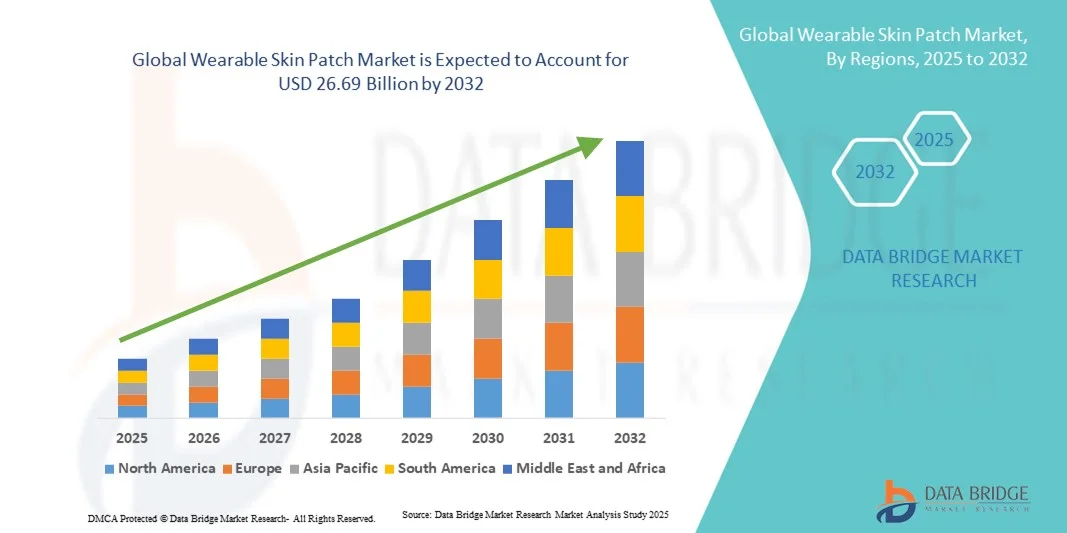
- The global wearable skin patch market size was valued at USD 14.00 billion in 2024 and is expected to reach USD 26.69 billion by 2032, at a CAGR of 8.40% during the forecast period
- The market growth is largely fueled by the increasing adoption and technological advancements in wearable medical devices and digital health solutions, leading to enhanced monitoring and management of health conditions in both clinical and homecare settings
- Furthermore, rising consumer demand for convenient, non-invasive, and user-friendly health monitoring tools is establishing wearable skin patches as a preferred solution for continuous health tracking. These converging factors are accelerating the uptake of wearable skin patch solutions, thereby significantly boosting the industry's growth
Wearable Skin Patch Market Analysis
- Wearable skin patches, offering non-invasive monitoring, drug delivery, and health tracking solutions, are becoming increasingly vital components in modern healthcare and wellness systems due to their enhanced convenience, remote monitoring capabilities, and seamless integration with digital health ecosystems
- The escalating demand for wearable skin patches is primarily fueled by the growing prevalence of chronic diseases, increasing focus on preventive healthcare, and rising consumer preference for personalized and connected health solutions
- North America dominated the wearable skin patch market with the largest revenue share of 37.9% in 2024, characterized by early adoption of digital health technologies, high healthcare expenditure, and a strong presence of key industry players, with the U.S. experiencing substantial growth in patch usage for both clinical and consumer health applications
- Asia-Pacific is expected to be the fastest growing region in the wearable skin patch market during the forecast period due to increasing urbanization, rising disposable incomes, and expanding healthcare infrastructure
- The Clinical Applications segment dominated the wearable skin patch market with the largest revenue share of 46.8% in 2024, driven by extensive use in hospitals, clinics, and home healthcare
Report Scope and Wearable Skin Patch Market Segmentation
|
Attributes |
Wearable Skin Patch Key Market Insights |
|
Segments Covered |
|
|
Countries Covered |
North America
Europe
Asia-Pacific
Middle East and Africa
South America
|
|
Key Market Players |
|
|
Market Opportunities |
|
|
Value Added Data Infosets |
In addition to the insights on market scenarios such as market value, growth rate, segmentation, geographical coverage, and major players, the market reports curated by the Data Bridge Market Research also include in-depth expert analysis, pricing analysis, brand share analysis, consumer survey, demography analysis, supply chain analysis, value chain analysis, raw material/consumables overview, vendor selection criteria, PESTLE Analysis, Porter Analysis, and regulatory framework. |
Wearable Skin Patch Market Trends
Rising Role of AI and Voice Integration in Wearable Skin Patches
- A significant and accelerating trend in the global wearable skin patch market is the integration of artificial intelligence (AI) and voice-enabled digital health platforms
- These technologies enhance user convenience by enabling personalized insights, predictive analytics, and hands-free interaction with health applications
- For instance, in 2024, the BioStamp nPoint wearable patch integrated AI-driven monitoring with voice alerts, allowing patients to receive real-time health updates via voice assistants such as Amazon Alexa or Google Assistant. This seamless integration enables users to track multiple health parameters without needing to manually check devices
- AI in wearable patches provides advanced features such as detecting anomalies in physiological data, predicting potential health risks, and generating personalized recommendations
- Voice-enabled interfaces make the technology accessible to elderly or differently-abled users, promoting greater patient engagement and adherence to health monitoring
- The integration of patches with broader digital health ecosystems allows centralized management of multiple devices and health metrics. Users can monitor glucose, heart rate, sleep, and activity data on a single platform, offering a holistic approach to personal health management
- This trend is reshaping expectations in the wearable health device market, with AI and voice-enabled features now seen as essential for next-generation patches, especially in chronic disease management and preventive care
Wearable Skin Patch Market Dynamics
Driver
Rising Demand for Continuous and Preventive Healthcare Monitoring
- The growing prevalence of chronic diseases such as diabetes and cardiovascular disorders is driving demand for wearable skin patches, which provide continuous and non-invasive monitoring of vital health parameters
- For instance, in March 2023, Abbott’s FreeStyle Libre 3 patch expanded into several U.S. and European markets, offering real-time glucose monitoring for diabetic patients. This launch exemplifies how continuous monitoring solutions are gaining widespread adoption due to their convenience and clinical relevance
- Patches allow healthcare providers and patients to identify trends, respond quickly to anomalies, and reduce the need for frequent hospital visits. This capability is increasingly critical as healthcare systems shift toward preventive and remote patient care model
- Rising awareness of personal wellness and preventive health has broadened patch usage beyond clinical settings, with consumers adopting devices for monitoring activity, sleep, hydration, and other lifestyle parameters
- Investment in R&D, coupled with regulatory approvals, continues to fuel the market, making wearable patches indispensable in personalized healthcare
Restraint/Challenge
Data Privacy Concerns and Cost Barriers
- Despite their advantages, wearable skin patches face challenges related to data privacy and cost. Continuous data collection and cloud connectivity make patches vulnerable to cybersecurity risks, which may deter potential users
- For instance, a 2024 report highlighted vulnerabilities in connected health devices, prompting BioStamp and similar manufacturers to implement stronger encryption and secure authentication protocols to protect patient data
- The relatively high cost of advanced multi-sensor and AI-enabled patches limits accessibility, particularly in developing regions or for price-sensitive consumers. While basic wellness patches are becoming more affordable, medical-grade patches with comprehensive monitoring capabilities remain expensive
- Limited reimbursement frameworks in some countries further restrict adoption, as patients may bear out-of-pocket expenses
- Addressing these challenges through enhanced cybersecurity, consumer education, and more cost-effective designs is essential for sustaining growth in the wearable skin patch market
Wearable Skin Patch Market Scope
The market is segmented on the basis of technology and application.
- By Technology
On the basis of technology, the wearable skin patch market is segmented into regular wearable and connected wearable. The regular wearable segment dominated the market with the largest revenue share of 44.5% in 2024, primarily due to its affordability, ease of use, and effectiveness for single-purpose applications such as drug delivery and basic physiological monitoring. These patches are non-invasive, comfortable for extended wear, and ideal for patients who do not require continuous remote monitoring. Research advancements in biocompatible materials and ergonomic designs have further strengthened adoption in both clinical and home settings. The segment benefits from its reliability without dependency on smartphones or cloud systems, making it a preferred option in regions with limited connectivity. Users appreciate the simplicity of standalone patches for administering insulin, nicotine, or pain relief medication. Hospitals and clinics often recommend them for routine monitoring where real-time connectivity is unnecessary, supporting steady market growth. The availability of various sizes, shapes, and adhesive options enhances patient comfort and adherence. Education and awareness programs by healthcare providers are also driving adoption. Overall, the regular wearable segment remains a cornerstone in the Wearable Skin Patch market.
The connected wearable segment is expected to witness the fastest CAGR of 22.1% from 2025 to 2032, fueled by the growing demand for remote patient monitoring and real-time health data tracking. These patches are integrated with Bluetooth, Wi-Fi, and low-power wireless communication technologies to transmit continuous data to smartphones, tablets, or cloud-based health platforms. They support AI-powered analytics, predictive alerts, and personalized insights, enabling users and caregivers to monitor multiple parameters such as glucose, heart rate, and hydration simultaneously. Integration with telemedicine services allows physicians to intervene promptly when abnormal readings are detected. Connected wearables are increasingly adopted in chronic disease management, elderly care, and preventive health applications. Consumers favor them for their convenience, hands-free monitoring, and ability to share data with healthcare professionals. The rise of AI-assisted dashboards, mobile apps, and voice-enabled feedback systems further accelerates adoption. Regulatory approvals and technological innovations continue to make these devices more reliable and user-friendly. Urbanization, increasing disposable income, and healthcare digitalization also support market growth. The segment’s versatility in both clinical and non-clinical use ensures long-term potential.
- By Application
On the basis of application, the wearable skin patch market is segmented into clinical applications and non-clinical applications. The clinical applications segment dominated the market with the largest revenue share of 46.8% in 2024, driven by extensive use in hospitals, clinics, and home healthcare. These patches are used for continuous glucose monitoring, cardiac monitoring, drug delivery, and other vital sign tracking. The segment benefits from the growing prevalence of chronic diseases, increasing adoption of telehealth solutions, and the rising focus on preventive care. Hospitals and healthcare providers prefer wearable patches for patient compliance, non-invasiveness, and accuracy. The growing investment in R&D, regulatory approvals, and digital health infrastructure further supports adoption. Continuous monitoring reduces hospital visits, lowers healthcare costs, and enables timely medical interventions. Patients and caregivers value real-time insights and alerts provided by these patches. The integration with AI and connected platforms enhances predictive healthcare management. Clinical applications also include monitoring post-surgery recovery and supporting clinical trials for pharmaceuticals.
The non-clinical applications segment is expected to witness the fastest CAGR of 21.5% from 2025 to 2032, driven by the rising demand for wellness and fitness monitoring among consumers. These patches track parameters such as activity levels, sleep patterns, hydration, and body temperature. Adoption is fueled by growing health consciousness, preventive healthcare trends, and the desire for lifestyle optimization. Connected wearables provide insights through apps and dashboards, helping users make data-driven decisions about diet, exercise, and sleep. The integration of AI, machine learning, and voice assistants adds value by offering personalized recommendations and health notifications. Urban populations with higher disposable incomes and tech-savvy consumers are early adopters of non-clinical patches. Companies are investing in attractive designs, improved comfort, and multi-functional capabilities to enhance consumer appeal. The segment also benefits from the expansion of wearable ecosystems, including smart watches and fitness trackers. Partnerships with wellness apps and fitness platforms further drive adoption. Non-clinical patches are increasingly marketed for stress monitoring, lifestyle management, and preventive healthcare, supporting rapid growth across global markets.
Wearable Skin Patch Market Regional Analysis
- North America dominated the wearable skin patch market with the largest revenue share of 37.9% in 2024, characterized by early adoption of digital health technologies, high healthcare expenditure, and a strong presence of key industry players
- The region’s robust healthcare ecosystem, combined with increasing awareness of preventive healthcare and chronic disease management, is driving the widespread adoption of wearable skin patches for both clinical and consumer health applications.
- Consumers in the region highly value the convenience, non-invasive monitoring, and real-time health tracking offered by wearable skin patches, which enable continuous management of conditions such as diabetes, cardiovascular disorders, and respiratory ailments. This strong adoption is further supported by technologically inclined populations, high disposable incomes, and the growing integration of wearable health devices with digital health platforms and mobile applications
U.S. Wearable Skin Patch Market Insight
The U.S. wearable skin patch market captured the largest revenue share of in 2024 within North America, fueled by the swift uptake of connected health devices and growing interest in remote patient monitoring. Consumers and healthcare providers are increasingly prioritizing the convenience, accuracy, and real-time data capabilities offered by wearable skin patches. The growing integration with telemedicine platforms, mobile apps, and cloud-based health monitoring solutions further propels market growth, enabling personalized healthcare and continuous health tracking.
Europe Wearable Skin Patch Market Insight
The Europe wearable skin patch market is projected to expand at a substantial CAGR throughout the forecast period, driven by rising awareness of preventive healthcare and chronic disease management, along with supportive healthcare policies. The increase in urbanization and growing demand for connected health devices are fostering the adoption of wearable skin patches across clinical and non-clinical applications. The region is experiencing significant growth in hospitals, clinics, and homecare settings, with innovative wearable solutions being incorporated into patient monitoring programs.
U.K. Wearable Skin Patch Market Insight
The U.K. wearable skin patch market is anticipated to grow at a noteworthy CAGR during the forecast period, supported by increasing consumer interest in health monitoring and personalized care solutions. Concerns regarding chronic disease management and the emphasis on preventive healthcare are encouraging adoption among both individual consumers and healthcare institutions. The U.K.’s strong digital health infrastructure and e-health initiatives are expected to further stimulate market expansion.
Germany Wearable Skin Patch Market Insight
The Germany wearable skin patch market is expected to expand at a considerable CAGR during the forecast period, fueled by increasing awareness of digital health solutions and the adoption of technologically advanced, patient-friendly monitoring devices. Germany’s well-developed healthcare infrastructure, focus on innovation, and government support for digital health adoption promote the use of wearable skin patches in both hospitals and homecare settings. The integration of wearable devices with electronic health records and telemedicine platforms is also gaining traction.
Asia-Pacific Wearable Skin Patch Market Insight
The Asia-Pacific wearable skin patch market is poised to grow at the fastest CAGR during the forecast period, driven by increasing urbanization, rising disposable incomes, and expanding healthcare infrastructure in countries such as China, Japan, and India. The region’s growing awareness of preventive healthcare and technological adoption is driving demand for wearable skin patches across both clinical and consumer health segments. Furthermore, Asia-Pacific’s emergence as a manufacturing hub for wearable health devices is improving affordability and accessibility, thereby accelerating market adoption.
Japan Wearable Skin Patch Market Insight
The Japan wearable skin patch market is gaining momentum due to the country’s high-tech culture, aging population, and strong emphasis on health monitoring. Wearable skin patches are increasingly adopted in clinical settings and by individual consumers for chronic disease management and preventive care. Integration with digital health platforms, telemedicine services, and home-based monitoring solutions is further supporting market growth.
China Wearable Skin Patch Market Insight
The China wearable skin patch market accounted for the largest market revenue share in Asia-Pacific in 2024, driven by rapid urbanization, increasing disposable incomes, and high technological adoption. China’s focus on digital healthcare, smart hospitals, and preventive health solutions is propelling the adoption of wearable skin patches in clinical, homecare, and consumer health applications. The presence of strong domestic manufacturers and the availability of cost-effective solutions are further supporting market expansion.
Wearable Skin Patch Market Share
The wearable skin patch industry is primarily led by well-established companies, including:
- iRhythm Inc. (U.S.)
- Medtronic (Ireland)
- Abbott (U.S.)
- Dexcom (U.S.)
- Insulet Corporation (U.S.)
- Senseonics (U.S.)
- Koninklijke Philips N.V. (Netherlands)
- VivaLNK, Inc. (U.S.)
- VitalConnect (U.S.)
- G-Tech Medical (U.S.)
- Cardiac Insight, Inc. (U.S.)
- GENTAG, Inc. (U.S.)
- Blue Spark Technologies, Inc. (U.S.)
Latest Developments in Global Wearable Skin Patch Market
- In December 2024, researchers at the University of California, San Diego, announced the development of a wearable ultrasound patch capable of continuous and noninvasive blood pressure monitoring. This flexible skin patch utilizes ultrasound technology to measure blood pressure deep inside the body, offering a simpler and more reliable alternative to current clinical methods. The patch underwent comprehensive clinical validation on 117 subjects, including patients in intensive care units, demonstrating its potential for continuous and noninvasive blood pressure monitoring
- In May 2025, researchers introduced a flexible haptic patch designed to provide tactile feedback in virtual reality (VR) and augmented reality (AR) environments. This ultra-thin, wearable device enables users to feel virtual objects and interactions, enhancing the immersive experience in VR/AR applications. The development represents a significant step forward in wearable technology, bridging the gap between digital and physical sensations
- In September 2025, Melbourne-based startup Nutromics announced the development of a groundbreaking wearable diagnostic device known as a "lab-on-a-patch." Unlike traditional diagnostics that rely on blood draws and lab processing, Nutromics’ skin patch continuously monitors a range of health markers using DNA-based biosensors. The technology has shown promise in diagnosing and managing conditions such as sepsis, heart attacks, and especially dosing the antibiotic vancomycin, which requires precise therapeutic control. Clinical trials have already demonstrated its effectiveness, and Nutromics is conducting global-first ICU trials in this diagnostic class
SKU-
Get online access to the report on the World's First Market Intelligence Cloud
- Interactive Data Analysis Dashboard
- Company Analysis Dashboard for high growth potential opportunities
- Research Analyst Access for customization & queries
- Competitor Analysis with Interactive dashboard
- Latest News, Updates & Trend analysis
- Harness the Power of Benchmark Analysis for Comprehensive Competitor Tracking
Research Methodology
Data collection and base year analysis are done using data collection modules with large sample sizes. The stage includes obtaining market information or related data through various sources and strategies. It includes examining and planning all the data acquired from the past in advance. It likewise envelops the examination of information inconsistencies seen across different information sources. The market data is analysed and estimated using market statistical and coherent models. Also, market share analysis and key trend analysis are the major success factors in the market report. To know more, please request an analyst call or drop down your inquiry.
The key research methodology used by DBMR research team is data triangulation which involves data mining, analysis of the impact of data variables on the market and primary (industry expert) validation. Data models include Vendor Positioning Grid, Market Time Line Analysis, Market Overview and Guide, Company Positioning Grid, Patent Analysis, Pricing Analysis, Company Market Share Analysis, Standards of Measurement, Global versus Regional and Vendor Share Analysis. To know more about the research methodology, drop in an inquiry to speak to our industry experts.
Customization Available
Data Bridge Market Research is a leader in advanced formative research. We take pride in servicing our existing and new customers with data and analysis that match and suits their goal. The report can be customized to include price trend analysis of target brands understanding the market for additional countries (ask for the list of countries), clinical trial results data, literature review, refurbished market and product base analysis. Market analysis of target competitors can be analyzed from technology-based analysis to market portfolio strategies. We can add as many competitors that you require data about in the format and data style you are looking for. Our team of analysts can also provide you data in crude raw excel files pivot tables (Fact book) or can assist you in creating presentations from the data sets available in the report.