Global Farm Animal Drug Market
Market Size in USD Billion
CAGR :
% 
 USD
20.90 Billion
USD
34.85 Billion
2025
2033
USD
20.90 Billion
USD
34.85 Billion
2025
2033
 Forecast Period Forecast Period |
2026 –2033 |
 Market Size (Base Year) Market Size (Base Year) |
USD 20.90 Billion |
 Market Size (Forecast Year) Market Size (Forecast Year) |
USD 34.85 Billion |
 CAGR CAGR |
% |
| Major Markets Players |
|
Farm Animal Drug Market Size
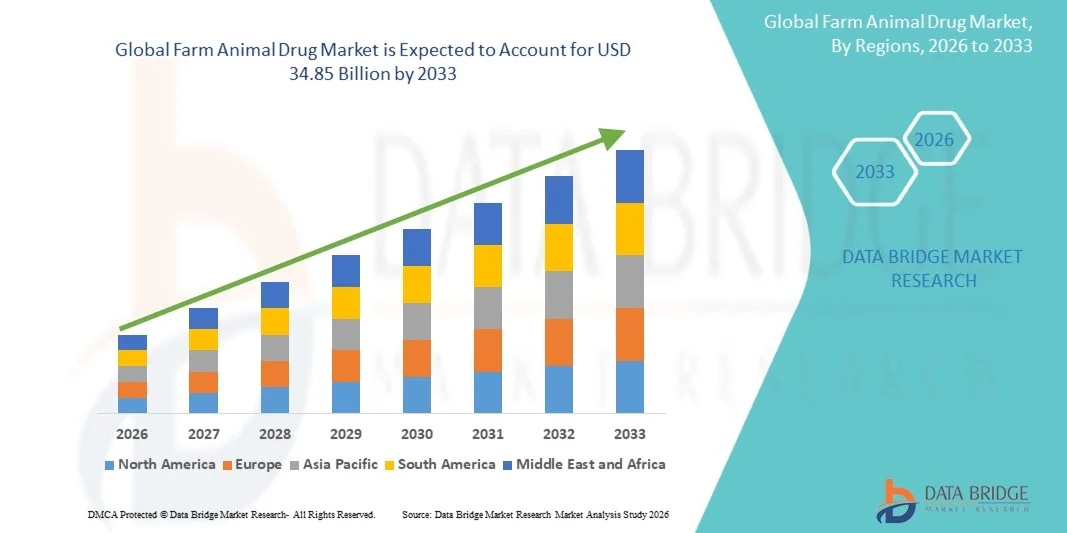
- The global farm animal drug market size was valued at USD 20.90 billion in 2025 and is expected to reach USD 34.85 billion by 2033, at a CAGR of 6.60% during the forecast period
- The market growth is largely driven by the increasing demand for livestock products, rising adoption of preventive healthcare practices for farm animals, and technological advancements in veterinary pharmaceuticals
- Furthermore, growing awareness of animal health, government initiatives supporting livestock productivity, and the need to control infectious diseases in farm animals are propelling the demand for farm animal drugs. These factors are collectively accelerating the adoption of veterinary pharmaceuticals, thereby significantly boosting the industry's growth
Farm Animal Drug Market Analysis
- Farm animal drugs, including anti-infectives, parasiticides, anti-inflammatories, anesthetics, analgesics, hormones, and other related products, are crucial for maintaining livestock health, enhancing productivity, and ensuring biosecurity in modern animal husbandry practices
- The rising demand for farm animal drugs is primarily driven by the growth of livestock populations, increasing adoption of preventive healthcare practices, and heightened awareness of disease management and animal welfare among farmers
- North America dominated the farm animal drug market with the largest revenue share of 39.8% in 2025, supported by advanced veterinary infrastructure, high adoption of innovative animal health solutions, and strong regulatory frameworks promoting livestock health, with the U.S. witnessing significant demand for anti-infectives and parasiticides in poultry and cattle
- Asia-Pacific is expected to be the fastest-growing region in the farm animal drug market during the forecast period due to rising meat consumption, expanding livestock farming, and increasing government initiatives supporting animal health programs
- Anti-infective segment dominated the farm animal drug market with a market share of 42.9% in 2025, driven by its critical role in preventing and treating bacterial infections and supporting overall livestock productivity
Report Scope and Farm Animal Drug Market Segmentation
|
Attributes |
Farm Animal Drug Key Market Insights |
|
Segments Covered |
|
|
Countries Covered |
North America
Europe
Asia-Pacific
Middle East and Africa
South America
|
|
Key Market Players |
|
|
Market Opportunities |
|
|
Value Added Data Infosets |
In addition to the insights on market scenarios such as market value, growth rate, segmentation, geographical coverage, and major players, the market reports curated by the Data Bridge Market Research also include in-depth expert analysis, patient epidemiology, pipeline analysis, pricing analysis, and regulatory framework |
Farm Animal Drug Market Trends
“Rising Adoption of Precision Livestock Farming and Digital Health Monitoring”
- A significant and accelerating trend in the global farm animal drug market is the integration of precision livestock farming tools and digital health monitoring systems, which enable more targeted and efficient administration of veterinary drugs
- For instance, smart collars and ear tags equipped with sensors monitor animal vitals, activity levels, and disease symptoms, allowing veterinarians to administer anti-infectives or parasiticides only when needed, reducing drug overuse
- Digital platforms are increasingly being used to track herd health data, optimize vaccination schedules, and provide predictive alerts for disease outbreaks, enhancing overall animal welfare and productivity
- The combination of farm management software and veterinary drug administration creates a data-driven ecosystem that improves decision-making and reduces costs associated with indiscriminate drug use
- This trend towards tech-enabled, precision-based livestock healthcare is reshaping farmer expectations regarding animal health management, prompting companies such as Zoetis to develop connected drug delivery systems integrated with herd management platforms
- The demand for farm animal drugs that can be monitored, optimized, and administered through digital and precision tools is growing rapidly across livestock operations worldwide, as producers increasingly prioritize efficiency, health outcomes, and regulatory compliance
- Emerging AI-driven predictive analytics are helping forecast disease outbreaks and optimize drug usage schedules, further enhancing the efficiency and cost-effectiveness of farm animal healthcare
Farm Animal Drug Market Dynamics
Driver
“Increasing Demand Due to Growing Livestock Production and Animal Health Awareness”
- The rising global demand for meat, dairy, and other livestock products, coupled with growing awareness of preventive animal healthcare, is a key driver for the farm animal drug market
- For instance, in March 2025, Boehringer Ingelheim launched an expanded line of anti-infectives and parasiticides for poultry and swine, aimed at improving herd immunity and overall productivity, highlighting the role of preventive care
- Increasing incidence of infectious and parasitic diseases in livestock is encouraging farmers to adopt comprehensive drug regimens, including vaccines and parasiticides, to maintain herd health and reduce economic losses
- Government programs promoting animal health standards, veterinary support services, and regulatory guidelines for livestock medication are further boosting demand for farm animal drugs
- Enhanced focus on food safety, animal welfare, and sustainable livestock practices is driving adoption of modern veterinary pharmaceuticals, ensuring both consumer confidence and improved productivity
- The convenience of ready-to-use formulations, easy-to-administer oral or injectable drugs, and broader availability through veterinary networks are key factors propelling market growth in both developed and developing regions
- Growing partnerships between pharmaceutical companies and feed producers are driving integrated solutions for herd health management, expanding access to farm animal drug
- Rising consumer preference for ethically and sustainably produced animal products is encouraging the use of preventive veterinary drugs and natural alternatives, creating new growth opportunities
Restraint/Challenge
“Antimicrobial Resistance and Regulatory Compliance Hurdles”
- Concerns growing concern of antimicrobial resistance (AMR) due to overuse or misuse of antibiotics in livestock is a significant challenge to market growth
- For instance, reports of multidrug-resistant bacterial strains in poultry and cattle have made some producers cautious about excessive anti-infective use, limiting market expansion for conventional antibiotics
- Strict regulations on drug residues in animal products, withdrawal periods, and veterinary prescription requirements pose compliance challenges for manufacturers and farmers alike
- Addressing these challenges through alternative therapies, stricter prescription controls, and the development of residue-free or natural drug options is crucial for maintaining market trust and sustainability
- High costs associated with novel drug formulations, vaccines, or bioactive feed additives may also act as barriers to adoption, particularly for small-scale farmers in emerging markets
- Overcoming these hurdles through awareness programs, regulatory support, and innovation in safe and effective veterinary pharmaceuticals is vital for long-term market growth
- Limited access to veterinary services and trained personnel in rural regions may delay proper drug administration, affecting market penetration
- Resistance from farmers to adopt newer, more expensive drug formulations without demonstrable short-term ROI can hinder widespread adoption of advanced veterinary drugs
Farm Animal Drug Market Scope
The market is segmented on the basis of product type, animal type, route of administration, and distribution channel.
- By Product Type
On the basis of product type, the farm animal drug market is segmented into anti-infectives, parasiticides, anti-inflammatories, anesthetics, analgesics, hormones and related products, and others. The anti-infective segment dominated the market with the largest market revenue share of 42.9% in 2025, driven by the essential role of antibiotics and related drugs in preventing and treating bacterial infections in livestock and poultry. Farmers prioritize anti-infectives due to their proven effectiveness in reducing mortality and improving productivity across large herds. Anti-infectives are widely used across multiple animal species, making them a cornerstone of veterinary care. Regulatory support for disease prevention and improved farm biosecurity also fuels the adoption of anti-infectives. Established pharmaceutical companies continue to innovate with broad-spectrum formulations to meet farmer needs efficiently. The market sees sustained demand due to ongoing disease outbreaks and the importance of maintaining herd health.
The parasiticides segment is anticipated to witness the fastest growth rate from 2026 to 2033, fueled by rising awareness of parasite control and preventive health practices in livestock and equine populations. Parasiticides address a broad spectrum of internal and external parasites that can significantly impact animal productivity and welfare. The increasing global livestock population and expansion of intensive farming systems are driving higher usage. Improved formulations offering easier administration and longer efficacy periods are enhancing adoption. Veterinary campaigns and farmer education programs further support market growth. In addition, parasitic infections directly impact food safety and economic outcomes, making parasiticides a rapidly growing focus in the farm animal drug sector.
- By Animal Type
On the basis of animal type, the farm animal drug market is segmented into livestock animals and equine. The livestock animals segment dominated the market with the largest revenue share in 2025, owing to the sheer volume of cattle, poultry, swine, and small ruminants requiring regular drug interventions for disease prevention and growth optimization. Livestock farmers invest heavily in preventive drugs, including vaccines, anti-infectives, and parasiticides, to reduce economic losses due to disease outbreaks. Government programs supporting livestock health and food safety standards further boost demand in this segment. The segment benefits from extensive veterinary support, availability of specialized products, and ongoing research into livestock disease management. Established veterinary pharmaceutical companies focus primarily on livestock due to the high-volume and recurring demand. Anti-infectives and anti-parasitic drugs remain the most widely used product types in this segment.
The equine segment is expected to witness the fastest growth during the forecast period, driven by increasing investments in horse breeding, racing, and recreational equestrian activities. Equine health management requires specialized drugs such as anti-inflammatories, analgesics, and vaccines, creating a niche but high-value market. Rising awareness of animal welfare and equine performance optimization fuels adoption. Advanced veterinary practices and specialized equine clinics contribute to the growth of this segment. Moreover, the growth in equestrian sports and recreational horse ownership in emerging markets is accelerating the demand for high-quality veterinary drugs.
- By Route of Administration
On the basis of route of administration, the farm animal drug market is segmented into oral, parenteral, topical, and others. The oral segment dominated the market with the largest revenue share in 2025, due to its ease of administration in large herds, suitability for preventive treatments, and compatibility with feed or water delivery systems. Oral drugs, including anti-infectives and parasiticides, enable mass medication efficiently and reduce stress on animals compared to injections. Farmers prefer oral administration for routine disease prevention and growth management. Technological improvements in palatability and stability further support adoption. The segment also benefits from established supply chains and formulations that allow consistent dosing. Regulatory approvals for oral drug use in livestock enhance farmer confidence and adoption rates.
The parenteral segment is expected to witness the fastest growth from 2026 to 2033, fueled by the demand for vaccines, biologics, and targeted therapeutic interventions that require injections. Parenteral administration ensures precise dosing and rapid bioavailability, critical for treating infections and acute conditions. Veterinary professionals prefer this route for high-value animals and during disease outbreaks. Innovations in needle-free injection devices and combination vaccines are further boosting adoption. Parenteral formulations are increasingly integrated into preventive herd health programs. Rising veterinary awareness and government support for vaccination campaigns also contribute to segment growth.
- By Distribution Channel
On the basis of distribution channel, the farm animal drug market is segmented into veterinary hospitals, veterinary clinics, pharmacies and drug stores, and others. The veterinary hospitals segment dominated the market with the largest revenue share in 2025, due to the availability of specialized treatments, professional supervision, and high-value services for livestock and equine animals. Hospitals serve as centralized points for mass vaccination, treatment of complex diseases, and delivery of injectable or specialty drugs. The segment benefits from trust and established relationships with farmers and large-scale livestock operations. Hospital-based distribution ensures compliance with regulatory standards and proper drug administration. Moreover, veterinary hospitals often provide integrated herd health management services that drive repeat sales.
The pharmacies and drug stores segment is expected to witness the fastest growth during the forecast period, fueled by easier access for small-scale farmers and rural livestock owners seeking over-the-counter veterinary drugs. These outlets offer convenience, availability of essential products, and a wide range of preventive and therapeutic drugs. The growth of online veterinary pharmacies and e-commerce platforms further supports this segment. Education campaigns promoting safe use of veterinary drugs also contribute to adoption. Increasing rural livestock populations and limited access to veterinary professionals in remote areas are driving demand through pharmacies and drug stores.
Farm Animal Drug Market Regional Analysis
- North America dominated the farm animal drug market with the largest revenue share of 39.8% in 2025, supported by advanced veterinary infrastructure, high adoption of innovative animal health solutions, and strong regulatory frameworks promoting livestock health
- Farmers in the region prioritize the health and productivity of livestock through regular use of anti-infectives, parasiticides, and vaccines, supported by access to veterinary services and modern drug formulations
- This widespread adoption is further reinforced by government initiatives promoting animal welfare and food safety, high awareness among livestock producers, and a focus on reducing disease-related economic losses, establishing farm animal drugs as an essential component of livestock management in both large-scale and commercial farms
U.S. Farm Animal Drug Market Insight
The U.S. farm animal drug market captured the largest revenue share of 82% in 2025 within North America, fueled by the country’s well-established livestock industry and high adoption of preventive veterinary healthcare. Farmers are increasingly prioritizing herd health through the use of anti-infectives, parasiticides, and vaccines to reduce disease outbreaks and improve productivity. The growing focus on food safety, animal welfare, and regulatory compliance further propels the market. Moreover, rising investments in livestock technology, veterinary infrastructure, and herd health management programs are significantly contributing to the market's expansion.
Europe Farm Animal Drug Market Insight
The Europe farm animal drug market is projected to expand at a substantial CAGR throughout the forecast period, primarily driven by strict animal health regulations and the need to prevent livestock diseases. The increase in intensive livestock farming, coupled with growing awareness of preventive healthcare practices, is fostering the adoption of farm animal drugs. European farmers are also adopting modern veterinary solutions to ensure productivity and food safety. The region is witnessing significant growth across poultry, swine, and cattle sectors, with farm animal drugs being increasingly integrated into herd health management programs.
U.K. Farm Animal Drug Market Insight
The U.K. farm animal drug market is anticipated to grow at a noteworthy CAGR during the forecast period, driven by rising awareness of animal welfare and the increasing adoption of preventive veterinary care. Concerns regarding livestock disease outbreaks are encouraging farmers to use anti-infectives, parasiticides, and vaccines more rigorously. The UK’s strong regulatory framework and support for sustainable livestock practices, alongside growing veterinary services, are expected to continue stimulating market growth. Moreover, both commercial farms and small-scale livestock owners are increasingly adopting modern drug solutions for disease control and productivity enhancement.
Germany Farm Animal Drug Market Insight
The Germany farm animal drug market is expected to expand at a considerable CAGR during the forecast period, fueled by stringent regulations on animal health and growing awareness of sustainable livestock management. Germany’s advanced veterinary infrastructure and emphasis on innovation promote the adoption of farm animal drugs, particularly vaccines, anti-infectives, and anti-parasitics. The integration of herd management software with veterinary treatments is also becoming increasingly prevalent. Farmers are seeking solutions that ensure productivity, food safety, and compliance with EU regulations, which is driving demand for modern veterinary pharmaceuticals.
Asia-Pacific Farm Animal Drug Market Insight
The Asia-Pacific farm animal drug market is poised to grow at the fastest CAGR of 25% during the forecast period of 2026 to 2033, driven by increasing livestock production, rising demand for meat and dairy products, and technological advancements in countries such as China, India, and Japan. The region’s growing adoption of preventive animal healthcare, supported by government initiatives promoting livestock health and biosecurity, is driving market growth. Furthermore, as APAC emerges as a manufacturing hub for veterinary pharmaceuticals, affordability and accessibility of farm animal drugs are expanding to a wider farmer base.
Japan Farm Animal Drug Market Insight
The Japan farm animal drug market is gaining momentum due to the country’s focus on high-quality livestock production, advanced veterinary infrastructure, and adoption of preventive healthcare practices. The Japanese market places a significant emphasis on biosecurity and animal welfare, and the adoption of vaccines and anti-infectives is driven by large-scale poultry and swine operations. Integration of herd management systems with drug administration practices is fueling growth. Moreover, Japan’s aging farming population is likely to spur demand for more efficient, easy-to-administer, and safe veterinary drug solutions in both commercial and small-scale livestock farms.
India Farm Animal Drug Market Insight
The India farm animal drug market accounted for the largest market revenue share in Asia-Pacific in 2025, attributed to the country’s expanding livestock population, rising meat and dairy demand, and rapid adoption of veterinary pharmaceuticals. India stands as one of the largest markets for preventive animal healthcare, and farm animal drugs are becoming increasingly popular among both commercial and smallholder farmers. Government initiatives promoting livestock health, the push towards organized dairy and poultry farms, and the availability of affordable drug options, alongside strong domestic manufacturing, are key factors propelling the market in India.
Farm Animal Drug Market Share
The Farm Animal Drug industry is primarily led by well-established companies, including:
- Zoetis Services LLC (U.S.)
- Elanco Animal Health (U.S.)
- Ceva Santé Animale (France)
- Vetoquinol (France)
- Merck Animal Health (U.S.)
- Boehringer Ingelheim (Germany)
- Virbac (France)
- Dechra Pharmaceuticals plc (U.K.)
- Phibro Animal Health Corporation (U.S.)
- Norbrook Laboratories Ltd. (U.K.)
- Neogen Corporation (U.S.)
- Huvepharma Inc (U.S.)
- Ouro Fino Saúde Animal Participações SA (Brazil)
- Laboratorios Hipra S.A. (Spain)
- Laboratorios Calier S.A. (Spain)
- Laboratorios Syva S.A. (Spain)
- Jurox Pty Ltd (Australia)
- Kyoritsu Seiyaku Corporation (Japan)
- SeQuent Scientific Limited (India)
- Zydus Animal Health and Investments Limited (India)
What are the Recent Developments in Farm Animal Drug Market?
- In January 2026, the European Medicines Agency (EMA) reported its key 2025 recommendations, noting that 30 veterinary medicines including 16 vaccines were recommended for marketing authorization, the highest number in consecutive years, indicating strong innovation momentum in veterinary pharmaceuticals
- In December 2025, EXZOLT™ CATTLE‑CA1 (fluralaner topical solution) received conditional FDA approval for prevention and treatment of New World screwworm larvae in cattle, offering a novel parasiticide option for livestock producers facing emergent pest threats
- In August 2025, the U.S. Department of Health and Human Services authorized Emergency Use Authorizations (EUAs) for animal drugs to counter screwworm infestations (despite no confirmed U.S. cases), allowing veterinarians to use approved or foreign drugs proactively to protect livestock health
- In July 2025, the Government of India banned 18 antibiotics, 18 antivirals, and one anti‑protozoan drug for livestock use in certain animals to enhance food safety and curb antimicrobial resistance, representing a major regulatory shift impacting farm animal drug use practices
- In April 2025, the U.S. Food and Drug Administration approved new animal drug products for livestock use, including Zoetis’s Simparica TRIO® for cattle (reducing ammonia emissions and improving feed efficiency) and Flunine‑S™ for swine respiratory disease control, marking significant new drug entries in farm animal healthcare
SKU-
Get online access to the report on the World's First Market Intelligence Cloud
- Interactive Data Analysis Dashboard
- Company Analysis Dashboard for high growth potential opportunities
- Research Analyst Access for customization & queries
- Competitor Analysis with Interactive dashboard
- Latest News, Updates & Trend analysis
- Harness the Power of Benchmark Analysis for Comprehensive Competitor Tracking
Research Methodology
Data collection and base year analysis are done using data collection modules with large sample sizes. The stage includes obtaining market information or related data through various sources and strategies. It includes examining and planning all the data acquired from the past in advance. It likewise envelops the examination of information inconsistencies seen across different information sources. The market data is analysed and estimated using market statistical and coherent models. Also, market share analysis and key trend analysis are the major success factors in the market report. To know more, please request an analyst call or drop down your inquiry.
The key research methodology used by DBMR research team is data triangulation which involves data mining, analysis of the impact of data variables on the market and primary (industry expert) validation. Data models include Vendor Positioning Grid, Market Time Line Analysis, Market Overview and Guide, Company Positioning Grid, Patent Analysis, Pricing Analysis, Company Market Share Analysis, Standards of Measurement, Global versus Regional and Vendor Share Analysis. To know more about the research methodology, drop in an inquiry to speak to our industry experts.
Customization Available
Data Bridge Market Research is a leader in advanced formative research. We take pride in servicing our existing and new customers with data and analysis that match and suits their goal. The report can be customized to include price trend analysis of target brands understanding the market for additional countries (ask for the list of countries), clinical trial results data, literature review, refurbished market and product base analysis. Market analysis of target competitors can be analyzed from technology-based analysis to market portfolio strategies. We can add as many competitors that you require data about in the format and data style you are looking for. Our team of analysts can also provide you data in crude raw excel files pivot tables (Fact book) or can assist you in creating presentations from the data sets available in the report.