Asia Pacific Cardiac Pacemakers Market
Market Size in USD Million
CAGR :
% 
 USD
368.11 Million
USD
646.81 Million
2024
2032
USD
368.11 Million
USD
646.81 Million
2024
2032
 Forecast Period Forecast Period |
2025 –2032 |
 Market Size (Base Year) Market Size (Base Year) |
USD 368.11 Million |
 Market Size (Forecast Year) Market Size (Forecast Year) |
USD 646.81 Million |
 CAGR CAGR |
% |
| Major Markets Players |
|
Cardiac Pacemakers Market Size
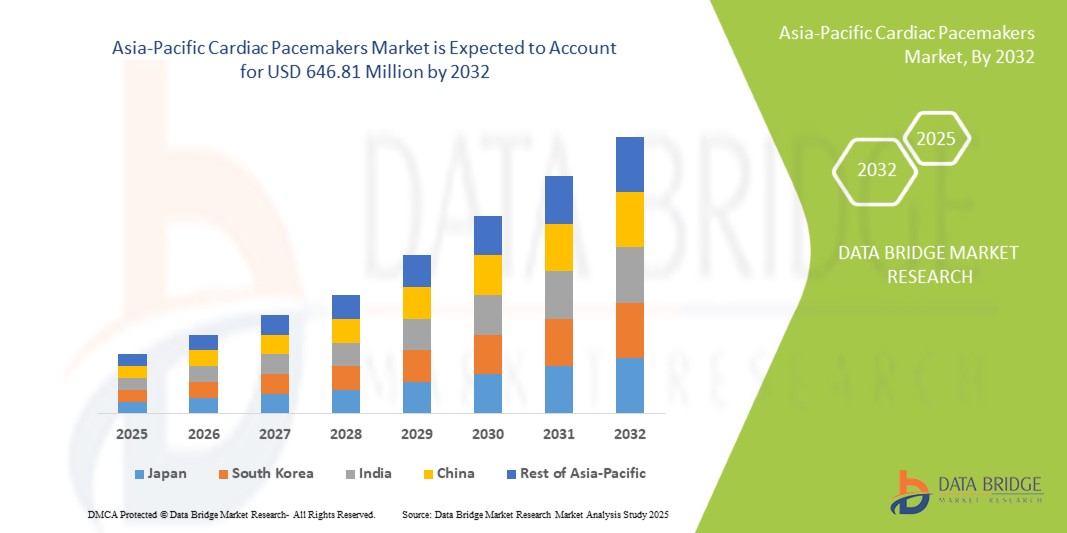
- The Asia- Pacific Cardiac Pacemakers Market Treatment market was valued at USD 368.11 million in 2024 and is expected to reach USD 646.81 Million by 2032, at a CAGR of 7.3%, during the forecast period
- The rising prevalence of cardiovascular diseases, particularly arrhythmias and heart block, along with the growing preference for minimally invasive cardiac procedures, is driving demand for cardiac pacemakers across the Asia-Pacific region. Additionally, increasing awareness about the importance of early intervention in heart rhythm disorders, coupled with advancements in pacemaker technologies—such as leadless and MRI-compatible devices—is further propelling market growth.
Cardiac Pacemakers Market Analysis
- Cardiac pacemakers are small, battery-powered medical devices implanted under the skin to help manage abnormal heart rhythms (arrhythmias) by delivering electrical impulses that prompt the heart to beat at a normal rate. These devices are essential in treating conditions such as bradycardia and heart block, significantly improving heart function, reducing symptoms like fatigue and fainting, and enhancing overall quality of life for patients with rhythm disorders.
- Japan emerges as a leading region in the Asia-Pacific Cardiac Pacemakers Market, supported by a highly advanced healthcare system, a rapidly aging population, and comprehensive reimbursement policies that promote the adoption of implantable cardiac devices.
- The region’s investment in next-generation pacemaker technologies—such as leadless pacemakers, MRI-compatible systems, and devices with remote monitoring capabilities—along with the high burden of cardiac arrhythmias, continues to drive innovation and market growth across the Asia-Pacific cardiac device landscape.
Report Scope and Cardiac Pacemakers Market Segmentation
|
Attributes |
Cardiac Pacemakers Market Key Market Insights |
|
Segments Covered |
|
|
Countries Covered |
Asia-Pacific
|
|
Key Market Players |
|
|
Market Opportunities |
|
|
Value Added Data Infosets |
In addition to the insights on market scenarios such as market value, growth rate, segmentation, geographical coverage, and major players, the market reports curated by the Data Bridge Market Research also include import export analysis, production capacity overview, production consumption analysis, price trend analysis, climate change scenario, supply chain analysis, value chain analysis, raw material/consumables overview, vendor selection criteria, PESTLE Analysis, Porter Analysis, and regulatory framework. |
Cardiac Pacemakers Market Trends
“Advancements in Remote Monitoring and Telemedicine Integration”
- A growing trend in the Asia-Pacific Cardiac Pacemakers Market is the integration of remote monitoring technologies and telemedicine, allowing for real-time monitoring of pacemaker performance and patient health from home, reducing the need for frequent hospital visits.
- Advancements in wireless pacemakers and mobile health applications are enhancing patient engagement and providing continuous data for healthcare providers to make informed decisions about treatment adjustments.
- For instance, Boston Scientific's Latitude NXT platform, which integrates with their cardiac devices, enables remote monitoring and automatic data uploads to the cloud, allowing for efficient management of patients’ cardiac health.
- This shift towards remote monitoring aligns with the increasing demand for telehealth services across the region, especially in remote or underserved areas, improving accessibility to timely interventions.
- The trend is also supported by advancements in artificial intelligence (AI) and machine learning, which are used to predict potential complications and optimize pacemaker therapy for individual patients.
- As patients and healthcare providers embrace these innovations, the Asia-Pacific Cardiac Pacemakers Market is seeing a transformation in patient care delivery and enhanced clinical outcomes.
Cardiac Pacemakers Market Dynamics
Driver
“Increasing Prevalence of Coronary Artery Disease (CAD)”
- As the Asia-Pacific population continues to age and lifestyle-related risk factors such as obesity, sedentary behavior, diabetes, and smoking become more prevalent, the incidence of coronary artery disease (CAD)—a condition characterized by narrowing or blockage of the coronary arteries due to plaque buildup—is rising significantly. CAD remains the leading cause of death worldwide, contributing to a growing demand for effective, life-saving interventions like Cardiac Pacemakers.
- Cardiac Pacemakers, particularly drug-eluting Cardiac Pacemakers (DES), offer a minimally invasive solution to restore blood flow in blocked arteries, relieve chest pain (angina), and reduce the risk of heart attacks. These devices are increasingly favored over traditional open-heart surgeries due to shorter recovery times, lower complication rates, and improved long-term outcomes.
For instance,
- In November 2023, the World Health Organization (WHO) reported that cardiovascular diseases are responsible for approximately 17.9 million deaths annually, with coronary heart disease accounting for a majority.
- According to data published by the Global Heart Association (2024), around 18.2 million adults in Japan are living with CAD, and this number is projected to rise with increasing age and risk factor prevalence.
- The growing Asia-Pacific burden of CAD is driving the need for scalable, effective interventional solutions. At the same time, heightened awareness among clinicians and patients about the benefits of early stenting is accelerating adoption rates.
- As clinical outcomes continue to improve due to innovations in stent design, coating technologies, and delivery systems, healthcare professionals are more frequently recommending PCI (Percutaneous Coronary Intervention) with stenting as a frontline treatment. This convergence of clinical need, awareness, and technological progress is creating a robust environment for the continued growth of the Asia-Pacific Cardiac Pacemakers Market.
Opportunity
“Advancements in Stent Technologies and Delivery Systems”
- Significant innovations in coronary stent design—such as next-generation drug-eluting Cardiac Pacemakers (DES), bioresorbable vascular scaffolds (BVS), and dual therapy Cardiac Pacemakers—are transforming the treatment landscape for coronary artery disease. These advancements provide longer-lasting arterial support, reduced restenosis rates, and enhanced biocompatibility, appealing to both clinicians and patients seeking safer and more effective cardiovascular solutions.
- Cutting-edge delivery systems and catheter technologies are improving stent placement precision, reducing procedure time, and minimizing complications, particularly in complex or multi-vessel interventions. These improvements directly align with the Asia-Pacific shift toward minimally invasive cardiac procedures and contribute to better clinical outcomes and faster patient recovery.
For instance,
- Abbott Laboratories, Boston Scientific, and Medtronic have introduced Cardiac Pacemakers with polymer-free coatings, ultra-thin strut designs, and optimized drug elution profiles to improve long-term patency and reduce inflammatory response.
- In early 2024, peer-reviewed studies published in journals such as JACC: Cardiovascular Interventions and EuroIntervention highlighted the superiority of new-generation DES in complex lesions and high-risk patient groups, including those with diabetes and chronic total occlusions.
- These technological advances meet the increasing demand for durable, patient-centric cardiovascular care in both mature and emerging markets.
- Companies that invest in innovative stent platforms, customized treatment solutions, and precision-guided PCI tools are better positioned to capitalize on the expanding Asia-Pacific burden of coronary artery disease. This makes the Cardiac Pacemakers Market sector an attractive and strategic area for long-term investment and competitive growth within the interventional cardiology space.
Restraint/Challenge
“High Cost and Accessibility Barriers in Coronary Stent Procedures”
- The high cost of coronary stent implantation, especially when coupled with advanced stent technologies and hospital-based interventional procedures, presents a major challenge to widespread accessibility—particularly in low- and middle-income countries (LMICs) and underserved populations. Even in high-income nations, patients may face substantial out-of-pocket expenses due to insurance limitations or tiered reimbursement structures, which can discourage timely intervention and compromise long-term cardiovascular health outcomes.
- While drug-eluting Cardiac Pacemakers (DES) have improved clinical efficacy, they are often significantly more expensive than bare-metal Cardiac Pacemakers (BMS), leading some healthcare systems and patients to opt for less effective but more affordable alternatives.
- Additionally, the cost of post-procedural care, including dual antiplatelet therapy (DAPT), regular monitoring, and follow-up angiography, further increases the financial burden on patients and healthcare systems. This cumulative cost structure may limit the reach of life-saving stenting procedures in areas with constrained healthcare budgets.
For instance,
- A 2023 report by the College of Cardiology (ACC) noted that percutaneous coronary intervention (PCI) with drug-eluting Cardiac Pacemakers can range between USD 10,000 to USD 35,000, depending on geographic region, hospital, and stent type.
- In January 2024, a Lancet Asia-Pacific Health study emphasized that in LMICs, many hospitals struggle to afford newer-generation Cardiac Pacemakers, resulting in limited adoption of the most effective technologies and increased reliance on outdated or less durable options.
- According to Medtronic and Boston Scientific, pricing disparities between high-end DES and generic alternatives, along with limited government subsidies in certain regions, restrict patient access to the latest coronary stent innovations.
- These financial and infrastructural barriers hinder equitable access to advanced interventional cardiology. Addressing them through pricing reform, broader insurance coverage, tiered product offerings, and government-supported subsidy programs will be essential to ensure Asia-Pacific market expansion and improved patient outcomes.
Cardiac Pacemakers Market Scope
The market is segmented on the type, technology, application, and end users.
|
Segmentation |
Sub-Segmentation |
|
By Type |
|
|
By Technology |
|
|
By Application |
|
|
By End Users |
|
In 2025, the MRI Compatible Pacemaker Segmentis Projected to Dominate the Market with the Largest Share in the type Segment
The MRI Compatible Pacemaker segment is expected to dominate the Asia- Pacific Cardiac Pacemakers Market in 2025, accounting for the largest market share of approximately 68.7%. This leadership is primarily driven by the increasing adoption of MRI-compatible pacemakers due to their ability to safely perform MRI scans, which is crucial for patients requiring frequent imaging. Additionally, advancements in pacemaker technology and growing awareness of their benefits in managing cardiac conditions contribute to their dominance in the market.
Single-chamber Pacemaker are Expected to Account for the Largest Share During the Forecast Period in technology segment
In 2025, Single-chamber Pacemaker are projected to dominate the Asia- Pacific Cardiac Pacemakers Market , accounting for the largest market share of approximately 64.9%. This segment's dominance is fueled by the widespread preference for single-chamber pacemakers due to their simplicity, cost-effectiveness, and suitability for patients with less complex cardiac conditions. They offer effective treatment for individuals requiring pacing in only one chamber of the heart, such as those with atrial or ventricular arrhythmias. Additionally, their lower cost and shorter procedure times contribute to their high adoption rate across the Asia-Pacific region.
Cardiac Pacemakers Market Regional Analysis
“Japan is the Dominant country in the Asia- Pacific Cardiac Pacemakers Market ”
- Japan leads the Asia-Pacific Cardiac Pacemakers Market, driven by its advanced healthcare infrastructure, high procedural volumes of percutaneous coronary interventions (PCI), and widespread availability of cutting-edge pacemaker technologies such as drug-eluting pacemakers (DES) and bioresorbable scaffolds.
- Japan holds the largest market share, owing to the rising prevalence of coronary artery disease (CAD), a growing aging population, and increasing lifestyle-related risk factors such as obesity, hypertension, and diabetes.
- Favorable reimbursement policies, extensive healthcare coverage, and strong government support for cardiovascular health programs contribute significantly to the region’s market dominance.
- Additionally, the presence of key players such as Abbott, Boston Scientific, and Medtronic, along with continuous R&D investments and clinical trial activity, fuels technological innovation and product adoption across the Asia-Pacific region.
“China is Projected to Register the Highest Growth Rate”
- China is anticipated to experience the fastest growth in the Cardiac Pacemakers Market, driven by the rising burden of cardiovascular diseases, improving healthcare access, and increasing adoption of interventional cardiology procedures.
- China is emerging as a key market due to its large patient population, higher demand for minimally invasive procedures, and government-led initiatives to address the growing cardiovascular health crisis.
- With its well-developed medical infrastructure and aging population, China is a leader in adopting advanced pacemakers and imaging-guided PCI techniques.
- Moreover, the rise of domestic pacemaker manufacturers and cost-effective product offerings, combined with supportive regulatory reforms, are positioning the region as a key growth engine for the Asia-Pacific Cardiac Pacemakers Market.
Cardiac Pacemakers Market Share
The market competitive landscape provides details by competitor. Details included are company overview, company financials, revenue generated, market potential, investment in research and development, new market initiatives, Asia- Pacific presence, production sites and facilities, production capacities, company strengths and weaknesses, product launch, product width and breadth, application dominance. The above data points provided are only related to the companies' focus related to market.
The Major Market Leaders Operating in the Market Are:
- Medtronic (Ireland)
- Abbott Laboratories (USA)
- Boston Scientific Corporation (USA)
- Biotronik (Germany)
- Philips Healthcare (Netherlands)
- St. Jude Medical (Abbott Laboratories, USA)
- MicroPort Scientific Corporation (China)
- Livanova PLC (UK)
- Pacetronix (India)
- Osypka Medical (Germany)
Latest Developments in Asia- Pacific Cardiac Pacemakers Market
- In June 2021, India Medtronic Private Limited launched Micra AV, a miniaturized, fully self-contained pacemaker that delivers advanced pacing technology to atrioventricular (AV) block patients via a minimally invasive approach. The device is the first pacemaker that can sense atrial activity without a lead or device in the upper chamber of the heart
- In January 2021, Boston Scientific Corporation announced its plan to acquire the remote cardiac monitoring developer, Preventice Solutions.
SKU-
Get online access to the report on the World's First Market Intelligence Cloud
- Interactive Data Analysis Dashboard
- Company Analysis Dashboard for high growth potential opportunities
- Research Analyst Access for customization & queries
- Competitor Analysis with Interactive dashboard
- Latest News, Updates & Trend analysis
- Harness the Power of Benchmark Analysis for Comprehensive Competitor Tracking
Research Methodology
Data collection and base year analysis are done using data collection modules with large sample sizes. The stage includes obtaining market information or related data through various sources and strategies. It includes examining and planning all the data acquired from the past in advance. It likewise envelops the examination of information inconsistencies seen across different information sources. The market data is analysed and estimated using market statistical and coherent models. Also, market share analysis and key trend analysis are the major success factors in the market report. To know more, please request an analyst call or drop down your inquiry.
The key research methodology used by DBMR research team is data triangulation which involves data mining, analysis of the impact of data variables on the market and primary (industry expert) validation. Data models include Vendor Positioning Grid, Market Time Line Analysis, Market Overview and Guide, Company Positioning Grid, Patent Analysis, Pricing Analysis, Company Market Share Analysis, Standards of Measurement, Global versus Regional and Vendor Share Analysis. To know more about the research methodology, drop in an inquiry to speak to our industry experts.
Customization Available
Data Bridge Market Research is a leader in advanced formative research. We take pride in servicing our existing and new customers with data and analysis that match and suits their goal. The report can be customized to include price trend analysis of target brands understanding the market for additional countries (ask for the list of countries), clinical trial results data, literature review, refurbished market and product base analysis. Market analysis of target competitors can be analyzed from technology-based analysis to market portfolio strategies. We can add as many competitors that you require data about in the format and data style you are looking for. Our team of analysts can also provide you data in crude raw excel files pivot tables (Fact book) or can assist you in creating presentations from the data sets available in the report.